




As It Is Written . . .
The Left-Handed Right-Hander
by Patrick Henry Reardon
In the sixth century The Holy Rule of St. Benedict determined that monks must not read from certain books of the Bible just before going to bed. The Rule does not say why, but it was apparently felt that some biblical stories might stimulate the monks' imaginations too much at bedtime, either keeping them awake or giving rise to troublesome dreams. The books mentioned by St. Benedict in this respect were "the Heptateuch and Kings," the "Heptateuch" being the Bible's first seven books, and "Kings" including those four books that today we call Samuel and Kings. One recognizes, of course, that St. Benedict was right. Some of the stories in those eleven books are among the most graphic and exciting in the Bible.
Included among the stories that might keep a monk awake at night, or haunt his dreams if he did manage to fall asleep after reading it, was the adventure of Ehud, one of the most violent, dramatic, and memorable narratives in all of Holy Scripture.
Ehud, we recall, was the Benjaminite leader charged to carry Israel's tribute to Moab's big, fat king, Eglon, under whom Israel was oppressed for eighteen years. Raised up by God, Ehud resolved to set the Israelites free, and Judges 3 tells how he did it.
Ehud's Plan
His first step was to procure what the King James Bible calls a "dagger." This blade, which was double-edged, was longer than most daggers, however; its length was a cubit, the distance between a man's elbow and the tip of his little finger. Ehud concealed this weapon under his clothing, attached along his right thigh, for he was, you see, a left-handed man. (This detail is ironical, because Ehud belonged to the tribe of Benjamin, a name meaning "son of my right hand.") Why a weapon so large, and therefore easier to detect? Well, Ehud had a plan.
After his delegation finished delivering the annual tribute to the Moabites, Ehud asked to speak to Eglon in private, mentioning that he had a message from God for the king. Eglon suspected nothing amiss; after all, the tribute had just been paid, and Ehud's retinue had been sent away, nor did he appear to be armed. (Metal-detectors were, as yet, not much in vogue in Moab.) The unsuspecting Eglon, therefore, took his visitor to the privacy of a cool apartment on his roof.
When they were alone, Ehud's left hand quickly reached under the garment covering his right leg and drew forth the long, twin-edged blade. As hard as he could, he rammed it into the immense stomach of the Moabite king. He drove in the point so forcefully that the entire length of the blade became buried in Eglon's massive flesh. Indeed, the king's abundant flab oozed out around the haft and covered it, so that the weapon could not be extracted. Then, taking the king's key and locking the dying king in the apartment, Ehud went out to rally the troops that he had placed on the road to Moab. Eglon's astonished courtiers had barely discovered his corpse when Ehud returned with an army and took the Moabites by surprise at the fords of the Jordan. There he "killed about ten thousand men of Moab, all stout men of valor; not a man escaped." Thus did Ehud deliver Israel from the
oppressor.
A Deeper, Mystic Meaning
Now if a monk should read this story before going to bed, St. Benedict believed, its vividness and violence might keep him awake or give him nightmares. The monk might not observe that the account of Ehud possessed a deeper, mystic level of meaning. His imagination thus stimulated by a racy story, the insomniac monastic might not reflect on the story's more important significance. His overly agitated mind might fail to observe that the account of Ehud's deliverance is a type or allegory (two terms used interchangeably in ancient Christian literature) of our own salvation from Moabites far worse than fat Eglon. He might miss the spiritual significance of the two-edged sword used to slay God's glutted enemy. He might also fail to recognize the "power of the keys" symbolized in Ehud's locking of Eglon's door.
Distracted by the very dynamism of the adventure, the insomniac monk might not observe the reference to holy baptism, mystically signified in the fords of the Jordan, that sacramental river where God's enemies are crushed and put to flight. Who, after all, is this Ehud? He is Christ our Savior, from whose mouth issues the two-edged sword of his holy Word, in whose hand are the keys that lock so that no man may open, whose forces are rallied at the fords of the Jordan, and whose Israelites are thus delivered from a far-worse oppressor.
Patrick Henry Reardon is pastor emeritus of All Saints Antiochian Orthodox Church in Chicago, Illinois, and the author of numerous books, including, most recently, Out of Step with God: Orthodox Christian Reflections on the Book of Numbers (Ancient Faith Publishing, 2019).
A Journal of Mere Christianity—Delivered to Your Door
- Essays on theology, culture, and the Church
- Contributors from across the Christian traditions

Six print issues (one year) of Touchstone, plus full online access and PDF downloads for only $39.95.

Get a one-year full-access subscription to the Touchstone online archives for only $19.95.
bulk subscriptions
Order Touchstone subscriptions in bulk and save $10 per sub! Each subscription includes 6 issues of Touchstone plus full online access to touchstonemag.com—including archives, videos, and pdf downloads of recent issues for only $29.95 each! Great for churches or study groups.
Transactions will be processed on a secure server.
more from the online archives
20.6—July/August 2007
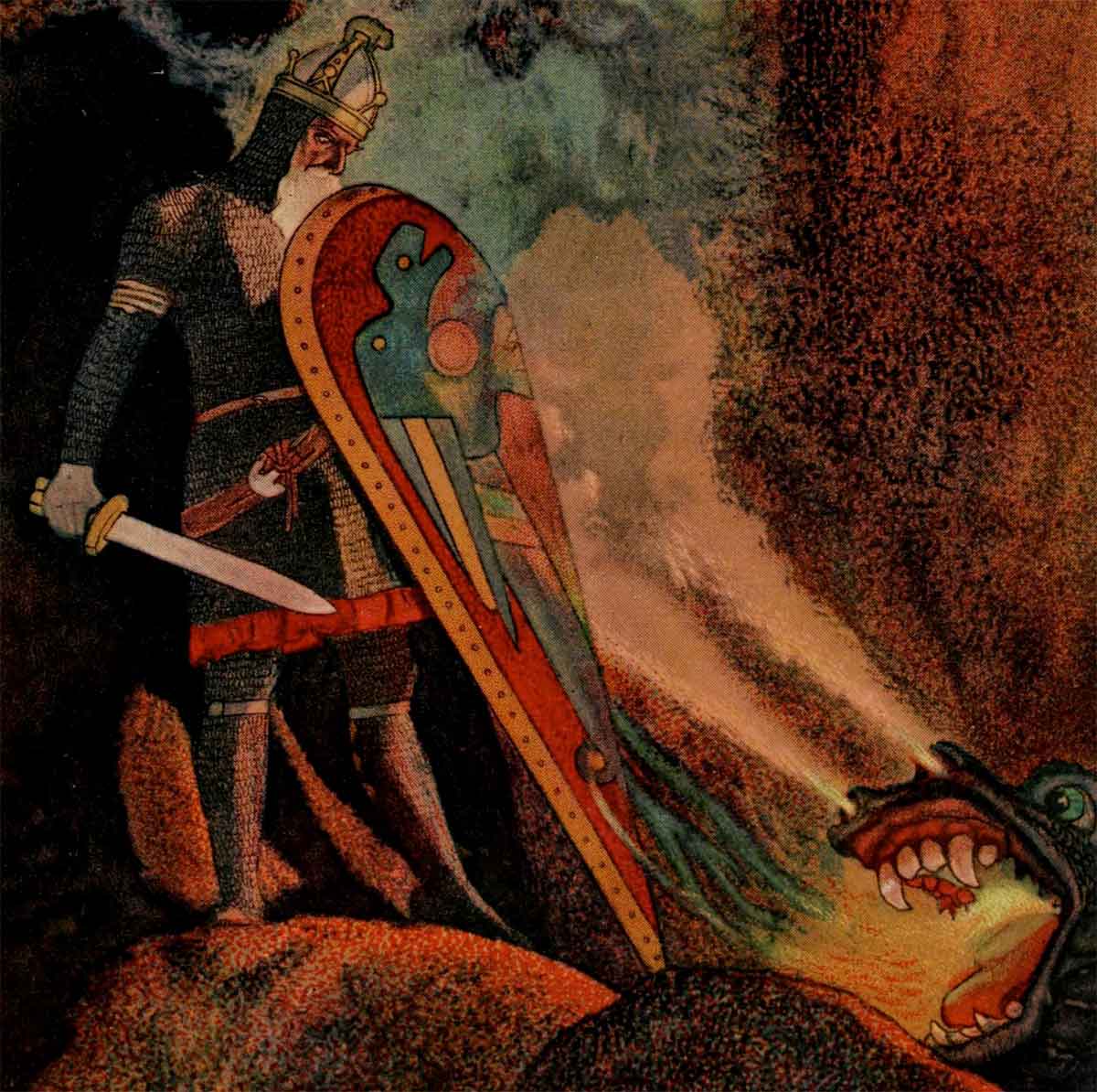
The Beowulf Poet Was a Shrewd Christian Apologist by Douglas Wilson

25.4—July/August 2012
The Corrosive & Far-Reaching Fallout of the Sexual Revolution by Anthony Esolen

calling all readers
Please Donate
"There are magazines worth reading but few worth saving . . . Touchstone is just such a magazine."
—Alice von Hildebrand
"Here we do not concede one square millimeter of territory to falsehood, folly, contemporary sentimentality, or fashion. We speak the truth, and let God be our judge. . . . Touchstone is the one committedly Christian conservative journal."
—Anthony Esolen, Touchstone senior editor
