




Feature
The Signs of Silence
Many Have Glimpsed a Mystery in the Quiet Intervals
by Steven Faulkner
Sitting on a limestone outcropping on a summer night, my skinny boy arms wrapped around the worn knees of my jeans, an old bolt-action Marlin twenty-two my father gave me lying beside me in the prairie grass, I was watching the moonlit valley below and listening to the wind. Beyond that little valley, the Flint Hills of northeast Kansas rolled away beneath a pale night sky flecked with a few faint stars. Above the hills, the south moon was rising impossibly large, a pitted limestone wheel.I was ten or eleven, in love even then with the summer wind—the steady, warm blowing that was traveling from somewhere beneath that moon—running lightly over miles and miles of prairie hills. Thirty feet below me, a two-lane blacktop road ran west with the night, segmented center lines stepping away into darkness. A limestone farmhouse a quarter-mile away rested in the restless shadows of cottonwood trees, and one window echoed the rising moon. Beyond the house was a quiet stream where I had often hunted and fished.
The wind came as a voice in my ears, yet at night, on the prairie, it seemed one with the wider silences. And even a boy caught by the yelling of day games and laughing friends and barking dogs will sometimes care for silence.
Annie Dillard, in Teaching a Stone to Talk, says, "Nature's silence is its one remark," and the limestone blocks, thick and irregular, that dropped away beneath me in layers of stone and shale and chert and dust to the empty blacktop registered that remark.
Out of & Into Silence
Now I sit, waiting out a late-summer night in a folding chair on a backyard deck in southern Virginia. Listening. The air lies still, the mercury easing away from the nineties now, the sky moonless, scattered with clear stars above a dark forest of sweet gum and oak and juniper—a tall forest that in comparison to Kansas rarely feels the breathing of the wind. And the quietness has deepened within me.
We are not a people given to silence. We don't have the patience, though silence surrounds us infinite as space, both through time and distance, reaching out between the burning stars and their volcanic planets and passing beyond icy moons and into the impossible reaches of the cosmos. Pascal said, "The eternal silences of these infinite spaces frighten me" (Pensées). And well they might. However we understand the vast silence, it is clear that we will soon pass into it.
"Man," says the French writer Max Picard, "lives between the world of silence from which he comes and the world of the other silence to which he goes." Yet, he says,
In the modern world language is far from both worlds of silence. It springs from noise and vanishes in noise. Silence is today no longer an autonomous world of its own. . . . It is a mere interruption of the continuity of noise, like a technical hitch in the noise-machine . . . the momentary breakdown of noise. (The World of Silence)
Walking down a long, forested road this evening, I was startled by a strange, repeated wailing. I stood and listened. A desolate, unfamiliar despair. In time it came to me as the calling of the screech owl—not despair at all, but the call of desire and hope. And that calling wasn't the only sound in the forest night. Tree frogs creaked and grated all through the high trees, and earlier, before the sun subsided, the locusts of August had been rasping out their noises like so many tiny machines revving up to an infernal pitch, then releasing the accelerators—the sounds coasting away. Not quiet. True enough. But like the winds of Kansas, somehow a part of the greater silence, the great darkness. And now, after midnight, even the tree frogs have retired and "all the air a solemn stillness holds."
That's old poet Thomas Gray standing in a churchyard at dusk, contemplating graves. Not a happy prospect? Still, "Elegy Written in a Country Churchyard" is a good poem: "Far from the madding crowd's ignoble strife" and all that. He stands listening to an owl, hears a beetle buzz by, and from far away come the "drowsy tinklings" of sheep bells.
Poetry, of course, depends on silence. It flashes out of silence and returns to it as meteors streak from the incomprehensible black and burn away into darkness. I suppose that's why so few people read the poets these days. We avoid the necessary silence. We refuse to walk into the quiet darkness.
"Great poetry," says Picard, "is a mosaic inlaid into silence."
Different Kinds of Silence
There are, of course, different kinds of silence. Writer Amy Blackmarr sold her Kansas City paralegal business and moved, first to a fishing cabin on her grandfather's farm in South Georgia, and later to a handmade house built on a limestone bluff in Kansas, a place she calls the House of Steps. "Alone in my hermit's life in Georgia," she writes,
I knew an old, mossy, pine-scented silence; now I'm coming to know this vast Midwestern soundlessness. It's not a dark silence, like the one that creeps down the back of my neck when I jerk awake in the middle of the night, but a vibrant silence, a kind of earnest quietness, like an empty cup held out, a curtain about to rise, an owl in flight toward its nest. (House of Steps)
An African bush pilot in the 1930s, Beryl Markham, perhaps the first female pilot in all of Africa—perhaps in the world—tells of night flights over lightless Africa. Though the propeller roars in her ears, she experiences a kind of circumambient silence in her little plane of canvas, wood, and steel: "Night envelops me entirely, leaving me out of touch with the earth, leaving me within this small moving world of my own, living in space with the stars." And despite the ceaseless roar of her engine, she thinks of her plane in quiet terms: "In darkness such as this she is no more than a passing murmur, a soft, incongruous murmur above the earth." Then she begins to distinguish different kinds of silence:
There is the silence that comes with morning in a forest, and this is different from the silence of a sleeping city. There is silence after a rainstorm, and before a rainstorm, and these are not the same. There is the silence of emptiness, the silence of fear, the silence of doubt. There is a certain silence that can emanate from a lifeless object as from a chair lately used, or from a piano with old dust upon its keys. . . . This kind of silence can speak. (West with the Night)
But only if I am paying attention.
The old, dying minister in Marilynne Robinson's Gilead speaks of Sunday silence in a small town in Iowa: "Sometimes I have loved the peacefulness of an ordinary Sunday. It is like standing in a newly planted garden after a warm rain. You can feel the silent and invisible life."
But we have banished the quiet of Sundays.
Through the morning: television political talk shows. Through the afternoon: football, baseball, tennis, golf. Through the evening: Sixty Minutes. Nature. Movies. News. Sports analysis without end.
Even our churches are filled with planned talks and discussion groups and teaching sessions and sermons and small talk and lessons and computerized media presentations backed by piano arpeggios and organs multitasking prestissimo, and strumming guitars and rock bands wailing and recorded pop thump-thumping. And some of this might be necessary to liturgy and community, but who anymore walks into a quiet cathedral to wait and listen and pray?
A Definite Presence
And so, I have listened to my solitary footsteps walking out at night, listened for the owl, the tree frogs, the leaf-rustle of a mouse, or watched the sightless bats dipping and soaring through starlit spaces, and, finding an open meadow, have looked up: "I was almost conscious of a definite presence," says Walt Whitman, "Nature silently near. The great constellation of the Water-Serpent stretch'd its coils over more than half the heavens. The Swan with outspread wings was flying down the Milky Way. The northern Crown, the Eagle, Lyra, all up there in their places" (Specimen Days).
"A definite presence," he says. Is it only the poets who feel this? Who gather shells from the blank and endless seas of silence? Walking the tidewater alone, or sitting on a bluff beside the sea, are they the only ones who keep finding something out there in the deep, rising like the flash of fish from the depths of nothing?
A contemplative, too, will sit and watch and think: "I found her [Simone Weil]," says peasant-philosopher Gustave Thibon, in an early year of the second great war, "in front of the house, sitting on a stump, sunk in contemplation of the Rhone Valley. Then I saw her gaze gradually emerge from the vision in order to come back to ordinary sight" (Simone Weil as We Knew Her). A brilliant student of philosophy, Weil had left her teaching and her studies at first to work with other laborers in car factories in Germany. At the time Thibon saw her, she was about to begin harvesting grapes in the heat of southern France, though her frail body and recurrent migraines made such work almost impossible. During those weeks, she did not stop thinking and scribbling in her journal and discussing philosophy and theology with baffled peasant workers and with her new friend Thibon. That early morning in August, he found her sitting there rapt, and it seems with difficulty that her gaze found its way back to ordinary life.
Thibon's recorded glimpse of this moment was enough, years later, for Polish poet Adam Zagajewski to transfer that single, silent hour at dawn into this:
Suddenly she doesn't comprehend,
but only watches:
the Valley of the Rhone opens in the earth,
old villages appear above it,
broad scrawls of vineyards, thirsty wells.
The plane trees slowly reawaken,
roosters resume their stubborn march,
hawks mount the sky again,
and now she almost sees the light breath of larks,
mounds shouldered up by black moles,
farm roofs, walnut trees,
church towers curled like tobacco,
dark fields of ripe grain, scythes glittering,
baskets of grapes.
In the shade of the juniper death hovers,
war is near.
The broad Rhone's mercury oozes down the valley
with its barges and boats;
a moment of forgiveness,
an instant's bliss,
the olive tree of nothingness.
("Simone Weil Watches the Rhone Valley,"
from Without End)
The olive tree of nothingness? What is it? An hour's respite? An instant's peace? Simone Weil found that tree; she soon enough emptied herself to find what she sought, leaving us not nothing—not nothing. A philosopher and mystic who had held since childhood a deep sympathy for the working poor, she eventually fled France (she was Jewish and the Nazis were coming), fought briefly in the Spanish Civil War as a rather clumsy anarchist, then made her way to London, where she refused to eat more than the rations of the French workers under Nazi rule. Her fragile health and her self-deprivations led to an early death. Friends like Thibon eventually published her letters and scattered notes.
Attentiveness & Humility
And silence is a precondition for recognizing what German philosopher Joseph Pieper calls
the core of all things, the hidden, ultimate reason of the living universe, the divine foundation of all that is, the purest form of all archetypes . . . whenever and wherever we thus behold the very essence of reality—there is an activity that is meaningful in itself. . . . An activity which is meaningful in itself, first, cannot be accomplished except with an attitude of receptive openness and attentive silence. ("Work, Spare Time, and Leisure," from Only the Lover Sings)
Simone Weil calls this receptive openness humility. "Humility," she says, "partakes in God's patience. The perfected soul waits for the good in silence, immobility and humility like God's own. . . . And those who are capable not only of listening but also of loving can hear this silence as the word of God in the crucified Christ" (The Simone Weil Reader).
And in the end, silence is a matter of the heart. Silence not grasped in order to regain the self, to recuperate, to reconstruct or repair us for a place in the noisy machine, but silence held close, silence brought to the lips—to what end? In order to find and, perhaps, in order to give.
The poet and the contemplative look away from the mayhem and are quiet. Their silence waits . . . for the curtain to rise, the cup to be filled, the nest to be found.
"Silence," says Kathleen Norris in Dakota, "is the best response to mystery."
Norris tells of her years traveling through the prairies of North and South Dakota, teaching poetry to students in remote country schools. Often she had to spend the night in ramshackle motels with broken air conditioners and tin shower basins, but she learned to make of this loss of comfort a benefit: "Instead of escaping into television every night, I found that I could knit, work on my writing, and do serious reading; in short, be in the desert and let it bloom."
The Act of Listening
Another writer, who has brought the concepts and practices of the Russian hermits or poustinikki to America, Catherine de Hueck Doherty, says in Poustinia, "Silence is sometimes the absence of speech—but it is always the act of listening. The mere absence of noise . . . is not silence. A day filled with noise and voices can be a day of silence."
Listening.
Every day, she says, we may find countless "little departures" to that blooming desert of solitude.
These "little solitudes" are often right behind a door which we can open, or in a little corner where we can stop to look at a tree that somehow survived the snow and dust of a city street. There is the solitude of a car in which we return from work, riding bumper to bumper on a crowded highway. This too can be a "point of departure" to a desert, silence, solitude.
Points of departure. Points of view.
If I listen, I can find it bumper to bumper, but how much more easily in a remote mountain river:
"Like many fly fishermen in western Montana where the summer days are almost Arctic in length, I often do not start fishing until the cool of the evening," says Norman Maclean in A River Runs Through It. "Then in the Arctic half-light of the canyon, all existence fades to a being with my soul and memories and the sounds of the Big Blackfoot River and a four-count rhythm and the hope a fish will rise."
"I used to think," he says, "water was first, but if you listen carefully you will hear that the words are underneath the water."
We are city people now. Unused to silence. Strangers to solitude. And we scarcely realize that silence can be dangerous. Poet laureate Kay Ryan writes in "Shark's Teeth":
An hour
of city holds maybe
a minute of these
remnants of a time
when silence reigned,
compact and dangerous
as a shark.
In the shade of the juniper you may find not peace but your war. Death hovers. And what will you do—the television shut—if you can no longer distract yourself from distraction by distractions, as T. S. Eliot writes in "Burnt Norton" from The Four Quartets? Walking away from the anxious screen that flickers "Over the strained time-ridden faces / . . . Filled with fancies and empty of meaning / Tumid apathy with no concentration," stepping into your own silence—what will you do? This is not your habit. Are you afraid? Where flies the mind when released from distractions? To its own fancies and erratic meanings? Slipping and swerving, sightless, through the forest?
Can I sit down and wait and listen for the spinning to slow . . . to slow . . . slowly turning toward "the still point of the turning world"? Eliot understood.
Discovery of the Absolute
As a boy, Karol Wojtyla visited for the first time the thousand-year-old Wawel Cathedral in his native Poland. It was Holy Week.
I shall never forget what I experienced. . . . I remember the seminarians seated on their benches, the cathedral canons in their stalls in the choir, and close to the high altar the Archbishop of Cracow, the unforgettable Cardinal Adam Stefan Sapieha. In a central position was a great tripod on which the candles were extinguished one by one as the singing of each psalm came to an end. And finally the chant: "Christus factus est pro nobis oboediens usque ad mortem." After a period of silence, the "Miserere"—Psalm 50, and then the concluding prayer said by the Archbishop. . . . After which they all departed in total
silence.
"To this day," he writes,
I often think back to that, because the experience was quite unique; it has never returned with the same intensity, even in the same cathedral, during similar celebrations. It was not merely discovery of the beauty and spiritual attractiveness of the Holy Week liturgy; it was above all discovery of the absolute, of the mystery expressed in the liturgy and which the liturgy conveys as a message that is valid for all time.
After St. Paul's words concerning Christ's obedience unto death, all present remained perfectly silent, and felt that not only the men but the whole cathedral itself was preserving that silence. (Sign of Contradiction)
I hear the high murmur of a small plane passing through the stars, I watch the blinking of the fireflies in the underbrush beside the shadowed creek where often I walk, my hands in my pockets, listening to the crickets sing, and looking up I see the bats flicking deftly through the galaxies.
And above the trees, at last now, the bright limestone wheel is rolling up without sound and without movement. Up, over the steady oaks and above the solemn junipers into being, and being, too, is an act of absolute mystery.
Steven Faulkner teaches creative writing at Longwood University in southern Virginia. He is the author of Waterwalk: A Passage of Ghosts (2007) and Bitterroot: Echoes of Beauty and Loss (2016). Both books are memoirs of father-son journeys that followed the paths of missionary priests: Marquette (in Waterwalk) and De Smet (in Bitterroot).
A Journal of Mere Christianity—Delivered to Your Door
- Essays on theology, culture, and the Church
- Contributors from across the Christian traditions

Six print issues (one year) of Touchstone, plus full online access and PDF downloads for only $39.95.

Get a one-year full-access subscription to the Touchstone online archives for only $19.95.
bulk subscriptions
Order Touchstone subscriptions in bulk and save $10 per sub! Each subscription includes 6 issues of Touchstone plus full online access to touchstonemag.com—including archives, videos, and pdf downloads of recent issues for only $29.95 each! Great for churches or study groups.
Transactions will be processed on a secure server.
more from the online archives
31.5—September/October 2018
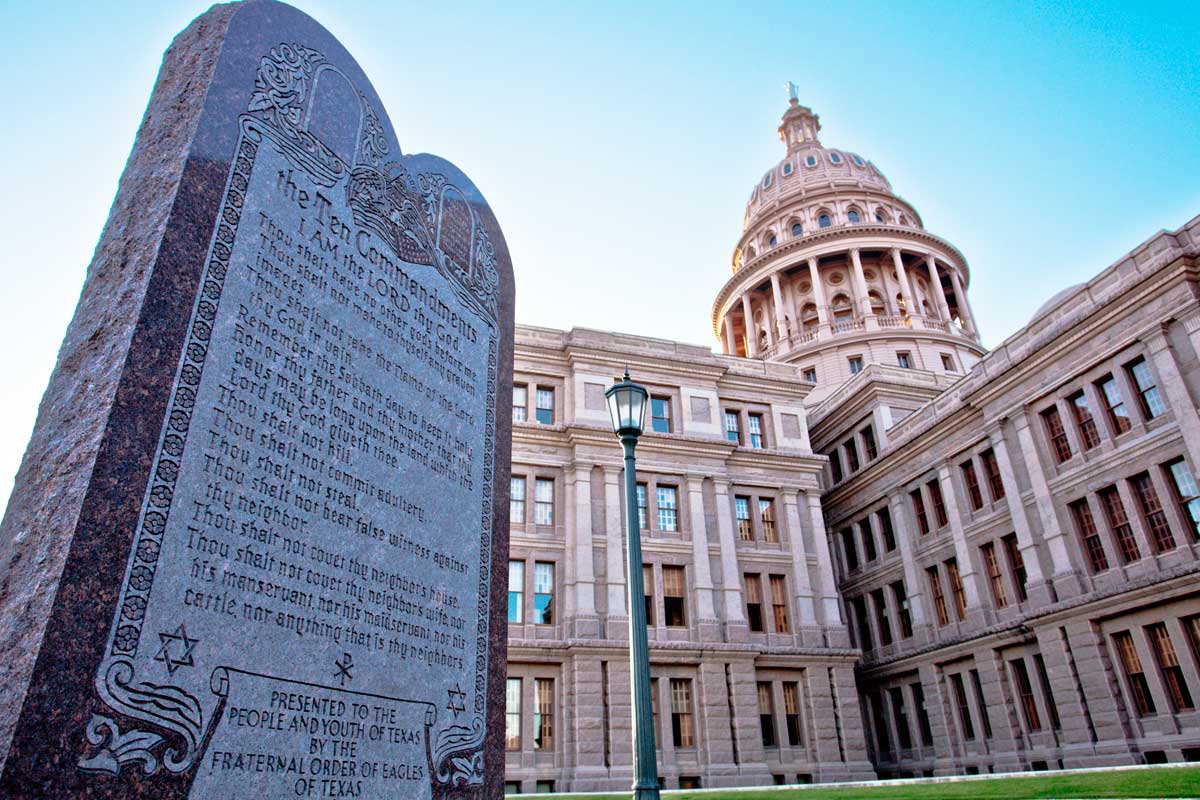
The Secular State Without the Decalogue by James M. Kushiner
32.1—January/February 2019
The Diabolical Failure of Leaders in the Present Crises by James M. Kushiner

20.6—July/August 2007
The Beowulf Poet Was a Shrewd Christian Apologist by Douglas Wilson
calling all readers
Please Donate
"There are magazines worth reading but few worth saving . . . Touchstone is just such a magazine."
—Alice von Hildebrand
"Here we do not concede one square millimeter of territory to falsehood, folly, contemporary sentimentality, or fashion. We speak the truth, and let God be our judge. . . . Touchstone is the one committedly Christian conservative journal."
—Anthony Esolen, Touchstone senior editor
