




Feature
Euripides' Beatific Vision
An Ancient Greek Drama Awakened a Powerful New Longing in Its Audiences
by James Ware
In the early spring of 438 b.c., a large crowd gathered at Athens in an open-air theater on the southern slope of the acropolis to view a series of twelve dramatic performances staged in conjunction with the yearly festival of Dionysus. Exhibited before the very image of the god, which had been transported in sacred procession from the adjacent temple, the twelve plays included four each by the famed tragic poets Sophocles and Euripides. The playwrights vied with each other, and Sophocles, we know, won the coveted first prize that year. But the only drama from the festival to survive is the last of Euripides' four plays—the Alcestis.
The Alcestis was thereafter widely performed in antiquity, and it remains to this day much studied—and controversial. For it involves a series of mysteries. The plot conforms to no genre that would have been familiar to Euripides' audience. Its core celebrates a virtue that was central neither in the philosophy of the playwright's own time nor in philosophy as it would develop after Plato. And the climactic scene depicts an event that, to the best of our knowledge, both Euripides and his audience believed to be impossible and contrary to the divine order. Compounding the riddle, each of these features of the play offers a striking parallel to the story of Jesus told in the Gospels. What are we to make of such things?
The Backstory
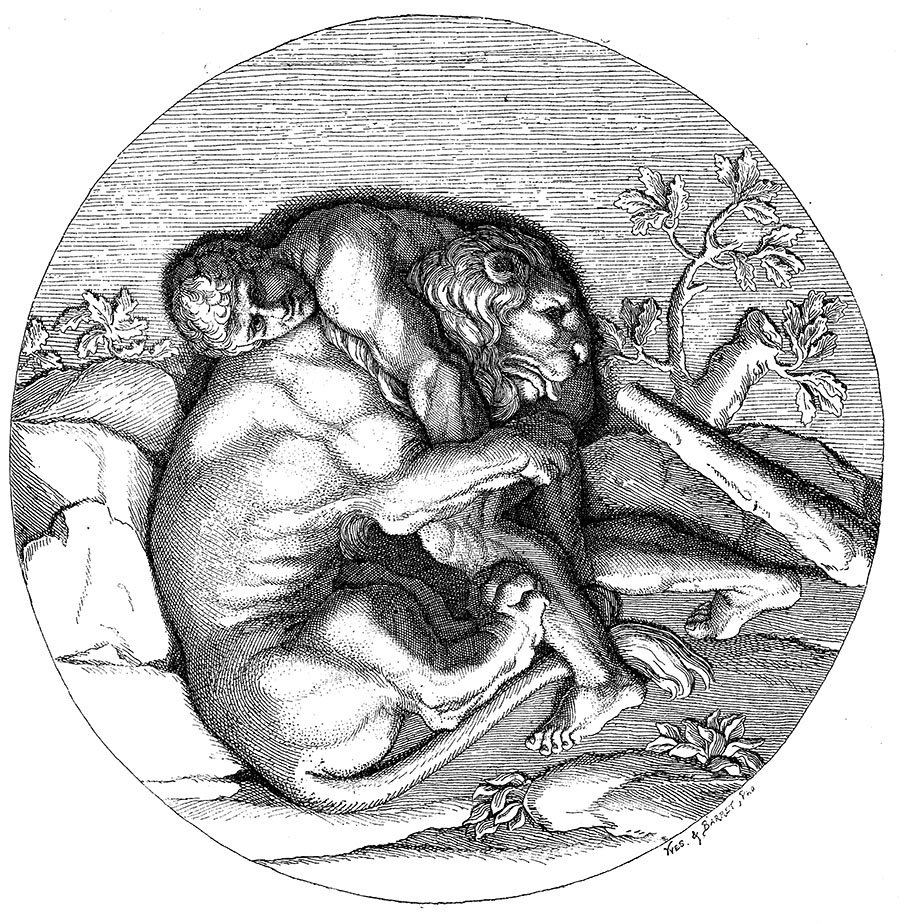
Let us begin with the story. The Alcestis recounts one of the ancient Greek tales about gods and men that would have been familiar to Euripides' audience. In the backstory of the myth, Apollo, the god of healing, through union with a mortal woman has a semi-divine son, Asclepius, who brings his own healing arts to such a pitch of perfection that he even raises many slain heroes back to life. In retribution for this violation of the prerogatives of Hades, the god of the nether world, Zeus, the most powerful of the gods, kills Asclepius with a thunderbolt. Apollo in turn slays the Cyclopes, the creatures who manufacture Zeus' lightning bolts.
Banished from Olympus by Zeus for this crime, and sentenced to be a slave for nine years in the house of a mortal man, Apollo serves as a shepherd in the palace of Alcestis' husband Admetus, the youthful king of Thessaly. Admetus, alas, is fated to die young, but Apollo, out of love for his noble host, tricks the Fates into allowing the king to escape an untimely death, provided he can find someone who is willing to die in his place.
But no one can be found. Even Admetus' aged father and mother are unwilling to make the sacrifice. Then Alcestis, out of love for her husband, freely offers—much to Admetus' dismay—to die so that he may live.
It is at this point in the story that the play begins, with black-robed Death at the doors of the palace, Admetus sorrowing over his wife's impending fate, and Alcestis, struck with illness, breathing her last.
Apollo's Limited Friendship
The plot of the Alcestis moves on the fulcrum of Apollo's friendship toward Admetus and his household. Such affectionate friendship, or philia, of the gods for those on whom their favor rests is a staple theme of Greek mythology. Within the anthropomorphic conception of the popular religion, the gods were considered subject to the full range of human passions and emotions: they were capable of love, pity, kindness, and mercy—but also of lust, hatred, malice, envy, jealousy, rivalry, covetousness, and deceit.
Beginning already in Euripides' time, the constant tendency of Greek philosophical thought was to combat this anthropomorphic understanding and to promote a purer, higher conception of the divine untouched by frail passion. But this more remote conception of the divine, while abolishing the gods' lusts and misdeeds, also abolished the prospect of their love and friendship. As Aristotle put it, there can be no friendship (philia) between gods and men.
James Ware is Professor of Religion at the University of Evansville in Evansville, Indiana. His newest book is a guide to Paul's letters for clergy, students, and laypeople, Paul's Theology in Context: Creation, Incarnation, Covenant, and Kingdom (Eerdmans, 2019). He and his wife Jan attend Holy Spirit Catholic Church in Evansville, Indiana.
A Journal of Mere Christianity—Delivered to Your Door
- Essays on theology, culture, and the Church
- Contributors from across the Christian traditions

Six print issues (one year) of Touchstone, plus full online access and PDF downloads for only $39.95.

Get a one-year full-access subscription to the Touchstone online archives for only $19.95.
bulk subscriptions
Order Touchstone subscriptions in bulk and save $10 per sub! Each subscription includes 6 issues of Touchstone plus full online access to touchstonemag.com—including archives, videos, and pdf downloads of recent issues for only $29.95 each! Great for churches or study groups.
Transactions will be processed on a secure server.
more on Imagination from the online archives

11.5—September/October 1998
Speaking the Truths Only the Imagination May Grasp
An Essay on Myth & 'Real Life' by Stratford Caldecott

19.10—December 2006
Training Up a Child Requires a Well-Formed Imagination by David Mills

more from the online archives

29.5—Sept/Oct 2016
on Past & Present Atheism & the Invention of Happiness by Jordan Bissell

22.3—April 2009
Neil Postman's Amusing Ourselves to Death: Public Discourse in the Age of Show Business by J. Daryl Charles
calling all readers
Please Donate
"There are magazines worth reading but few worth saving . . . Touchstone is just such a magazine."
—Alice von Hildebrand
"Here we do not concede one square millimeter of territory to falsehood, folly, contemporary sentimentality, or fashion. We speak the truth, and let God be our judge. . . . Touchstone is the one committedly Christian conservative journal."
—Anthony Esolen, Touchstone senior editor
