





Endorsement & Academic Freedom
Debates About Commencement Speakers & Student Groups Reveal a Double Standard
by John Garvey
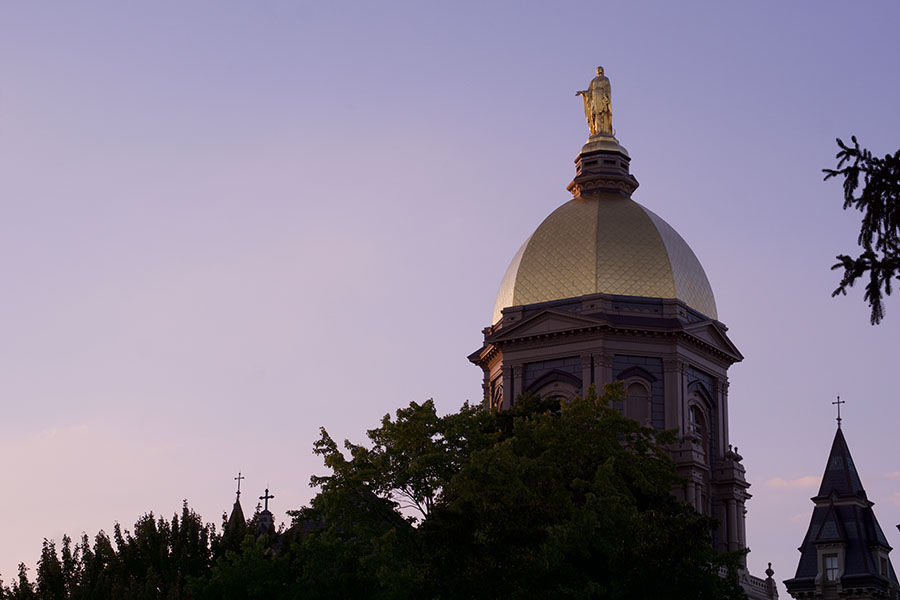
This is the time of year when we begin to argue about commencement speakers. Every spring Catholic colleges attract attention for inviting (or disinviting) speakers whose messages are at odds with the teaching of the Catholic Church. This matter of honoring commencement speakers is a lot like another issue we wrestle with throughout the academic year—giving official recognition to student groups. Both issues touch on an institution's expression of its own identity. I'd like to offer some thoughts relevant to this year's inevitable round of debates.
THIS ARTICLE ONLY AVAILABLE TO SUBSCRIBERS.
FOR QUICK ACCESS:
John Garvey is President of The Catholic University of America. In 2008 he was President of the Association of American Law Schools. He has practiced law with the firm of Morrison & Foerster in San Francisco, and taught at Notre Dame, Michigan, and Kentucky. He is the author or co-author of numerous books, including Religion and the Constitution (Aspen Publishers) and Sexuality and the U.S. Catholic Church (Crossroad).
A Journal of Mere Christianity—Delivered to Your Door
- Essays on theology, culture, and the Church
- Contributors from across the Christian traditions

Six print issues (one year) of Touchstone, plus full online access and PDF downloads for only $39.95.

Get a one-year full-access subscription to the Touchstone online archives for only $19.95.
bulk subscriptions
Order Touchstone subscriptions in bulk and save $10 per sub! Each subscription includes 6 issues of Touchstone plus full online access to touchstonemag.com—including archives, videos, and pdf downloads of recent issues for only $29.95 each! Great for churches or study groups.
Transactions will be processed on a secure server.
more on education from the online archives

26.5—Sept/Oct 2013
The Perils of Pragmatism in Christian Attitudes Toward the Liberal Arts by Robin Phillips
28.5—Sept/Oct 2015
on Our Sacred Duty to Teach the Devil to Death by Marcus Johnson
more from the online archives
27.3—May/June 2014
Religious Freedom & Why It Matters
Working in the Spirit of John Leland by Robert P. George
30.6—Nov/Dec 2017
on Benedict XVI on the Fairest of the Sons of Men by Michael Martin De Sapio
29.3—May/June 2016
Our Choice Is Obedience or Jesus as Anti-Christ by Anthony Esolen
calling all readers
Please Donate
"There are magazines worth reading but few worth saving . . . Touchstone is just such a magazine."
—Alice von Hildebrand
"Here we do not concede one square millimeter of territory to falsehood, folly, contemporary sentimentality, or fashion. We speak the truth, and let God be our judge. . . . Touchstone is the one committedly Christian conservative journal."
—Anthony Esolen, Touchstone senior editor
