




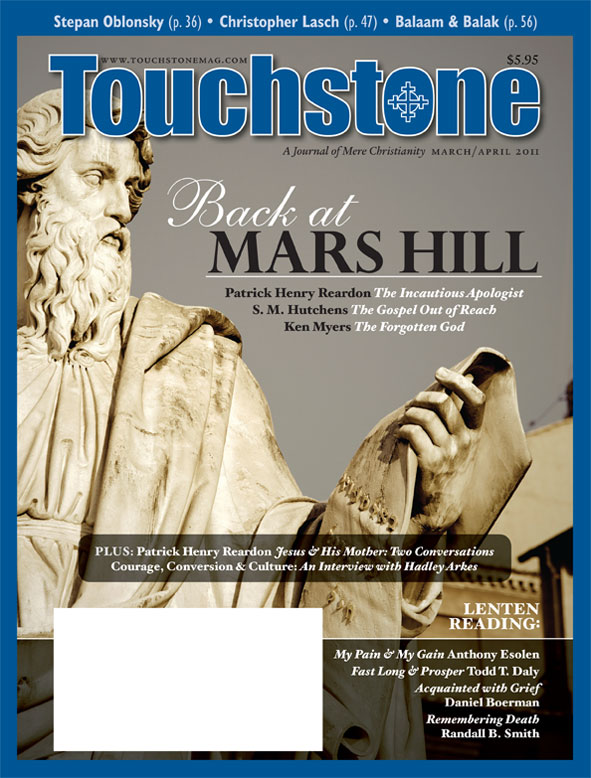
Acquainted with Grief
Daniel Boerman on the Christian’s Final Word About Suffering
Suffering is universal. Some of us suffer from frequent illness or chronic pain. Others deal with the trauma of job failure, divorce, or mental illness. As we grow older, there come the inevitable sorrows of losing parents and spouses. My mother died of a heart attack at the age of 58 and my sister of cancer at 59. As I write this article, I am experiencing chronic pain that has been present for over two years. No one can escape the reality of suffering.
Since suffering is so common to our human experience, it is no surprise that great thinkers from different philosophical and religious perspectives have often talked about it and how best to explain and respond to it. Although our Christian understanding of suffering is unique, it does share some common themes with the thinking of other traditions. A comparison of other ideas with Christian thinking about suffering may help us better understand how to cope with the suffering we live with day-to-day. To this end, we’ll briefly consider a Stoic, and then a Buddhist writer.
THIS ARTICLE ONLY AVAILABLE TO SUBSCRIBERS.
FOR QUICK ACCESS:
Daniel Boerman is a graduate of Calvin Theological Seminary whose articles and reviews have appeared in numerous Christian periodicals. He is currently working at home as a freelance writer. A lifelong member of the Christian Reformed Church, he and his wife have two adult children and two grandsons.
A Journal of Mere Christianity—Delivered to Your Door
- Essays on theology, culture, and the Church
- Contributors from across the Christian traditions

Six print issues (one year) of Touchstone, plus full online access and PDF downloads for only $39.95.

Get a one-year full-access subscription to the Touchstone online archives for only $19.95.
bulk subscriptions
Order Touchstone subscriptions in bulk and save $10 per sub! Each subscription includes 6 issues of Touchstone plus full online access to touchstonemag.com—including archives, videos, and pdf downloads of recent issues for only $29.95 each! Great for churches or study groups.
Transactions will be processed on a secure server.
more on christianity from the online archives

27.5—Sept/Oct 2014
on Growing Vegetables as a Primer in Moral Philosophy by Rachel Lu

30.3—May/June 2017
Insider Attempts to Disorient the Orthodox by Alexander F. C. Webster
more from the online archives

24.5—Sept/Oct 2011
on Wondering or Wandering Through College Education by Anthony Esolen


calling all readers
Please Donate
"There are magazines worth reading but few worth saving . . . Touchstone is just such a magazine."
—Alice von Hildebrand
"Here we do not concede one square millimeter of territory to falsehood, folly, contemporary sentimentality, or fashion. We speak the truth, and let God be our judge. . . . Touchstone is the one committedly Christian conservative journal."
—Anthony Esolen, Touchstone senior editor
