




Columns: Contours of Culture
Waiting for Epimenides
by Ken Myers
We are living in an age marked by skepticism, intellectual incoherence, and hostility to great, commanding ideas. In such a time, many Christians spend a great deal of time and emotional energy simply holding onto their faith—holding on, that is, to their assent to the most basic, core beliefs of the faith.
Our time is also marked by widespread ethical illiteracy and moral carelessness, a setting in which the alleged vocation to “authenticity” displaces any other trajectory of virtue. Encouraged by powerful social forces to “follow our bliss,” that is, to trust the innocence of our untrained desires, the perennial struggle against sin has become for many Christians an alien and exotic pursuit at best. Heroic holiness has never been common, but it was once at least more commonly coveted. Today, it seems implausible to many Christians to keep the bar set so high.
An Obstacle to Maturity
The properly ecumenical ideal of “mere Christianity” upheld by this magazine has great benefits, but it is surely not a call to be content with being “barely Christian.” Called to make disciples, teaching them to observe everything the Lord of heaven and earth has commanded, the Church and its shepherds should emulate the Apostle Paul in his zeal of “warning everyone and teaching everyone with all wisdom, that we may present everyone mature in Christ” (Col. 1:28). That goal of maturity is a recognition of the fact that the faith of the Bible and the Church is a faith with profound and myriad ramifications, intellectually and morally.
A passion for Christian maturity is easily obscured when church leaders become preoccupied with the Church’s cultural relevance. The widespread desire to be (as the common term of art puts it) “culturally engaged” is often a distraction from the Church’s mission, not because it takes culture too seriously, but because it has not paid close enough attention to the actual state of our culture.
The prevailing strategy is to make the Church more congruent with the current cultural ethos, with fashionable sensibilities and forms, so that those outside the Church will be more likely to assent to a few Christian propositions. But this strategy fails to account for the depth and breadth of our culture’s disorder. It may nudge some toward the profession of faith, but it does so by removing from sight the glorious image of a fully ramified Christianity.
We might be able to sustain some resonance with our confused culture by remaining barely Christian, but becoming thoroughly Christian, exploring and enacting the cultural ramifications of our faith, requires us to be more prophetic toward the cultural status quo. Real cultural engagement requires the wisdom to repudiate and shun cultural disorder.
Shifting Styles & Values
The moral and intellectual liabilities of our moment are evident in our dominant cultural styles. For example, it is obvious that our society is less sympathetic toward formal patterns of behavior than it was forty years ago. Well into the 1960s, men thought nothing of wearing a tie to a baseball game (and the hats they commonly wore were not ball caps), women rarely wore jeans in public, and the display of torn or frayed clothing at school or at a shopping center would have been a source of embarrassment to members of either sex. What one wore to the gym was not what one wore to go out to dinner. There were generally recognized proprieties—socially sanctioned expectations—to which one (without much thought) deferred.
Today, we defer (without much thought) to the complete absence of any sense of deference. That shift toward informality, toward the abandonment of proprieties, is not, as many assume, simply a meaningless evolution of style. Numerous cultural observers, from Richard Weaver in 1948 (in Ideas Have Consequences and in other essays) to linguist John McWhorter in 2003 (in Doing Our Own Thing: The Degradation of Language and Music and Why We Should, Like, Care) have argued that the contemporary preference for informality is deeply tied to suspicions about authority and about metaphysical hierarchy.
Ken Myers is the host and producer of the Mars Hill Audio Journal. Formerly an arts editor with National Public Radio, he also serves as music director at All Saints Anglican Church in Ivy, Virginia. He is a contributing editor for Touchstone.
A Journal of Mere Christianity—Delivered to Your Door
- Essays on theology, culture, and the Church
- Contributors from across the Christian traditions

Six print issues (one year) of Touchstone, plus full online access and PDF downloads for only $39.95.

Get a one-year full-access subscription to the Touchstone online archives for only $19.95.
bulk subscriptions
Order Touchstone subscriptions in bulk and save $10 per sub! Each subscription includes 6 issues of Touchstone plus full online access to touchstonemag.com—including archives, videos, and pdf downloads of recent issues for only $29.95 each! Great for churches or study groups.
Transactions will be processed on a secure server.
more from the online archives
31.5—September/October 2018
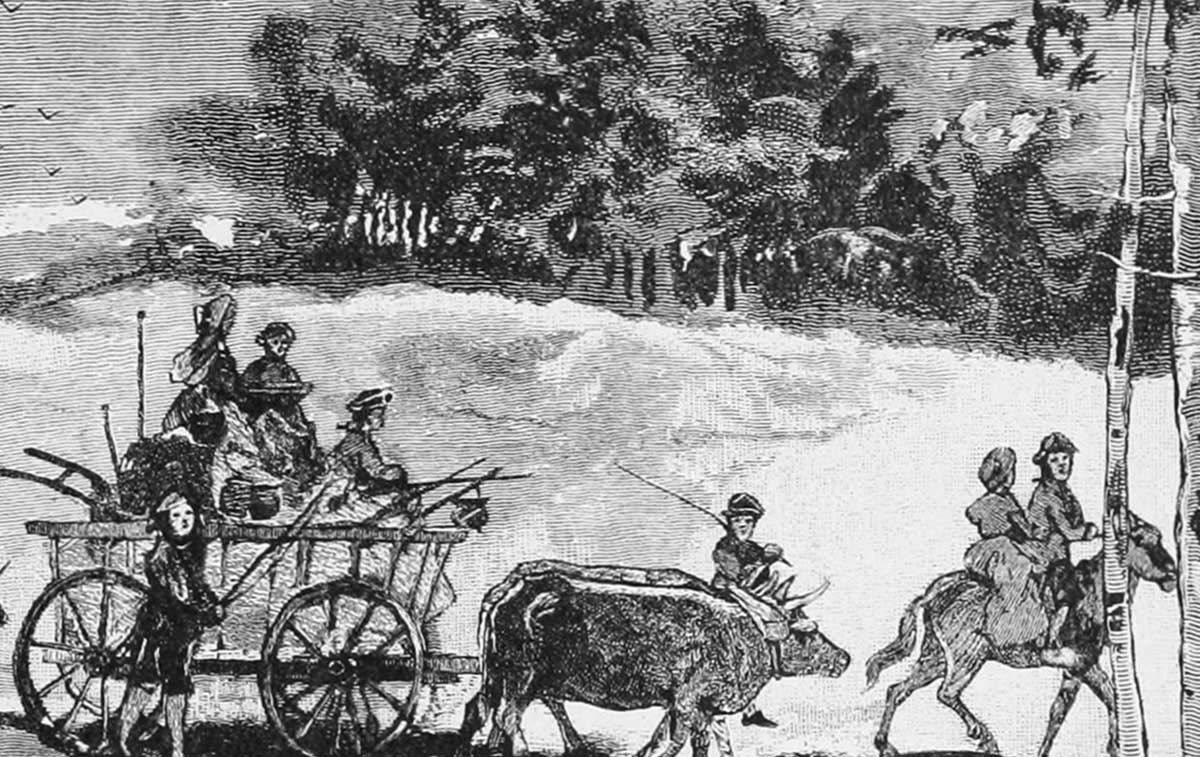
Errands into the Moral Wilderness
Forms of Christian Family Witness & Renewal by Allan C. Carlson
19.8—October 2006
on the Good Father’s Quiet Desperation by Russell D. Moore

30.2—March/April 2017
on Reading Don Quixote in Its Original Christian Context by Luis Cortest
calling all readers
Please Donate
"There are magazines worth reading but few worth saving . . . Touchstone is just such a magazine."
—Alice von Hildebrand
"Here we do not concede one square millimeter of territory to falsehood, folly, contemporary sentimentality, or fashion. We speak the truth, and let God be our judge. . . . Touchstone is the one committedly Christian conservative journal."
—Anthony Esolen, Touchstone senior editor
