





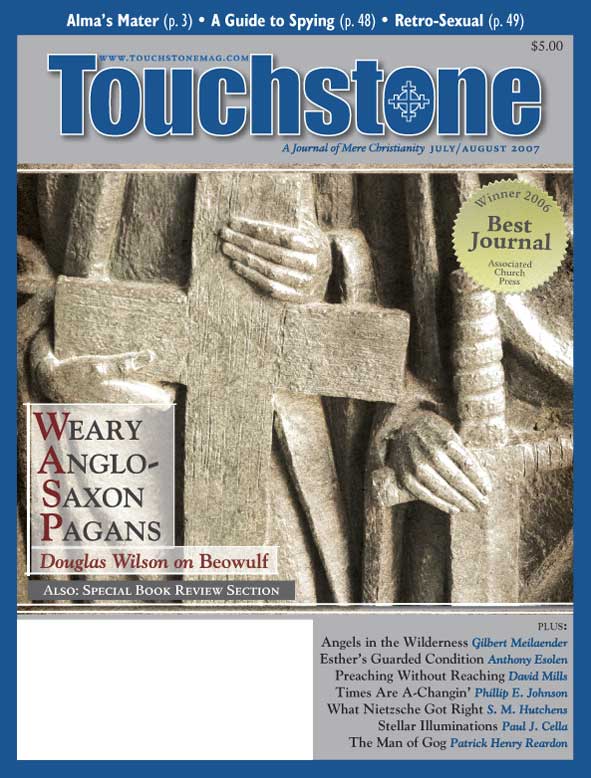
Self Evidence
From Nature to Experience: The American Search for Cultural Authority
by Roger
Lundin
Rowman & Littlefield, 2005
(280 pages, $26.95, paperback)
reviewed by John Harmon McElroy
From Nature to Experience: The American Search for Cultural Authority by Roger Lundin, a professor of English at Wheaton College, is a thoroughly documented, closely reasoned critique of the religious and literary temperament of Europe and the United States during the last two centuries. But despite its subtitle, the nature of cultural authority and whether Americans have sought it in distinctive ways are not analyzed.
THIS ARTICLE ONLY AVAILABLE TO SUBSCRIBERS.
FOR QUICK ACCESS:
John Harmon McElroy is Professor Emeritus of the University of Arizona. As a Fulbright Professor of American Studies he taught at universities in Brazil and Spain. He is the author of Divided We Stand: The Rejection of American Culture Since the 1960s (Rowman & Littlefield), published earlier this year. He and his wife have four children and ten grandchildren. Because of his experience in Poland, he says, he has been a communicant of the Roman Catholic Church since 1983.
A Journal of Mere Christianity—Delivered to Your Door
- Essays on theology, culture, and the Church
- Contributors from across the Christian traditions

Six print issues (one year) of Touchstone, plus full online access and PDF downloads for only $39.95.

Get a one-year full-access subscription to the Touchstone online archives for only $19.95.
bulk subscriptions
Order Touchstone subscriptions in bulk and save $10 per sub! Each subscription includes 6 issues of Touchstone plus full online access to touchstonemag.com—including archives, videos, and pdf downloads of recent issues for only $29.95 each! Great for churches or study groups.
Transactions will be processed on a secure server.
more on america from the online archives
29.4—July/August 2016
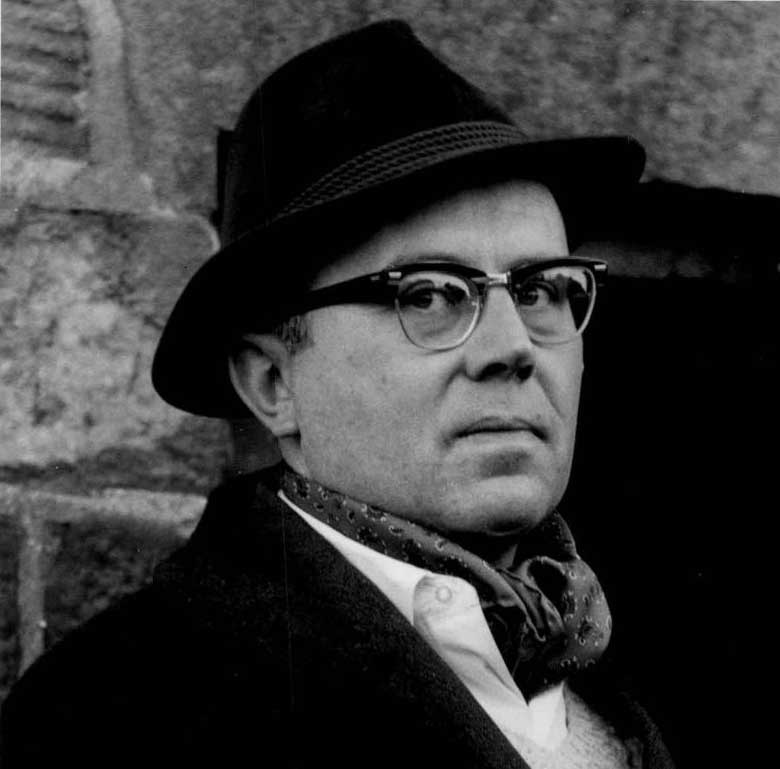
Russell Kirk: American Conservative by Bradley J. Birzer by Hunter Baker

30.5—Sept/Oct 2017
The Christian Cure for What Ails Modern Politics by David Bradshaw

29.2—March/April 2016
The History of Family Strength in America May Reveal Good News by Allan C. Carlson
more from the online archives

32.6—November/December 2019
An Open Letter to Christian Readers of Jordan Peterson & Roger Scruton by James Bryson

32.6—November/December 2019
Historical Truth, Beguiling Stories & Three Kinds of Hearers by Anthony Esolen
calling all readers
Please Donate
"There are magazines worth reading but few worth saving . . . Touchstone is just such a magazine."
—Alice von Hildebrand
"Here we do not concede one square millimeter of territory to falsehood, folly, contemporary sentimentality, or fashion. We speak the truth, and let God be our judge. . . . Touchstone is the one committedly Christian conservative journal."
—Anthony Esolen, Touchstone senior editor
