




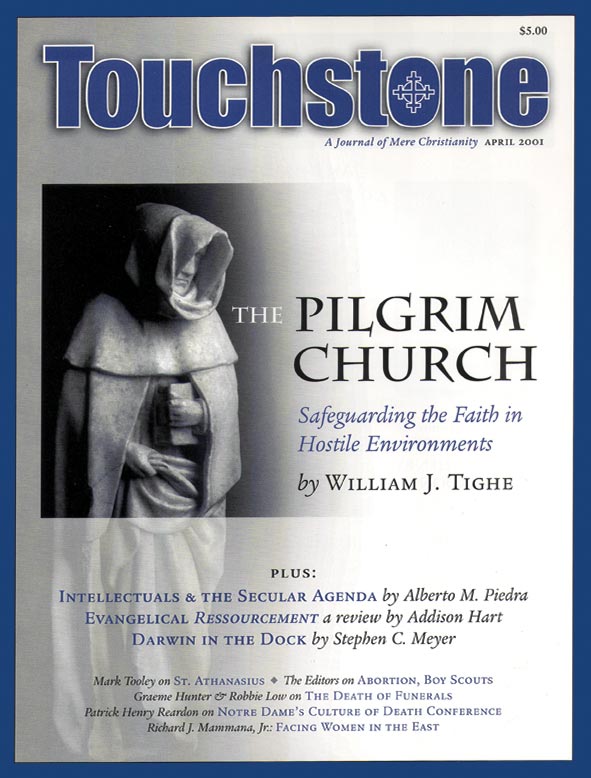
Darwin in the Dock
A History of Johnson’s Wedge
by Stephen C. Meyer
I first met Phillip Johnson in a small Greek restaurant on Free School Lane, next to the Old Cavendish Laboratory in Cambridge in the fall of 1987. The meeting had been arranged by a fellow graduate student who knew Phil from Berkeley. My friend had told me only that his friend was “an eccentric but brilliant law professor” who “was on sabbatical studying torts,” and that he “had become obsessed with evolution.” “Would you talk to him?” he asked. His description led me to anticipate a very different figure from the one I encountered. Though my own skepticism about Darwinism had been well cemented by this time, I knew enough of the stereotypical evolution-basher to be skeptical that a mid-career non-scientist could have stumbled onto an original critique of Darwin’s theory.
I should have known better, but only later did I learn of Johnson’s full intellectual pedigree: Harvard B.A.; top-of-the class University of Chicago law graduate; law clerk for Chief Justice Earl Warren; leading constitutional scholar; occupant of a distinguished chair at the University of California, Berkeley. In Johnson, I encountered a man of supple and prodigious intellect who seemed in short order to have found the central pulse of the origins issue.
Suspicions Aroused
Johnson told me that his doubts about Darwinism had started with a visit to the British Natural History Museum, where he learned about the controversy that had raged there earlier in the 1980s. At that time, the museum paleontologists presented a display describing Darwin’s theory as “one possible explanation” of origins. A furor ensued, resulting in the removal of the display, when the editors of the prestigious Nature magazine and others in the scientific establishment denounced the museum for its ambivalence about “established fact.”
Intrigued by the response to such an (apparently) innocuous exhibit, Johnson decided to investigate further. He began to read whatever he could find on the issue: Stephen Jay Gould, Michael Ruse, Mark Ridley, Richard Dawkins, and Michael Denton’s Evolution: A Theory in Crisis. What he read made him more suspicious of Darwinist orthodoxy. “Something about the Darwinists’ rhetorical style,” he told me later, “made me think they had something to hide.”
His examination of evolutionary literature confirmed his suspicion. Darwinist polemic revealed a surprising reliance upon arguments that seemed to assume rather than demonstrate that life had evolved via natural processes. Johnson also observed an interesting contrast between biologists’ technical papers and their popular defenses of evolutionary theory. When writing in scientific journals, he discovered, biologists acknowledged many fundamental difficulties with both standard and newer evolutionary models. Yet, when defending basic Darwinist commitments (such as the common ancestry of all life and the creative power of natural selection) in popular books or textbooks, Darwinists employed an evasive and rhetorical style to minimize problems and belittle critics. Johnson began to wonder why, given mounting difficulties, Darwinists remained so confident that all organisms had evolved naturally from simpler forms.
Opening the Trial
In Darwin on Trial (Regnery, 1991) Johnson first made his skepticism public. There he argued that evolutionary biologists remain confident about neo-Darwinism, not because empirical evidence generally supports their theory, but because their perception of the rules of scientific procedure virtually prevents them from considering any alternative view. Johnson cited, among other things, a communiqué from the National Academy of Sciences (NAS) issued to the Supreme Court during the Louisiana “creation science” trial. The NAS insisted that “the most basic characteristic of science” is a “reliance upon naturalistic explanations.”
While Johnson accepted that the use of naturalistic explanation describes the method in much of science, he argued that treating it as a normative rule when seeking to establish that natural processes alone produced life, assumes the very point that Darwinists (and neo-Darwinists) are trying to establish. Johnson reminded readers that Darwinism does not just claim that evolution (in the sense of change) has occurred. Instead, it purports to establish that the major innovations in the history of life arose by purely natural mechanisms—that is, without any intelligent direction or design. He thus distinguished various meanings of the term “evolution” from the central claim of Darwinism, which he later identified as “the Blind Watchmaker thesis,” following Richard Dawkins, the staunch modern defender of neo-Darwinism.
A Journal of Mere Christianity—Delivered to Your Door
- Essays on theology, culture, and the Church
- Contributors from across the Christian traditions

Six print issues (one year) of Touchstone, plus full online access and PDF downloads for only $39.95.

Get a one-year full-access subscription to the Touchstone online archives for only $19.95.
bulk subscriptions
Order Touchstone subscriptions in bulk and save $10 per sub! Each subscription includes 6 issues of Touchstone plus full online access to touchstonemag.com—including archives, videos, and pdf downloads of recent issues for only $29.95 each! Great for churches or study groups.
Transactions will be processed on a secure server.
more on history from the online archives
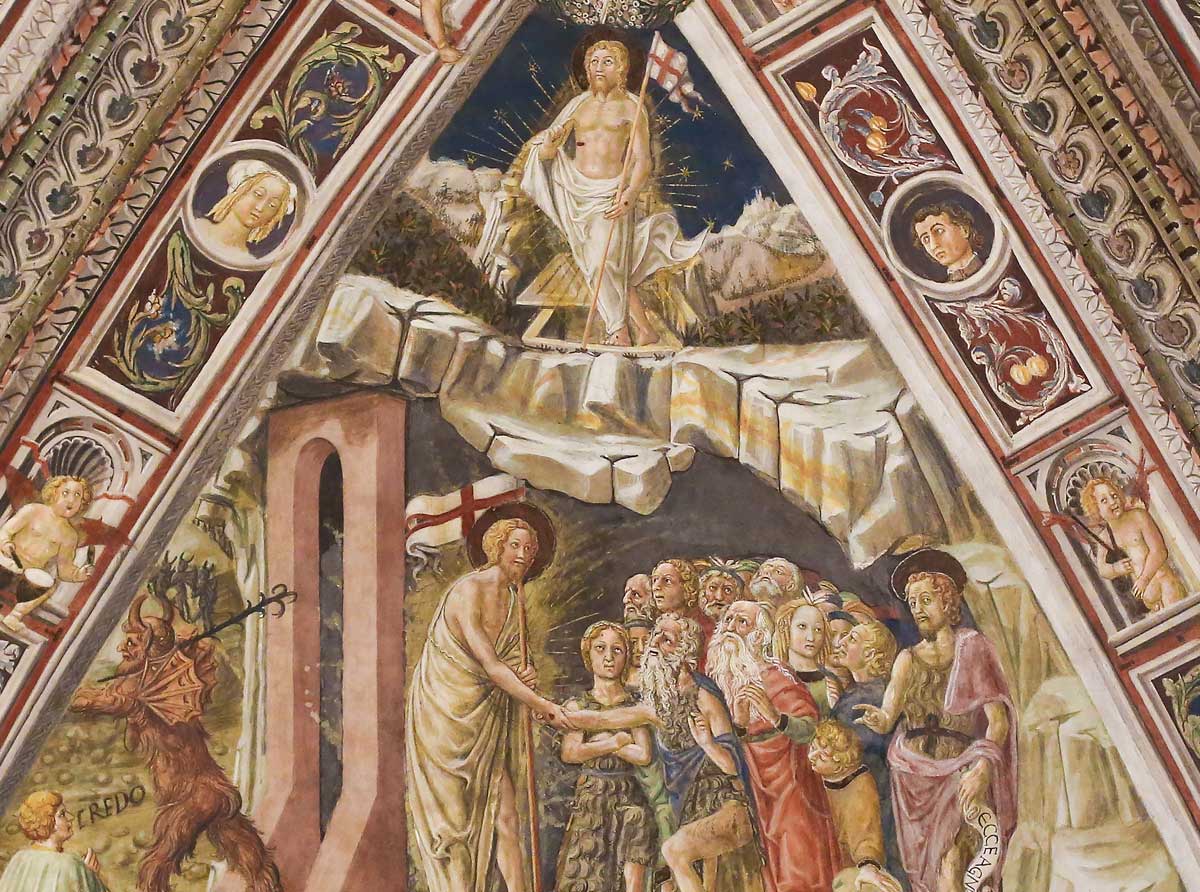
14.6—July/August 2001
The Transformed Relics of the Fall
on the Fulfillment of History in Christ by Patrick Henry Reardon
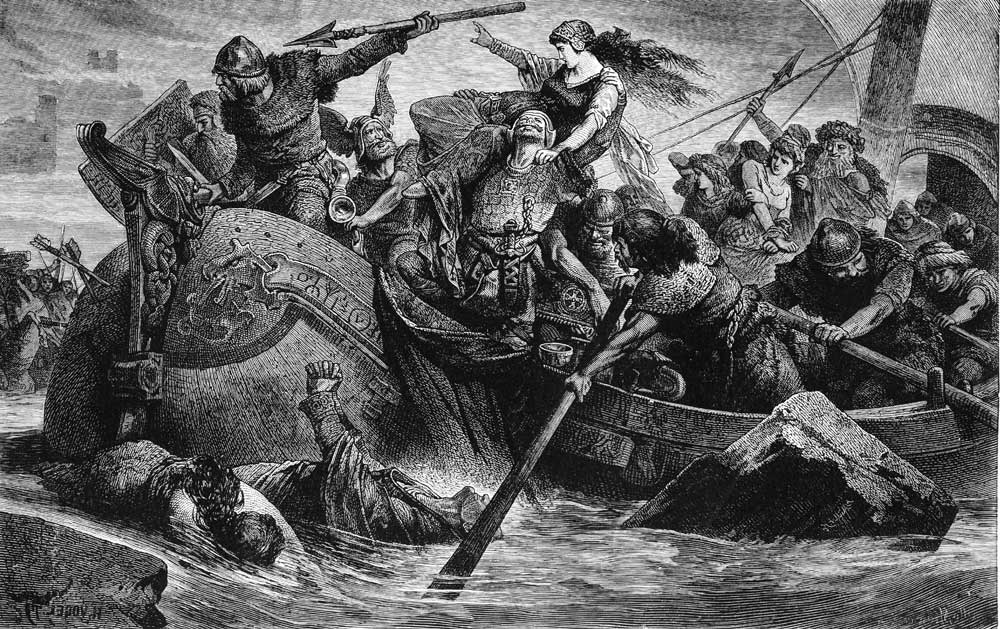
31.1—January/February 2018
on Ragnarök, an Extreme Weather Event & the Paths to Conversion by Timothy J. Burbery
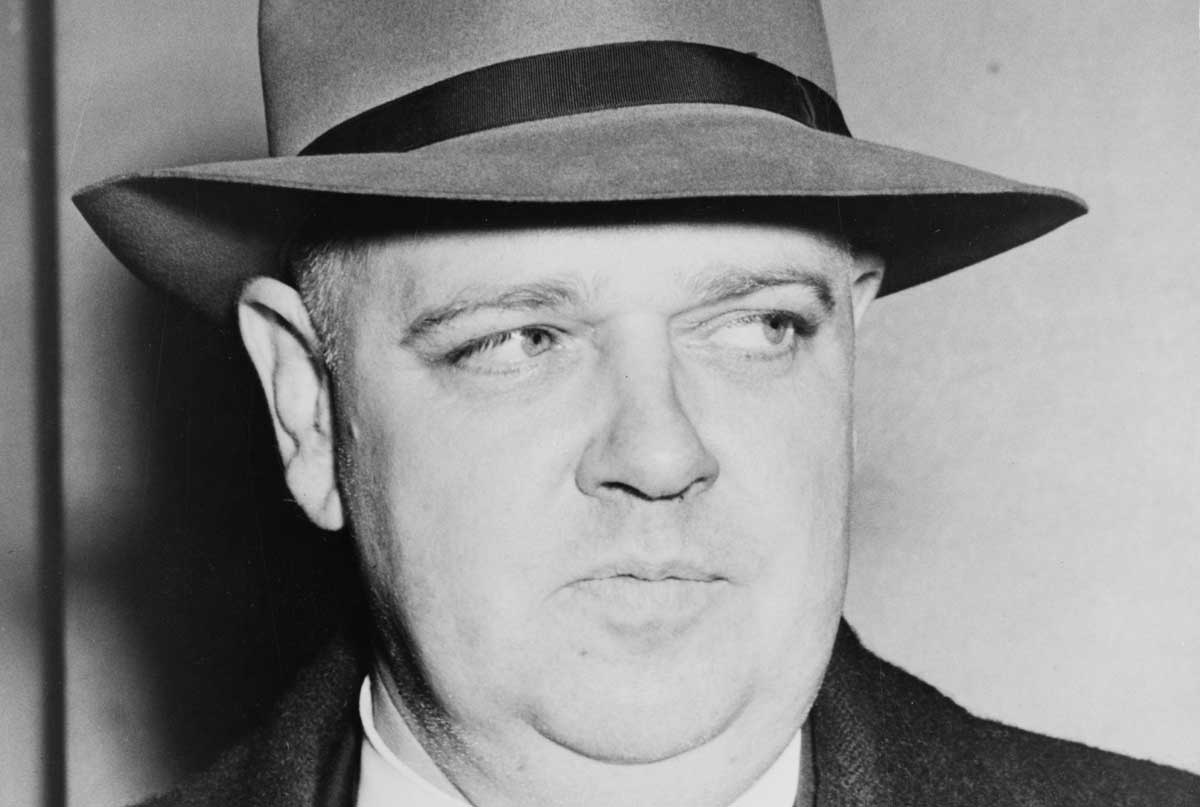
28.3—May/June 2015
Whittaker Chambers's Lonely War Against Godless Collectivism by Hunter Baker
more from the online archives

35.2—Mar/Apr 2022
on Fatigued Christians Deciding to Engage the Culture by Keith Lowery

18.2—March 2005
On Conservatism as Vexation, Vanity & Near Impossibility by Graeme Hunter
calling all readers
Please Donate
"There are magazines worth reading but few worth saving . . . Touchstone is just such a magazine."
—Alice von Hildebrand
"Here we do not concede one square millimeter of territory to falsehood, folly, contemporary sentimentality, or fashion. We speak the truth, and let God be our judge. . . . Touchstone is the one committedly Christian conservative journal."
—Anthony Esolen, Touchstone senior editor
