



Ecclesiastical Math
As the Lord commanded Moses, so he numbered them in the wilderness.
—Numbers 1:19
One might think that a faith that holds the book of Numbers in high esteem might be popular with mathematicians, but sadly this isn’t the case. With the accounts of the seven days of creation, forty years in the wilderness, and one hundred forty-four thousand sealed, one might think that experts in number theory would have felt at home with our faith from its very beginning. This is all the more true since the early Church read the book of Numbers from a translation known as The Seventy (i.e., the Septuagint or LXX).
One could postulate that mathematicians find the church teachings troublesome because the Church has its own rules for arithmetic. For example, Pentecost is the feast that follows 50 days after Easter (hence the name). But at exactly seven weeks later, it seems like it ought to be called “Fortynineocost.”
It comes as no surprise that we have lost our understanding of the church’s numbering system. We see this even in popular traditions. For example, few people in our society know when the twelve days of Christmas are, and even many of those who do know cannot tell on which day Twelfth Night falls. But this, of course, comes from a culture that starts reckoning the third millennium since our Lord’s birth a year early.
A friend recently asked me why, since it is forty days long, Lent begins on Ash Wednesday. He figured that if one counted back forty days from Easter one ought to arrive at Ash Wednesday. No, Ash Wednesday is more than forty days before Easter because Sundays are not counted as fast days. Then he asked what Septuagesima Sunday was. I told him it was Latin for “70 days” and starts a countdown towards Easter in the Western liturgical tradition. He then asked why it was celebrated nine weeks (i.e., 63 days) before Easter instead of ten (since seven times ten is seventy, not seven times nine). Although I tried to explain it in terms of its position relative to Quinquagesima Sunday and Sexagesima Sunday, I could tell that he was too bewildered to follow me.
Even our Lord’s Passion can be viewed as a mathematical conundrum. In a popular translation of First Corinthians, chapter fifteen, one finds “. . . Christ died for our sins just as he said he would, and that he was buried, and that three days afterwards he rose from the grave. . . .” If one starts on Friday, “three days afterwards” does not generally bring one to Sunday. We know that Christ was in the grave less than 40 hours, but only by using the church’s arithmetic could this be calculated from “three days afterwards he rose from the grave.”
The Apostle Paul said that Christianity would seem like foolishness to the Greeks—the intelligentsia of the day. Of course, the mathematics of the kingdom of heaven are bound to be confusing when they are rooted in one God in three Persons. If a founding principle is that one equals three, it is hardly reasonable to expect the rest of the math to always make sense.
If it appears that the Church shows blithe disregard for the basic rules of mathematics, it is because it is designed for another world. Such things are, by their very nature, beyond our understanding. Regarding these things, King David’s words provide the best advice: “I do not occupy myself with things too great and too marvelous for me.”
Thomas S. Buchanan is the George W. Laird Professor of Mechanical Engineering and Biomedical Engineering at the University of Delaware. He has studied at UCSD, Northwestern University, and MIT, and has held visiting professorships at the University of Western Australia and the University of Aix-Marseille. He has served as department chairman, deputy dean, and institute director, president of the American Society of Biomechanics, and editor-in-chief of the Journal of Applied Biomechanics. He is on the Board of Trustees of Saint Katherine College, the editorial board of Touchstone, and the board of The Fellowship of St. James.
A Journal of Mere Christianity—Delivered to Your Door
- Essays on theology, culture, and the Church
- Contributors from across the Christian traditions
Six print issues (one year) of Touchstone, plus full online access and PDF downloads for only $39.95.
Get a one-year full-access subscription to the Touchstone online archives for only $19.95.
bulk subscriptions
Order Touchstone subscriptions in bulk and save $10 per sub! Each subscription includes 6 issues of Touchstone plus full online access to touchstonemag.com—including archives, videos, and pdf downloads of recent issues for only $29.95 each! Great for churches or study groups.
Transactions will be processed on a secure server.
more on Bible from the online archives
32.2—March/April 2019
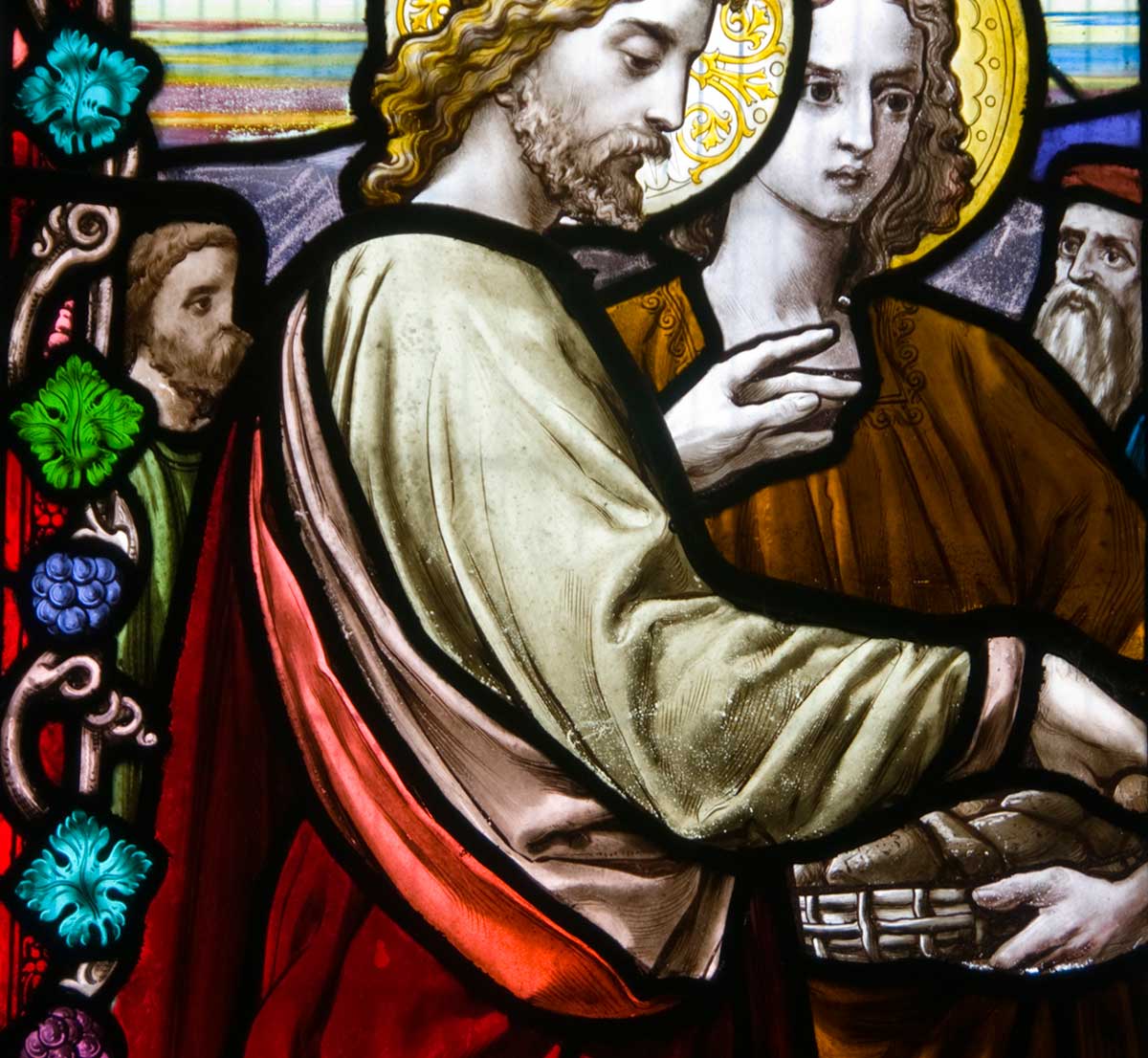
on Preserving Physical & Spiritual Nourishment by Nathanael Devlin
31.4—July/August 2018
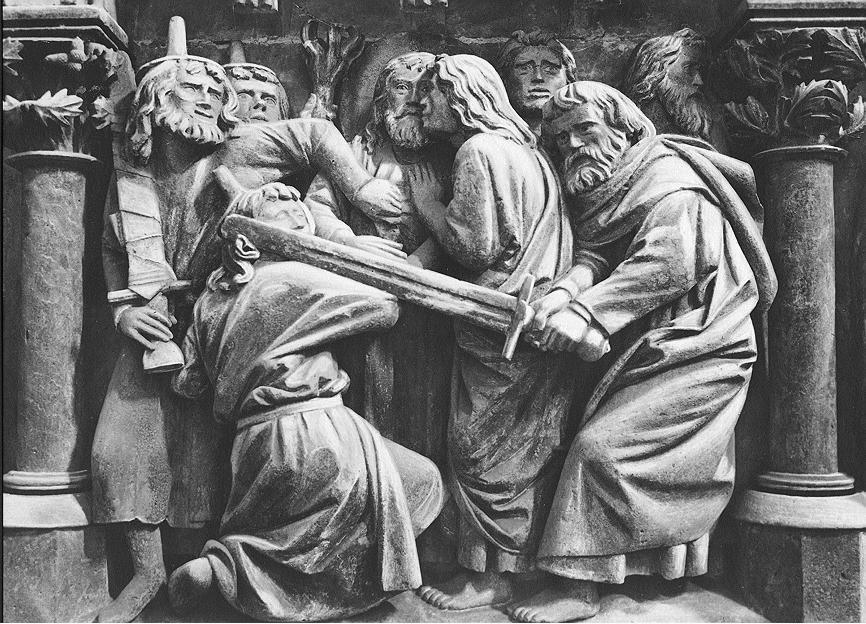
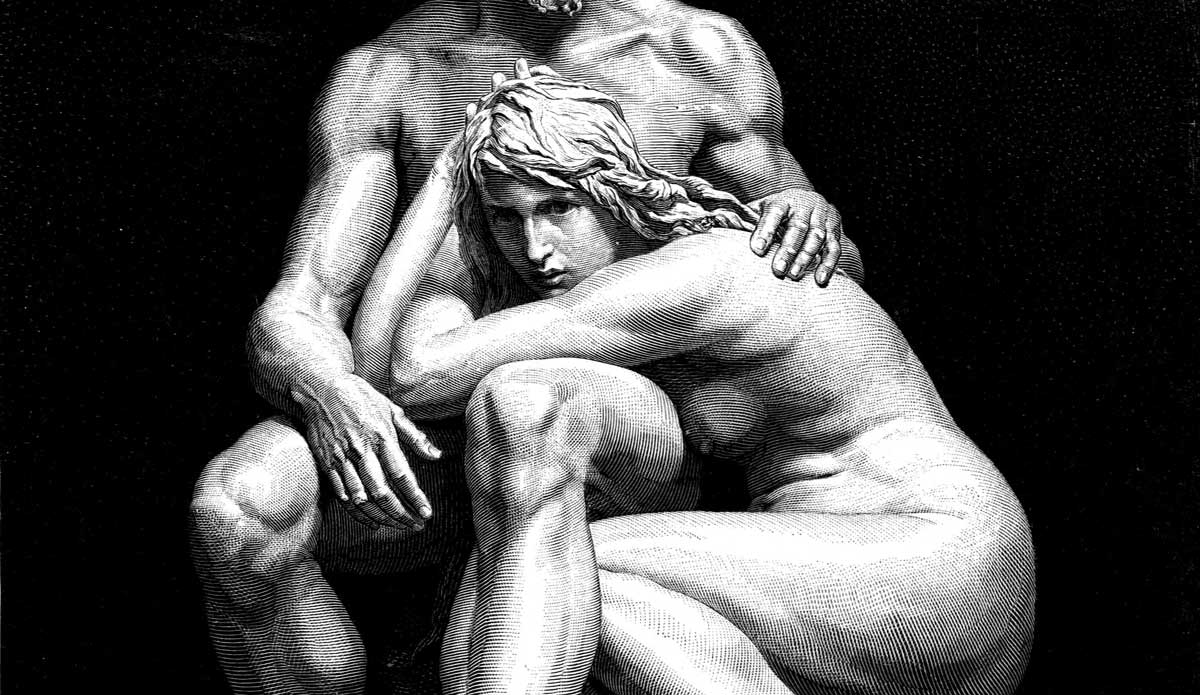
on the Brevity & Theology of Her Recorded Words by Judith Anderson
more from the online archives

31.6—November/December 2018
on the Church's Response to the Anti-marriage Tide by Diane Woerner

31.4—July/August 2018
Life & Love Are Real Despite Theatrical Illusions by Anthony Esolen
35.4—Jul/Aug 2022
The Death Rattle of a Tradition
Contemporary Catholic Thinking on the Question of War by Andrew Latham
calling all readers
Please Donate
"There are magazines worth reading but few worth saving . . . Touchstone is just such a magazine."
—Alice von Hildebrand
"Here we do not concede one square millimeter of territory to falsehood, folly, contemporary sentimentality, or fashion. We speak the truth, and let God be our judge. . . . Touchstone is the one committedly Christian conservative journal."
—Anthony Esolen, Touchstone senior editor