





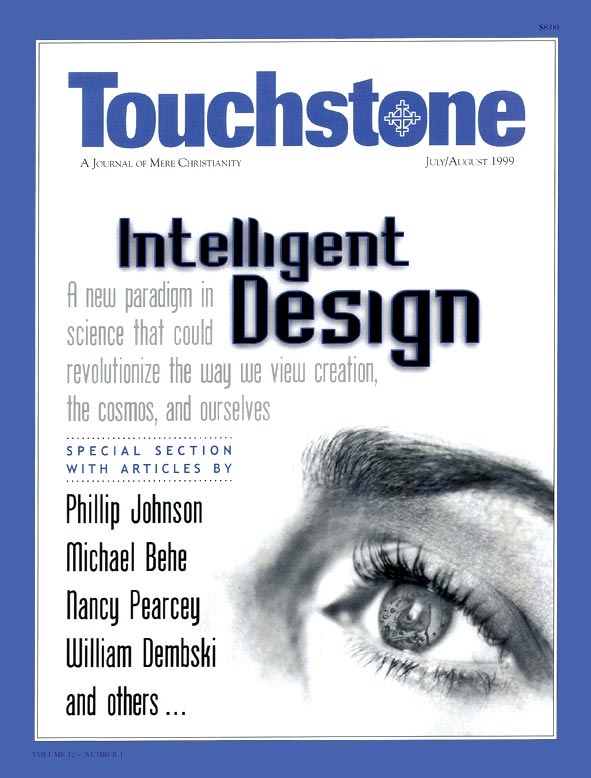
Signs of Intelligence
A Primer on the Discernment of Intelligent Design
by William A. Dembski
Intelligent design examines the distinction between three modes of explanation: necessity, chance, and design. In our workaday lives we find it important to distinguish between these modes of explanation. Did she fall or was she pushed? And if she fell, was it simply bad luck or was her fall unavoidable? More generally, given an event, object, or structure, we want to know:
THIS ARTICLE ONLY AVAILABLE TO SUBSCRIBERS.
FOR QUICK ACCESS:
William A. Dembski is Associate Research Professor in the Conceptual Foundations of Science at Baylor University and a senior fellow with the Discovery Institute?s Center for Science and Culture. He is the author of many books, including Intelligent Design (InterVarsity Press), No Free Lunch (Rowman & Littlefield), and The Design Revolution (InterVarsity Press); and the editor, with James Kushiner, of Signs of Intelligence (Brazos), a collection taken from the first Touchstone special issue on intelligent design.
A Journal of Mere Christianity—Delivered to Your Door
- Essays on theology, culture, and the Church
- Contributors from across the Christian traditions
Subscribe (Print + Online) 
Six print issues (one year) of Touchstone, plus full online access and PDF downloads for only $39.95.
Subscribe (Online Only) 
Get a one-year full-access subscription to the Touchstone online archives for only $19.95.
bulk subscriptions
Order Touchstone subscriptions in bulk and save $10 per sub! Each subscription includes 6 issues of Touchstone plus full online access to touchstonemag.com—including archives, videos, and pdf downloads of recent issues for only $29.95 each! Great for churches or study groups.
Transactions will be processed on a secure server.
more on evolution from the online archives

22.8—November/December 2009
Looking for Beauty & Justice 150 Years After Darwin’s Classic by Charles Taliaferro

32.2—March/April 2019
Flight from the Absolute: Cynical Observations on the Postmodern West, Volume II by Paul Gosselin by Louis Markos

22.6—July/August 2009
on a Noble Defense Doomed by Darwinian Materialism by John G. West
more from the online archives

27.5—Sept/Oct 2014
on Growing Vegetables as a Primer in Moral Philosophy by Rachel Lu
22.6—July/August 2009
on the Integration of Anger into the Virtuous Life by Leon J. Podles
calling all readers
Please Donate
"There are magazines worth reading but few worth saving . . . Touchstone is just such a magazine."
—Alice von Hildebrand"Here we do not concede one square millimeter of territory to falsehood, folly, contemporary sentimentality, or fashion. We speak the truth, and let God be our judge. . . . Touchstone is the one committedly Christian conservative journal."
Support Touchstone
—Anthony Esolen, Touchstone senior editor
