




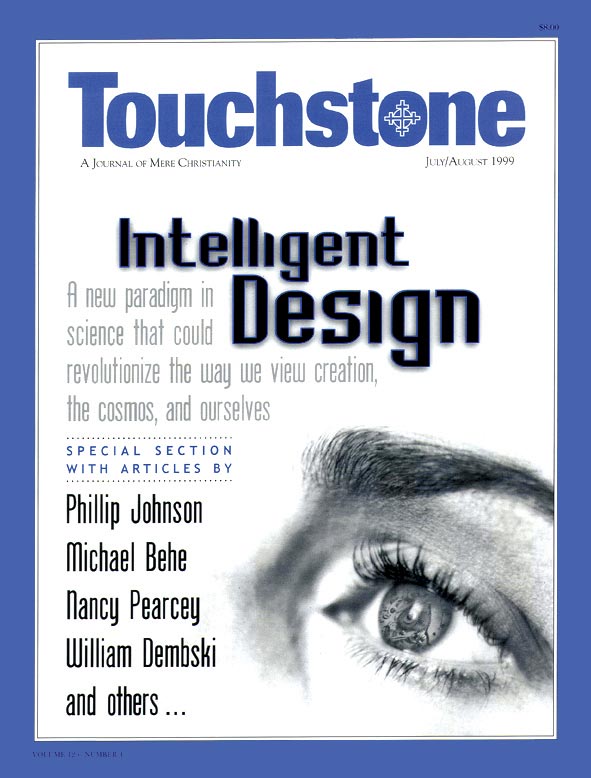
Word Games
DNA, Design, & Intelligence
by Stephen C. Meyer
“Einstein said, ‘God does not play dice.’
He was right. God plays scrabble.”
—Philip Gold
Since the late nineteenth century most biologists have rejected the idea that living organisms display evidence of intelligent design. While many acknowledge the appearance of design in biological systems, they insist that Darwinism, or neo-Darwinism, explains how this appearance arose naturalistically—that is, without invoking a directing intelligence or agency. Following Darwin, modern neo-Darwinists generally accept that natural selection acting on random variation can explain the appearance of design in living organisms. As evolutionary biologist Francisco Ayala has explained, “The functional design of organisms and their features would . . . seem to argue for the existence of a designer. It was Darwin’s greatest accomplishment [however] to show that the directive organization of living beings can be explained as the result of a natural process, natural selection, without any need to resort to a Creator or other external agent.”
Yet, however one assesses the explanatory power of Darwinism (or modern neo-Darwinism), the appearance of design in at least one important domain of biology cannot be so easily dismissed. During the last half of the twentieth century, advances in molecular biology and biochemistry have revolutionized our understanding of the miniature world within the cell. Research has revealed that cells—the fundamental units of life—store, transmit, and edit information and use that information to regulate their most fundamental metabolic processes. Far from characterizing cells as simple “homogeneous globules of plasm” as did Ernst Haeckel and other nineteenth-century biologists, biologists now describe cells as, among other things, “distributive real time computers” or complex information-processing systems. Recently, for example, a special issue of the prestigious journal Cell was dedicated entirely to the topic of “Macromolecular machines.”
Darwin, of course, neither knew about these intricacies nor sought to explain their origin. Instead, his theory of biological evolution sought to explain how life could have grown gradually more complex starting from “one or a few simple forms.” Strictly speaking, therefore, those who insist that the purely naturalistic Darwinian mechanism can explain the appearance of design in biology overstate their case. The complexities within the microcosm of the cell beg for some kind of explanation. Yet they lie beyond the purview of strictly biological evolutionary theory, which assumes, rather than explains, the existence of the first life and the information it required.
Explaining Life’s Origin in Materialistic Terms
During the 1870s and 1880s scientists assumed that devising an explanation for the origin of life would be fairly easy. For one thing, they assumed that life was essentially a rather simple substance called protoplasm that could be easily constructed by combining and recombining simple chemicals such as carbon dioxide, oxygen, and nitrogen. Early theories of life’s origin reflected this view. Haeckel likened cell “autogeny,” as he called it, to the process of inorganic crystallization. Haeckel’s English counterpart, T. H. Huxley, proposed a simple two-step method of chemical recombination to explain the origin of the first cell. Just as salt could be produced spontaneously by adding sodium to chloride, so, thought Haeckel and Huxley, could a living cell be produced by adding several chemical constituents together and then allowing spontaneous chemical reactions to produce the simple protoplasmic substance that they assumed to be the essence of life.
During the 1920s and 1930s a more sophisticated version of this so-called chemical evolutionary theory was proposed by a Russian biochemist named Alexander I. Oparin. Oparin had a much more accurate understanding of the complexity of cellular metabolism, but neither he, nor anyone else in the 1930s, fully appreciated the complexity of the molecules, such as protein and DNA, that make life possible. Oparin, like his nineteenth-century predecessors, suggested that life could have first evolved as the result of a series of chemical reactions. Unlike his predecessors, however, he envisioned that this process of chemical evolution would involve many more chemical transformations and reactions, and many hundreds of millions (or even billions) of years.
The first experimental support for Oparin’s hypothesis came in December of 1952. While doing graduate work under Harold Urey at the University of Chicago, Stanley Miller circulated a gaseous mixture of methane, ammonia, water vapor, and hydrogen through a glass vessel containing an electrical discharge chamber. Miller sent a high voltage charge of electricity into the chamber via tungsten filaments in an attempt to simulate the effects of ultraviolet light on prebiotic atmospheric gases. After two days, Miller found a small (two percent) yield of amino acids in the U-shaped water trap he used to collect reaction products at the bottom of the vessel.
Miller’s success in producing biologically relevant “building blocks” under ostensibly prebiotic conditions was heralded as a great breakthrough. His experiment seemed to provide experimental support for Oparin’s chemical evolutionary theory by showing that an important step in Oparin’s scenario—the production of biological building blocks from simpler atmospheric gases—was possible on the early Earth.
A Journal of Mere Christianity—Delivered to Your Door
- Essays on theology, culture, and the Church
- Contributors from across the Christian traditions

Six print issues (one year) of Touchstone, plus full online access and PDF downloads for only $39.95.

Get a one-year full-access subscription to the Touchstone online archives for only $19.95.
bulk subscriptions
Order Touchstone subscriptions in bulk and save $10 per sub! Each subscription includes 6 issues of Touchstone plus full online access to touchstonemag.com—including archives, videos, and pdf downloads of recent issues for only $29.95 each! Great for churches or study groups.
Transactions will be processed on a secure server.
more from the online archives
22.8—November/December 2009
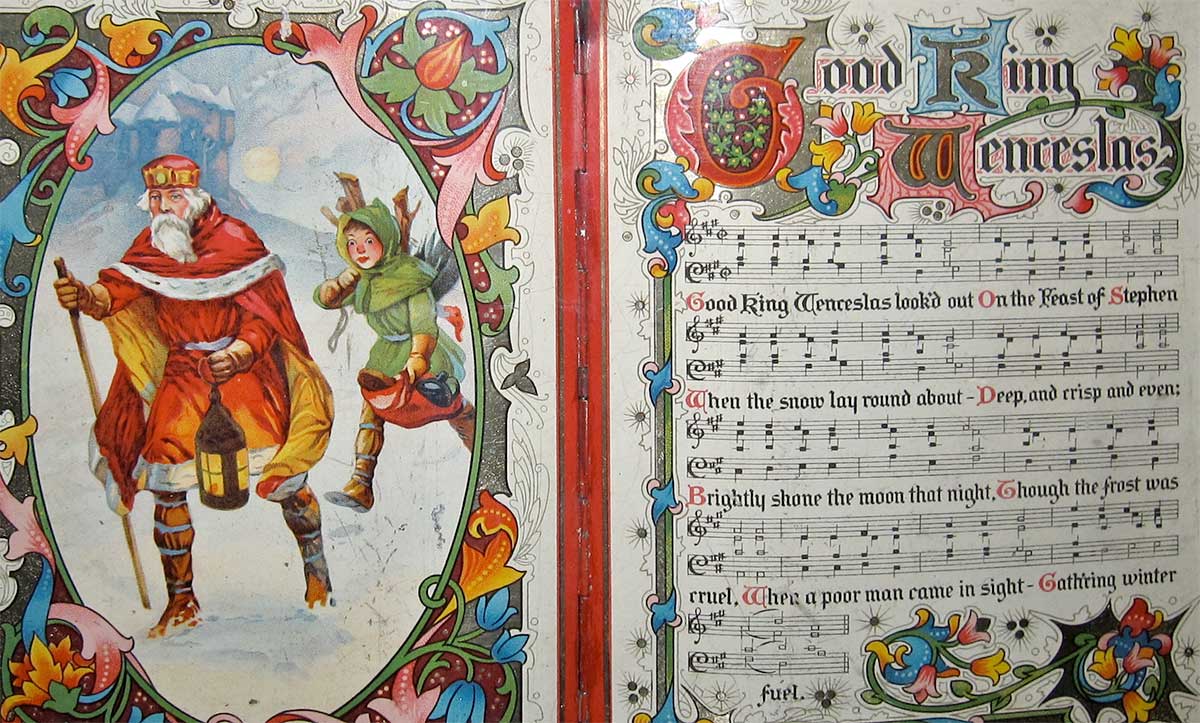
on the Real Men Behind the Christmas Carol by Michael Baum

calling all readers
Please Donate
"There are magazines worth reading but few worth saving . . . Touchstone is just such a magazine."
—Alice von Hildebrand
"Here we do not concede one square millimeter of territory to falsehood, folly, contemporary sentimentality, or fashion. We speak the truth, and let God be our judge. . . . Touchstone is the one committedly Christian conservative journal."
—Anthony Esolen, Touchstone senior editor
