




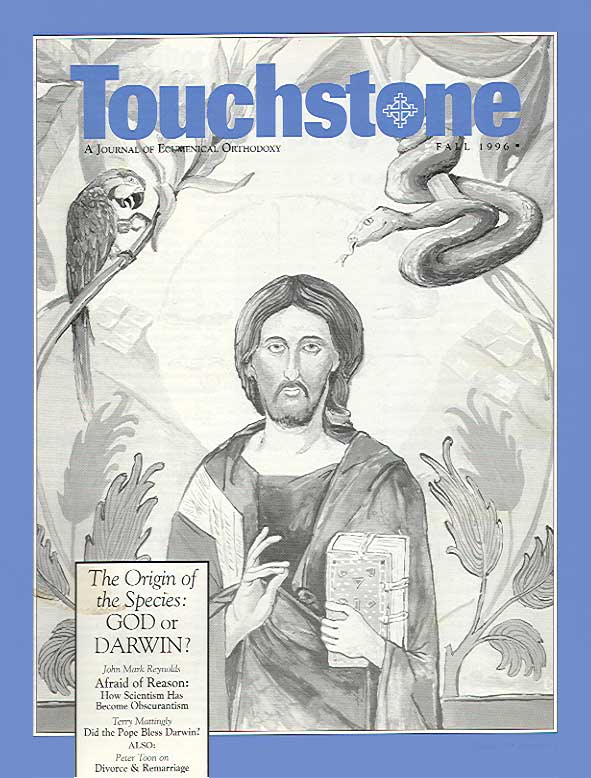
View
Which God?
S. M. Hutchens on the First Commandment
At the foundation of the gospel is the law, which has not been destroyed by the coming of Christ, but has been incorporated into his gospel as the lesser into the greater. The sacrifices of the old covenant, for example, are still with us. They have in one sense ceased, but only to become greater in their comprehension in Christ’s sacrifice, in which we still partake. And so it is with all the law, which has not been revoked but remains alive in Christ.
At the center of the law are the commandments written once in stone by the finger of God, and now still written in the hearts of those who know him, for the Lord did not come to destroy the law, but to perfect it. The Ten Commandments, James Russell Lowell once observed, “will not budge.” This is because they are the Word of God, and are as such our food and drink—something we must have, for man does not live by bread alone, but by every word—including the law—that proceeds from the mouth of God.
The commandments must be as firmly fixed in our minds as the Creed, for our confession as Christians includes not only articles of belief, but also a way of life that cannot be separated from them. There are things believers do and refrain from doing by which they may be identified—not only by other people, but also by God—as people who fear him and live in his power. I am very concerned that Christians concentrate too much on mere belief—on confessing things that are clear even to the demons—and upon pneumatic experience, but not enough upon the concrete actions and avoidances that make us good, that identify us before the visible and invisible worlds as children of God, and upon which our eternal reward is based.
I.
The first word of his commandment to the children of Israel—and so also to us, for we are by faith Abraham’s children—is this:
“I am the Lord your God who brought you out of the land of Egypt, out of the house of bondage. You shall have no other gods before me.”
The existence of the commandments implies our ability either to obey or disobey. They take for granted our power to do or not to do what we are told. That may seem obvious, but I assure you that it is not and that many have denied it. One does not have to become a mad philosopher to deny the freedom of the will. One can be a simple, sensible person, when one day, out on a walk, the feeling will wash over you that there is nothing you can do about your existence, that you are trapped by heredity and environment, and that, more than that, one’s place in the universe is fixed by movements that are so much greater than one’s self that freedom is an illusion, and that one cannot help being what one is or doing what one does. I have often been haunted by the intuition that once the first element arose into being all else naturally followed, for the end and the trajectory of the whole that leads to it is fixed inevitably and inexorably in its beginning. What can God expect from me? one says, for down to my very ability to will or desire he made me what I am, and put me where he did, and I cannot escape it.
That is true, he did, and you cannot. But even so, we cannot presume to know what that means about the deep character of freedom, nor about our or anyone else’s eternal destinies—that one’s beginning or end are fixed in any way we can comprehend—for the sovereignties of the Creator and the little gods that we are shall in the end work together. While we cannot escape the force of his decrees, we also know, when another mood is upon us, that something else is true: that we are free to do, within the boundaries he has set, what we wish. We are, in fact, free to do good or evil—and we know it well—or to become different people than we are by choosing, and moving along one of the two paths that he has laid before us. Within the bounds of God’s inscrutable sovereignty we are free, and within that freedom we freely and meaningfully choose to become what he has made us to be.
No one who truly desires love and light and salvation shall fail to find it, for the Lord has promised that he will. He who seeks will find. To him who knocks, it will be opened. No one who desires the darkness shall fail to find it as well. The damned will not like the misery that comes with his choice, but neither will he be able to claim that he has not freely chosen the thing he hates.
So the commandments are not frivolous. They were not given to taunt people who cannot do what they say; rather they were given to be followed by those who have the ability to follow them. How we can obey them perfectly (for perfection is what is required) when we so often transgress them is another story, and awaits the gospel. In the meantime we must believe (since we demand it of both ourselves and of others) that the commandments can be followed, and that there is an absolute obligation to do so.
S. M. Hutchens is a senior editor and longtime writer for Touchstone.
A Journal of Mere Christianity—Delivered to Your Door
- Essays on theology, culture, and the Church
- Contributors from across the Christian traditions

Six print issues (one year) of Touchstone, plus full online access and PDF downloads for only $39.95.

Get a one-year full-access subscription to the Touchstone online archives for only $19.95.
bulk subscriptions
Order Touchstone subscriptions in bulk and save $10 per sub! Each subscription includes 6 issues of Touchstone plus full online access to touchstonemag.com—including archives, videos, and pdf downloads of recent issues for only $29.95 each! Great for churches or study groups.
Transactions will be processed on a secure server.
more on the ten commandments from the online archives
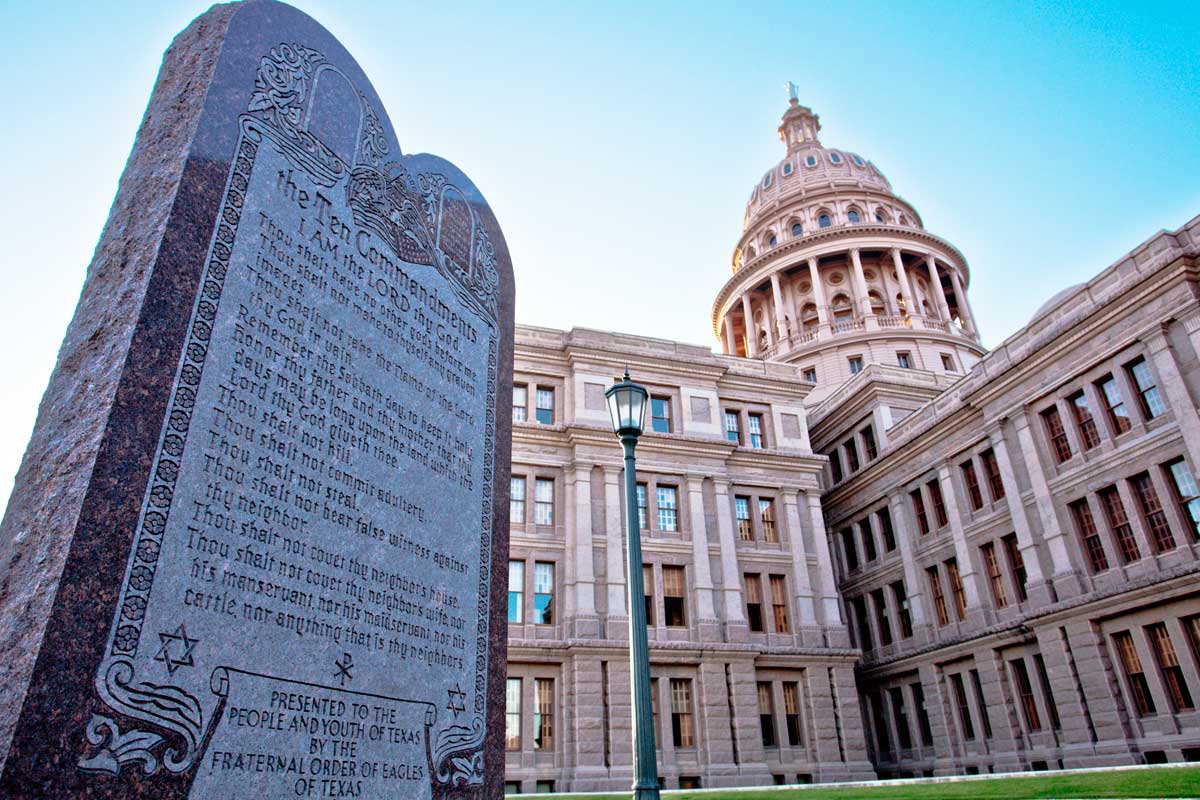
31.5—September/October 2018
The Secular State Without the Decalogue by James M. Kushiner
more from the online archives
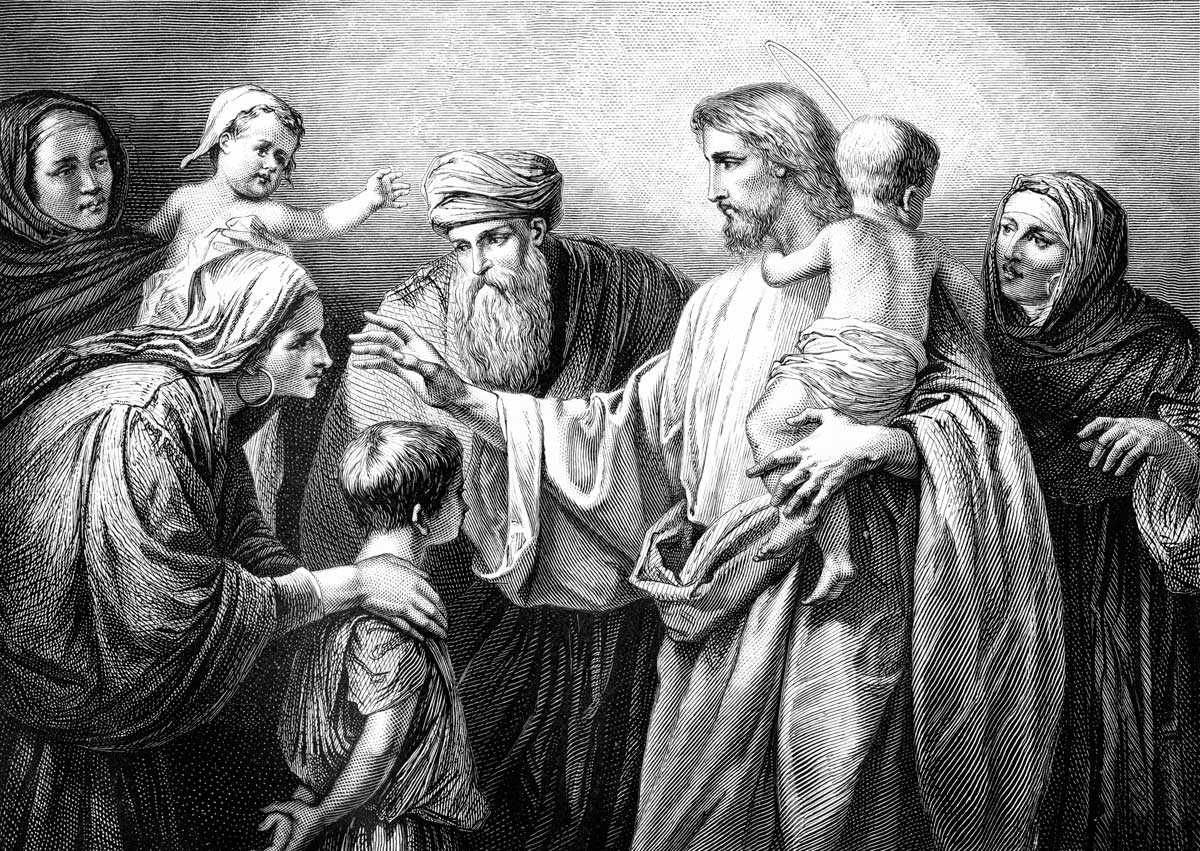
18.10—December 2005
on an Apostle’s Encounter with the Son’s Children by Anthony Esolen

26.1—Jan/Feb 2013
The Alternate & Alternative Worlds of H. P. Lovecraft & C. S. Lewis by C. R. Wiley

31.5—September/October 2018
on the Congregation as a Wilderness by Paul Gregory Alms
calling all readers
Please Donate
"There are magazines worth reading but few worth saving . . . Touchstone is just such a magazine."
—Alice von Hildebrand
"Here we do not concede one square millimeter of territory to falsehood, folly, contemporary sentimentality, or fashion. We speak the truth, and let God be our judge. . . . Touchstone is the one committedly Christian conservative journal."
—Anthony Esolen, Touchstone senior editor
