Angels in the Wilderness by Gilbert Meilaender
Angels in the Wilderness
Letter to a Daughter About Giving Up a Child
Dear Hannah,
Yes, I can understand the question you raised when we were talking
on the phone the other night. There is something frightening about
bringing a child into the world, and I’m not sure we’d ever do it if nature
didn’t just get the better of us. I’m afraid I didn’t do
a very good job of replying on the spot to your comment, so I thought I’d
try to organize my ideas better by putting them down on paper.
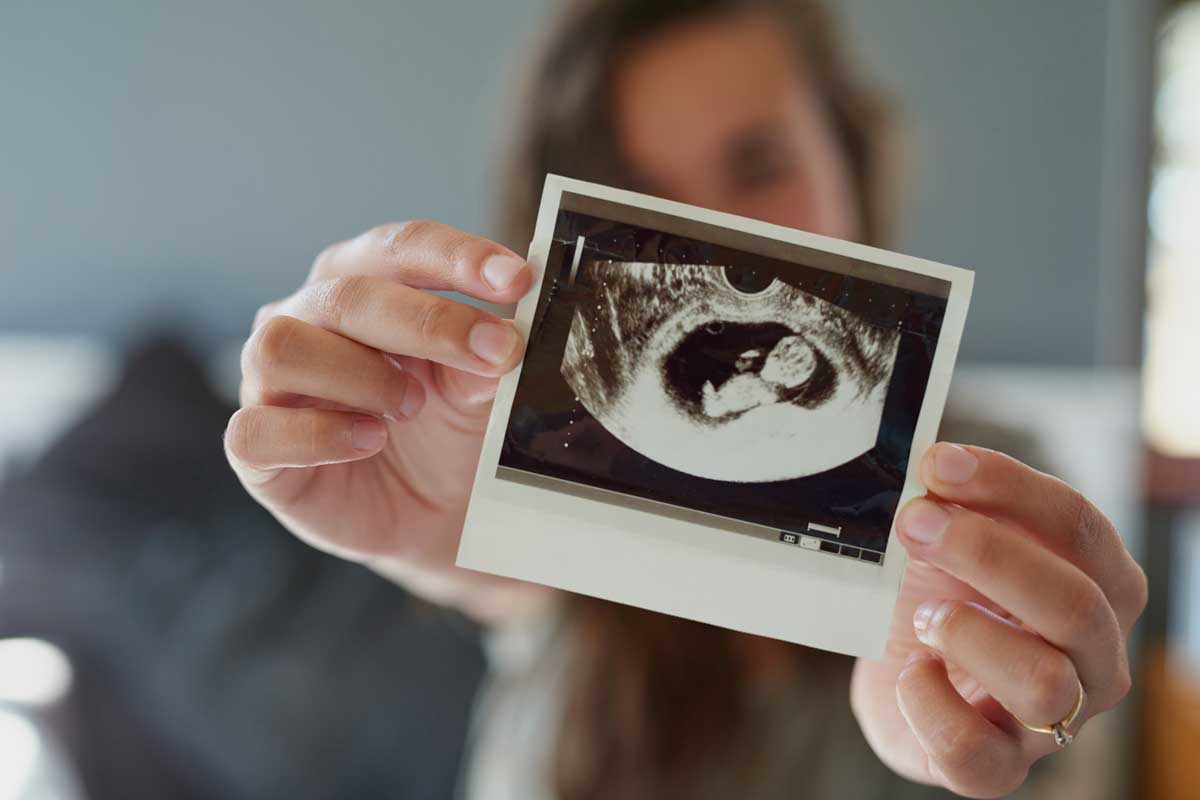
When taking up the topic of abortion in class over the years, I’ve
often wondered: Why would a pregnant woman rather snuff out the life of her
unborn child than complete the pregnancy and put the child up for adoption?
I’ve asked precisely that question countless times, and the same answer
always comes back from a good number of students: “I couldn’t bear
to go through life not knowing what happened to my child.”
I understand this, yet I don’t understand it. Here’s what I don’t
understand: How can we miss the fact that we are subtly making ourselves rather
than that child (whose young life is to be snuffed out) the victim? Is this
a way of avoiding the unpleasant truth that we are indeed attached
to this child?
For, after all, if we were not, uncertainty about the child’s future
could not touch us so deeply. There’s an egregious act of bad faith involved
in failing to see and reflect upon this—in failing to see our own attachment
and in forgetting who is really the victim here.
Still, there is also something that I do understand: It is frightening to
be so deeply attached to one for whose life we can offer no assurance or guarantee.
As the old minister, John Ames, reflects in Marilynne Robinson’s Gilead:
It seems almost a cruelty for one generation to beget another when parents
can secure so little for their children, so little safety, even in the
best circumstances. Great faith is required to give the child up, trusting
God to
honor the parents’ love for him by assuring that there will indeed
be angels in that wilderness.
(Did you catch the biblical allusion? Have a look at Genesis 21.)
This is true even for all of us who do not give up our children but try,
instead, to raise them. We too “can secure so little . . . even in the
best of circumstances”—and often circumstances are far from the
best.
Realizing this, we should think seriously not only about the bad faith I
noted above but also—perhaps even more—about our desire to shape
and mold the next generation. We don’t want to bring home just any baby,
much less a baby with obvious “defects.” So we test prenatally,
we screen in advance, we refine our ability to determine not only illnesses
but also characteristics, such as sex, earlier and earlier in pregnancy.
And then, if nonetheless we find ourselves in the wilderness, we do not expect
to meet angels there. Our plans derailed, feeling ourselves victimized, we
try again to take charge of the next generation by eliminating it.
I don’t think a person even has to be “pro-life” to see
this. I remember how struck I was by an observation of Barbara Katz Rothman—a
sociologist and not herself opposed to abortion—who noted how prenatal
screening, though used to relieve the anxiety of a pregnant woman about the
health of her unborn child, is really relieving anxiety it has largely produced
in the first place. It is, in considerable measure, the ability to screen that
makes us fear what we cannot control.
Still more, screening is poor preparation for parenthood, in which we “can
secure so little” for our children “even in the best of circumstances.” Or,
as Rothman puts it: “The possibility of spending the rest of one’s
life caring for a sick or disabled child can never be eliminated
by prenatal testing. I worry about women who say they only dare have children
because prenatal diagnosis is available. Motherhood is, among other things,
one more chance for a speeding truck to ruin your life.”
I’ve even found myself wondering whether, in some complicated ways
I can’t entirely trace or fathom, this desire of ours to secure the next
generation is related to our society’s increasingly desperate attempt
to ward off death and stay alive as long as possible. Having children reminds
us of our mortality. I’ve never forgotten how—it was quite some
time ago—the birth of my first child (your older brother) gave me an
entirely different angle on my relation to my own parents.
There’s an undercurrent to parenthood that makes us uneasy. “Even
in the best of circumstances,” we will eventually have to leave our children
behind. We will die. However desperately we would like to secure their future,
would like all to be well for them, that future will be taken out of our hands—because,
for us, it will be no more.
It is, then, no small act when we hand these children over in baptism. In
doing so we acknowledge that we cannot guarantee their future. No more than
a mother who hands over her child for adoption can we know what the future
will hold for them, do anything more to shape it, help them to face it, or
deflect the speeding trucks that may be coming.
Perhaps the first thing a genuinely pro-life sensibility needs to recapture
is this sense of our own limits. The gift of the child, precisely because it
is a gift, is ours to care for but not finally to secure. There had better
be angels in the wilderness, who can say to us as to Hagar: “Fear not;
for God has heard the voice of the lad.”
Love,
Dad
|