Supremely Modern Liberals by James Hitchcock
Supremely Modern Liberals
The Unhappy & Abusive Marriage of Liberalism & Modernism
by James Hitchcock
American politics is now as acrimonious as it has perhaps ever been. This
may be puzzling to some as there are seemingly no longer any deep divisions
within the polity. Most Americans, after all, are internationalists and free
marketers of some kind, who disagree only within those parameters.
But there are deep and growing divisions. What is being played out now, acrimoniously,
are the final implications of the agenda of the modernist movement, and of the
liberalism it transformed in the 1960s, the final working out of ideas that
were present from the beginning in the late 1700s but for a long time remained
only half-recognized. This movement has made every political disagreement a
dispute over fundamental beliefs, and indeed over the nature of reality: matters
over which people will fight with particular ferocity.
Modernism in this sense is not the historical reality of modernization. It
is an almost religious commitment to radical change, a fevered sense of the
past as oppressive, a determination to move ruthlessly into the future no matter
what the cost, an urge to shock traditional sensibilities. (Like all movements,
I should note, modernism can be defined in a variety of ways, and not all self-conscious
modernists espouse its entire agenda.)
It is inherently nihilistic, at its core nothing less than the systematic
negation of every established belief and institution, the denial that any ultimate
truth underlies culture, the often demonic conviction that destruction is the
necessary preliminary to creation. It has touched deep and sinister springs
in the human psyche: the love of negation and annihilation for their own sakes.
Gratuitous, anarchical terrorism is in a sense modernism’s ultimate expression.
A Maniacal Urge
Modernism began with the French Revolution, whose maniacal urge to destroy
the past even went to the point of abolishing the calendar and attempting to
begin history entirely anew. Artists now became conscious of themselves as an
“avant-garde” (previously a military term) and defined creativity
as requiring a radical break with the art of the past. The new “bohemian”
social type carried this ideal into society, defining free and authentic human
existence as necessarily at odds with accepted beliefs and behavior. With Ludwig
Feuerbach and Karl Marx, atheism for the first time became intellectually respectable,
even as “theologians” like Bruno Bauer and David Strauss reinterpreted
Christianity so as to require an outright denial of what Christians had believed
for 1,800 years.
As Friedrich Nietzsche foresaw, the desire to destroy the past and begin history
anew would require, as modernism’s final stage, the “transvaluation
of values,” in which everything once thought to be virtuous—piety,
family loyalty, personal uprightness, patriotism, self-reliance—would
be turned into vices. Throughout history, human values have primarily been centered
in family, religion, and country, and those institutions had to be destroyed
if a “new humanity” were to be created.
Thus modernism extols every kind of sexual “liberation,” which
nullifies the family; a skeptical, “value free,” and “scientific”
spirit, which nullifies religion; and universalism, which nullifies loyalty
to one’s country. Thus, it portrays the family as the source of pathology
and abuse, and condemns both religion and patriotism as either hypocritical
or dangerously fanatical. The ideal modernist is a militant religious skeptic
who renounces both family ties and loyalty to country and submits instead to
an abstract ideal of modernism’s new world.
Modernism sometimes proceeds by frontal attacks on traditional beliefs and
institutions, but it can also achieve its goals by appearing to respect them
while radically redefining them. Thus, “marriage” can be dissolved
at will and can be undertaken by homosexuals; “God” becomes an emanation
from the self, and “Scripture” is understood as recording man’s
religious aspirations; and “true patriots” condemn their own country
as a force for evil in the world. Traditional beliefs and institutions do not
have to be annihilated; it is sufficient to drain them of their ancient meanings
and fill them with others—particularly if they are reduced to the realm
of the subjective and therefore private, of “values” that cannot
be “imposed” on others.
At various stages of its development, modernism appeared to create new systems
of meaning to supersede the old, but its internal dynamic required that in time
the new consensus also be rejected, as merely a new kind of tyranny. Insofar
as modernists profess stable values, those values originate outside modernism
itself, which of its very nature cannot affirm anything permanent.
For a long time, devotees of Marxism or Freudianism (or both) claimed that
they provided new certitudes to replace those modernism had rejected, but both
ideologies are now the principal exhibits in modernism’s bankruptcy proceedings.
Both were of their very natures destructive of fundamental values, Marxism by
its cynical materialism, its reduction of even the most sublime realities to
the level of economic interests, and Freudianism by its undermining of the classical
Western definition of man as a rational animal and its claim that human action
is governed primarily by the unrecognized irrational dynamics of the psyche.
Freudianism ultimately failed both as an understanding of life and as a therapy,
even though for many decades it was treated as an unquestionable truth, its
critics accused of resisting it precisely because it was true. Simultaneously,
Marxism not only failed to achieve its promised utopia, but proved to provide
the grossest of tyrannies.
Liberalism Transformed
Liberalism—the experiment of continually increasing the limits of personal
freedom—developed almost simultaneously with modernism, but for a long
time it balanced openness to change with respect for tradition, and promised
an ordered liberty based on transcendent morality. For most of the two centuries
since their birth, modernism was hostile to liberalism, insofar as the latter
held to an objective moral order and could be dismissed as merely the rationalization
of bourgeois privilege. Modernists claimed liberal freedoms for themselves even
as they rejected the underlying principles behind those freedoms.
Nevertheless, liberalism contained within itself tendencies that could transform
it into an ally or even a form of modernism. For one thing, the spirit of self-criticism
is an essential component of liberalism, and at some point that ingrained habit
went beyond casting an honest eye on one’s own beliefs and institutions
and became a reflexive negativity towards them—as with spouses who find
their marriages oppressive by nature, church members who deny the basic doctrines
of their faith, and citizens who assume that their country is wrong in every
situation.
For another, from the beginning liberalism also harbored certain nihilistic
potentialities. The dogma of progress implied that repudiating the past would
bring only good to humanity, and (once belief in transcendent morality was lost)
liberalism could only affirm the value of freedom without being able to offer
substantial guidance as to what it was for and how it was to be used. Liberals
insisted that freedom be exercised responsibly, but their sense of what was
responsible had to be brought in from sources outside liberalism itself, usually
from the moral inheritance from the past, about which they felt deep and steadily
increasing ambivalence.
At various stages of its development, liberalism has drawn lines beyond which
the exercise of freedom was said to be irresponsible. But inevitably those lines
have proven to be unstable, because of an ingrained suspicion of whatever comes
down from the past, whatever is “imposed” on the free individual
by society. As recently as 1960 it would have seemed preposterous (and gravely
unfair) to accuse liberals of failing to honor the duties that men owe to God,
family, and nation. By the end of that decade, those obligations had been defined
as the obsessions of a benighted conservatism that was the enemy of freedom.
Like modernism, liberalism increasingly defines its task as that of expanding
the scope of freedom without limit. Despite whatever misgivings they may have,
liberals find it intellectually and emotionally difficult to oppose anything
that presents itself as progress.
Liberalism had in its beginning held to the free market, and that idea also
conceals a certain nihilism, since the market treats all commodities equally,
distinctions among them deriving solely from the law of supply and demand. Any
moral restraint imposed on the market—in particular, on what one can make
and what one must pay workers—must be imported from the outside.
But since the 1930s, liberalism has nourished an animus against the free market,
allegedly on the grounds that it rewards greed. This charge is almost always
made against businessmen, seldom against wealthy athletes, entertainers, or
authors, and the aspect of the free market that arouses the greatest liberal
indignation is the claim that self-reliance and hard work bring deserved rewards.
What many liberals detest in that claim is not the injustice it allegedly conceals
but the fact that it affirms values that for 175 years modernists have despised
as “bourgeois.”
Revolutionary Nihilism
Such were the two movements as they had developed since the late 1800s, at
best uncomfortable allies. After their coming together in the period imprecisely
called “the sixties,” the two have been so synthesized that the
word liberal means in all essentials modernist.
The crucial coming together of modernism and liberalism occurred when a seemingly
solid middle-class liberal culture proved to be vulnerable, primarily through
its young, who combined a real or feigned liberal guilt over social injustice—particularly
in the American South and in Vietnam—with a determination to test the
limits of liberal tolerance for a variety of “alternative lifestyles.”
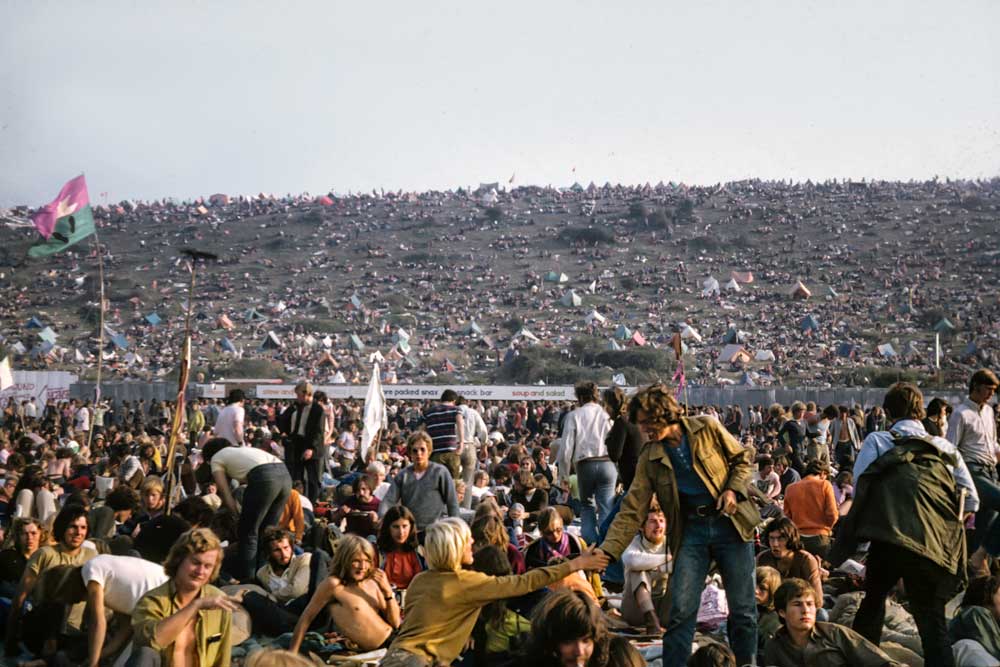
The counterculture of the sixties was not new in the sense that it offered ideas
never heard before. It had ample pedigree in various artistic and intellectual
sources, and modernist ideas had long been propagated in the universities, at
least as academic studies.
What was revolutionary was that the nihilism of socially marginal modernists
finally spread to the great middle class, primarily through the actions of the
privileged children of that class, who had grasped the implications of modernism
and now demanded to enjoy the unrestrained “freedom” that it placed
at the center of existence. Ironically, in view of its traditional contempt
for the free market, modernism achieved this new mass base partly by becoming
commercialized, with magazines like Rolling Stone sold on small-town
newsstands and carrying expensive ads for rock groups whose music appeared on
major commercial labels.
The youth culture effected a transvaluation of values in numerous ways, not
least by forbidding learning from the past (“Don’t trust anyone
over thirty”) and declaring rebellion against social norms to be true
authenticity (“It is forbidden to forbid”). The counterculture was
in essence a sometimes violent assertion of the “imperial self”:
the claim that the free individual alone is the final arbiter of truth and righteousness,
that self-expression is the highest good, that everything external to the self
is tyranny. The counterculture talked compulsively of “community,”
precisely because its ideologies undermined all existing communities, destroying
even the possibility of such a thing.
The status of marginalization was now taken as a condemnatory judgment on
society itself, the behavior of the marginalized (drug use and promiscuous sex
most notably) turned into the new normality. This was most revealingly manifest
with respect to pornography and crime. Traditionally, liberals had defended
the civil rights of those whose views they despised, so that they opposed the
suppression of pornography as a violation of due process and insisted that the
rights even of criminals be respected, while they condemned the transgressions
themselves.
But during the sixties, under the influence of modernism, they began to validate
pornography as psychologically liberating and artistically significant, while
defining criminals as victims of oppression and even as martyrs for liberty.
Liberals who could not accept this, nonetheless could not easily oppose it,
since the liberal idea of freedom had merged almost seamlessly with the modernist
claim that every assertion of personal autonomy, every assault on established
values, is truly liberating. (Those who, in the name of traditional liberalism,
did oppose this movement found themselves denounced as “conservatives”
and cast out from the major institutions of liberal culture.)
The modernist identity derives almost entirely from self-assertion, and it
must search compulsively for restraints to throw off. Its continuous demand,
which liberals were willing to meet, is, at a minimum, to “understand”
behavior that is plainly evil, such as gratuitous killings and acts of terrorism,
and as far as possible to lay it at the door of “society,” thereby
reversing the roles of transgressors and responsible citizens.
Modernity’s Acids
Inevitably, modernism undermined the authority even of the institution that
had sheltered it for so long: the university. Rigorous cultural and intellectual
standards are among the chief victims of the modernist culture of nihilism,
and here as elsewhere, liberals who struggled to maintain objective standards
in the face of radical assaults were necessarily fighting a rear-guard action
and condemned as reactionaries.
The intellectual vogue of “deconstructionism”—the claim
that no text has a fixed and authoritative meaning, that all texts should be
understood as willed efforts to exercise power—is usually considered “postmodern,”
a term coined to acknowledge that the acids of modernism, once they had penetrated
deeply enough, undermined modernism itself, discrediting all its certitudes,
including those of liberalism. But “postmodernism” is a misleading
term if it is taken to imply the repudiation of modernist ideas. It is simply
modernism’s inevitable and logical next stage.
According to deconstructionism, a group’s beliefs are merely the values
it has adopted to advance its own interests and to suppress every other group.
The characteristic beliefs of Western civilization—which most liberals
themselves held until the sixties—are merely those of “dead white
(heterosexual) males” and an effective mechanism for oppressing women
and racial and sexual minorities. What had been considered the Great Works,
the works by which the civilized mind and character should be formed, must now
be read so as to reveal this.
The related movement of multiculturalism tends to define society in terms
of “oppressors” and “victims,” another manifestation
of the nihilistic impulse, which reduces reality to group conflicts in which
“truth” is on the side of those who most effectively claim victimhood
for themselves and who put forward their demands in such a way as to silence
even the possibility of discussion. For example, terrorism is “explained”
on the grounds that terrorists feel oppressed, without regard for the legitimacy
of those feelings.
Until only a few decades ago most liberals would have been resistant to deconstructionism
and multiculturalism, to the extent that both denied the truth of Western liberal
values, including individual freedom and tolerance for diversity. But belief
in the moral superiority of the non-Western world has become almost a staple
of the Western educational system at all levels, and exalting other cultures
at the expense of one’s own is taken as a sign of enlightenment, a test
of political and personal authenticity.
It is a fundamentally incoherent position, since the imperative of systematic
self-criticism itself seems to be a product of Western civilization. It is also
a fundamentally illiberal position, since it requires, in the name of liberalism,
the support of societies that deny the liberal values of freedom and tolerance.
Liberals compulsively turn the weapons of self-criticism against their own culture,
even as they extol other cultures that deny that imperative, and those liberals
who defend their own culture often do so with troubled consciences, with many
qualifying caveats.
Anti-Humanists
To the extent that modernism could be said to have escaped the trap of nihilism
throughout its earlier history, it escaped by affirming a vague kind of humanism,
particularly by claiming that the destruction of old beliefs and institutions
and the expansion of freedom were pursued for the sake of human dignity and
“human flourishing.” (Liberalism had escaped by holding to an objective
moral order, which it held with decreasing commitment until, in coming together
with modernism, it abandoned that belief entirely.)
But humanism, in its exaltation of the human species and its pride in civilization,
was always problematical for modernism, and now the movement’s cutting
edge is precisely a repudiation of humanism. With modernism having undermined
traditional beliefs, including the belief in truths securely inherited from
the past, post-modernism now acknowledges that there is also no philosophical
basis for modernism itself, no compelling way in which human dignity can be
affirmed. Deconstruction possesses the power to deconstruct anything, precluding
even the possibility of an authoritative text, including those texts (the Declaration
of Independence) by whose authority liberalism traditionally justified itself.
The “animal rights” movement is the overt denial of humanism,
thereby reducing liberalism to nothing beyond an unlimited acceptance of change,
the anti-humanistic theories of Peter Singer currently serving as the principal
test of liberal “open-mindedness.” (Singer has suggested that unborn
children have less of a right to life than some of the higher primates.) On
the other side, having dealt humanism a fatal blow, liberalism is also unable
to mount a strong defense against a technological utopianism in which the role
of man in the universe is steadily surrendered to machines.
According to current modernist-liberal dogma, man’s proclaimed superiority
over other animals is the ultimate arrogance, while on the other hand there
is nothing distinctively human that cannot be ceded to technology. The fact
that some liberals condemn technology as the rape of nature and at the same
time favor human cloning and other advanced technologies is another manifestation
of the blind openness to change that modernism enforces. Familiar kinds of technology
are condemned; radical new kinds are endorsed.
Issues of sexual behavior are now foremost in the liberal program because,
no longer able to affirm an exalted view of human dignity, liberals are reduced
to defining freedom in terms of personal desires.
Liberalism Modernized
With the coming together of modernism and liberalism, the meaning of the latter
has undergone a significant change. Properly understood, the New Left of the
1960s was not a political movement at all but a cultural one, asserting claims
to “freedom” that no ordered society could accommodate. Thus, as
liberalism assimilated the modernist outlook, primarily through the agency of
the New Left, it also ceased to be primarily political.
Although battles are still fought over familiar issues—war and peace,
economic policies—those battles are increasingly cultural in nature, calling
into play passions that often seem disproportionate to the issues themselves
and demanding symbolic victories that extend well beyond any measurable political
effects. (For example, critics of earlier American wars would never have thought
that the “right” to burn the flag was a properly liberal issue.)
There are no liberals who resist the liberal-modernist synthesis for the simple
reason that those who do are excommunicated from the movement and redefined
as conservatives. For that reason, I will hereafter refer to that synthesis
as “liberalism” by itself.
This liberalism explains much of the animosity in contemporary politics, because
it transforms every political disagreement into a dispute over fundamental beliefs
and attempts to put the coercive power and economic force of the state behind
its policies. The sexual behavior of President Clinton became the bitterest
of political battles because both sides understood that the battle was, in effect,
a national referendum over the very possibility of sexual morality. Some people
detested Clinton as the embodiment of irresponsible hedonism, while others detested
Kenneth Starr as the embodiment of an outmoded and oppressive notion of moral
objectivity. President Bush is hated by liberals not primarily because he promotes
specific policies but because of who he is: a symbol of virtues that modernism
long ago rejected.
For much of the twentieth century, conventional enlightened opinion predicted
that traditional beliefs, especially (in the West) orthodox Christianity, would
dissipate under the irresistible pressures of modernity. Instead, those pressures
have inspired a strong revival of religion in the United States, a resurgence
frightening and incomprehensible to liberals, who (therefore?) denounce religious
movements with particular ferocity. It might even be said that now the primary
agenda of liberalism is to deny moral traditionalism every kind of public respectability.
Allegedly, this alarm stems from the fear that religious believers aim to
establish some kind of theocracy, but strong religion is mainly detested because
it constitutes the ultimate public affirmation of objective meaning, a continuous
counterfoil to modernist nihilism. Liberals take particular alarm at the religious
claim that there are sources of value beyond the liberal society itself, and
some liberals now insist that full rights of citizenship can be granted only
to those who accept modernist agnosticism. The worst condemnation liberals can
hurl at religious believers is, “They claim to possess the truth!”
Thus, some liberals identify the “religious right” as the greatest
single danger facing the country, not merely because of its specific political
program (particularly its opposition to abortion and the sexual revolution)
but because religion ought not even to have a program. Some would exclude religious
believers from any meaningful participation in public life. (For a survey of
this liberal hostility, see my “The Enemies of Religious Liberty,”
in the February 2004 issue of First Things.)
Debatable Issues
In principle, the “social issues” should not be matters of political
debate at all, since the political expression of those issues ought to manifest
the values of the citizenry, values that originate from independent, indeed
superior, sources. The reason liberals can make matters of fundamental meaning
matters of public debate is that the welfare state, in its claim of responsibility
for people’s lives in the fullest sense, inevitably turns questions of
value into political issues.
If, for example, through the public schools and other agencies, the state
undertakes to foster people’s “welfare” in ways that go beyond
mere economic need, should it not also change “repressive” attitudes
towards sexual behavior, relations between men and women, or respect for authority?
If healthy family life is shown to be the best protection against poverty, should
the state encourage stable marriages between any two people willing to enter
into that state?
In an only half-conscious way, political battles are now often conflicts over
fundamental meaning or, more precisely, conflicts between those who believe
that there are such meanings and those who deny them. Thus, the advance guard
of liberalism does not seek concrete political achievements so much as symbolic
victories, the use of the public forum to undermine existing certitudes. Debates
over particular issues—abortion, homosexuality, pornography—are
only secondarily about the specific practices themselves. Instead, they represent
the liberal demand that all such questions be kept perpetually open, that no
one be permitted to affirm objective moral standards, that each self-defined
“oppressed” group be permitted to throw off its shackles in the
terms it chooses. Remember, for example, General Wesley Clark’s remarkable
claim, during his failed bid for the presidency, that the child becomes a human
being only “when the mother chooses.”
Similarly, the push for homosexual “marriage” is really a demand
for the deconstruction of marriage, a denial of its real existence, its demotion
to the status of an arbitrary legal category. Despite all the publicity about
American homosexuals now attempting to “marry,” experience in the
Scandinavian countries shows that relatively few homosexuals took advantage
of this opportunity when it was offered to them. Many homosexuals regard the
institution of marriage as itself the root of all repression and claim to offer
society a better model of sexual relationships.
At first unnoticed by the general public, various American elites—educators,
clergy, journalists, attorneys, government officials, even some businessmen,
the very people whom modernists had always despised as philistines—over
time became deeply infected with liberalism. The same process of liberalism
being transformed by modernism that occurred in the universities also occurred
in the mainline Protestant and the Catholic churches, in social agencies, and
in the major media. As a result, never before in history has there been a society
in which the institutions that embody its values—schools, social agencies,
many of the churches—now work to undermine those values.
In contemporary America most elites appear to be at least complacent towards
nihilistic currents—few are heard to object to the misogynist and racist
lyrics of rappers, for example, presumably because the rappers are considered
“marginalized” and are protesting “society”—and
it is primarily the masses who retain some tenuous commitment to traditional
beliefs. The famous division between “red” and “blue”
on the electoral map of 2000 roughly corresponds to the division within the
country between those who believe in traditional values and those who do not.
According to liberal dogma, the tradition-minded masses are by definition incapable
of embracing necessary changes and must be prodded or coerced into doing so.
Soft Totalitarians
This popular resistance has led modernism to adopt a kind of “soft totalitarianism”
implicit in its philosophy. This is seen in the philosophy of existentialism
following World War II, which held that existence was “absurd,”
and in doing so announced that the final negation had at last been reached,
that the modern quest had exhausted itself.
Logically, it should have led to political quiescence. But its most famous
spokesman, Jean-Paul Sartre, was a dogmatic Marxist who placed his ideology
beyond the reach of rational criticism by making an uncritical commitment to
the “progressive” forces of history. He offered a confirmation of
the fact that nihilism ends in totalitarian politics, because the denial of
intellectual objectivity unleashes (and justifies) Nietzsche’s “will
to power,” which leaves people free to assert their wills in whatever
ways they are able.
Both communism and fascism were modernist movements that mounted lawless radical
assaults on traditional beliefs and institutions and proclaimed that civilization
was at bottom merely the fruit of the imposition of power. Some modernists were
attracted to fascism, but many more chose communism. (And many, George Bernard
Shaw for example, chose both, till the Nazis discredited fascism.) Although
a concern for the oppressed was the alleged reason for this, communism’s
fanatical hatred of bourgeois values made it attractive, along with its claim
to command the future.
Communism had little appeal for the working classes, who were its supposed
beneficiaries. Its most passionate devotees were educated people, often from
privileged backgrounds, who showed little real sympathy for the poor. As George
Orwell, Lionel Trilling, and others recognized at the time, sympathy for communism
was finally a mere intellectual fashion. Some Western liberals made a special
effort to overcome their squeamishness about communism because it was for them
the very embodiment of the modernist imperative.
Liberalism now moves towards a soft totalitarianism, a view of political authority
in which citizens are conceded less and less ability to govern their own lives.
The omnicompetent welfare state is already in place as the vehicle for this
totalitarianism, and the imperial judiciary now decides questions of meaning,
an inevitable development once religion was defined as an “intrusion”
into the public sphere. Moral questions (such as whether homosexuals should
be allowed to marry) sometimes require political decisions, and the courts are
the only available agencies to resolve them. It is only one of the many ironies
of the situation that judges thus must function as repositories of transcendent
wisdom, even as liberalism denies that such wisdom is even possible.
Despite this skepticism, liberalism now moves relentlessly to impose its dogmas
on a reluctant citizenry. Education is used as an instrument for changing young
people’s fundamental beliefs, even to the point of weaning children away
from the beliefs of their “reactionary” parents. In other liberal
Western countries (Canada among them) freedom of expression has been significantly
curtailed to forbid any public criticism of favored groups, especially homosexuals,
and in the United States liberals have tried, with varying degrees of success,
to enforce “speech codes” on college campuses.
Zeno’s Paradox
Abortion still stands as the premier liberal issue, since it involves the
ultimate assertion of the untrammeled will of the individual. But the rhetoric
of “choice” is only invoked in support of women who choose to abort.
Liberals have been reluctant to condemn the policy of forced abortions in China,
since they regard a woman’s decision to bear a child as often irresponsible,
demonstrating that the mother is insufficiently enlightened to make a correct
choice.
Beyond abortion, environmentalism will, for the indefinite future, be the
crucial issue. In the name of the good of the earth, some liberals have already
announced their willingness to use coercive measures, even to the point of restricting
people’s right to bring children into the world.
This soft totalitarianism is nihilistic in that it systematically nullifies
traditional beliefs and customs and replaces them with rules that are purely
external, without any deep roots in the culture. They are imposed from without
in the name of progress, an imposition of precisely the kind of soulless conformity
that liberals claim to be characteristic of traditional societies. A thoroughly
“modern” society leaves people with a sense of emptiness, because
they cannot relate its imposed forms to family, religion, and other perennial
organic realities.
“Speech codes” and other measures restrictive of civil liberties
are now part of the liberal agenda because liberalism defines traditional beliefs,
and those who hold them, as inherent threats to freedom. In Canada and parts
of Western Europe, civil liberties have moved from being the very essence of
liberalism to being severely curtailed under the rubric of preventing “hate
crimes” by preventing “hate speech,” and the attempts to impose
this censorship in American universities serve notice that liberals intend the
same for the whole society.
Beginning with the French Revolution, modernism has also required authoritarian
government as the only antidote to the anarchy it spawns. As traditional laws
and customs are discarded, whatever order exists must be imposed. The nihilism
now spreading through bourgeois culture can still be concealed in various ways,
prosperity often serving as a kind of anesthetic against nihilism’s depredations.
But the culture of poverty in its most extreme manifestations displays the results
of liberal negation in their starkest forms: naked lust, greed, hatred, and
violence, a war of all against all without even a pretext of redeeming features,
a condition in which poor people trying to live ordered lives are the principal
victims.
Liberal orthodoxy requires that such pathologies be explained as the effects
of an unjust society, caused solely by material deprivation. Few liberals can
acknowledge the depth of those pathologies or the extent to which they have
been exacerbated by decades of liberal ideology and policies. In reducing the
problem entirely to one of poverty, liberals effectively deny the moral nature
of poor people, who are treated merely as economic beings. Liberal opposition
to “faith-based initiatives” is a denial of the claim that religion
can or should play a central role in overcoming social pathologies.
Modernism is an exemplar of Zeno’s Paradox, whereby it is impossible
to arrive at a goal because it is necessary repeatedly to traverse half the
remaining distance to the goal. The angry hysteria now characteristic of so
much liberal politics is perhaps partly triggered by a panicky awareness that
the point of ultimate denial is fast being approached. How many more “breakthroughs”
can society celebrate, how many more obstacles to freedom can be assaulted and
toppled, before there is nothing left?
But if liberals sometimes have an inkling that the process of “liberation”
has gone too far, they have no way of turning back. Thus, as the goal of absolutely
untrammeled freedom is approached, liberals proclaim all the more loudly that
society is oppressive and demand a redoubled push towards liberation.
Weakened Egos
Ironically, the very assault on established values that modernism mounted
in the name of personal freedom, its reduction of social reality essentially
to an emanation from the self, actually weakens the ego, which is thereby made
to experience its own fragility, the fact that it is bereft of substantial support
and is thrown back on its own resources. Much of liberal politics is therefore
a demand for public affirmations of worth—for women, racial minorities,
homosexuals—made necessary in part by the liberal negation of the traditional
communities that once clothed the naked self.
The concept of “affirmative action” follows from this and is itself
nihilistic, because the categories into which it places people are empty ones—sex,
race, ethnicity—which have no necessary connection to the moral identity
of the individuals placed in them. “Conservative” women and blacks
represent a threat because they affirm meanings that are more than mere expressions
of group identity.
The politics of meaning is not conveniently reduced to partisan divisions.
Some Republicans are modernist liberals, or at least can see nothing radically
wrong with the modernist-liberal agenda. Many others are uncomfortable with
issues they think do not belong in politics at all, and still others seem largely
oblivious to those issues. But after 1968, the Democratic party made itself
increasingly hospitable to the ideologies of modernistic liberalism. Symbolically,
abortion, far more than any strictly political or economic question, is the
one issue on which, at the highest levels of the party, there can be no compromise.
It is not coincidental that, while self-proclaimed religious skeptics are
a small minority of the citizenry, they are overwhelmingly Democratic in their
politics. While the party still includes many sincere believers, nonbelievers
correctly sense that they have there a comfortable home. It is primarily Democrats,
beginning with John F. Kennedy, who have banished religious principles
from public life, on the grounds that those principles are purely “private,”
hence, purely subjective.
It is also not coincidental that a large majority of those who profess some
kind of “New Age” religiosity (reincarnation, goddess worship) also
announce themselves as Democrats, since New Age religiosity is a purely self-created
form of belief, validated solely by the subjective demands of the self.
James Hitchcock is Professor of History at St. Louis University in St. Louis. He and his wife Helen have four daughters. His most recent book is the two-volume work, The Supreme Court and Religion in American Life (Princeton University Press, 2004). He is a senior editor of Touchstone. |