|
|
Subscribe to Touchstone today!
God’s Word in ColorThe Mystical Language of Icons reviewed by Addison H. Hart In a time when what usually passes for religious art in the West is deplorable, it is always a sign of hope to come across the relative few who genuinely represent the tradition and (not to overstate the case in the least) the universal and authoritative canon of authentic Christian theological aesthetics. As regards the iconographic arts in particular, the essence of that canon is best expressed in the words of the Seventh Ecumenical Council (A.D. 787), which stated:
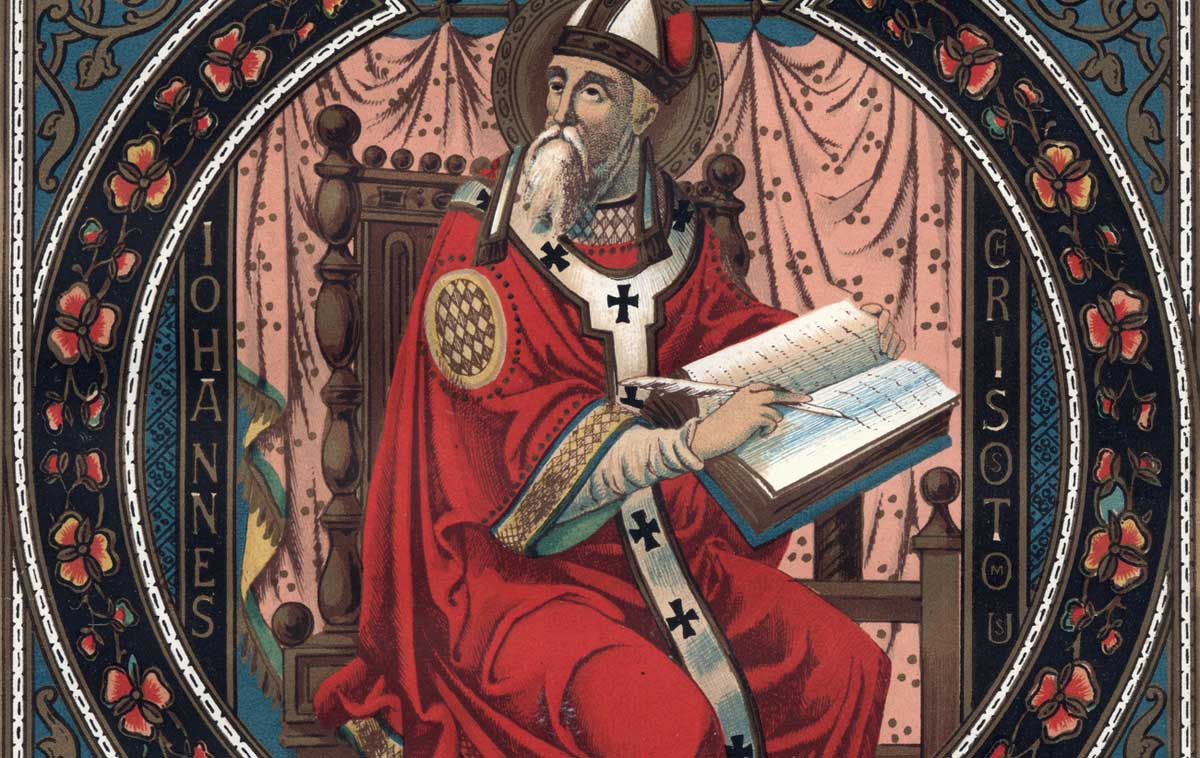
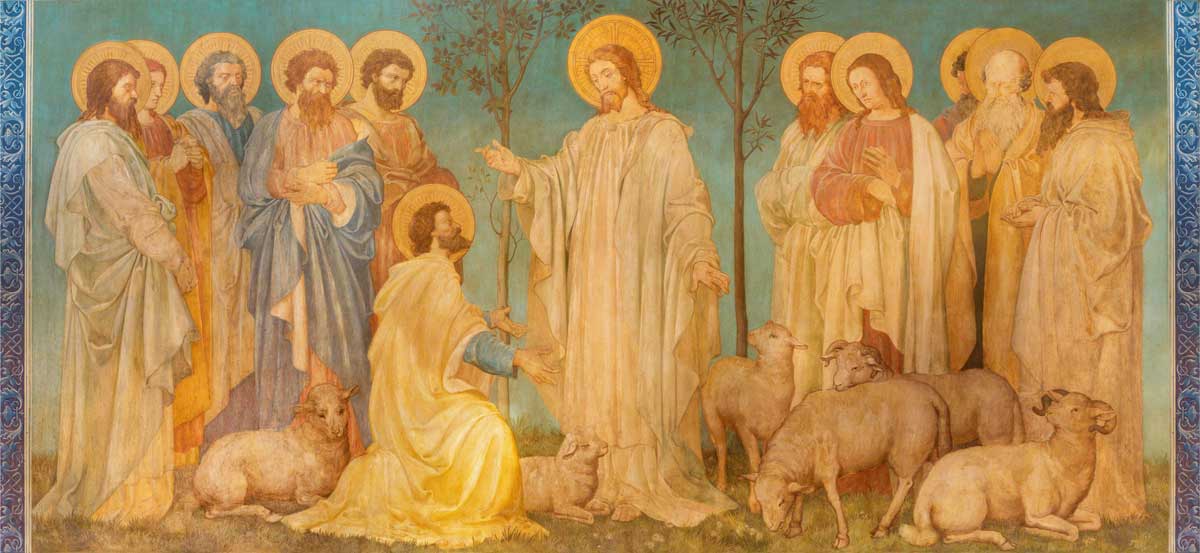
In other words, the common classical heritage of Christian art is embedded in an objective tradition, one which is conventional, canonical, dogmatic, didactic, and liturgical. The antithesis of true Christian iconography in the Church is therefore that which presumes to abandon the objective for the subjective, tradition based on God’s revelation for social propaganda, dogma for mere sentiment, the canon for self-expression. Drop into just about any Christian book or gift shop and one is likely to see prominently displayed “Precious Moments” angels, or those many ghastly “Jesus” pictures that I’ve come to think of (depending on which of the various scenes is depicted) as “Happy Jesus,” “Malibu Jesus,” and (when he is shown helping children play baseball, etc.) “Jesus the Friendly Ghost.” If one continues looking around, he might descry cards or books of the skillfully rendered “icons” of either Robert Lentz (“Bridge-Building Icons”) or William Hart McNichols. Lentz and McNichols have adapted the Eastern iconographic style to serve their own religious sociopolitical agenda. As such, though technically impressive, their icons do not serve as vehicles of the tradition, but as propaganda and individual expression. For example, Lentz has produced such “icons” as those of “Hagios” Harvey Milk, and Christ as an AIDS victim. (Personally speaking, if pressed at gunpoint to make the choice, I would choose “Happy Jesus” for my bedroom wall over one of these slick propaganda-icons, which constitute a far graver offense.) Solrunn Nes, whom I was privileged to meet at the last Orientale Lumen Conference in June 2001, is the author of a beautiful antidote to such stuff. Highly regarded as an iconographer of considerable skill in Europe (her work can be found in many places, including Aylesford Priory in England and Takvam Chapel in Arna), and especially in her native Norway where she is a lecturer at the University of Bergen, Miss Nes has produced a fine guide to iconography in her recently published The Mystical Language of Icons. The book is lavishly illustrated in full color throughout with Miss Nes’s own icons, each in the style of one of the various schools with which she is most conversant. All are striking and luminous, and fully in accord with the objective canonical tradition. Her work reveals how one committed prayerfully to the latter can nonetheless produce art of obvious creativity. Miss Nes provides us with an informative introduction, the fruit of her many years of research and travel to the great centers and monasteries of Orthodoxy, detailing for the reader the technique of icon painting (or “writing,” as some would say), and showing the steps with photographs. She cursorily provides the historical and theological background of Orthodox iconography, the range of motifs, and important insights into the use of form, perspective, attribute, and symbol. The “meat” of the book, though, is page after page of her fine icons—those of Christ and the Theotokos, the feasts of the church year, the saints, and so forth—along with explanatory notes of the “mystical language” contained in each piece. As such, this book is both a crash course in the way the faith of the Fathers is conveyed through the art of the prayerful canonical painter, and a book for slow and absorbing devotional meditation. Above all, Solrunn Nes, herself a Western European and convert to Roman Catholicism, nonetheless possesses a profound knowledge and love of Eastern Christianity, and can be recognized as a true representative of the tradition expressed preeminently at Nicea II. Two quotations from her book’s introduction serve to show why this is so, and why she is an authentic iconographer (and why, incidentally, Lentz and McNichols are not):
Well, you won’t get that with “Malibu Jesus” or “Saint Harvey Milk,” but you will surely see it in Solrunn Nes. This book is unreservedly recommended. For those who would like to consider commissioning Solrunn Nes for production of a work, she can be contacted at: Solrunn Nes, Art Historian and Iconographer, Fosswinckelsgt. 15, 5007 Bergen, Norway; telephone: +47-55317958; mobile: +47-48107188. Letters Welcome: One of the reasons Touchstone exists is to encourage conversation among Christians, so we welcome letters responding to articles or raising matters of interest to our readers. However, because the space is limited, please keep your letters under 400 words. All letters may be edited for space and clarity when necessary. letters@touchstonemag.com Subscribe to Touchstone today!
“God?s Word in Color” first appeared in the January/February 2002 issue of Touchstone. If you enjoyed this article, you'll find more of the same in every issue. Click here for a printer-friendly version. An introductory subscription (six copies for one year) is only $29.95. |