|
|
Subscribe to Touchstone today!
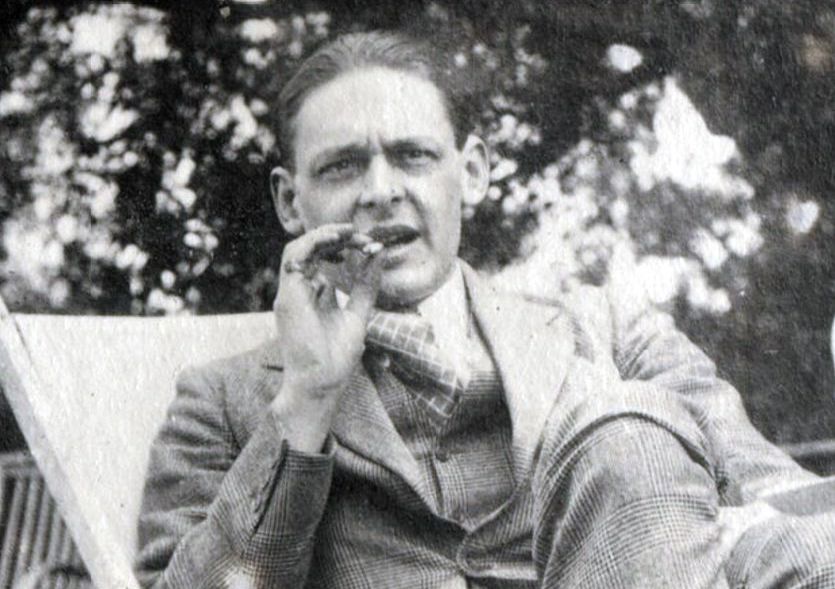
T. S. Eliot on Literary MoralsOn T. S. Eliot’s After Strange Gods by Russell Kirk T. S. Eliot’s slim book about moral and immoral fiction may surprise anyone who first comes upon a copy. After Strange Gods: A Primer of Modern Heresy consists of three lectures delivered at the University of Virginia in 1933. These present an uncompromising denunciation of liberalism— both the liberalism of the nineteenth century and that of the twentieth (the two differing little, in Eliot’s judgment); both liberalism in the Church and liberalism in the secular commonwealth. A Forbidden, Forgotten Book Fifteen hundred copies of the first edition were printed in New York; no later edition has been published in this country. Why have these lively lectures been virtually suppressed? Chiefly because of an aside on page 20. There Eliot is discussing the conditions necessary for a tradition to develop and survive, with particular reference to Christian tradition and to Virginia. For tradition to endure, he remarks,
Howls of rage, in New York especially, arose at this passage when Eliot’s little volume was published in 1934; the same fulminations against Eliot were uttered in 1989, when the first volume of his letters was published. The New York Times, never forgiving Eliot for his Charlottesville lectures, thereafter dealt him a knock whenever opportunity occurred. Actually this alleged “anti-Semitism” was merely an illustration of the principle that a culture—which arises from a cult—cannot well abide two radically different religions. It would be equally true that a community of orthodox Jews would be distressed and resentful, were they to find themselves beset by a Comus’s rout of free-thinkers nominally Christian. The religion, or anti-religion, of the “free-thinking Jews” that Eliot had in mind was not Judaism, but rather secular humanism (a term employed by Eliot’s friend Christopher Dawson). It was the predominance of this secular humanism (or humanitarianism, the term preferred by Irving Babbitt) that caused Eliot to remark, later, that the worst form of expatriation for an American writer is residence in New York City. The Evil Spirit & Heresies There being nothing more in the pages of After Strange Gods about Jews, whether free-thinking or orthodox, it is absurd to cry anathema and to keep from others’ eyes this outspoken little book. Does literature have an ethical end? Should books be judged by the moral suppositions they implicitly affirm or deny? Do Good and Evil matter? And may the operations of the Evil Spirit (capital letters Eliot’s) be discerned among us in the twentieth century? May they be descried, indeed, among men of letters whose talents are high and whose private characters are commendable? These questions are raised perceptively in After Strange Gods. As orthodoxy had been Samuel Johnson’s doxy, so was she Eliot’s, in 1933 and so long as he lived. Heresies among men of letters in his time infected even his mentor Irving Babbitt, his helpful friend Ezra Pound, and such eminent contributors to Eliot’s Criterion as William Butler Yeats and D. H. Lawrence: Eliot is very blunt about this.
So Eliot said in his first Page-Barbour Lecture. “So far as we are able to redress the balance, effect the compensation, we may find such authors of the greatest value.” The Lack of Tradition & Eccentricity So Eliot finds George Eliot, William Butler Yeats, Thomas Hardy, and D. H. Lawrence, none of whom wrote within true tradition.
Thus Eliot puts it in his second lecture. A little later,
Diabolic Decadence James Joyce, Eliot instructs us, is the most ethically orthodox of the writers of his day; but Thomas Hardy and D. H. Lawrence represent “the intrusion of the diabolic into modern literature.” In his third lecture, he reproaches Hardy for cruelty and moral nihilism.
As for Lawrence—on behalf of whom Eliot was a witness at the trial for alleged obscenity in Lady Chatterly’s Lover—“It would seem that for Lawrence any spiritual force was good, and that evil resided only in the absence of spirituality. . . . The man’s vision is spiritual, but spiritually sick.” Protestant Decay What disease of mind and heart brings on this literary decadence? Why, deliquescent Protestantism.
After Strange Gods would be no more approved by the National Council of Churches than by the Anti-Defamation League or the American Humanist Association. It is a very Catholic piece of criticism. And what with the depravity in prose and verse that has flourished during the past several decades—especially since Eliot’s death—this forbidden little book deserves careful reading nowadays. Corrupt Imagination Literary decadence commonly is bound up with a general intellectual and moral disorder in a society resulting, presently, in violent social disorder. The decay of literature appears often to result from a rejection of the ancient human endeavor to apprehend a transcendent order in the universe and to live in harmony with that order; for when the myths and the dogmata are discarded, the religious imagination withers. So it had come to pass with twentieth-century Protestantism, Eliot believed. Religious assumptions about the human condition having been abandoned by men of letters, the moral imagination starves. And presently the moral imagination gives way, among many people, to the idyllic imagination; and after they have become disillusioned with Arcadia, they turn to the diabolic imagination, which afflicts both the best-educated and the worst-schooled classes in Western society today. Upon this corrupted imagination the clever charlatan and the nihilistic writer prey. Unscrupulous originality thus terminates in a universal boring nihilism—or, yet more catastrophic than the listlessness of nihilism, the common collapse of all standards, of all authority visible or invisible, the ruin of culture, the ruin of life. Eliot foresaw this in 1933. It is unpopular teaching still, but painfully true. Reprinted from Touchstone, Summer 1991. Russell Kirk (1918–1994), was author of thirty books, including The Conservative Mind, The Age of T. S. Eliot, The Wise Men Know What Wicked Things Are Written on the Sky, and The Politics of Prudence. He was founder of the journals, The University Bookman and Modern Age. Letters Welcome: One of the reasons Touchstone exists is to encourage conversation among Christians, so we welcome letters responding to articles or raising matters of interest to our readers. However, because the space is limited, please keep your letters under 400 words. All letters may be edited for space and clarity when necessary. letters@touchstonemag.com Subscribe to Touchstone today!
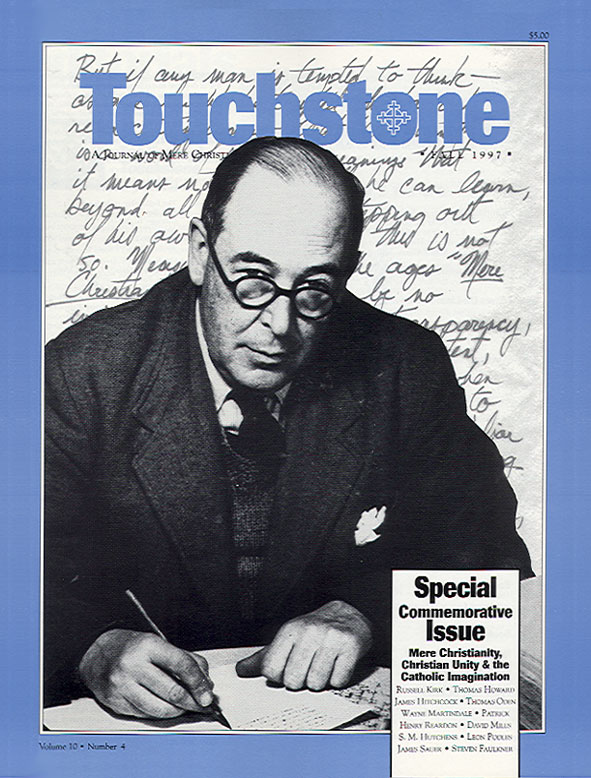
“T. S. Eliot on Literary Morals” first appeared in the Fall 1997 issue of Touchstone. If you enjoyed this article, you'll find more of the same in every issue. Click here for a printer-friendly version. An introductory subscription (six copies for one year) is only $29.95. |