




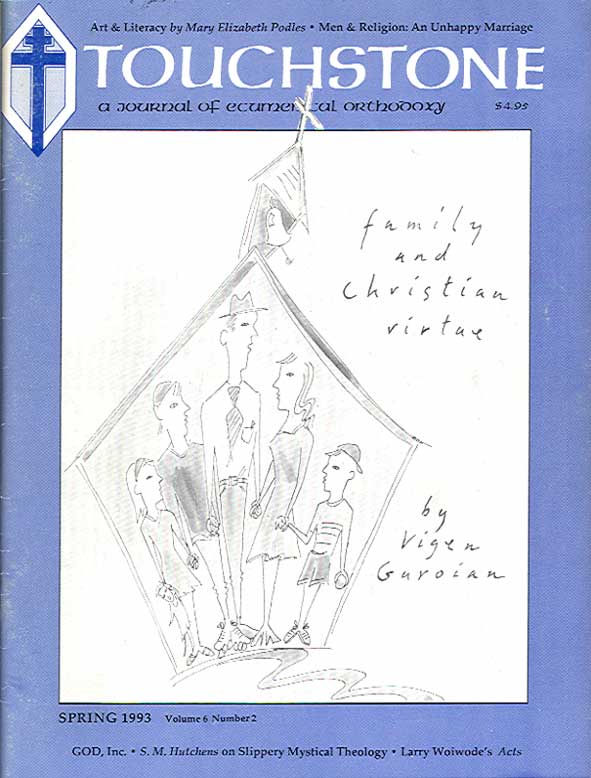
Ranks of Prayer
Pray without ceasing.
—1 Thessalonians 5:17
“Prayer is the primary work of the moral and religious life,” wrote St. Theophan the Recluse (1815-1894). Theophan, once a bishop who retreated into the Russian wilderness to live as a hermit, spent hours each day giving spiritual advice in letters. This spiritual “Dear Abby” was particularly known for his writings on prayer.
“The root of this life is a free and conscious relationship with God, which then directs everything,” he continued. “It is the practice of prayer that expresses this free and conscious attitude towards God, just as the social contacts of daily life express our moral attitude towards our neighbor, and our ascetic struggles and spiritual efforts express our moral attitude towards ourselves. Our prayer reflects our attitude towards God, and our attitude to God is reflected in prayer.”
Theophan argues that prayer is a barometer of our relationship with God. It is the essence of our spiritual life. Communication with God, just like communication with others, forms the foundation of our relationships.
“And since this attitude is not identical in different people, so the kind of prayer is not identical either. He who is careless of salvation has a different attitude to God from him who has abandoned sin and is zealous for virtue, but has not yet entered within himself, and works for the Lord only outwardly. Finally, he who has entered within and carries the Lord in himself, standing before him, has yet another attitude. The first man is negligent in prayer just as he is negligent in life; and he prays in church and at home merely according to the established custom, without attention or feeling. The second man reads many prayers and goes often to church, trying at the same time to keep his attention from wandering and to experience feelings in accordance with the prayers which are read, although he is very seldom successful. The third man, wholly concentrated within, stands with his mind before God, and prays to him in his heart without distraction, without long verbal prayers, even when standing for a long time at prayer in his home or at church.”
The first of these three people is too preoccupied with himself to allow his faith to take hold of his life. The second tries hard, probably appears to be pious, but falls short. The third succeeds.
“Take away oral prayer from the second, and you will take away all prayer from him; impose oral prayer on the third and you will extinguish prayer in him by the wind of many words. For every rank of person, and every degree of drawing near to God, has its own prayer and its own rules.”
THIS ARTICLE ONLY AVAILABLE TO SUBSCRIBERS.
FOR QUICK ACCESS:
Thomas S. Buchanan is the George W. Laird Professor of Mechanical Engineering and Biomedical Engineering at the University of Delaware. He has studied at UCSD, Northwestern University, and MIT, and has held visiting professorships at the University of Western Australia and the University of Aix-Marseille. He has served as department chairman, deputy dean, and institute director, president of the American Society of Biomechanics, and editor-in-chief of the Journal of Applied Biomechanics. He is on the Board of Trustees of Saint Katherine College, the editorial board of Touchstone, and the board of The Fellowship of St. James.
A Journal of Mere Christianity—Delivered to Your Door
- Essays on theology, culture, and the Church
- Contributors from across the Christian traditions

Six print issues (one year) of Touchstone, plus full online access and PDF downloads for only $39.95.

Get a one-year full-access subscription to the Touchstone online archives for only $19.95.
bulk subscriptions
Order Touchstone subscriptions in bulk and save $10 per sub! Each subscription includes 6 issues of Touchstone plus full online access to touchstonemag.com—including archives, videos, and pdf downloads of recent issues for only $29.95 each! Great for churches or study groups.
Transactions will be processed on a secure server.
more from the online archives
32.1—January/February 2019
The Diabolical Failure of Leaders in the Present Crises by James M. Kushiner

29.3—May/June 2016
A Deathbed Reflection on Catholic Social Teaching & Our Future Prospects by Karl D. Stephan
calling all readers
Please Donate
"There are magazines worth reading but few worth saving . . . Touchstone is just such a magazine."
—Alice von Hildebrand
"Here we do not concede one square millimeter of territory to falsehood, folly, contemporary sentimentality, or fashion. We speak the truth, and let God be our judge. . . . Touchstone is the one committedly Christian conservative journal."
—Anthony Esolen, Touchstone senior editor
