





The Victorious King
“My kingdom,” said Jesus to Pontius Pilate, “is not of this world” (John 18:36). And yet the world would put him to death, the world he came into, even as “God sent his Son into the world, not to condemn the world, but that through him it might be saved” (John 3:17).
We might take it as a case of mistaken purposes, as if Pilate and all the other agents of this world could sensibly go about their way and not meddle with Jesus, because Jesus was not going to meddle with them. For when the Jews tried to tempt him into falling afoul either of the zealots among them or the Romans nearby, Jesus deferred the question or he made it the more acute, saying, “Render then unto Caesar the things that are Caesar’s, and unto God the things that are God’s” (Mark 12:17).
And we may soothe the ruffled secular feathers a little more, by saying that in Christian history it is far more likely that we will render too much unto Caesar than too little. For Caesar is near and glowering, and the swords are drawn, while God seems far away, though he is nearer to us than we are to ourselves. Yet, at the same time, the world and Christ are at enmity, and when the Lord assures his disciples that they will suffer in this world, he assures them further that they must be cheerful anyway, “because I have triumphed over the world” (Greek nenikeka, I have won the victory; John 16:33).
So the world is right to fear, if it wishes to remain in its stubborn resistance to the grace and the all-transforming love of God. But the world is foolish in its fear, because the Light has come, the Light of true and all-victorious life. To follow Jesus is to turn a corner, to allow oneself to be made a new creation, and that cannot happen without something akin to darkness, and something more than akin to death, for “whosoever shall lose his life for my sake and the gospel’s, the same shall save it” (Matt. 16:25).
The Pretender & the True King
I come then to the hymn for the vespers of Epiphany, Hostis Herodes impie, made up of several stanzas from Sedulius’s fifth-century hymn on the manifestation of Christ, A solis ortus cardine. I have it in three English translations, one each by the estimable translators John Mason Neale and Edward Caswall, and another by Percy Dearmer, specifically for The English Hymnal (1633). All three are quite good. You may then find it listed as “Why, Impious Herod, Shouldst Thou Fear” (Dearmer), or “Why, Impious Herod, Vainly Fear” (Neale). But I will use Caswall’s translation, sung to a melody in Eminor: “O Cruel Herod, Why Thus Fear.”
In the first of our stanzas—actually the eighth in the full poem he wrote—Sedulius addresses Herod the Great, who trembled in fear that he might lose his grand and pathetic earthly realm, as, we may recall, an Idumaean pretender protected by his overlords from Rome:
O cruel Herod! Why thus fear
Thy King and God who comes below?
No earthly crown comes He to take,
Who heavenly kingdoms doth bestow.
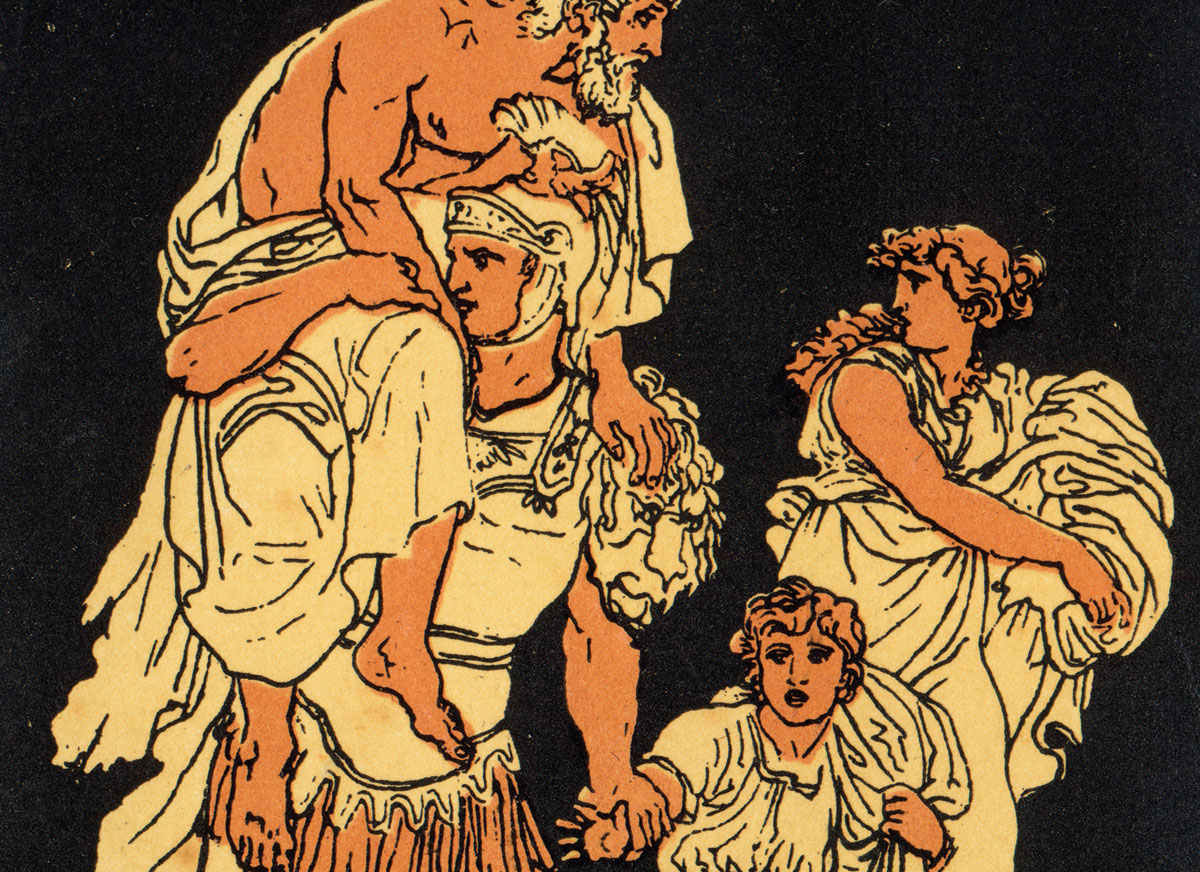
The dramatic irony, as our medieval forebears loved to portray it on stage, is quite rich. Herod, fabulously wealthy, potent, swaggering, boastful, loudmouthed (as late as Shakespeare, Hamlet can warn the traveling players not to “out-Herod Herod”), is a fool to be afraid of a small child in a manger in Bethlehem. But we are more foolish if we suppose that that is because Jesus is only a child. The true King of the Jews is not the pretender, nor any earthly ruler. In one sense, Jesus does not come to displace Herod at all; in a truer sense, he most certainly does, definitively, forever.
Seeking the Light
But we should welcome the Lord, and instead of the foolish and power-hungry Herod, Sedulius turns our attention to the Magi, who show in their persons what the Psalmist says, that “in Thy light we shall see light” (Ps. 36:9):
The wiser Magi see the star,
And follow as it leads before;
By its pure ray they seek the Light,
And by their gifts, that Light adore.
The last two lines of this stanza translate Sedulius’s direct and potent couplet:
Lumen requirunt lumine,
Deum fatentur munere.
That is, they seek the Light by the light, and by their gifts they confess that the Light they seek, the child, is God. For they brought gold, as for a king; frankincense, as for a high priest; and myrrh, as for the sacrifice itself, or for the sweet-smelling robes of the Messiah, that smell of “myrrh, and aloes, and cassia” (Ps. 45:8).
We may wonder whether the jar of perfumed oil that the sinful woman broke to anoint Jesus (Matt. 26:7) contained myrrh also, as Jesus says that she has anointed him to prepare him for burial. That would be of little consequence to us, except that the anointed Lord who gives himself up to death shall triumph over death and the grave, as God alone can do. The Herods of the world can but kill, and they die in their sins. The Child in the stable will die, to give life.
The Water & the Blood
The old hymnodists do seem to have treasured the divine irony of the saving work of God. Sedulius brings us next to the Jordan River, where Jesus shall be baptized by John, “to fulfill all righteousness” (Matt. 3:15). He calls Jesus the caelestis Agnus, the heavenly Lamb, and we are to recall the grand river of life that flows from the side of the throne of God and the Lamb (Rev. 22:1).
That the Lamb of God should now deign to be washed in the Jordan, less than the hint of a dewdrop by comparison with that river in heaven, is more than an irony of scale. It is an irony of being: for Jesus, spotless, did not need to be cleansed in the river, as John himself said. We do need the cleansing, though, and he who brought with him no sins down into the water, bears our sins by washing us clean, not in water, but in his own blood:
Behold at length the heavenly Lamb
Baptized in Jordan’s sacred flood;
There consecrating by his touch
Water to cleanse us in his blood.
And now we come to Cana, as it is one epiphany after another, each one a bright manifestation of the deity of Christ. The translator Caswall picks up a hint in an unusual verb that Sedulius uses to describe what the water in the jars does at Jesus’ command: rubescunt. It turns red. What other red liquid do we immediately think of, if not blood? And Jesus himself will say, when he blesses the wine at the Last Supper, “This is my blood” (Matt. 26:28).
Sedulius asks us to think of the water not as simply being transformed from what it was, but as springing from an entirely new origin, a new wellspring: mutavit unda origine. This is Caswall’s translation, with the startling participle reddening, and an adjective I have never seen used to describe that simple water, obedient:
But Cana saw her glorious Lord
Begin his miracles divine,
When water, reddening at his word,
Flowed forth obedient in wine.
Praise & Readiness
The final stanza is a doxology fit for Epiphany:
Jesu, tibi sit gloria,
Qui apparuisti gentibus,
Cum Patre, et almo Spiritu
In sempiterna saecula. Amen.To Thee, O Jesus, who Thyself
Hast to the Gentile world displayed,
Praise, with the Father evermore
And with the Holy Ghost, be paid. Amen.
He has appeared to the nations. We have been assured that he will do so again, though when he comes, it will not be as that little child. Let us be ready.
Anthony Esolen is Distinguished Professor of Humanities at Thales College and the author of over 30 books, including Real Music: A Guide to the Timeless Hymns of the Church (Tan, with a CD), Out of the Ashes: Rebuilding American Culture (Regnery), and The Hundredfold: Songs for the Lord (Ignatius). He has also translated Dante’s Divine Comedy (Random House) and, with his wife Debra, publishes the web magazine Word and Song (anthonyesolen.substack.com). He is a senior editor of Touchstone.
A Journal of Mere Christianity—Delivered to Your Door
- Essays on theology, culture, and the Church
- Contributors from across the Christian traditions

Six print issues (one year) of Touchstone, plus full online access and PDF downloads for only $39.95.

Get a one-year full-access subscription to the Touchstone online archives for only $19.95.
bulk subscriptions
Order Touchstone subscriptions in bulk and save $10 per sub! Each subscription includes 6 issues of Touchstone plus full online access to touchstonemag.com—including archives, videos, and pdf downloads of recent issues for only $29.95 each! Great for churches or study groups.
Transactions will be processed on a secure server.
more on music from the online archives

33.3—May/June 2020
Bach's Cantata BWV 106, Gottes Zeit ist die allerbesteZeit (God's time is the very best time) by Ken Myers
more from the online archives

26.1—Jan/Feb 2013
Manly Chastity, Hedonism & the Law of Non-contradiction by Anthony Esolen
calling all readers
Please Donate
"There are magazines worth reading but few worth saving . . . Touchstone is just such a magazine."
—Alice von Hildebrand
"Here we do not concede one square millimeter of territory to falsehood, folly, contemporary sentimentality, or fashion. We speak the truth, and let God be our judge. . . . Touchstone is the one committedly Christian conservative journal."
—Anthony Esolen, Touchstone senior editor
