




What Do I Have That I Did Not Receive?
Reflections on the Unmerited Gifts I've Received from Others
Alasdair MacIntyre declares in After Virtue that "we are never more (and sometimes less) than the co--authors of our own narratives." Co-authorship can entail percentages both great and small. I believe that, as we grow older, our own side of the ledger shrinks. The proportion may fall even into single digits, so great does our sense of indebtedness increase. The Apostle Paul presses home this point to the Christians at Corinth in the sharpest terms: "Who sees anything different in you? What do you have that you did not receive? If then you received it, why do you boast as if you did not receive it?" (1 Cor. 4:7).
Receiving the 2020 Lifetime Achievement Award from the Conference on Christianity and Literature gives me occasion to enumerate some of the things I have been given beyond all deserving. Permit me, therefore, to mark five major moments when I received markedly more than I merited.
I. The Blessings of My Upbringing
I regard it as a blessing beyond all adequate thanksgiving to have been reared amid modest circumstances in the rural South—namely, in Linden, population 1,714, a -county-seat town set deep in the piney woods of northeastern Texas. Though I never knew poverty, I knew people who didn't have enough to eat or decent clothes to wear. Indeed, I knew one white family whose only flooring was the bare earth. My maternal grandparents were sharecroppers, constantly on the move to escape creditors. My grandfather, Jim Walker, was never able to follow his desire to be a teacher. Yet he made his silent protest against the sharecropping system by refusing to train any of his four daughters to plow. In that radical refusal he gave my mother, and eventually me, the desire to be a
teacher.
Both my father and my mother were the first members of their families to receive education beyond the tenth grade—the maximum level offered in small-town schools. After two years of sub-college, they became full-time teachers in rural one- and two-room schools when they were only 19. They married in 1930, hardly an auspicious year. Not until a dozen years later was I born, in 1942, an only child. That small datum—"the unbought grace of life"—has produced an unbroken line of gifts received far more than deserved.
My parents were public-school teachers, and they earned as much respect as the local lawyers and doctors and ministers. My best teachers—Annie Mae Cameron, Margaret Lovelace, Faye Wadsworth—were not content merely to keep order. They knew their subjects—reading, English, biology—and they taught them well. I wanted to become a person worthy of their regard. I wanted most specially to follow the path of Brother Joe Gilmore, pastor of the First Baptist Church of Linden. Unlike most of our less-educated ministers, Gilmore was a Baylor graduate who studied his Bible and books, prepared his sermons in advance, and preached with both eloquence and passion.
These Baptists in this small town thus gave me the most important thing in the world: the Gospel of Jesus Christ and life in his Body called the Church. I owe them an unpayable debt.
II. The Blessings of My College Years
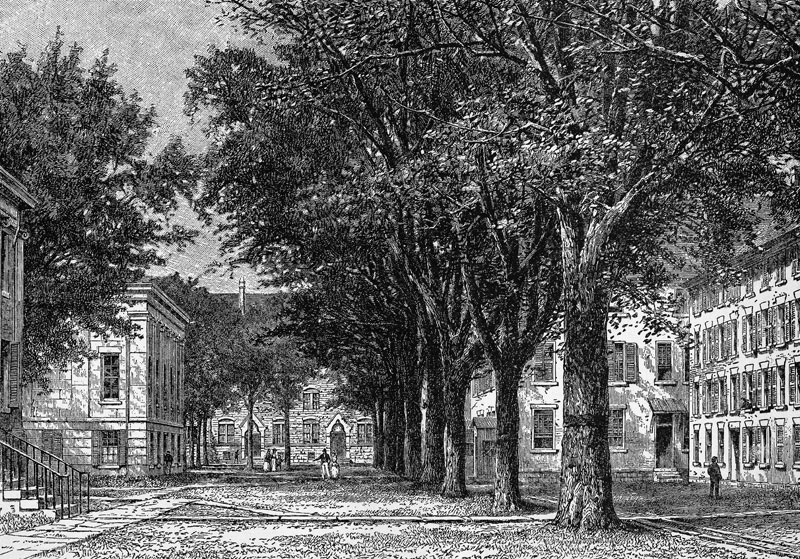
Because of Gilmore's sterling example, I felt a call to gospel ministry. This meant that, like Gilmore, I wanted to attend Baylor. But when I graduated from high school at age 16 in 1959, Baylor was far too expensive for my parents to underwrite the studies of a preacher-boy down there at Jerusalem on the Brazos, as Waco was called. With the aid of a valedictorian's full tuition scholarship of $150, I matriculated at a much lesser school, East Texas State College in Commerce, sixty miles east of Dallas. Some of my teachers were first-rate, some were dull as dirt, but all were overworked—teaching five classes per term, plus six weeks of summer school.
Yet one of them stood out. His name was Paul Wells Barrus, an Iowan who had come south to escape the harsh winters of Des Moines. He was not only the most learned member of the faculty, the best teacher by far, and a scholar gifted with the largest mastery of languages and cultures; he was also the deepest Christian, a man who embodied sanctity. Yet there was a problem: he was a devout Roman Catholic, the only one on the faculty. I had never even met a Catholic; in fact, there wasn't a single Catholic church in my home county. The divine irony here is keen indeed. Had I realized my desire to attend Baylor, I would never have encountered such a teacher, for, at that time, Baylor prohibited Catholics from teaching on its faculty.
Barrus taught the nineteenth-century masters of American literature—Thoreau and Dickinson, Hawthorne and Melville, Emerson and Twain—not only for their literary import but also because they wrestled with the wisdom questions: Who are we? Where are we? What time is it? In 1962, when I was a senior, Barrus spent his entire $250 budget for visiting lecturers to bring a little-known writer to our campus. It would be her only Texas visit, for in two years she would die of disseminated lupus erythematosus at age 39. Her name was Flannery O'Connor.
I was immediately struck by her fiction. She had transformed the rural world of my baptistic Christianity into transcendent art. She was also gut-wrenchingly funny. And her comedy was deeply Christian even in—nay, especially in—its grotesque violence. A lot of people get killed in her fiction, as she sardonically noted, but don't nobody get hurt.
The grisly brutality in O'Connor's fiction, I discovered, is comic in the Dantesque sense. Almost all her stories open up to newness of life, rather than shutting down to tragic failure and defeat. So great is the freedom bearing down on her characters that, if only in the moment of death, they put their wills in accord with the divine will. This radical turning comes by way of blinding revelation, the searing insight that the Lord's mercy burns, that the love of God heals only by wounding.
Flannery O'Connor's coming to my small school marked me as surely as did my Baptist upbringing. This was the second decisive blessing that I could not have earned. I would spend the next six decades studying, teaching, lecturing, and writing on O'Connor's life and work, with never a whit of weariness in so doing.
She taught me, among a myriad of other life-saving truths, that H. L. Mencken was woefully wrongheaded when, in 1918, he devised the most derisive term he could imagine to besmirch the region called Dixie. Seeking to give permanent insult to the South, Mencken unawares paid it the highest of compliments by calling it the
Bible Belt.
Yet Mencken wasn't altogether wrong. My blessed upbringing in the small-town South was deeply flawed. The elephant in the room that nobody seemed to notice was, of course, race. There was no vicious racism in my hometown. I never knew any African-Americans to be personally harrassed, but I did notice that the pink undersides of our maid's hands and feet were the same color as mine. Local blacks did not revolt against either their inferior schools or our segregated society—though surely they must have chafed under the systemic daily injustice of institutional racism. It was made evident, most obviously, by the signs placed over every public waiting room, every public restroom, every public drinking fountain: Colored Only or Whites Only. Neither did I think it odd that an elderly black janitor addressed me, a mere boy, as "Mist' Ralph" while I would never have considered calling him Mr. Williams, but only Ed.
To have disputed the color-line of apartheid that would not allow blacks to eat in public restaurants, to stay in public hostelries, and (God forbid) to attend our white churches—this would have been like asking birds to dispute the air. Not all things received are good. The South gave me not only the greatest of all blessings but also one of the worst of all curses, and the two were often intertwined.
My sinful racism was cured through neither noble self-enlightenment nor secular hectoring, but through the Baptist Student Union at East Texas State. Our leaders insisted that we hold joint rather than separate annual meetings with our fellow Baptists from historically black colleges in Texas. There I encountered African-Americans who were just as smart, just as properly dressed, just as civilized as we were. They were, in fact, much more than our equals. They were our brothers and sisters in Christ.
The upshot was lasting. Though our numbers were small and our efforts modest, a few of us Baptist undergrads began to ask why blacks were banned from our churches and schools and other public places. In a small act of resistance, we invited Bill Lawson, a black pastor from Houston, to lecture on our all-white campus, even to stay in our homes. Little did I know that, though barely 20 years old, I was being prepared for a blessing I could not possibly deserve—namely, to have an African-American son-in-law forty years later. Still more blessedly undeserved is the fact that, there at the Baptist Student Union, I met and eventually married Suzanne Coppedge, the woman who is indeed my sine qua non.
III. The Blessings of Graduate Education
Thanks to interventions too mysterious to be called accidental, but also too complex to recount here, I was able to study for a second master's and then a doctorate at the University of Chicago Divinity School. I soon discovered that my major professor, Nathan Scott, was black. At our very first meeting, I declared my hope that studying with him might atone, at least in small part, for the slave-holding sins of my ancestors. Scott replied in firm terms: "Those are their sins, not yours. Now get about your work." Scott was not denying that racial guilt is inherited, but that good and evil are so complexly intermeshed that my study with him would not depend on disentangling them. Theological and literary excellence would be the sole criteria.
Thus would my focus be on the theology of Reinhold Niebuhr and Paul Tillich, and on such high modernists as Eliot and Pound, Faulkner and Stevens, Rilke and Woolf. From Tillich and Niebuhr, I learned that theological answers must be calibrated to fit secular questions if they are to have real trenchancy. This proved to be a useful method of relating Christianity and culture, so long as the scandal and uniqueness of the gospel are set to one side.
Yet I was studying not only theological liberals and literary modernists but also the great Anglican divines of the sixteenth and seventeenth centuries: George Herbert, John Donne, Thomas Cranmer, Lancelot Andrewes, Thomas Hooker. It seemed "our bounden duty and service" for my wife and me to seek out the churchmanship of these stellar figures. We thus experienced liturgical and ceremonial worship for the first time. We soon found ourselves at home in the Episcopal Church and were confirmed into it in 1968. Here, we discovered, was a way to honor and serve the triune God in the beauty of holiness. It also served as a strong refuge when both the nation and the city began to fall apart, with the blow-up of the 1968 Democratic Convention, the assassinations of Martin Luther King Jr. and Robert Kennedy, and the race riots and burning of Chicago ghettoes.
Something was missing, but I didn't know it. It was first identified by Jean Kellogg, a Roman Catholic friend. Jean was old enough to be my mother, and thus had the right to treat me as a son. "I'm worried," she said, "about a Baptist youth from the South studying here in Swift Hall." "Why?" I asked in puzzlement. "Because you are uncritically imbibing Protestant liberalism," she answered. "Remember," she added, "that its aim is to turn the wine back into water." She might have added that Tillich's watchword—"Religion is the substance of culture, and culture is the shape of religion"—was not exactly a creed worth dying for.
Let me be clear: I had fine teachers in Swift Hall, especially Brian Gerrish, the Reformation historical theologian. However, my turnaround began with a course in the division of Comparative Literature. It was taught by Edward Wasiolek. Rather than watering the wine, he fortified it. In his course on Dostoevsky, I found drastic accounts of the uses and abuses of freedom. The human capacity for spite and deception, even within love, makes for a tragic antinomy that Dostoevsky doesn't pretend to solve. Such is the risk God takes with man. Yet there is a potential remedy contained in the hard sayings of Father Zosima: "all are responsible for all" and "all are guilty for all."
The refusal to dominate and humiliate others, even when seeking their welfare, requires love in action, said Dostoevsky, not love in dreams. The latter can be reduced to moral formulas whose outcome seems assured of success. Dmitri's love in action leads him, by contrast, to do outrageous things that have dire, unpredictable consequences. Most notably, he confesses his guilt for a crime he didn't commit: the murder of his wretched and contemptible father, Fyodor Karamazov. Though there is ample evidence to exonerate Dmitri, he pleads guilty and is sentenced to imprisonment in Siberia. There he will work underground in the mines, suffering not in resentment but in a strange sense of privilege, seeking to aid his fellow convicts. He will be accompanied by another complex and contradictory soul, Grushenka, a former prostitute. She will patiently await his release and their eventual marriage.
To have had Wasiolek teach me Dostoevsky's thorny truth—and to have in turn taught the Brothers Karamazov for almost the entirety of my fifty years in the classroom—these, once again, are gifts beyond adequate gratitude.
IV. The Blessings of Teaching
hough at the time it seemed outrageous, Jean Kellogg's caveat against turning the wine back into water had more merit than I recognized. My unrecognized danger became evident to me only when I began my teaching career in 1971 at Wake Forest University in Winston-Salem, North Carolina, a fine school in a lovely city. Yet my Chicago presumption went with me. It led me to think that my prime mission was to wipe the grins off fundamentalist faces, to rub pious Baptist noses in the cold snows of modern secularity, so that my students would turn out to be liberals like me. And so, during my very first semester, I taught the modern literary masters of suspicion—Hemingway and Faulkner, Kafka and Lawrence, Sartre
and Camus.
Yet I faced a terrible problem. There was not a single fundamentalist in my classes, and there were only a few pietists. Instead, my classrooms were filled with bright young products of the late 1960s, many of whom had protested the Vietnam War and experimented with drugs. This often meant that they were either poorly catechized Catholics coming down from the North, or else regional Protestants knowing little about their own tradition. I was at wit's end. I had been educated for a job that I was grossly unprepared to perform! What to do? How could I deepen and revitalize the shallow and moribund faith not only of my students, but chiefly of myself?
I was saved from total calamity when I was confronted by the pastor of the campus Baptist church, Warren Carr. He was smarter, tougher, funnier, and more theologically astute than the professors. He had put his life on the line during the civil rights crisis of the 1960s. His house had been bombed and his church defaced in Durham, North Carolina. Yet Carr always made clear that his courageous stance on race derived from his prior and final commitment to Christ and his Church. There alone can we be reconciled to each other, because God has first reconciled himself to us. Carr had learned this lesson not from Tillich or Niebuhr but from Karl Barth. Nothing less than God's total reconciliation of the world to himself in Christ, Carr learned from Barth, can redeem and transform both the noblest moral causes and the worst moral evils. Barth also taught Carr that, far from being a merely private or individual matter, our alienation from God is overcome only in the worship and practices of the community called the Body of Christ.
At first, I balked from tackling even a modest portion of the forbidding 10,000 pages of Barth's masterwork, with its uninviting title: Church Dogmatics. There was still a lingering Tillichianism at work in my conviction that the great monuments of Western art and culture were a sufficient legacy to sustain Christian faith. But a year spent in Italy, 1976–1977, cured me of this delusion. The European churches were on their way to becoming mausoleums, even as their civil impact was also dwindling. And so I plunged into the work of Søren Kierkegaard, seeking to find a radical alternative to the collapse of Christendom that he so acutely had diagnosed in the nineteenth century. Eventually I discovered what Kierkegaard himself confessed—that he was a corrective rather than a cure, a way station and not a stopping-point. And so I immersed myself in the curative theology of Karl Barth by way of a long and arduous self-tutelage.
I also began setting Barthian theology in relation to a clutch of writers who helped re-baptize my own imagination as well as reinvigorate the dormant if not dead Christianity of my students: T. S. Eliot and W. H. Auden, J. R. R. Tolkien and C. S. Lewis, Graham Greene and Walker Percy, Charles Williams and Dorothy L. Sayers. Best of all, I returned to Flannery O'Connor. She arrested the attention of my Wake Forest students like no
one else.
For the next 26 years, therefore, I devoted myself to teaching these Protestant and Catholic figures to my Protestant and Catholic students, in still another blessing I could not have deserved.
V. The Blessings of Choosing the "Lesser"
Yet there was yet a fifth and seemingly final gift awaiting me, quite without expectation, much less with desert. For complex reasons, I took the advice of Wendell Berry, the Kentucky Baptist poet who recommends that we seek downward rather than upward mobility. And so I left a prestigious school for one not so distinguished—at least as these things are measured by national rankings. To my surprise and delight, "lesser" turned out to be "greater." After a happy interim year at Samford University in Birmingham, I was invited, in 1998, to join the Baylor faculty, where I have been able to direct doctoral students and to teach across the disciplines.
Here, for the last 23 years, my wife and I have enjoyed the best time of our lives. Younger faculty—some of them could have been our children—took us into their fellowship. They have welcomed us at their tables, invited us into their churches, accompanied us to academic conferences, even shared our common love of collegiate athletics. We even razz the refs and cheer the Bears in unison—even as we often vehemently debate and disagree about the things that truly matter.
My colleagues in English and Theology and Great Texts have enabled the growth of my intellectual and spiritual life. They in turn have been open to my own major theological development—namely, my discovery of the riches of Eastern Christianity as a radically alternative way of being Christian, especially via the icon tradition. I have found means, if only by stealth, to work the icons into my courses. I should add that none of this could have been possible without the wonderful host of students whom I've taught during the past half-century. Many of them have become lasting friends, and several of them now serve as my teachers.
These various convergences have enabled me to unite the scandalous angularity of my backwoods faith with a vision of the universal Church. At last the whole pattern has begun to fall into place, though ever so ironically. As St. Augustine teaches, our lives seem like a maze of chicken tracks during the living of them. Only in retrospect can we thankfully place our own little narratives within the divine Story. My pilgrim path has thus traced neither a neat circle nor a straight line so much as a jagged back-and-forth trek of totally unmerited blessings, though with a few curses largely of my own making.
It's a road taken rather much like that of the Company of Nine Walkers in The Lord of the Rings. They are often confused and even lost. Their true path, as they slowly learn, lies in fighting the right battles at the right times with the right weapons and for the right reasons. They finally win by losing—by refusing to employ the coercive power of the evil one, Sauron, lest in so doing they become Saurons themselves. Thus is Tolkien's poignant confession also my own: "I am a Christian . . . so that I do not expect 'history' to be anything but a 'long defeat'—though it contains (and in a legend may contain more clearly and movingly) some samples or glimpses of final victory."
Today marks, for me at least, one of those samples or glimpses of the triumph that lies "beyond the walls of the world," as Tolkien also said. Hence my glad confession that I can claim as my own very little that I have not first -received.
Ralph C. Wood was, until his retirement, University Professor of Theology and Literature at Baylor University in Waco, Texas. His books include The Comedy of Redemption (University of Notre Dame Press), Flannery O’Connor and the Christ-Haunted South (Eerdmans), and Chesterton: The Nightmare Goodness of God (Baylor University Press).
A Journal of Mere Christianity—Delivered to Your Door
- Essays on theology, culture, and the Church
- Contributors from across the Christian traditions

Six print issues (one year) of Touchstone, plus full online access and PDF downloads for only $39.95.

Get a one-year full-access subscription to the Touchstone online archives for only $19.95.
bulk subscriptions
Order Touchstone subscriptions in bulk and save $10 per sub! Each subscription includes 6 issues of Touchstone plus full online access to touchstonemag.com—including archives, videos, and pdf downloads of recent issues for only $29.95 each! Great for churches or study groups.
Transactions will be processed on a secure server.
more on education from the online archives


20.8—October 2007
The Deep & Abiding Biblical Roots of Western Liberal Education by David Lyle Jeffrey

24.5—Sept/Oct 2011
on Wondering or Wandering Through College Education by Anthony Esolen
more from the online archives

33.3—May/June 2020
on the Wisdom of the Good Doctor Edmund Pellegrino by Allen H. Roberts II

33.3—May/June 2020
Bach's Cantata BWV 106, Gottes Zeit ist die allerbesteZeit (God's time is the very best time) by Ken Myers
calling all readers
Please Donate
"There are magazines worth reading but few worth saving . . . Touchstone is just such a magazine."
—Alice von Hildebrand
"Here we do not concede one square millimeter of territory to falsehood, folly, contemporary sentimentality, or fashion. We speak the truth, and let God be our judge. . . . Touchstone is the one committedly Christian conservative journal."
—Anthony Esolen, Touchstone senior editor
