




What Television Shows
An Ancient TV Guide Suggests a Program for Today's Choices
by Anthony Esolen
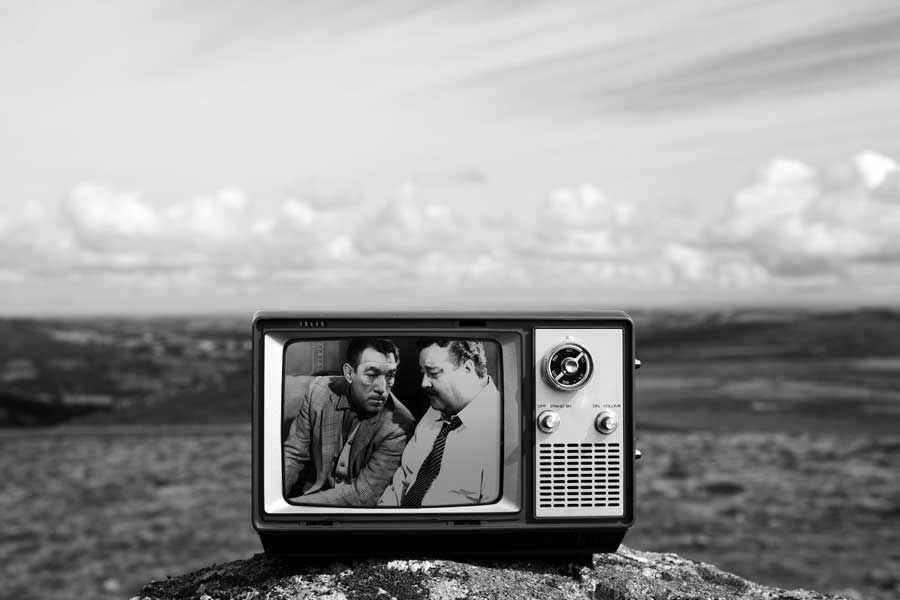
The next time someone asks me what I do for a living, I think I will reply, "I am an archaeologist," because I study human habits long forgotten, and try to bring them to the attention of my readers, so that together we may stretch our imaginations and see what life might have been like for people less blessed with ignorance and distraction than we are now.
To that end, my wife dug up a fossil for me and put it in my Christmas stocking. It is the May 11–17, 1957 issue of TV Guide. The listings are for seven channels in New York City (ABC, CBS, NBC, DuMont, and three independent channels) and two in western Connecticut (one ABC, the other offering a combination of shows from ABC, CBS, and DuMont). Most people in the country would not have had so many choices. These were not boutique channels, tailored for a specific audience. They had to capture a large enough share of the general audience to stay in business.
Several things leapt to my attention, which I will describe in ascending order of significance. Each of them marks its provenance as an alien culture, almost an alternate universe.
Variety in Life
The first thing is that ordinary people did a lot of things. They were the last generation who had grown up without television. In their world, people largely made their own entertainment. To spend time outdoors did not mean that you walked along town-designated trails in the woods close to home. There were no such. It did not mean a week skiing in Colorado. Most people did not have the money for that, even if they had the inclination, and farmers—there were millions of farmers still—could not leave their animals untended. It meant that you lived among other people: outdoors meant being with others, doing things.
We see as much in the amateur shows, and, incidentally, in plenty of other places. Every weekday at 5:00 p.m., WOR-9 in New York ran Teenage Bandstand, featuring teenagers from one regional high school after another, and the Guide names them: William Howard Taft H.S., the Bronx; Elmont H.S., Long Island; and so forth. The host was Ted Steele, a ferociously active young impresario, bandleader, recording executive, and sometime Pennsylvania farmer and raiser of Guernseys. Steele himself had been a boy prodigy, enrolling at the New England Conservatory of Music when he was seven. Teenage Bandstand was mostly a music show, but not exclusively: on Monday, May 13, students from the High School of Fashion Industries, in the Bronx, came to show off the graduation dresses they had designed and made.
Assuming that summer was for reruns, Steele must have visited about 150 high schools each year, all from the greater metropolitan area. There is no reason to suppose that Long Island was less social in this regard than the panhandle of West Virginia or the hills of the Ozarks.
There were amateur hours, too, with the old meaning of the word in force: people who did things because they loved them. The Ed Sullivan Show, for example: "Tonight Ed presents anotherAll-Navy talent program, chosen from Navy personnel from all over the country" (Sunday, May 12, 8:00 p.m., CBS). Some of the acts are solo singers, but we have also a ventriloquist, an accordion duo, two quartets, a guitarist, a marimba duo, a pantomime, a composer, and a vocal-instrumental duo novelty act.
Not to be outdone by CBS, ABC had the Ted Mack Amateur Hour at 9:00 p.m., the successor to the long-running radio show, the Major Bowes Amateur Hour. "Tonight Ted salutes Dayton, Ohio," says the Guide, suggesting that the show could someday set up shop near your own town. The guests on this night included a woman pop singer, a vocal quartet from Upper Darby, Pennsylvania, a man-woman vocal duo from Lansdowne, Pennsylvania, a soldier baritone from Fort Dix, New Jersey, a choral group of student nurses from Saint Peter's hospital in Albany, New York, and a pianist from Passaic, New Jersey. "Ted's special guest tonight," says the Guide, "is Frederick H. Boland, Ireland's ambassador to the United Nations." What Boland did for the show, I cannot tell, but his wife was a painter of note, and his daughter a poet.
Vibrant Social Life
Outside of such shows, we see everywhere the strong traces of a vibrant and varied social life. Lawrence Welk invited the boys of the baseball team he sponsored to come on his show and sing "The Little Leaguer." The independent station WATV-13 broadcast Junior Town Meeting, lasting one hour, on Sunday afternoon. This day's topic was "What Hope for Our Future?", with finalists from four city high schools. The same channel on Monday night gave a platform to the Citizens Alliance of Hoboken. Fedora Bontempis, host of a regular cooking show, prepared lamb stew with artichokes while hosting the members of the Committee for a Better Brooklyn (WABC-7, Saturday, noon). Two for the Money, a quiz show hosted by the comedian Sam Levenson (WCBS-2, Saturday night), featured "Marsha Ann Morgan, president of Girls' Nation, Marion, O[hio]; Dan McCall, American Legion oratorical winner, Modesto, Cal.; and Mr. and Mrs. James Morgan, Angel's Camp, Cal., who are bell-ringers and stone-ringers."
The Mickey Mouse Club, easy to ridicule for its sentimentality and silly costumes, was really a club, after all. On Wednesday at 5:00 p.m., the hour-long ABC show featured a newsreel on, among other things, "Boxing, Fair Play Taught Boys," and "Boys Fight King-size Kite Battle." The guest for Thursday was a Danish foreign correspondent. Friday featured the Covan Kids, dancers from Los Angeles, the descendants of black tap dancer Willie Covan, who first hit the boards for vaudeville when he was a six-year-old boy.
War movies were popular, not, I think, because of the neural rush we get when we watch violence on a screen, but because they spoke to the direct experiences of a majority of American men. The army was a social institution, a male brotherhood, compelled to fight on the razor edge between civility and barbarity.
The same can be said for the once-popular genre, the Western. Thus, for the GE Theater (CBS, Sunday, 9 p.m.), Ronald Reagan and Kevin McCarthy, in "A Question of Survival," played the captain and the surgeon of a cavalry outfit surrounded by Comanches. The captain must decide whether or not to send the surgeon, whom he despises, "to tend to the fatally wounded son of the attacking chief," thus buying safety for his men but at the expense of the surgeon's life.
A Common Culture: Music
The second thing I notice is that there is something like a common culture, made manifest in three obvious ways. The first is music. It is everywhere in the Guide, and we are not talking about soloist rappers or canned sound. This was, after all, still a few years before the sales of vinyl records outpaced for the first time the sales of sheet music, and the music store was a common presence in town life.
The number and variety of the music shows is impressive. WCBS-2 broadcast, on Monday through Friday, from 7:00 to 7:45 a.m.—evidently for housewives preparing breakfast, or for people eating breakfast before setting off to school or work—the Jimmy Dean Show, featuring mostly country music and folk songs; Chet Atkins was his guest this week. Monday's lineup of songs included "Poor People of Paris," "Trinkets of Shiny Gold," "Why, Baby, Why," "If'n," "Alabamy Bound," and "Yellow Rose of Texas." WABC-7 (Saturday, 10:00 p.m.) showed the Ozark Jubilee, hosted by Red Foley; regulars were "the Marksmen, vocal quartet, and Bill Wimberley's Country Rhythm Boys."
Here are other music shows broadcast on Saturday alone: On WCBS-2: Patti Page. On WRCA-4: Rosemary Clooney (her guest this week was the old comic actor Charles Coburn); Perry Como (with guest Liberace and "the zany Wiere Brothers"); Mr. Broadway (Mickey Rooney leads a tribute to George M. Cohan), and Your Hit Parade. On WABD-5: Liberace and The Story of Gilbert and Sullivan (a 1953 English film). On WABC-7: Frankie Laine; Rock 'n' Roll, and Lawrence Welk. And on WATV-13: Fiesta Musical; La Pregunta Musical; Echoes of Poland (with Monsignor W. A. Rojek speaking on the Battle of Monte Cassino); Polka Show; Harry McGuirk, and Songs of Yesteryear.
It was not all popular music, unless we consider that classical music was popular also. So WRCA-4 ran, on Sunday morning, opposite WATV-13's Joe Bostic's Gospel Train, the show Opera History. May 12th's installment was on Early Romanticism, with host Jay Harrison discussing Carl Maria von Weber and presenting excerpts from Der Freischütz.
A Common Culture: Stories
Another feature of this still-living culture was its cache of stories inhabiting a moral universe with generally acknowledged laws. For about ten years, genuinely talented writers of short stories and plays wrote also for television, to bring the playhouse into the living room. I do not speak metaphorically. The writers had the playhouse in mind; the form of the play and its traditional matter gave structure to what they wrote and to what their audiences expected.
Indeed, many Hollywood films in this period are plays for the screen, with long scenes, a strong emphasis on dialogue, parallel or contrapuntal roles, and a key moral problem that leads the central characters to a crisis of triumph or failure. Think of Paddy Chayefsky's Marty, or William Inge's Come Back, Little Sheba.
Hence the many high-quality "playhouse" TV programs, featuring the best writers and actors that Hollywood had to offer. Each week you would see a fresh story, a fresh play. This week's Dupont Theater (WABC-7) showed Once a Hero, by Jack Schaefer, author of the novel Shane. An old rodeo star (Ward Bond) enters the arena again to prove to his boy that he is no fraud.
Friday's Schlitz Playhouse (WCBS-2) starred the brilliant character actor Edmond O'Brien as an ex-policeman, embittered against women, now working as a hotel detective, who "believes that every woman deserts her man when the going gets rough. Then a beautiful girl checks into the hotel to wait for her boyfriend who is due to be released from prison." The story is by novelist and screenwriter Raymond Chandler, creator of the character Philip Marlowe (The Big Sleep).
This issue of the Guide also has an article on one of the best of the playhouse-for-television writers, Rod Serling, to celebrate his Requiem for a Heavyweight, the tragedy of a washed-out boxer who cannot make his way back to an ordinary human life. Anthony Quinn stars in the title role, with Mickey Rooney, Julie Harris, and, in what for the audience must have been a revelation of unsuspected dramatic talent, Jackie Gleason as the man's mean and selfish manager.
Striving for Intelligent Ends
At this time, Edward R. Murrow was about to characterize television as a wasteland, and here we may note a curious feature of human cultures. The more self-critical a culture is, the healthier it may be, while the self-satisfied are fat, lazy, and stupid. People were aware of the possibilities that television had to offer, but also of the threats it posed. So we see real attempts to use the medium for intelligent ends.
On Saturday, WRCA-4 began its regular lineup with Modern Farmer, whose three segments on May 11 included one on "Corn's Hidden Enemies," that is, the corn rootworm. Sunday's Open Mind (WRCA-4, 12:30 p.m.) featured a discussion of "The Alger Hiss Case and American Public Opinion." Opposite it was WPIX-11's Operation Success, containing an interview with Dino Olivetti, president of the Olivetti Typewriter Company, discussing the factory and the machines used to manufacture his typewriter. WATV-13, at 2:00 p.m. on Sunday, ran its University program; for this episode, a professor discussed Martin Chuzzlewit, and why Dickens subjected to bitter satire the America that had so warmly welcomed him. Medical Horizons, WRCA-7's show on Sunday at 4:30 p.m., was devoted to a discussion of infectious diseases and antibiotics, led by Dr. William Frye, dean of the Louisiana State Medical School.
Even children's shows could have a rather high educational aim. The calm and pleasant Captain Kangaroo, seen on WCBS-2 every morning at 8:00, watched by children too small for school, showed to them on Monday "an original painting by [Maurice] Utrillo," the painter of cityscapes who died in 1955. On Tuesday the Captain told them the story of Lewis and Clark. On Friday, Mr. Green Jeans talked about aluminum.
And the talk shows, too: on Monday morning, the Garry Moore Show (WCBS-2) invited two students to talk about their "I Like Ludwig" club. One of them was sixteen-year-old Robert Cenedella, Jr., who would become a satirical artist of some note, after using the proceeds from selling his Beethoven campaign buttons to finance his way through art school.
A Common Culture: Religion
But culture does not exist without an orientation toward the divine, and here is the most startling difference I observe. In the Guide, religious programs are everywhere.
We are not talking about the slick televangelist, increasing as God decreases. Oral Roberts had a program, true. Billy Graham was just beginning his crusades: on Monday, May 13, WPIX-11 showed the debut of his fifteen-minute weeknight series, with gospel music sung by George Beverly Shea, and news about "Graham's nightly crusade at Madison Square Garden." That sentence is telling. Fulton Sheen's tremendously popular Life Is Worth Living had just completed its five-year run; the bishop would return to the air in 1958.
But mostly, the religious shows were of three kinds. First was the instructive story, coming from the imagination or from some true-life event. This Is the Life (WOR-9, Sunday morning) featured "The Guilt of Clare Matson," about "a young mother who deserts her infant daughter and is then overcome by a sense of guilt." Lamp Unto My Feet (WCBS-2) featured a biography of Albert Schweitzer, narrated by the actors Fredric March and Burgess Meredith; also, "Mr. and Mrs. Christopher Okojie, founders of a hospital in Nigeria, discuss with Dr. Lyman Bryson further aspects of Schweitzer's life and work." WABC-7, at the Sunday dinner hour, had the Dean Pike show: "Today Dean Pike tells his four children . . . 'The Story of Jamestown.'" Earlier in the day, the same channel showed, on This Is the Answer, the playlet "Road to Jericho," wherein "a self-styled war hero is shown to be an impostor," and so "needs help to win back the respect he threw away." The Christophers (WABC-7, noon) showed "The Gentle Warrior," with film star Jeanette Nolan playing Dorothea Dix, "who began a campaign for humane treatment of the mentally ill in an age when they were treated as criminals."
The second kind was the discussion of religious life, appealing to a broad audience. We have nothing comparable now. On Sunday, May 12, Look Up and Live (WCBS-2) showed the "second in the three-part series on 'Ways of Worship of Jews in America,'" this segment featuring Conservative Judaism, with guest narrator Rabbi Edward T. Sandrow. A different episode of The Christophers (WPIX-11) featured a discussion of "the power of television." On Sunday afternoon, WRCA-4 showed The Catholic Hour, the current episode both a play and a discussion: "Two in One Flesh," the third in a series dealing with "the psychology of husband and wife." We can guess that more than Catholics watched that show.
The third kind was the sermon. Bishop Sheen gave sermons dashed with humor, and his personality was immensely attractive, but what he really wanted to do was to speak home truths to his audience, soberly and intelligently. Understanding, not passion, was his goal.
But what strikes the archaeologist in me is not that there was a Bishop Sheen on prime-time television (Tuesday at 8:00 p.m. was his slot, opposite Milton Berle and Frank Sinatra). It is that television stations often began and ended their days with sermons or prayer. On Monday, Wednesday, and Friday mornings, WNHC-8 from New Haven (!) began its day with Sacred Heart; on Tuesday and Thursday, with Man to Man. WCBS-2 began the weekdays with a five-minute show, Give Us This Day, its sermons divided among preachers of various religious communions, Christian and Jewish. Good feeling among men of God should not surprise us, as not so long before, chaplains of these communions in the armed forces had suffered and died on the battlefield along with all manner of soldiers, ministering to them body and soul. WRCA-4 began the day with the Daily Sermonette; WABC-7 with four minutes of Morning Prayer; WATV-13 with two minutes of TV Pastor. Channels 2, 4, and 7 ended their days with the same, and WABD-5 with Call to Prayer.
Profit in Value
People may object that such religion was a thousand miles wide and two inches deep. There are suggestions of a reversal of values already in progress; channels 2 and 5 combined their religious sign-on and sign-off with previews of the next day's programs.
But does the objection really work, when we change the focus from religion to anything else in human affairs? Something made it profitable for WRCA-4 to show, on Saturday afternoon right up against the Giants and the Dodgers, the show Mathematics, with Professor Morris Kline, prominent in the field of education, discussing "Mathematics and Art." Something made it profitable for the same channel to give a half-hour every weekday afternoon to the down-home folk singer Tennessee Ernie Ford. Something made it profitable for WCBS-2 to show, every Sunday night, the genuinely humorous What's My Line?, featuring ordinary people and their odd occupations.
Always at a Fork
Of course, we were at a fork in the road. Little of what I have described would survive the 1960s. In comedy, we would move from the whimsy of human conditions (Father Knows Best, Make Room for Daddy), to the utterly zany (Car 54, The Beverly Hillbillies), to the off-color and puerile (Maude, M*A*S*H*), to the snide and nasty, where we are now. The great variety shows are long past. In music, we went from Sinatra or Liberace or Van Cliburn or Ernie Ford to American Idol, wherein contestants, straining in the throes of laryngeal constipation, perform one narrow form of music, such as it is, with no connection to the past. The playhouse shows were gone by the time I became aware of television. Nobody would go to the box for a sober discussion of anything.
But we are always at a fork in the road. The Pill was about to transform human life and destroy the moral habits that prepare young people for marriage. But we did not have to welcome the Pill. We did not have to welcome no-fault divorce. Priests in the wake of Vatican II did not have to destroy the art of their churches.
Only after the fact do things acquire the air of inevitability. Choices lie before us now. They are not trivial. A butterfly flapping its wings in China, say the chaos theorists, may stir up a storm in the north Atlantic. Perhaps in the spiritual life of a man or a culture or a nation, it is the same; things are not determined by sheer mass, like a landslide, but by this act, this decision, by this small person, right here, right now. And perhaps if we turn off the television, we may think again, and seek truth.
Anthony Esolen is Distinguished Professor of Humanities at Thales College and the author of over 30 books, including Real Music: A Guide to the Timeless Hymns of the Church (Tan, with a CD), Out of the Ashes: Rebuilding American Culture (Regnery), and The Hundredfold: Songs for the Lord (Ignatius). He has also translated Dante’s Divine Comedy (Random House) and, with his wife Debra, publishes the web magazine Word and Song (anthonyesolen.substack.com). He is a senior editor of Touchstone.
A Journal of Mere Christianity—Delivered to Your Door
- Essays on theology, culture, and the Church
- Contributors from across the Christian traditions

Six print issues (one year) of Touchstone, plus full online access and PDF downloads for only $39.95.

Get a one-year full-access subscription to the Touchstone online archives for only $19.95.
bulk subscriptions
Order Touchstone subscriptions in bulk and save $10 per sub! Each subscription includes 6 issues of Touchstone plus full online access to touchstonemag.com—including archives, videos, and pdf downloads of recent issues for only $29.95 each! Great for churches or study groups.
Transactions will be processed on a secure server.
more from the online archives

33.2—March/April 2020
Encounters with Faith & Forgiveness in Communities of Faith by Nicole M. King
32.1—January/February 2019
The Diabolical Failure of Leaders in the Present Crises by James M. Kushiner
24.2—March/April 2011
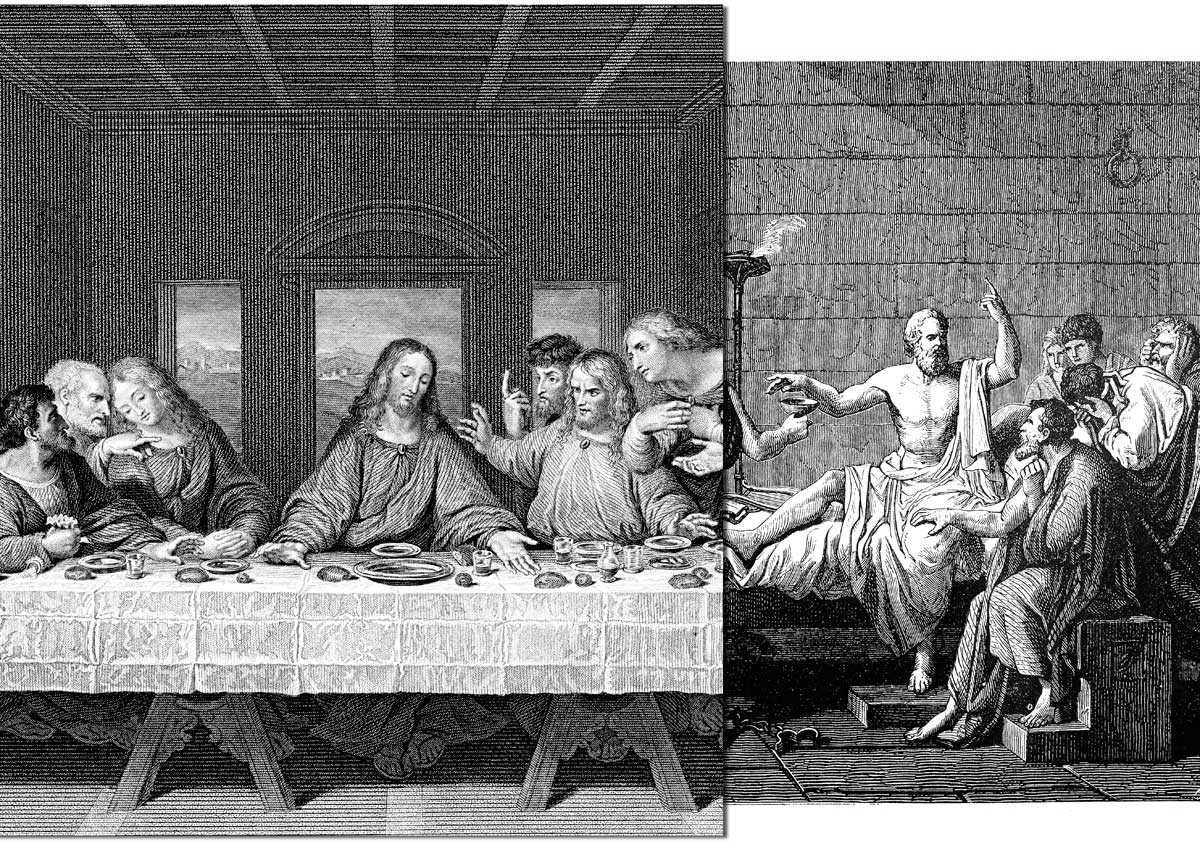
Certain Death & the Last Lectures of Socrates & Jesus by Randall B. Smith
calling all readers
Please Donate
"There are magazines worth reading but few worth saving . . . Touchstone is just such a magazine."
—Alice von Hildebrand
"Here we do not concede one square millimeter of territory to falsehood, folly, contemporary sentimentality, or fashion. We speak the truth, and let God be our judge. . . . Touchstone is the one committedly Christian conservative journal."
—Anthony Esolen, Touchstone senior editor
