




As It Is Written . . .
Ashes & Idolatry
by Patrick Henry Reardon
Everybody, I suppose, has his own favorite among the plagues inflicted on Egypt. Mine is number six. On the outside chance, however, that its finer details may have slipped the reader's mind, let us quickly rehearse the account:
So the Lord said to Moses and Aaron, "Take for yourselves handfuls of ashes from a kiln, and let Moses scatter them toward heaven in the sight of Pharaoh. And it will become fine dust in all the land of Egypt, and it will cause boils that break out in sores on man and beast throughout all the land of Egypt. (Ex. 9:8–9)
Several features of this plague seem to stand out. It involves, for instance, a sort of ritual. Whereas the previous plagues appeared without much ceremony—at most, the extension of Aaron's rod—in this case Moses must go and gather some ashes that he flings heavenward. There is a more obvious cause-and-effect here. These ashes "become" (wehaya) the afflicting dust.
The ashes, moreover, are taken from a "kiln" (kibshan), an industrial furnace, used either to smelt metallic ore or to bake bricks. The important thing to consider is that this kibshan represented the economic and cultural life of Egypt.
The detail is significant. When the Book of Exodus earlier spoke of the hardships the Egyptians imposed on the Israelites, it spoke in particular of the baking of bricks for the Pharaoh's building projects (1:14; 5:7–19). The Egyptian construction technology resembled, in this respect, that of ancient Babel (Gen. 11:3). Indeed, there was an even deeper, more spiritual affinity in the two cases: the ambitions of Babel and of Egypt displayed the same political idolatry, the identical rebellion against the true God.
Thus, when Moses throws the ashes from this kiln "heavenward," the action symbolized Egypt's pride and rebellion against God. The text says that Moses did this "at the eyes of Pharaoh." That is to say, the ashes are thrown toward heaven, but they are also thrown at Pharaoh's eyes; flung in the latter direction, they symbolize the spiritual blindness the king displays through the entire course of the plagues.
A modern reader of Exodus can hardly fail to suspect in this story an ecological dimension: the sixth plague involved a measure of "air pollution" when Moses removed the ashes from the furnace and cast them into the atmosphere. That is to say, the severe skin rash on the flesh of the Egyptians came from industrial waste, specifically air pollution. The story sounds terribly "modern."
I don't believe such a reading is far-fetched, however, inasmuch as part of the message in the early chapters of Exodus is the oppressive nature of Egypt's economic and technical culture. Already in Genesis, indeed, the same idolatrous impulse had been present in the brick-and-bitumen works of ancient Babel, and we find the same theme later in the social concerns of the prophets. William Blake was on solid biblical ground when he spoke of "the dark satanic mills" to describe the Industrial Revolution.
The wound inflicted by the dust of this plague is called a shechin, apparently an inflammation (from the root shachan, meaning "to be hot"). The Septuagint version translates this term as elkos, meaning an abscess or ulceration. This is exactly the term that appears in the Bible's final set of plagues, those in the Book of Revelation. Of the first of those plagues we read, "So the first [angel] went and poured out his bowl upon the earth, and a foul and loathsome abscess (elkos) came upon the men who had the mark of the Beast and those who worshiped his image" (Rev. 16:2).
Idolatry & Oppression
Once again, this plague is a punishment for the sin of idolatry; it afflicts "the men who had the mark of the Beast and those who worshiped his image."
When the Beast and his mark were first mentioned three chapters earlier in Revelation, the context was a form of idolatry expressed in social and economic oppression. Of this Beast we are told, he "causes all, both small and great, rich and poor, free and slave, to receive a mark on their right hand or on their brow, and that no one may buy or sell except one who has the mark or the name of the beast, or the number of his name" (13:16–17).
The mark of the Beast, inscribed on the forehead or the right hand of the idolaters, is a parody of the seal that marks the brow of those who worship the Lamb (Rev. 7). This very seal was foreshadowed in the paschal blood, which, on Passover night, marked the doorframes of the Israelites in Egypt. In the end-time, then, humanity is divided by these two marks.
Inasmuch as the service of a false god invariably fosters some form of servile domination, idolatry is never a "victimless crime." Pharaoh, because his heart is hard, will always be an oppressor.
Patrick Henry Reardon is pastor emeritus of All Saints Antiochian Orthodox Church in Chicago, Illinois, and the author of numerous books, including, most recently, Out of Step with God: Orthodox Christian Reflections on the Book of Numbers (Ancient Faith Publishing, 2019).
A Journal of Mere Christianity—Delivered to Your Door
- Essays on theology, culture, and the Church
- Contributors from across the Christian traditions

Six print issues (one year) of Touchstone, plus full online access and PDF downloads for only $39.95.

Get a one-year full-access subscription to the Touchstone online archives for only $19.95.
bulk subscriptions
Order Touchstone subscriptions in bulk and save $10 per sub! Each subscription includes 6 issues of Touchstone plus full online access to touchstonemag.com—including archives, videos, and pdf downloads of recent issues for only $29.95 each! Great for churches or study groups.
Transactions will be processed on a secure server.
more on bible from the online archives
32.3—May/June 2019
on the Implications of Changing the Pater Noster by John M. McCarthy
5.3—Summer 1992
Everything You Need to Know About Morality & the Bible by David Mills
32.2—March/April 2019
on Preserving Physical & Spiritual Nourishment by Nathanael Devlin
more from the online archives

31.6—November/December 2018
Victimhood Culture Scapegoats Its Very Source by Michael P. Foley
24.3—May/June 2011
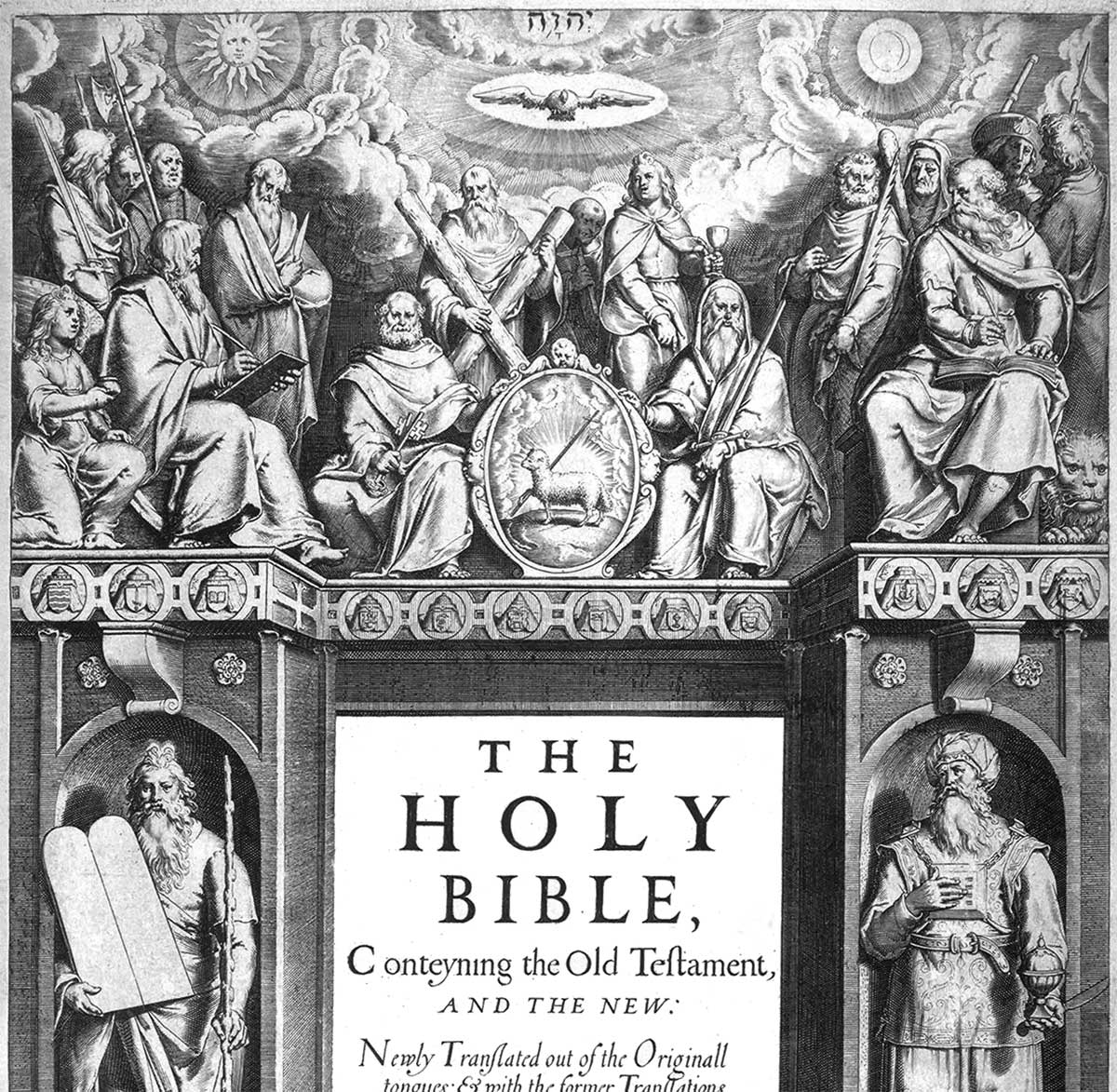
The Making & Endurance of the King James Bible, 1611-2011 by Barton Swaim

calling all readers
Please Donate
"There are magazines worth reading but few worth saving . . . Touchstone is just such a magazine."
—Alice von Hildebrand
"Here we do not concede one square millimeter of territory to falsehood, folly, contemporary sentimentality, or fashion. We speak the truth, and let God be our judge. . . . Touchstone is the one committedly Christian conservative journal."
—Anthony Esolen, Touchstone senior editor
