The Marriage of Tobias and Sarah by Mary Elizabeth Podles

A Thousand Words

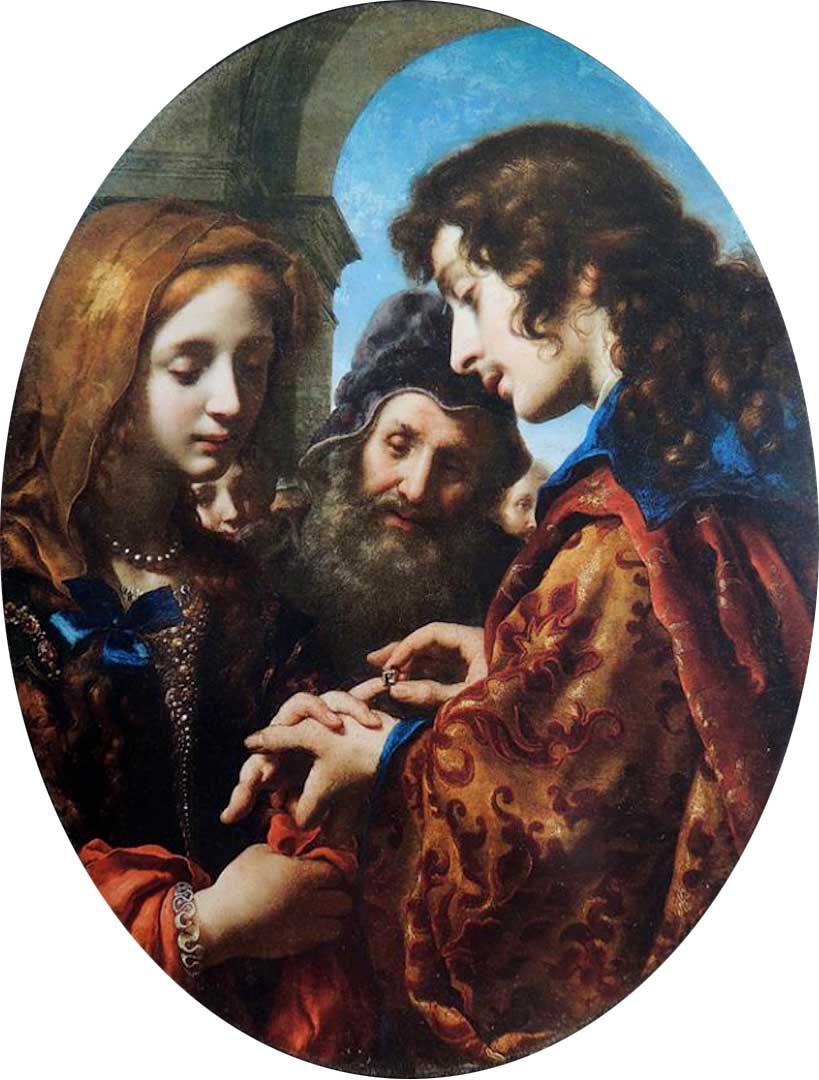
The Marriage of Tobias and Sarah
by Carlo Dolci

by Mary Elizabeth Podles

Carlo Dolci? Isn't he the father of holy card art? Sappy Madonnas and weepy saints? I thought this was a serious column . . .

Poor Carlo Dolci. Though his paintings were highly prized (and priced) among the Medici and the connoisseurs of seventeenth-century Florence, the taste for them in later years has largely vanished. Recent exhibitions and new scholarship, however, have begun to spark appreciation for Dolci as an able artist and an eloquent spokesman for the doctrinal and pastoral concerns of the Council of Trent and the Catholic Counter-Reformation.

A Meditation on Marriage

The Marriage of Tobias and Sarah (c. 1649) demonstrates Dolci at his best. The subject comes from the apocryphal Book of Tobit, already excluded from the Protestant canon by Dolci's own time. It tells the story of young lovers kept apart by evil forces, but finally joined together by way of angelic intervention. Themes of chastity and fidelity run through it, and it is a charming assertion of the sweetness and joy of marriage.

Marriage before the Reformation was in a terrible state. Annulments were granted freely on grounds of consanguinity, physical and spiritual, up to the third degree, and were as prevalent as divorce is in modern times. Marriage reform was one of the principal issues tackled by the Council of Trent, as was expanded education and catechesis regarding the sacraments.

Carlo Dolci was a thoughtful and religious man, a member of a lay confraternity given to good works, who stated once that it was his "firm intention to paint only works that would inspire the fruits of Christian piety in those who saw them." His Tobias and Sarah can be read as an instructive meditation on marriage. Dolci chooses to portray the moment of transition, just as Tobias is slipping the ring onto Sarah's finger. The complex and delicate intertwining of their fingers at the center of the picture is a metaphor for the complex interaction of two lives that makes up a marriage.

Tobias is himself in a kind of transition: he has just the beginnings of a wispy mustache and a trace of fuzz on his chin. He is barely on the cusp of young manhood (the biblical story implies that he was too young to travel alone), but with his marriage he enters into the adult world. Behind the couple stands Sarah's full-bearded father, a foreshadowing of the patriarch that Tobias is to become through his constancy to Sarah. Behind him, a few anxious onlookers oversee the transaction (seven previous husbands had died mysteriously), reminding us of the social and familial nature of marriage. The Tridentine reformers urged early marriage to discourage sexual immorality, and they insisted that marriages be public and witnessed by the Church. Here, the dry bones of that theology are given flesh in a sweet and intimate moment.

Jewel-Like Richness

Dolci uses all the formal elements of the painting to reinforce his point. The color blue unites the young couple: Tobias's collar and cuffs are the same deep blue as the ribbon on Sarah's shoulder, and the arch of the blue sky accentuates the tender tilt of Tobias's head towards his bride. Blue was the symbolic color of constancy, as it is the color of the sky, which is forever blue. The custom of wearing "something blue" at one's wedding is a venerable one, still observed today. Notice that Dolci uses his blues sparingly. A true ultramarine blue was made from grinding lapis lazuli into pigment, one reason his paintings were so costly. The red and gold of Tobias's and Sarah's clothing make a frame for their hands and add a richness and jewel-like quality to the simple color triad of red, yellow, and blue.

In a way the whole painting shines like a jewel. Dolci worked extremely slowly and gave all his paintings a polished, meticulously textured surface that was much admired by contemporary critics and by the pious circles of the Medici court. Most of his paintings were intended for the private devotions and individual prayer encouraged by the spiritual movements of the reformers, and were executed on a small scale, like this one (it measures just under thirty inches across). Such a picture would have been meant for close examination and as a focus for prayerful thought. A wealth of meaningful detail would add depth to a prayerful contemplation.


Mary Elizabeth Podles is the retired curator of Renaissance and Baroque art at the Walters Art Museum in Baltimore, Maryland. She is the author of A Thousand Words: Reflections on Art and Christianity (St. James Press, 2023). She and her husband Leon, a Touchstone senior editor, have six children and live in Baltimore, Maryland. She is a contributing editor for Touchstone.

A Journal of Mere Christianity—Delivered to Your Door

  • Essays on theology, culture, and the Church
  • Contributors from across the Christian traditions
Subscribe (Print + Online)

Six print issues (one year) of Touchstone, plus full online access and PDF downloads for only $39.95.

Subscribe (Online Only)

Get a one-year full-access subscription to the Touchstone online archives for only $19.95.


bulk subscriptions

Order Touchstone subscriptions in bulk and save $10 per sub! Each subscription includes 6 issues of Touchstone plus full online access to touchstonemag.com—including archives, videos, and pdf downloads of recent issues for only $29.95 each! Great for churches or study groups.

Transactions will be processed on a secure server.


more on art from the online archives
32.4—July/August 2019

Sojourner Knight

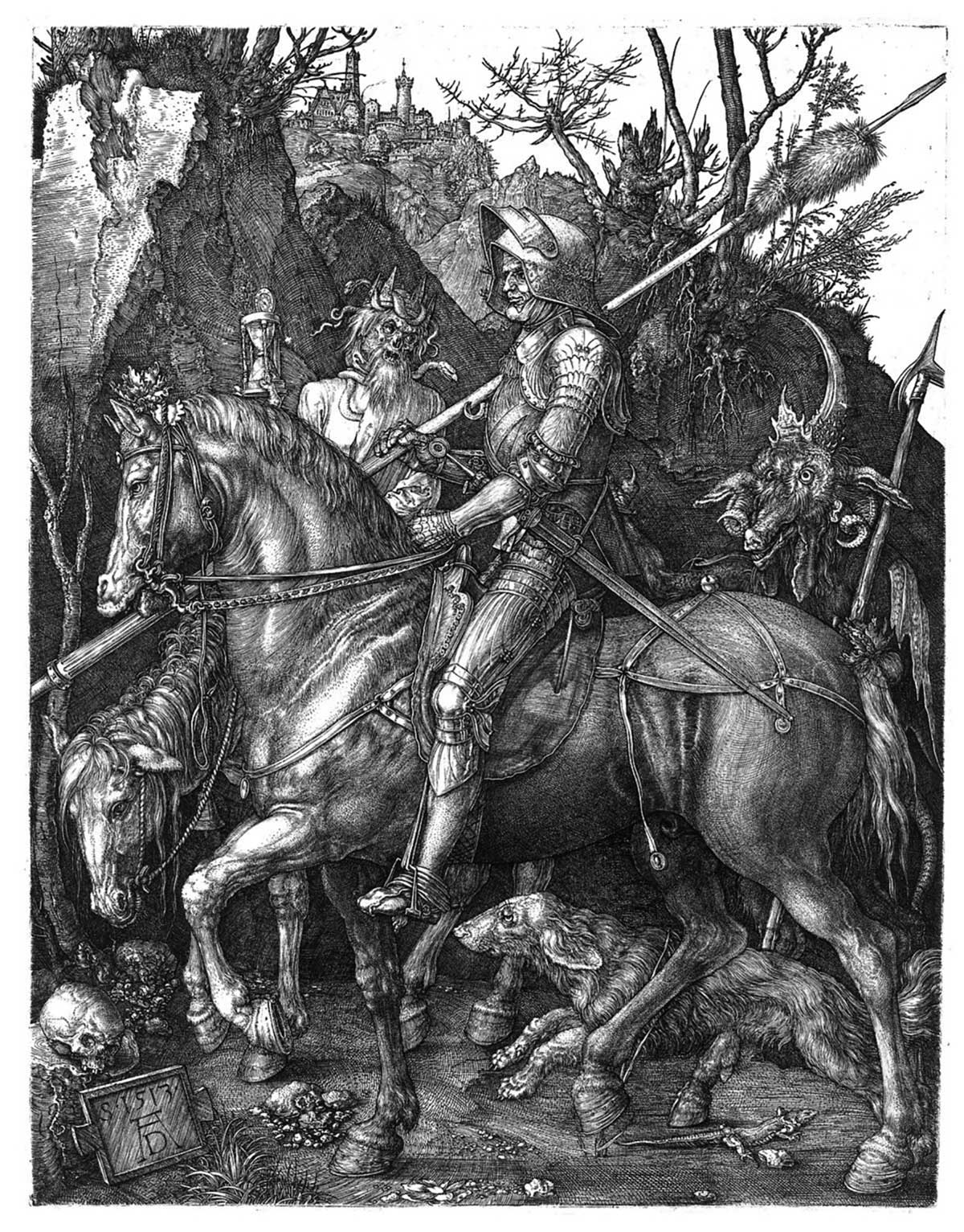
on Single-Mindedness in Durer's Ritter, Tod, und Teufel by Anthony Costello
33.2—March/April 2020

Christ Chapel at Hillsdale

An Architectural Sign of Mere Christianity by Michael Ward

30.3—May/June 2017

St. Luke the Evangelist

by Mary Elizabeth Podles


more from the online archives

18.2—March 2005

Long Shadows of Eden

On Conservatism as Vexation, Vanity & Near Impossibility by Graeme Hunter

32.4—July/August 2019

Sojourner Knight

on Single-Mindedness in Durer's Ritter, Tod, und Teufel by Anthony Costello

30.3—May/June 2017

Not Merely Islam

C. S. Lewis Assesses the Religion of Mohammed by Jacob Fareed Imam

calling all readers

Please Donate

"There are magazines worth reading but few worth saving . . . Touchstone is just such a magazine."
—Alice von Hildebrand

"Here we do not concede one square millimeter of territory to falsehood, folly, contemporary sentimentality, or fashion. We speak the truth, and let God be our judge. . . . Touchstone is the one committedly Christian conservative journal."
—Anthony Esolen, Touchstone senior editor

Support Touchstone

00