




View
Professor Faustus
Robert Erle Barham on Modern Education as a Deal with the Devil
When I taught Christopher Marlowe's Doctor Faustus at Covenant College last fall, I expected student trepidation, given the play's depiction of demons and dark arts. After all, the protagonist is a notorious necromancer, who sells his soul to Lucifer, declaring as he signs the blood deed, "Consummatum est"—"It is finished"—in a parody of Christ. But I was wrong: the students found the play both accessible and moving.
Perhaps I should not have been surprised. Faustus is a student too, and Marlowe repeatedly reminds us of Faustus's learning, from his swift success at university, mentioned in the prologue, to his final plea, "I'll burn my books!" Over the course of the play, we see that a tragically mistaken view of education—that it's strictly for self-indulgence—contributes to his ruin. My students' admirable willingness to learn from Doctor Faustus showed that the play offers a powerful lesson for the present.
Faustus's Self-Deceiving Use of Erudition
When we first meet Faustus in the opening scene, he surveys logic, medicine, law, and divinity, considering "the end of every art," that is, how it might gratify him. The particular misguided ends that Faustus seeks include ravishment, riches, miracles, and monuments, all of which expose an intellectual appetite hijacked by egocentric desire. When he settles on magic, he explains: "O what a world of profit and delight, / Of power, of honor, of omnipotence / Is promised to the studious artisan!" In an era when the celebrated writer Sir Philip Sidney described "virtuous action" as "the ending end of all earthly learning," Faustus's idea of education for personal gain is ominously self-centered.
Given his success at university and mastery of disciplines ranging from logic to law, Faustus has great confidence in his erudition as an instrument for achieving his desires; he thinks of learning as a means of control—though it turns out he is mistaken. For instance, when the demon Mephistopheles invokes damnation, Faustus treats it as merely a term to be contested, a matter of abstract academic argument rather than real truth. The reader is reminded of his fellow scholar's remark that Faustus made the schools ring with "sic probo"—"Thus I prove." Faustus responds to Mephistopheles: "This word damnation terrifies not him, / For he confounds hell in Elysium. / His ghost be with the old philosophers." Thanks to his education, he can appeal to the classical alternative to Christian perdition, thereby reducing "damnation" and "hell" to words.
In the play's most famous scene, when Mephistopheles presents Faustus with Helen of Troy, it is Faustus's eloquence that gives the moment its power:
Was this the face that launched a thousand ships
And burnt the topless towers of Ilium?
Sweet Helen, make me immortal with a kiss.
Her lips suck forth my soul. See where it flies!
Come, Helen, come, give me my soul again.
Here will I dwell, for heaven is in these lips,
And all is dross that is not Helena.
I will be Paris, and for love of thee
Instead of Troy shall Wittenberg be sacked,
And I will combat with weak Menelaus,
And wear thy colors on my plumed crest.
Yea, I will wound Achilles in the heel
And then return to Helen for a kiss.
Though Mephistopheles conjures up a diabolical phantasm, Faustus's verbal pyrotechnics turn the demon into Helen, Wittenberg into Troy, and Faustus into Paris—but only momentarily and only from Faustus's perspective as he deploys his desire-fueled learning. In his last speech, as in these earlier moments, he desperately invokes classical and Christian traditions in order to escape. By then, however, his time is up.
A Ruinous View of Learning
Faustus's disposition toward education makes him seem eerily modern. The play's disturbing insight is that training in academic subjects and in rhetorical dexterity can be dangerous when seen as no more than the means of autonomy. As my students noted, Faustus is deceived: he uses his learning to create only the impression of control.
It would be going too far to suggest that Christopher Marlowe wrote a culturally conservative parable, and certainly there are subversive elements in Doctor Faustus (not the least of which is the extent to which the play asks us to consider whether Faustus is a reprobate, damned from the very start). Nevertheless, Marlowe's portrayal of a ruinous view of learning is instructive.
In our own era, we sometimes reduce education to training in abstract knowledge as a tool for pursuing personal gratification. This contemporary view of education partly explains the disillusionment expressed when degrees don't produce great jobs with financial security, which in turn encourages colleges and universities to reconstitute themselves along Faustian lines. Thus we discount the benefit of certain liberal arts, regard students as mere consumers, and see education with only a narrow understanding of its utility. We would do well to consider whether such a view—now over 400 years after Marlowe depicted its consequences—might just be a deal with the devil.
Robert Erle Barham is Assistant Professor of English at Covenant College in Lookout Mountain, Georgia. He and his wife Amy live with their son Robert in Chattanooga, Tennessee, and are members of Lookout Mountain Presbyterian Church.
A Journal of Mere Christianity—Delivered to Your Door
- Essays on theology, culture, and the Church
- Contributors from across the Christian traditions

Six print issues (one year) of Touchstone, plus full online access and PDF downloads for only $39.95.

Get a one-year full-access subscription to the Touchstone online archives for only $19.95.
bulk subscriptions
Order Touchstone subscriptions in bulk and save $10 per sub! Each subscription includes 6 issues of Touchstone plus full online access to touchstonemag.com—including archives, videos, and pdf downloads of recent issues for only $29.95 each! Great for churches or study groups.
Transactions will be processed on a secure server.
more on literature from the online archives

30.5—Sept/Oct 2017
on Costly Grace in Breece D'J Pancake's Flyover Country by Casey Chalk
20.6—July/August 2007
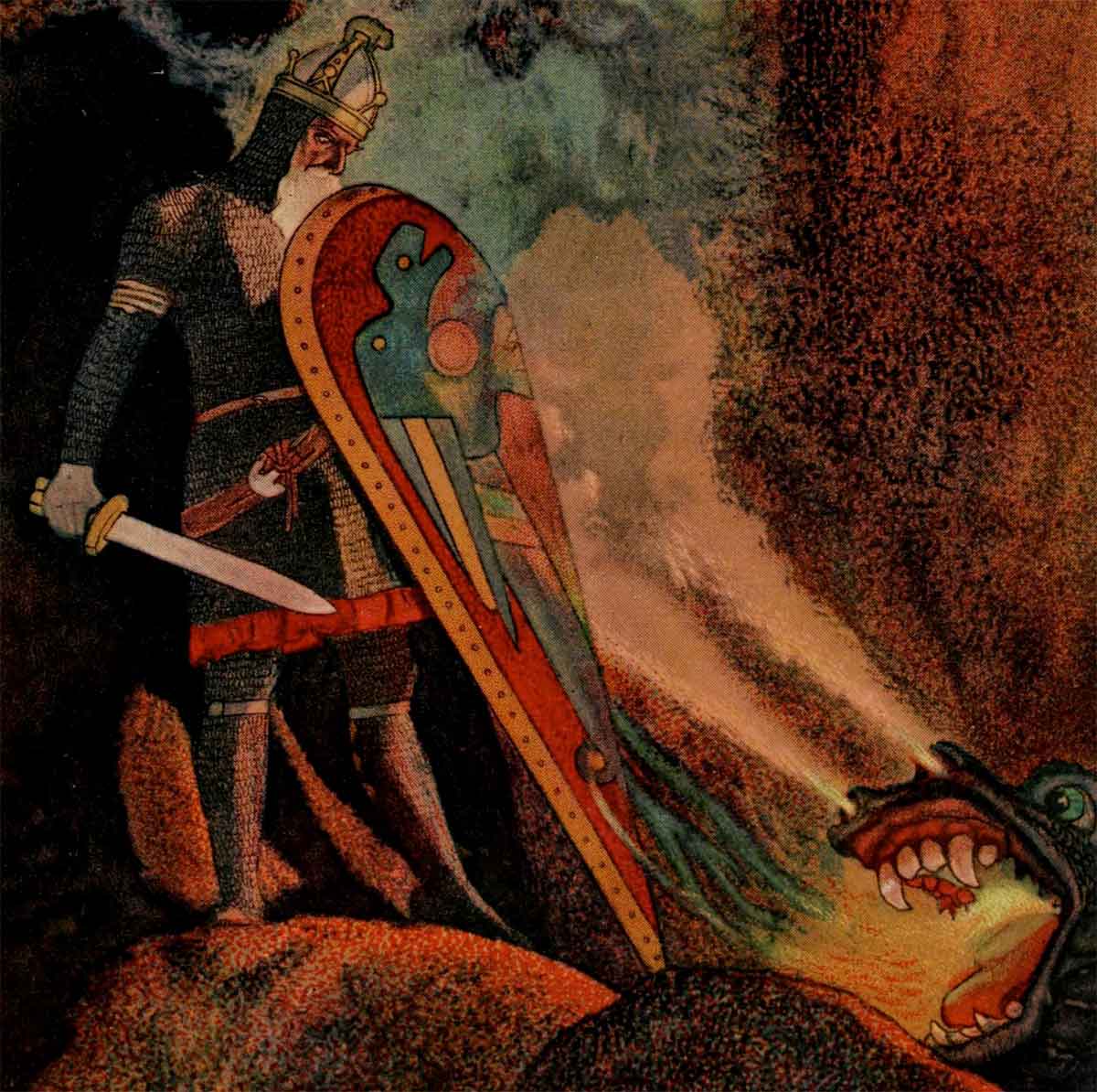
The Beowulf Poet Was a Shrewd Christian Apologist by Douglas Wilson
32.2—March/April 2019
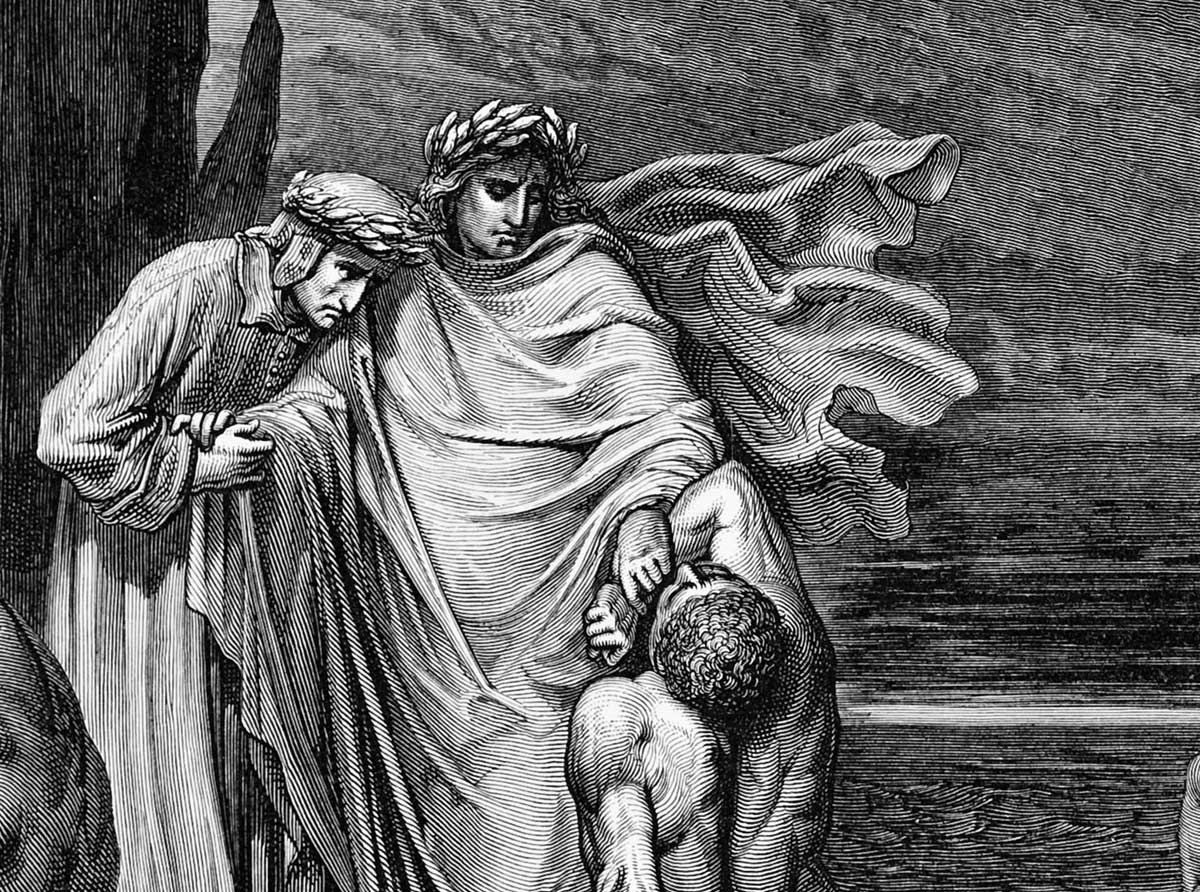
Misguided Mercy & Dante's Infernal Purgation by Joshua Hren
more from the online archives

33.1—January/February 2020
Do You Know Your Child’s Doctor?
The Politicization of Pediatrics in America by Alexander F. C. Webster

33.2—March/April 2020
Encounters with Faith & Forgiveness in Communities of Faith by Nicole M. King

27.5—Sept/Oct 2014
The Culture of Death's Campaign Against the Catholic Church by Brantly Millegan
calling all readers
Please Donate
"There are magazines worth reading but few worth saving . . . Touchstone is just such a magazine."
—Alice von Hildebrand
"Here we do not concede one square millimeter of territory to falsehood, folly, contemporary sentimentality, or fashion. We speak the truth, and let God be our judge. . . . Touchstone is the one committedly Christian conservative journal."
—Anthony Esolen, Touchstone senior editor
