




Illuminations
Loving Sacrifice
by Anthony Esolen
I work at one of the most atavistic institutions in the world. I am a college professor, teaching in the humanities.By "atavistic," I do not mean anything so noble as that we still cherish the poets of old and feel honored to sit at their feet and listen, if not to their wisdom, at least to their touches of sweet harmony. A few old-fashioned liberal professors, I suppose, still hold fondly to the hope of the once-Christian Matthew Arnold, that the moral order would be saved by good taste in poetry. Most professors in the humanities have reeled back into the beast—a sallow and lumpy beast, but a beast no less. If the demonstrations on college campuses are any evidence, they and their students have recovered the ancient joy of confessing other people's sins, often sins that require a perfectly mystical fault-finding to identify, and making other people pay. The process has been described by the recently deceased philosopher René Girard. Choose your scapegoat well, and cleanse yourself by happily slitting its throat and plunging your arms up to the elbow in its blood.
The Cross is a stake through the heart of this all-too-natural religion.
The irony of our faith, shadowed forth in the Old Testament and made manifest in the person of Jesus, is that God "makes himself sin" for us, makes himself the Lamb led to slaughter. We are all on the side of the goats. We are always eager to choose some innocent, make it out to be the real carrier of our misery, and kill it. That's what the old Phoenicians did in times of trouble. Take an innocent child and offer it to Moloch; if you are rich, buy the child from a poor family, "adopt" him, and burn him in Moloch's furnace, cashing in on his sacrificial value. Abortion in the cause of a fuller bank account is the same sort of thing, though more tawdry and much more commonplace.
The Absurdity of Love
Ritual violence ends in the absurdity of the Cross, which is also the supernatural absurdity of Love. We want so much to justify ourselves, we will kill even the Lord, who opens his heart to us in his death. Consider some of the verses of the long Lenten hymn, "Herzliebster Jesu" ("O Dearest Jesus"),as translated by Catherine Winkworth:
What punishment so strange is suffered yonder!
The Shepherd dies for sheep that loved to wander;
The Master pays the debt His servants owe Him,
Who would not know Him.
"He came into the world, and the world was made through him," says Saint John, "and the world knew him not." What would it mean to know Jesus? To acknowledge him—but we don't want to do that. The Lord said to Peter that before the cock crowed, he would deny three times that he knew him. We may be pleased to despise Peter for that. But someone might plead in Peter's defense, even if Peter would not. Peter wanted to be near Jesus, yet at the same time he feared for his own safety. We don't want to acknowledge that Jesus even is the Lord. We aren't hanging around the praetorium, hoping against hope. We are selling souvenirs to spectators at Calvary. We have a license from the government for it:
The sinless Son of God must die in sadness;
The sinful child of man may live in gladness;
Man forfeited his life and is acquitted,
God is committed.
Now, as long as we remain, like Caiaphas, in the realm of the political, the worldly, we see the Crucifixion as a legal problem, either a politically necessary evil or a miscarriage of the law. Then we will find some other scapegoat to die for our having put Jesus to death. But ours are the hearts that have to be pierced with the lance of love. We cannot pay God back. His love is like our sin in this regard: the debt is literally incalculable:
For vainly doth our human wisdom ponder,
Thy woes, Thy mercy, still transcend our wonder.
Oh, how should I do aught that could delight Thee!
Can I requite Thee?
Readier to Give
We beg, then, for the Spirit of love to dwell within our hearts, so that we will "repay" God with the good that he himself works within us:
But since my strength will nevermore suffice me
To crucify desires that still entice me,
To all good deeds, oh, let thy Spirit win me
And reign within me!
That does not mean that we will revert to political action, folding God back into the world. It means that we will be the readier to give all things, because we know that the things are not really ours to give, but God's. It means that we toddle to Calvary on our unsteady, lamb-like limbs, ready to give ourselves up, against the world and for the world, to the protection of God:
Whate'er of earthly good this life may grant me,
I'll risk for Thee; no shame, no cross, shall daunt me.
I shall not fear what man may do to harm me,
Nor death alarm me.
And still we claim no credit. Again, that would be to revert to the economy of the quid pro quo. Support this politician, buy this product, hate this party, kill this enemy, and ye shall be saved. Love knows nothing of the banker's deal. Phlebas the Phoenician merchant is a fortnight dead, and the waves pick his bones clean. We appeal not to retributive justice, but to the love of the Father who gave his Son for us:
But worthless is my sacrifice, I own it;
Yet, Lord, for love's sake Thou wilt not disown it;
Thou wilt accept my gift in Thy great meekness
Nor shame my weakness.
And the first glimmering of Easter looms on the horizon. •
Anthony Esolen is Distinguished Professor of Humanities at Thales College and the author of over 30 books, including Real Music: A Guide to the Timeless Hymns of the Church (Tan, with a CD), Out of the Ashes: Rebuilding American Culture (Regnery), and The Hundredfold: Songs for the Lord (Ignatius). He has also translated Dante’s Divine Comedy (Random House) and, with his wife Debra, publishes the web magazine Word and Song (anthonyesolen.substack.com). He is a senior editor of Touchstone.
A Journal of Mere Christianity—Delivered to Your Door
- Essays on theology, culture, and the Church
- Contributors from across the Christian traditions

Six print issues (one year) of Touchstone, plus full online access and PDF downloads for only $39.95.

Get a one-year full-access subscription to the Touchstone online archives for only $19.95.
bulk subscriptions
Order Touchstone subscriptions in bulk and save $10 per sub! Each subscription includes 6 issues of Touchstone plus full online access to touchstonemag.com—including archives, videos, and pdf downloads of recent issues for only $29.95 each! Great for churches or study groups.
Transactions will be processed on a secure server.
more from the online archives
31.1—January/February 2018
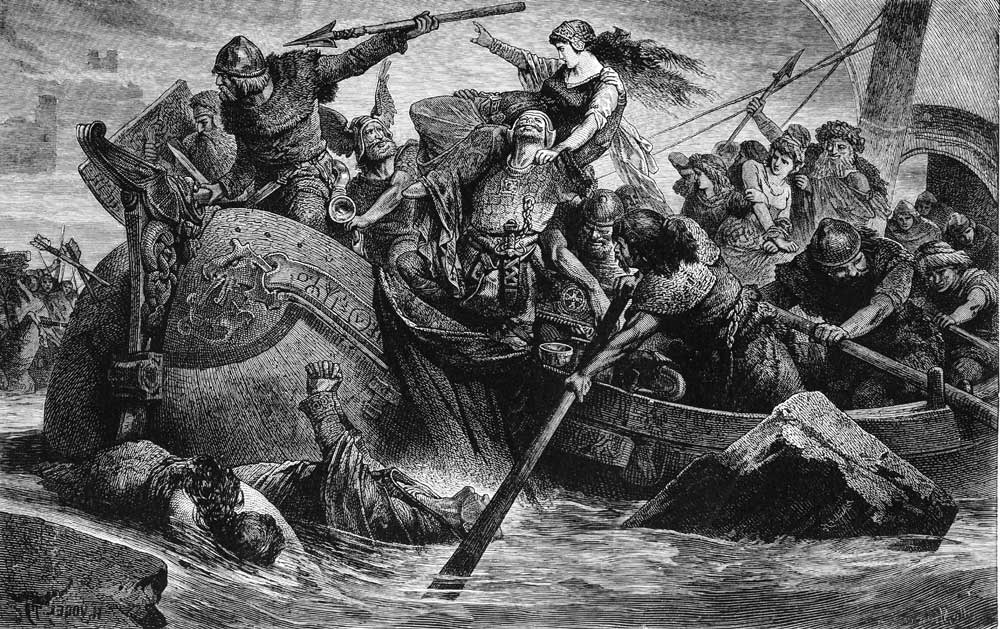
on Ragnarök, an Extreme Weather Event & the Paths to Conversion by Timothy J. Burbery
23.1—January/February 2010
It’s Bent on Bringing Down the House on the Family & the Church by Douglas Farrow
calling all readers
Please Donate
"There are magazines worth reading but few worth saving . . . Touchstone is just such a magazine."
—Alice von Hildebrand
"Here we do not concede one square millimeter of territory to falsehood, folly, contemporary sentimentality, or fashion. We speak the truth, and let God be our judge. . . . Touchstone is the one committedly Christian conservative journal."
—Anthony Esolen, Touchstone senior editor
