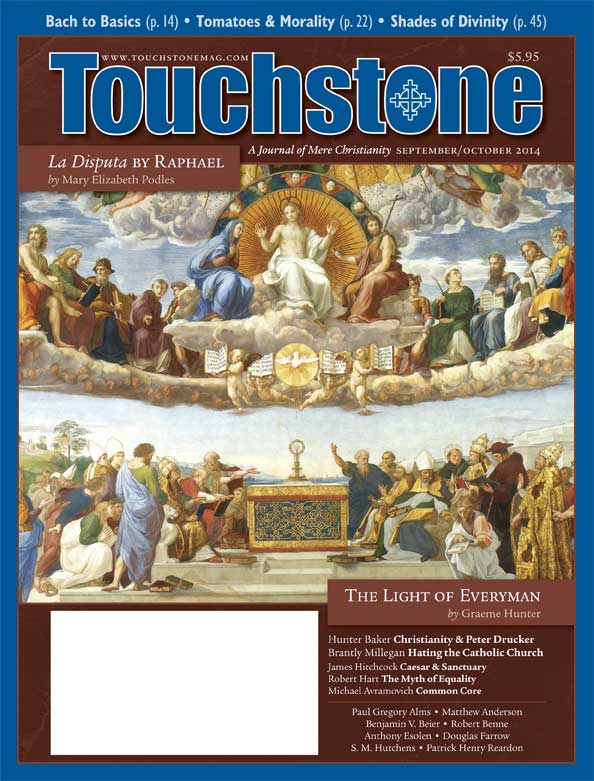
La Disputa, Raffaello Sanzio by Mary Elizabeth Podles

A Thousand Words

La Disputa

Mary Elizabeth Podles on Christian Art

In 1503, Julius II acceded to the papacy as the reform candidate after the notoriously bad Alexander VI. He came to the papacy with ambitious political plans and a far-reaching foreign policy, as well as a large-scale program for patronage of the arts. The old Basilica of St. Peter had developed alarming cracks. Julius, never an indecisive man, ordered it to be pulled down and commissioned a bold new design from the architect Bramante. In addition, Bramante was to redesign and expand the papal palace so that the Vatican presented a modern, unified Renaissance whole.

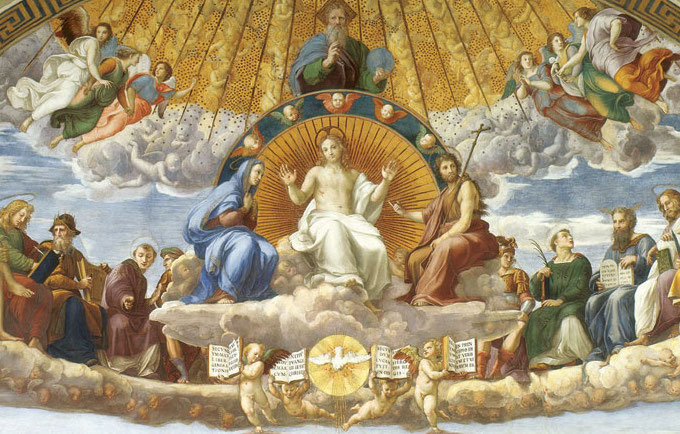
La Disputa by Raffaello Sanzio
Raphael's La Disputa
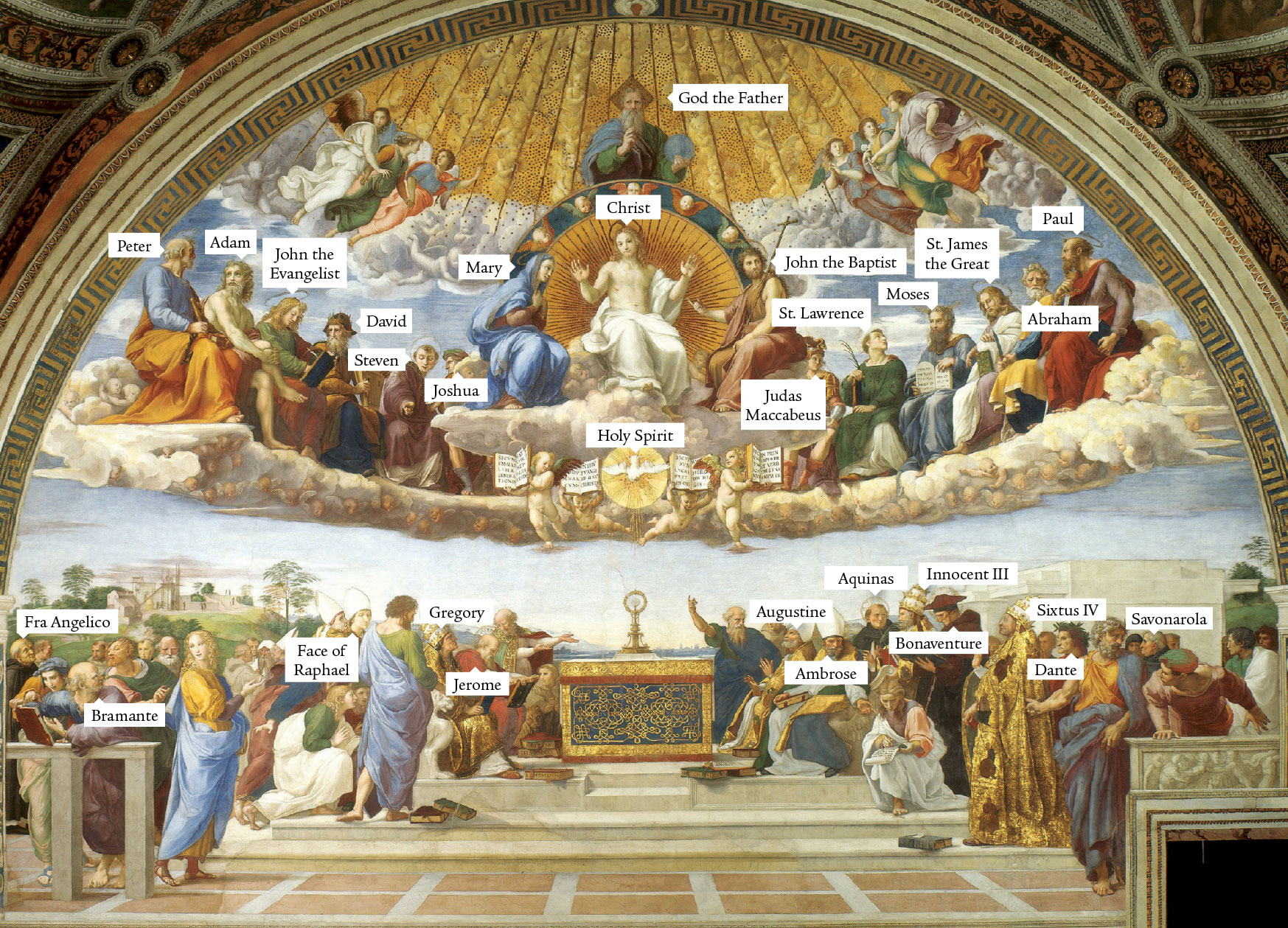
Click here to enlarge with identifying labels

Julius was also a man of strong prejudices. So much did he despise his predecessor that he refused to occupy the same apartments and ordered the renovation and decoration of a completely new set for himself. Among the artists he hired for the job was a young man from Bramante's hometown of Urbino, the 25-year-old Raphael. He came in 1508, but such was his talent that in 1509 he was put in charge of the decorative scheme of the whole first room, the Stanza della Segnatura, and produced the astonishing Disputa.

A Portrait of the Church

Nothing like it had been seen before; to date, it was the largest complex of figures in fresco ever created, a Cecil B. DeMille crowd carefully managed and grouped in rhythms and accords that make a rational and coherent, readable whole.

Reading from the top down, then, we start with God the Father, the Creator of all things, holding the starry globe of the cosmos and surrounded by a golden apse of adoring angels. Below him, in a golden mandorla of his own, sits Christ enthroned in glory, and at his feet the Holy Spirit, flanked by the four Gospels of his inspiration, in another golden circle. On either side of Christ sit Mary and John the Baptist, the two intercessors, and flanking them in a semicircle sit twelve patriarchs, apostles, and martyrs. A band of clouds separates this, the heavenly zone, from the lower half of the painting, where a crowd of theologians, clerics, poets, artists, and anonymous staffage figures gathers around an altar and focuses its attention on the monstrance containing the Host.

This is a familiar arrangement: a gilded apse divided hierarchically into Deesis, the heavenly realm, and the earthly realm with altar, is like an early Christian basilica. At this time, with all the various forms of corruption the Church had suffered, there was a theological movement urging reform, purification, and a return to the principles of the early Church. Raphael, friend of humanists, clerics, and the pope, and no doubt working with a theological advisor, surely was making a conscious statement. This is not a church, but the Church.

Pastoral & Doctrinal

If so, then each of the figures chosen to be included must represent some important aspect of the Church. In the heavenly half-circle, we find (from left to right) St. Peter in conversation with Adam, John the Evangelist conferring with David, Stephen the first martyr, and Joshua; on the right, Judas Maccabeus, St. Lawrence, Moses, St. James the Great, Abraham, and St. Paul. The figures are carefully paired across the half-circle: Peter with Paul; Adam, father of the human race, with Abraham, patriarch of the Jews; and so on, but the figures on the left side all represent the pastoral role, while the ones on the right the doctrinal mode of the Church. David the shepherd is paired with Moses the lawgiver; Joshua, the defender of Israel, with Judas Maccabeus, martyr for the sake of the law; Peter, the first shepherd of the Church, with Paul, the teacher of the Gentiles.

What people are saying about Touchstone:


The same division continues in the lower, earthly region, starting with the two figures flanking the altar. The one on the left, robed in church vestments, gestures toward the Eucharist, the pastoral manifestation of God, while the one on the right points upward toward the heavenly realities expounded in the doctrines of the Church. Next to them sit four Fathers of the Church: Jerome and Gregory on the left, Augustine and Ambrose on the right. Jerome's translation of the Bible and Gregory's liturgy are key to the practical, pastoral life, and Ambrose's treatise on the Holy Spirit and Augustine's City of God are important to the intellectual, doctrinal side. But of the two pairs, one each looks to the Holy Spirit and the other engages in practical scholarly work; both are essential. Interestingly, Raphael has given Gregory the features of Julius II, as if the pontiff wished to make a point of his pastoral role. (Raphael gives the bishop closest to Julius, looking outwards at us, his own face.)

All the identifiable figures fall into these two divisions, pastoral and doctrinal. On the right, for example, we find Thomas Aquinas, Innocent III, Bonaventure, Sixtus IV (Julius's scholarly uncle), Dante, an elderly man who may exemplify the contemplative life, Savonarola, and, at the end, a workman, possibly from the construction of St. Peter's, the official institutional church looming behind. On the pastoral side, a simple village church appears in the background, and the crowd of clerics and worshipers is not so readily identifiable. We have already noted the contemporary portraits of Julius and Raphael; in addition, behind the young man in blue and gold (the active life?) are Bramante (the bald man leaning on the parapet) and the painter Beato Angelico (the monk at the far left). Three artists, then, are included as a crucial part of the pastoral life of the church.


Mary Elizabeth Podles is the retired curator of Renaissance and Baroque art at the Walters Art Museum in Baltimore, Maryland. She is the author of A Thousand Words: Reflections on Art and Christianity (St. James Press, 2023). She and her husband Leon, a Touchstone senior editor, have six children and live in Baltimore, Maryland. She is a contributing editor for Touchstone.

A Journal of Mere Christianity—Delivered to Your Door

  • Essays on theology, culture, and the Church
  • Contributors from across the Christian traditions

Subscribe (Print + Online)

Six print issues (one year) of Touchstone, plus full online access and PDF downloads for only $39.95.

Subscribe (Online Only)

Get a one-year full-access subscription to the Touchstone online archives for only $19.95.


bulk subscriptions

Order Touchstone subscriptions in bulk and save $10 per sub! Each subscription includes 6 issues of Touchstone plus full online access to touchstonemag.com—including archives, videos, and pdf downloads of recent issues for only $29.95 each! Great for churches or study groups.

Transactions will be processed on a secure server.


more on art from the online archives
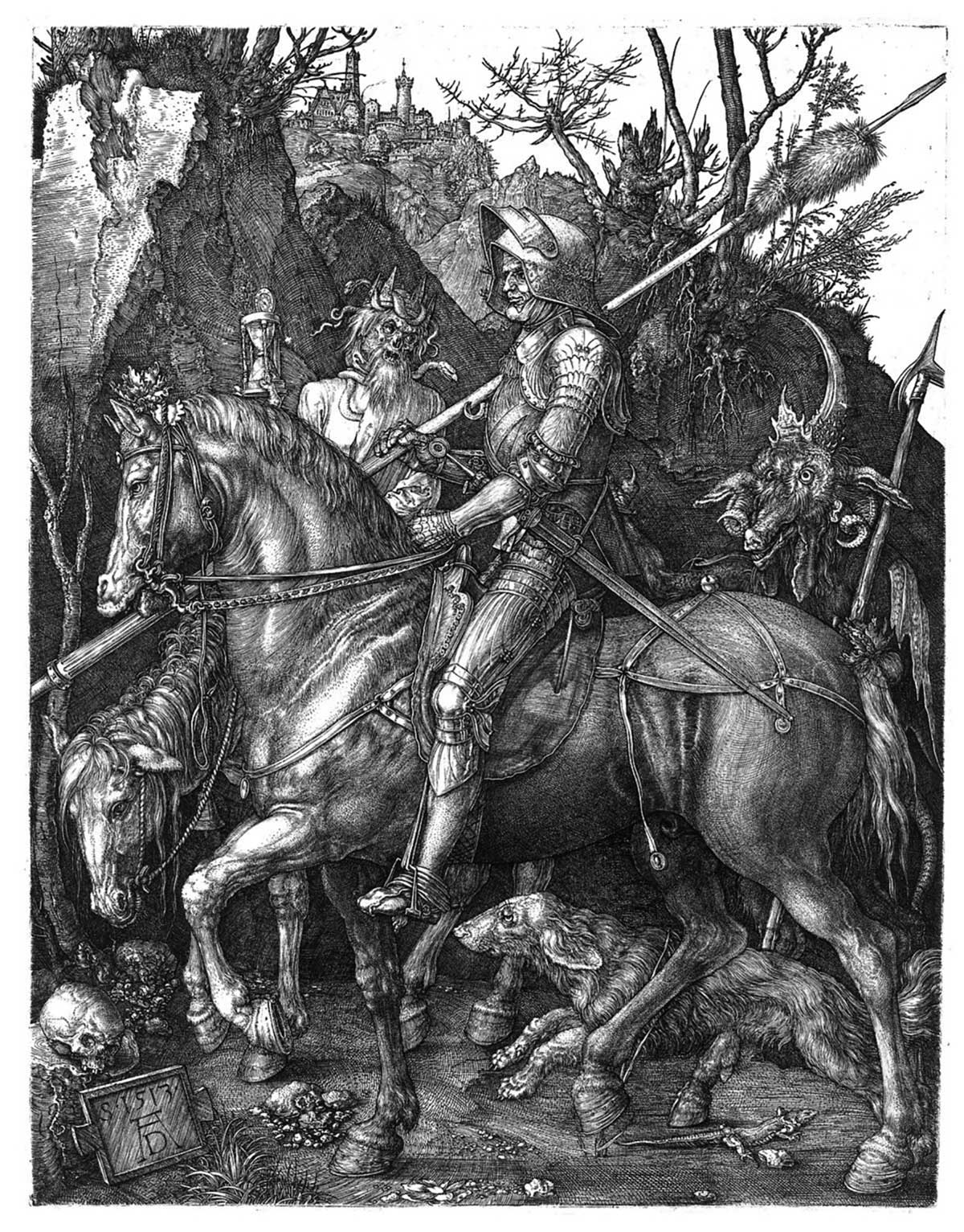
32.4—July/August 2019

Sojourner Knight

on Single-Mindedness in Durer's Ritter, Tod, und Teufel by Anthony Costello
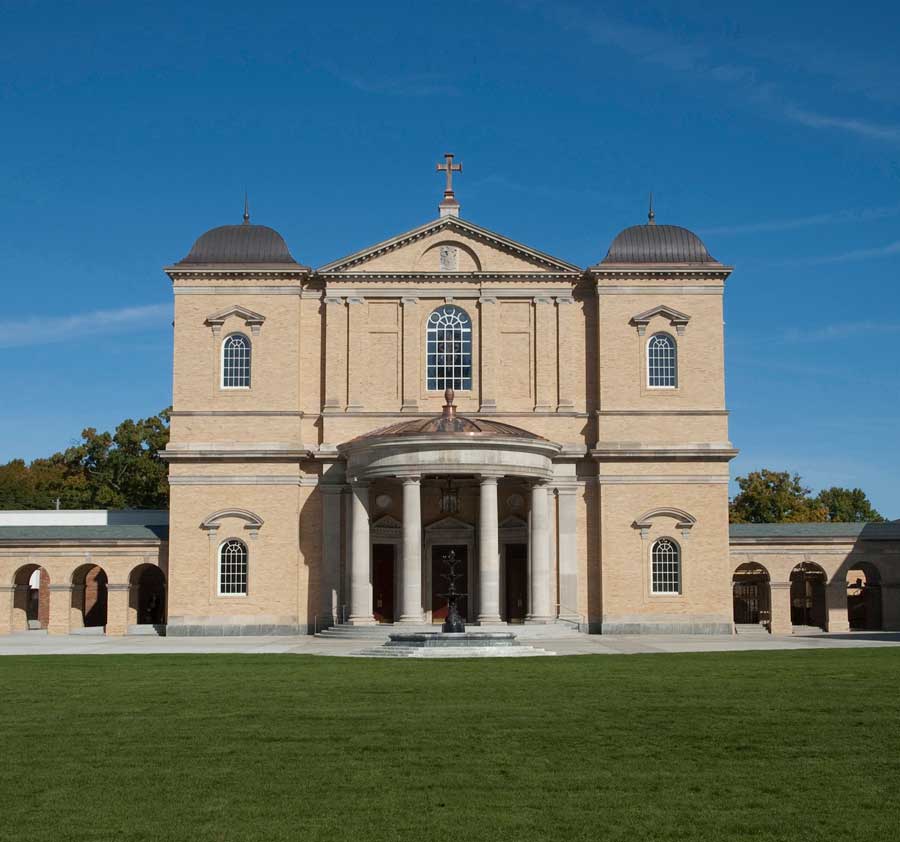
33.2—March/April 2020

Christ Chapel at Hillsdale

An Architectural Sign of Mere Christianity by Michael Ward
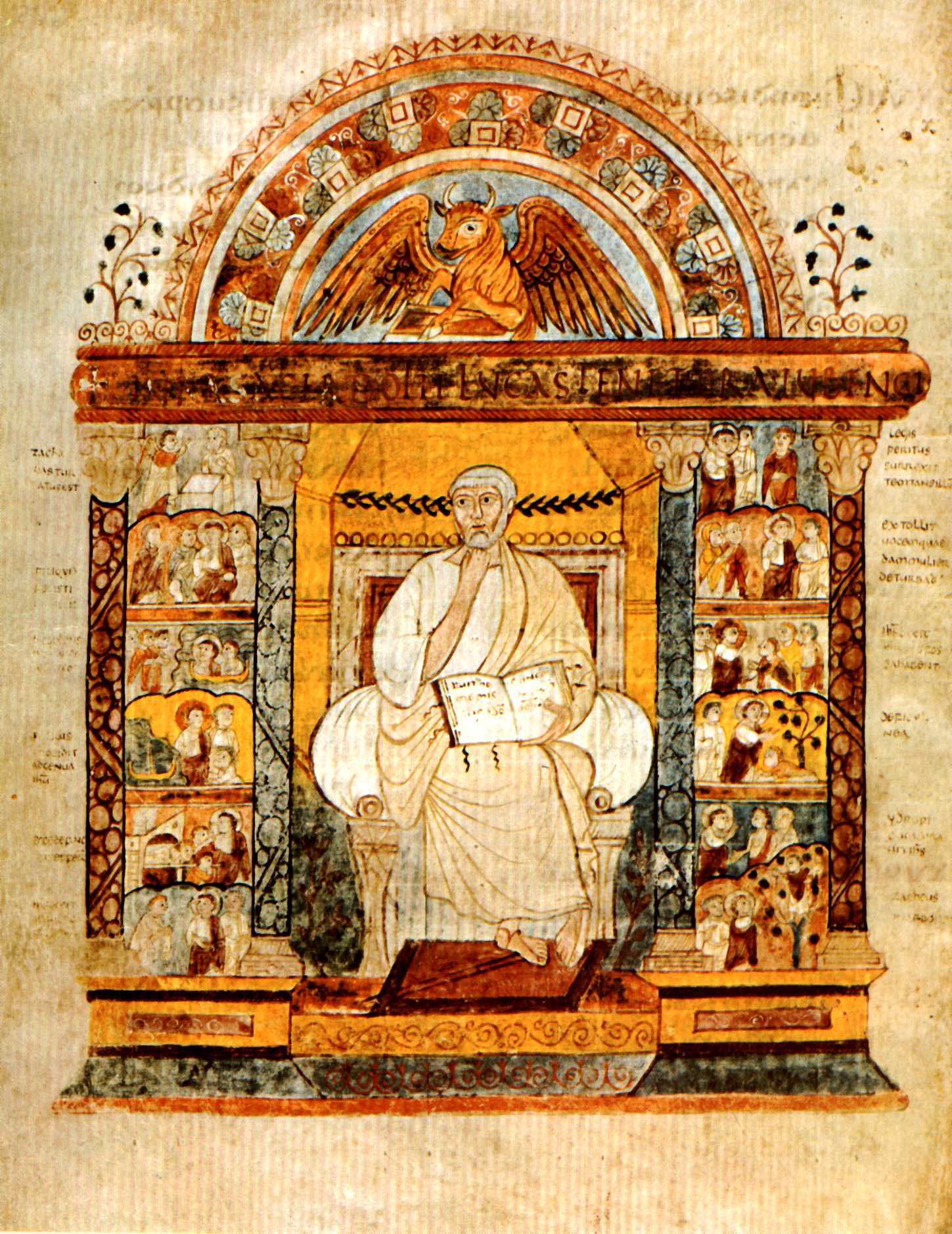
30.3—May/June 2017

St. Luke the Evangelist

by Mary Elizabeth Podles


more from the online archives

32.2—March/April 2019

The Problem of Pity

Misguided Mercy & Dante's Infernal Purgation by Joshua Hren

21.10—December 2008

Savior in a Manger

Early Christian Teaching on the Incarnation & Redemption by Patrick Henry Reardon

31.5—September/October 2018

Pastoral Realism

on the Congregation as a Wilderness by Paul Gregory Alms

calling all readers

Please Donate

"There are magazines worth reading but few worth saving . . . Touchstone is just such a magazine."
—Alice von Hildebrand

"Here we do not concede one square millimeter of territory to falsehood, folly, contemporary sentimentality, or fashion. We speak the truth, and let God be our judge. . . . Touchstone is the one committedly Christian conservative journal."
—Anthony Esolen, Touchstone senior editor

Support Touchstone

00