




Column: Illuminations
An Easter Trinity
by Anthony Esolen
We Christians believe in a communion that makes many another monotheistic system seem cold and distant, even desolate. In the order of human causes, were it not for the fiery Athanasius, we might be bowing before the lonely god of Omar, as Chesterton put it; or the more philosophical among us might be joining the gentle soul of Plotinus, seeking a mystical flight of the alone to the Alone. But we believe that God is Father, Son, and Holy Spirit; which is another way of saying that God is love. The divine Persons are really Persons, not personifications; they are not aspects of God, or modes or portions of his being. They are three, and they are One.
(Ye Sons and Daughters),
by Jean Tisserand,
1494.
I'm not enough of a theologian to turn the first leaf of this mystery. I'm wary of the good St. Patrick's shamrock, which might have served to illustrate the truth to a rude Irishman, but might not do for even ruder Americans now. I do know that our forefathers in the faith intuited that everything would fall apart if we got wrong either the person of Christ or the nature of the Trinity. Lose or muddle the Trinity, lose or muddle the divinity of Christ, and soon you will be peddling dilute deistic nostrums according to the taste of the day, your faith having decayed into humanitarianism, preached in an inoffensive little old white building with a spire, next door to a strip joint or an abortuary.
Trinitarian Musical Form
That's why the earliest Christian poets ended their hymns with a doxology, a "glory-word" to Father, Son, and Holy Spirit. I suspect it's also why they invented the rhyming triplet. Anyone can rhyme one line with another; but it's a fine thing to rhyme three consecutive lines in one compact stanza, without padding, and without straying from the single unifying thought. It's even finer if you can use that most emphatic and difficult third line for a climax, or a surprise. How better, in a Christian hymn, to make manifest the unity, the glory, and the sheer unexpectedness of the Trinity? Or of Easter, which we celebrate in this and in every season?
Christian poets had long been using the triplet when Jean Tisserand gave us the Easter hymn O filii et filiae, which we know in Edward Caswall's translation as "Ye Sons and Daughters." Here is the first stanza, in Latin and in English:
O filii et filiae,
rex caelestis, rex gloriae,
morte surrexit hodie.Ye sons and daughters of the Lord,
the King of glory, King adored,
this day himself from death restored.
Don't be fooled by Tisserand's simplicity. It is the simplicity of a man with the one day of all days in mind. His first line is a call to young men and maidens—they of the clear and youthful voices, for song. His second line names the Lord, the heavenly King, the King of Glory. His third line tells us why we sing, rhyming internally on the word morte, death, emphatically placed, but immediately overcome, as the stanza ends on hodie: this day!
The common melody for "Ye Sons and Daughters," in all of its variations, reflects the Trinitarian form. We sing two lines that "rhyme" exactly, and then follow them with a third and climactic line that echoes the first two but that also stands alone; then we echo the whole stanza with an alleluia, in some versions followed in turn by three more alleluias, repeating but not exactly repeating the melodies of the first two lines and then the third. We could label them thus: A A A*, followed by alleluias a / a*a**a. It's quite haunting, as every small feature of that Easter morning seems worthy of its own small and perfect stanza, and its own overflowing alleluias. Thus we sing for joy even before the disciples know that there's reason for joy.
Everything Is Precious
My favorites are the stanzas that dwell upon the names of the disciples and the things they do in ignorance—with the day's wonder so near to breaking upon them:
Et Maria Magdalene,
et Iacobi, et Salome
venerunt corpus ungere.
Caswall doesn't try to get those names into his translation, but his final line well delivers the pathos of the scene: the women are there "to anoint the sacred Body o'er." They are there to bestow the last work of mercy upon a corpse. And the choir bursts out into alleluias.
The apostles soon hear about it, too:
Et Ioannes apostolus
Petro cucurrit citius,
monumento venit prius.This told they Peter, told they John,
who forthwith to the tomb are gone,
but Peter is by John outrun.
And again we sing the alleluias.
Everything about that day is precious to us; everything bears a lesson. Tisserand doesn't delay to tell us what the lesson is. His stanza leaves us with the dramatic fact, made manifest in the third line: John reached the tomb before Peter did. Why? Was it that John was younger than Peter? Or was it that John, the beloved disciple, was filled with greater hope than Peter was? Yet we know, and Tisserand knows he doesn't have to tell us, that it was Peter, not John, who entered the tomb first. Did John defer to his elder? Is that, too, a part of the love that shines through on this holy day?
Great Day of Days
Someone soon after Tisserand added a few more stanzas to his poem, in the same form and with the same dramatic spirit. Thomas, we know, did not witness the risen Christ along with the other disciples. He believed that the news was too good to be true. It is, I think, the greatest challenge to the Christian faith. It comes not from the intellect, nor from the heart, but from the calluses on the skin. The unknown
poet presents Thomas without adornment:
Ut intellexit Didymus
quia surrexerat Iesus,
remansit fere dubius.But Thomas, when of this he heard,
was doubtful of his brethren's word;
wherefore again there comes the Lord.
Even the calluses merit their alleluias, because Jesus comes to guide the fingers of Thomas's soul. Says the poet at once, with admirable brevity:
Vide Thoma, vide latus,
vide pedes, vide manus,
noli esse incredulus."Thomas, behold my side," saith he;
"My hands, my feet, my body see;
and doubt not, but believe in me."
It would be hard, I think, for a mole in his warren, with the soil crumbling over his head, to believe in such things as stars, but that is not the fault of the stars. On this great day of days, the Son begotten of the Father's love is raised incarnate from the dead, and all things, even moles and men, should sing out with joy, as if they were young again—because they are born again. And for that we thank our mysterious God of love: Father, Son, and Holy Spirit.
Anthony Esolen is Distinguished Professor of Humanities at Thales College and the author of over 30 books, including Real Music: A Guide to the Timeless Hymns of the Church (Tan, with a CD), Out of the Ashes: Rebuilding American Culture (Regnery), and The Hundredfold: Songs for the Lord (Ignatius). He has also translated Dante’s Divine Comedy (Random House) and, with his wife Debra, publishes the web magazine Word and Song (anthonyesolen.substack.com). He is a senior editor of Touchstone.
A Journal of Mere Christianity—Delivered to Your Door
- Essays on theology, culture, and the Church
- Contributors from across the Christian traditions

Six print issues (one year) of Touchstone, plus full online access and PDF downloads for only $39.95.

Get a one-year full-access subscription to the Touchstone online archives for only $19.95.
bulk subscriptions
Order Touchstone subscriptions in bulk and save $10 per sub! Each subscription includes 6 issues of Touchstone plus full online access to touchstonemag.com—including archives, videos, and pdf downloads of recent issues for only $29.95 each! Great for churches or study groups.
Transactions will be processed on a secure server.
more from the online archives
34.1—January/February 2021
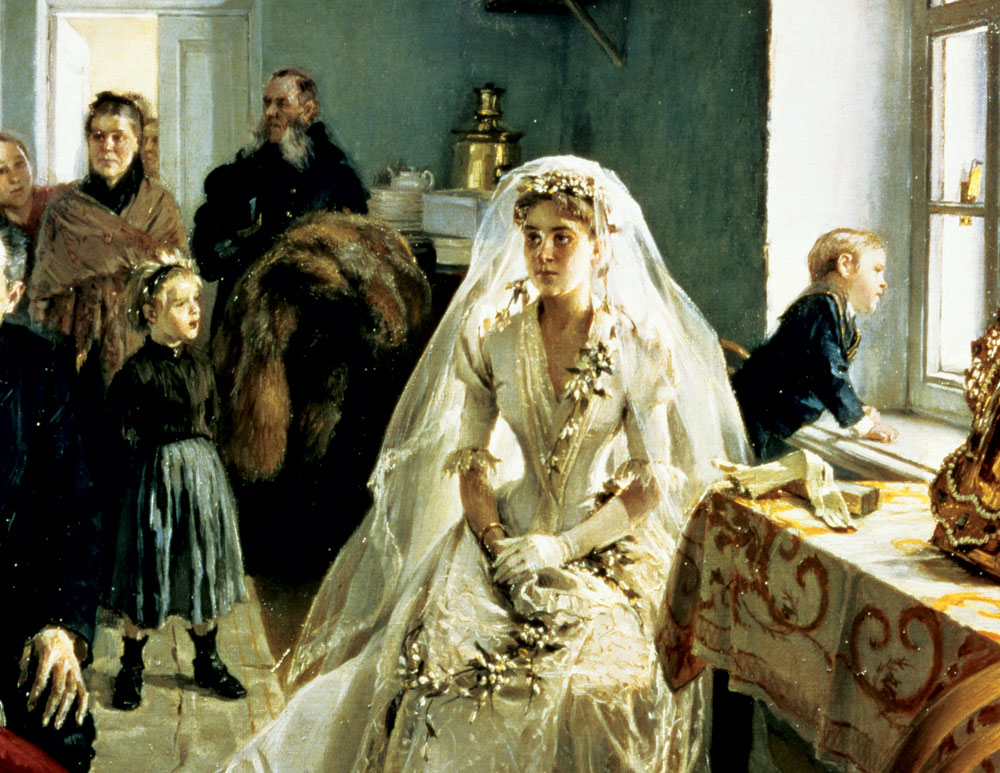
Jesus' Astonishing Other Teaching on Marriage by James Ware
18.3—April 2005
on Being a Free Narnian & the Joy of Subordination by Donald T. Williams
27.3—May/June 2014
Religious Freedom & Why It Matters
Working in the Spirit of John Leland by Robert P. George
calling all readers
Please Donate
"There are magazines worth reading but few worth saving . . . Touchstone is just such a magazine."
—Alice von Hildebrand
"Here we do not concede one square millimeter of territory to falsehood, folly, contemporary sentimentality, or fashion. We speak the truth, and let God be our judge. . . . Touchstone is the one committedly Christian conservative journal."
—Anthony Esolen, Touchstone senior editor
