





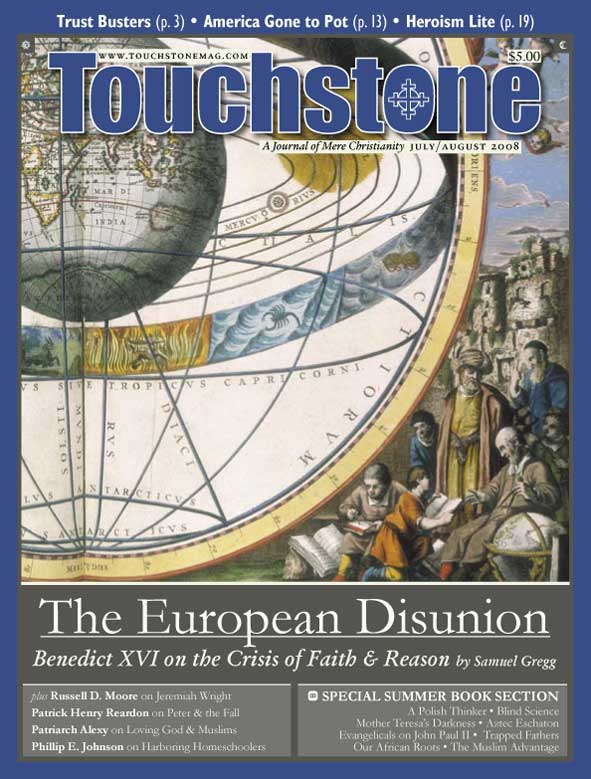
Obstructed View
Science’s Blind Spot: The Unseen Religion of Scientific Naturalism
by Cornelius G. Hunter
Brazos Press, 2007
(170 pages, $14.99, paperback)
reviewed by Terry Scambray
Most people think that science and religion were entangled in the past, to the detriment of science, but that the modern, experimental science of the last 400 years, with its reliance on natural explanations, has eliminated any lingering religious influence. “Nothing could be further from the truth,” Cornelius Hunter writes in the opening pages of Science’s Blind Spot.
THIS ARTICLE ONLY AVAILABLE TO SUBSCRIBERS.
FOR QUICK ACCESS:
A Journal of Mere Christianity—Delivered to Your Door
- Essays on theology, culture, and the Church
- Contributors from across the Christian traditions

Six print issues (one year) of Touchstone, plus full online access and PDF downloads for only $39.95.

Get a one-year full-access subscription to the Touchstone online archives for only $19.95.
bulk subscriptions
Order Touchstone subscriptions in bulk and save $10 per sub! Each subscription includes 6 issues of Touchstone plus full online access to touchstonemag.com—including archives, videos, and pdf downloads of recent issues for only $29.95 each! Great for churches or study groups.
Transactions will be processed on a secure server.
more on science from the online archives

28.2—March/April 2015
Why Scientism's Cherished Progress Narrative Fails by Jonathan Witt

17.6—July/August 2004
Old Science Confronts a Formidable Challenge in the Scientific ID Movement by Jay W. Richards

29.4—July/August 2016
on Noticing That Modern Science Has Rendered Atheism Irrational by Harry Biltz
more from the online archives
36.4—Jul/Aug 2023
Our Political Void & the Disintegration of Truth by Michael Hanby

19.6—July/August 2006
The Three-Fold Cord of Imagination, Reason & Will in C. S. Lewis by Michael Ward
33.2—March/April 2020
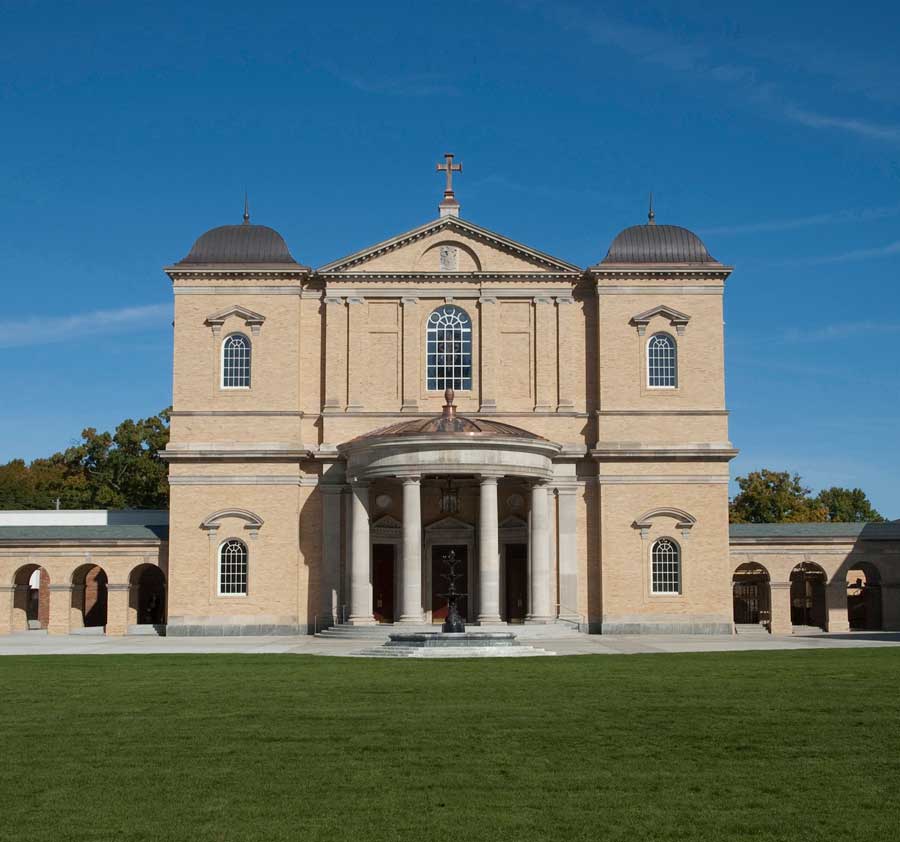
An Architectural Sign of Mere Christianity by Michael Ward
calling all readers
Please Donate
"There are magazines worth reading but few worth saving . . . Touchstone is just such a magazine."
—Alice von Hildebrand
"Here we do not concede one square millimeter of territory to falsehood, folly, contemporary sentimentality, or fashion. We speak the truth, and let God be our judge. . . . Touchstone is the one committedly Christian conservative journal."
—Anthony Esolen, Touchstone senior editor
