




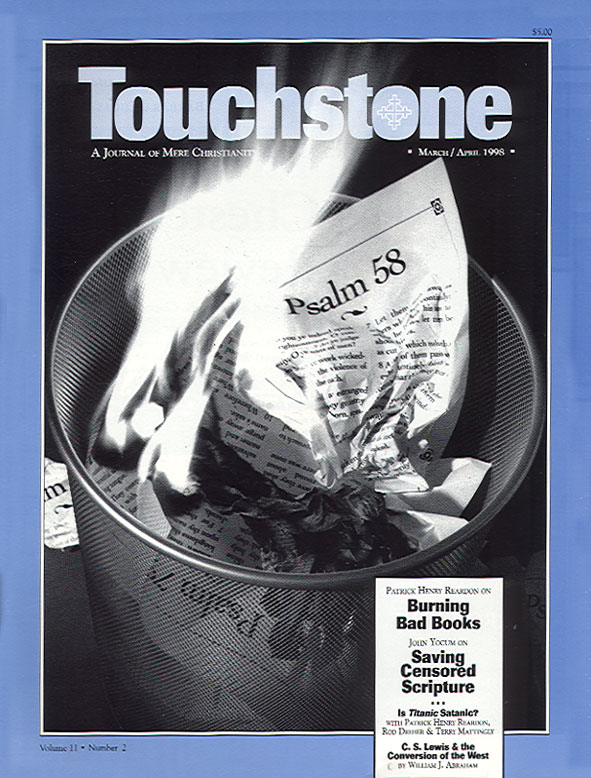
Mad as Hell
S. M. Hutchens on the Sixth Commandment
Now Abel was a keeper of sheep, and Cain a tiller of the soil. In the course of time Cain brought to the Lord an offering of the fruit of the ground, and Abel brought of the firstlings of his flock and of their fat portions. And the Lord accepted Abel and his offering, but Cain’s he did not accept. So Cain was very angry, and his face and bearing were altered. The Lord said to Cain, “Why are you angry? What is this change in you? If you do well, will you not be accepted? But if you do not do well, sin is crouching at the door; its desire is for you, but you must master it.”
Cain said to his brother Abel, “Let us go into the field.” And when they were in the field, Cain rose up against his brother Abel and killed him. Then the Lord said to Cain, “Where is your brother Abel?” He said, “I do not know; am I my brother’s keeper?” And the Lord said, “What have you done? The voice of your brother’s blood is crying to me from the ground, which has opened its mouth to receive your brother’s blood from your hand. When you till the ground, it shall no longer yield to you its strength; you shall be a fugitive and wanderer on the earth (Gen. 4:2–12).
“You shall do no murder.” This is the Sixth Commandment. The primal murder is presented by Scripture as an essentially irrational act, fueled by an anger that the primal murderer was given a chance to overcome, but which he allowed to overcome him, opening himself as a vehicle for sin, as his parents before him had. The tree planted by Adam and Eve here bears fruit in their firstborn son, who confirms that sin runs in the human family.
When Cain’s offering—an offering taken by the Lord to represent not just a tribute to himself, but as a presentation of the very being of the offerer—was not accepted, it did not mean the way to God was closed in his face. On the contrary, it meant that temptation opened two paths before him, as it had before his parents. If he did well, he would, the Lord said, be accepted. So the possibility of doing the right thing, and of pleasing God, was freely available to him. If he did not do well, then the sin that desired to master him would do so. Of his own will he chose the wrong path.
Cain’s redemption would certainly have involved joining himself to the acceptable sacrifice and to his brother Abel, so that Abel’s good offering would be Cain’s as well. It is the act required of every believer that they become joined to the sacrifice they cannot offer, that can only be offered by someone other than themselves. It was a difficult test that the Lord laid before Cain—for the older son to humble himself to ask for his younger brother’s help and intercession—but it was made plain that the test could be passed if Cain worked on it. Instead, however, of joining his brother—and this would involve loving him and becoming united with him in a redemptive bond that would have set an example for the entire human race thereafter—he chose to do away with him. Except you cannot really do away with anyone. The voice of the brother’s blood speaks to the Lord God from the ground.
Some of our translations have it, “Thou shalt not kill.” It is better translated, of course, “You shall do no murder,” for this is clearly not a prescription against taking human life at any time, but taking it unjustly. Biblical law prescribes the death penalty for a large number of offenses, not only for murder, but certain types of rape, for adultery, homosexual activity, criminal negligence, witchcraft, blasphemy, and even incorrigibility. These are sins God viewed as so serious that those who committed them should be cut off from his people. Also, there is clearly no prohibition against taking the life of an enemy in battle, or even genocide, when commanded by the Lord, who commanded at times the extinction of entire cultures—men, women, children, livestock—every living thing. This is not murder, but the just taking of life predicated on the inestimable value of human life. People and societies that brought spiritual death to the world were to be taken out of the world. Those who mutilated the image of God that is in man have performed a killing act that is itself worthy of death.
Murder accompanies anger, of which we must now speak at some length. Is anger in itself an evil thing? No, it is anger occurring in people who are sinners that easily and quickly becomes evil, just as wholesome desire can be subverted into lust. We are told by St. Paul in the letter to the Ephesians to “be angry, but do not sin.” Anger is the appropriate reaction in some situations, and it drives us to do what needs to be done. Our Lord was angry on more than one occasion, such as when he drove the money changers from the temple, or denounced the scribes and Pharisees.
Shall we say that anger directed at particular people is bad? That we may hate the sin, but must love the sinner, and that loving him involves not being angry at his person, only at the evil he is doing? I think here of homosexual activists who accuse Christians of hating them, a hatred they call homophobia. But if we hate the sin, loving their souls, what happens when they identify homosexuality as a part of their essential being? There is no difference, they are telling us, between me and the thing you call my sin; you can’t divide my homosexuality from my deepest personal identity. Love me, love my sin; hate my sin, and you hate me. Our own redemptive desire to divide the sin from the sinner, hating one and loving the other, is rejected. At a certain point God, in judgment, allows the stubborn sinner to keep his sin and sends him to hell. And before that time our own anger is going to be directed to the person so directly (for he wills it to be so) that it appears to arise from hatred of the person, even when this is not our desire or intention.
S. M. Hutchens is a senior editor and longtime writer for Touchstone.
A Journal of Mere Christianity—Delivered to Your Door
- Essays on theology, culture, and the Church
- Contributors from across the Christian traditions

Six print issues (one year) of Touchstone, plus full online access and PDF downloads for only $39.95.

Get a one-year full-access subscription to the Touchstone online archives for only $19.95.
bulk subscriptions
Order Touchstone subscriptions in bulk and save $10 per sub! Each subscription includes 6 issues of Touchstone plus full online access to touchstonemag.com—including archives, videos, and pdf downloads of recent issues for only $29.95 each! Great for churches or study groups.
Transactions will be processed on a secure server.
more on the ten commandments from the online archives
31.5—September/October 2018
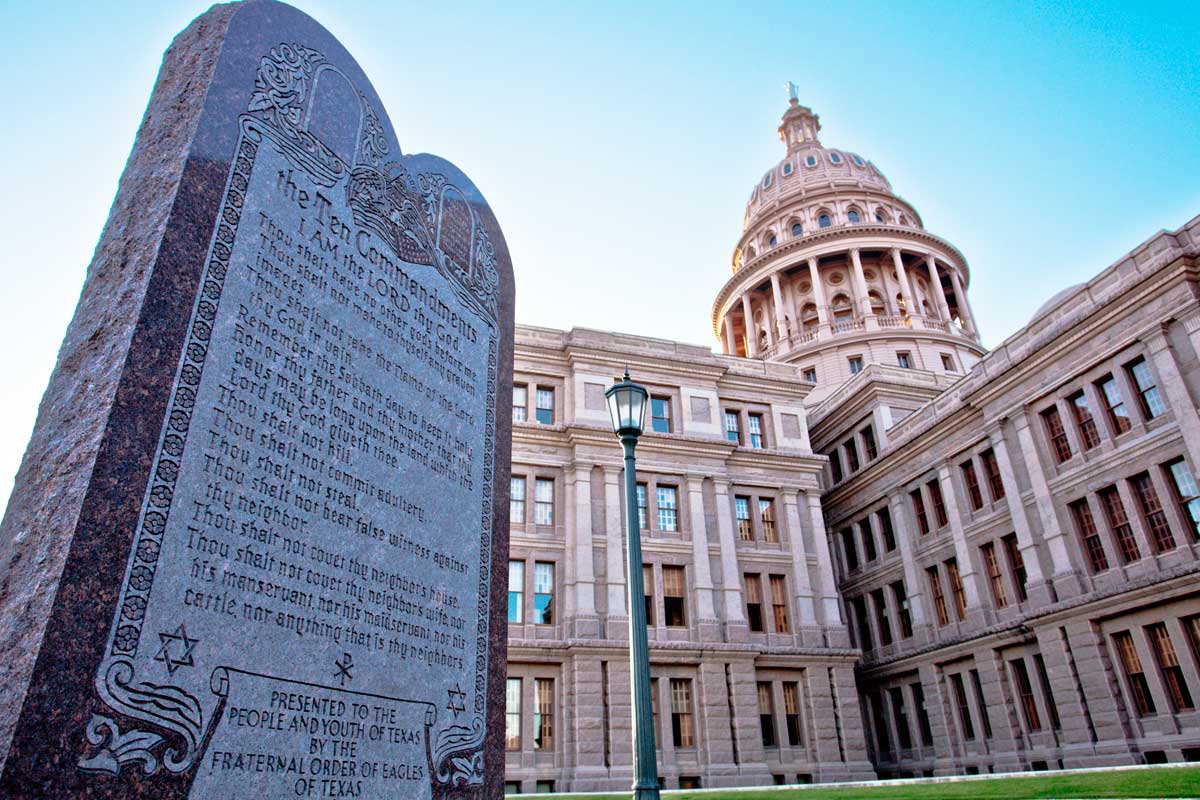
The Secular State Without the Decalogue by James M. Kushiner
more from the online archives
30.6—Nov/Dec 2017
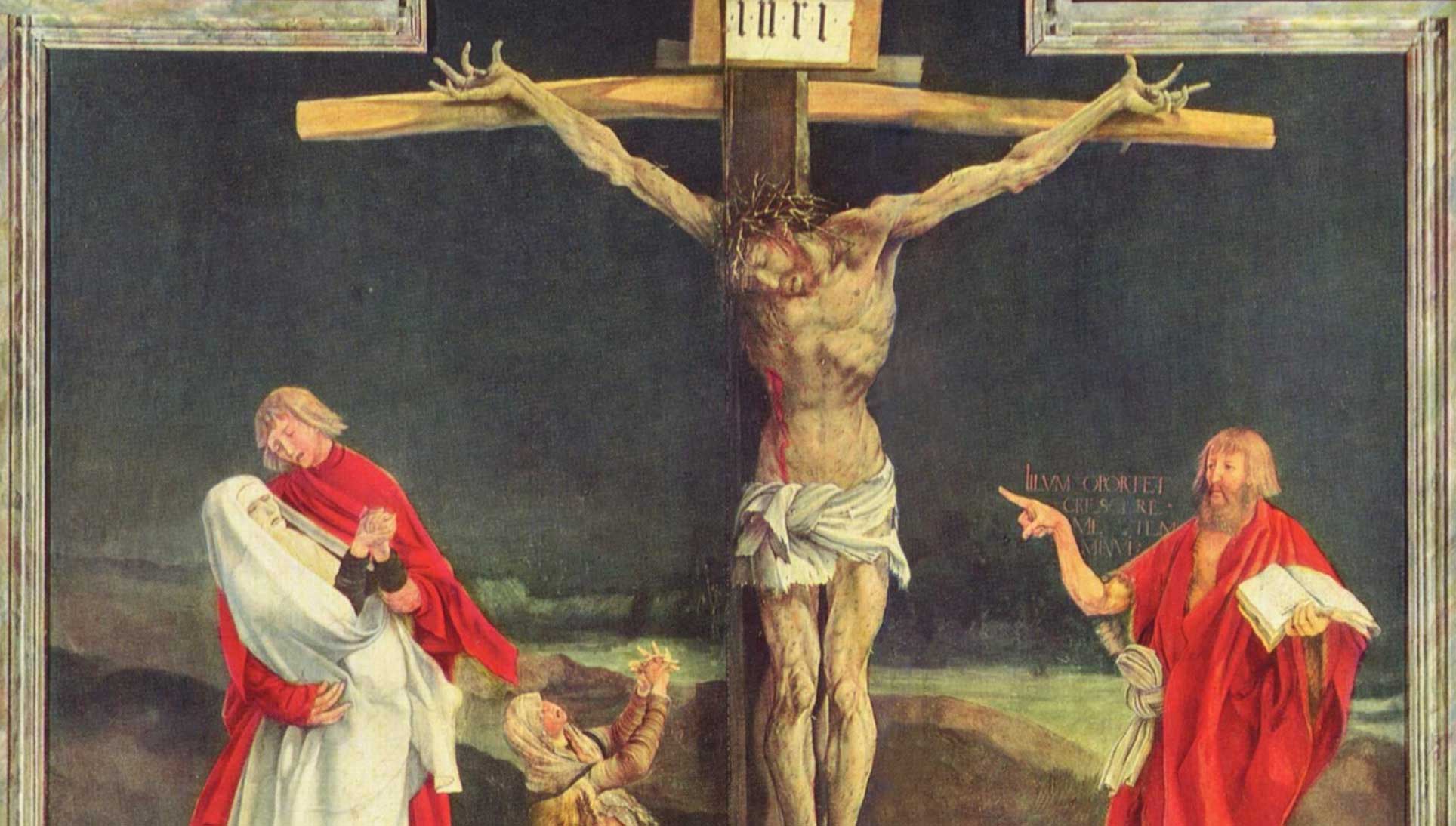
on Benedict XVI on the Fairest of the Sons of Men by Michael Martin De Sapio
37.5—Sept/Oct 2024
A Battle Plan for Peace While Growing Old by Anthony Esolen
calling all readers
Please Donate
"There are magazines worth reading but few worth saving . . . Touchstone is just such a magazine."
—Alice von Hildebrand
"Here we do not concede one square millimeter of territory to falsehood, folly, contemporary sentimentality, or fashion. We speak the truth, and let God be our judge. . . . Touchstone is the one committedly Christian conservative journal."
—Anthony Esolen, Touchstone senior editor
