





Contradictory Man
The Sobering Lessons of Dr. Jekyll & Dorian Gray
What a chimera then is man! What a novelty! What a monster, what a chaos, what a contradiction, what a prodigy! Judge of all things, imbecile worm of the earth; depositary of truth, a sink of uncertainty and error; the pride and refuse of the universe!
. . . if man had never been corrupt, he would enjoy in his innocence both truth and happiness with assurance; and if man had always been corrupt, he would have no idea of truth or bliss. But, wretched as we are, and more so than if there were no greatness in our condition, we have an idea of happiness, and cannot reach it.
. . . there are two truths of faith equally certain: the one, that man, in the state of creation, or in that of grace, is raised above all nature, made like unto God and sharing in His divinity; the other, that in the state of corruption and sin, he is fallen from this state and made like unto the beasts.
—Blaise Pascal
So wrote Pascal in his Pensées (trans. William Finlayson Trotter), and what he wrote is as true today as when he wrote it. It was equally true at the time of Shakespeare, of Dante, of Augustine, of Plato, of Homer, of Moses, and of Abraham. For what Pascal describes is the human condition in all its sad and painful perplexity.
Had we remained in our original state of innocence, or had we always known nothing but corruption, we would not feel so torn, so confused, so displaced. Alas, we are neither; we are creatures created good in the image of God but fallen and depraved. We cannot, at least on this side of the grave, tear asunder within us the good and the bad, the righteous and the unrighteous.
I would go so far as to suggest that every person in every culture since time began has felt, if briefly, the temptation to divide, or even detach, his good side from the bad, his better angel from the baser beast. Some may wish to soar, while others wish to sink, but most are uncomfortable with their dual nature and would escape the wrestling if they could. In our fallen state of sin and separation, we want to dictate how our bodies will shape our souls and our souls our bodies, how the external will shape the internal and the internal the external.
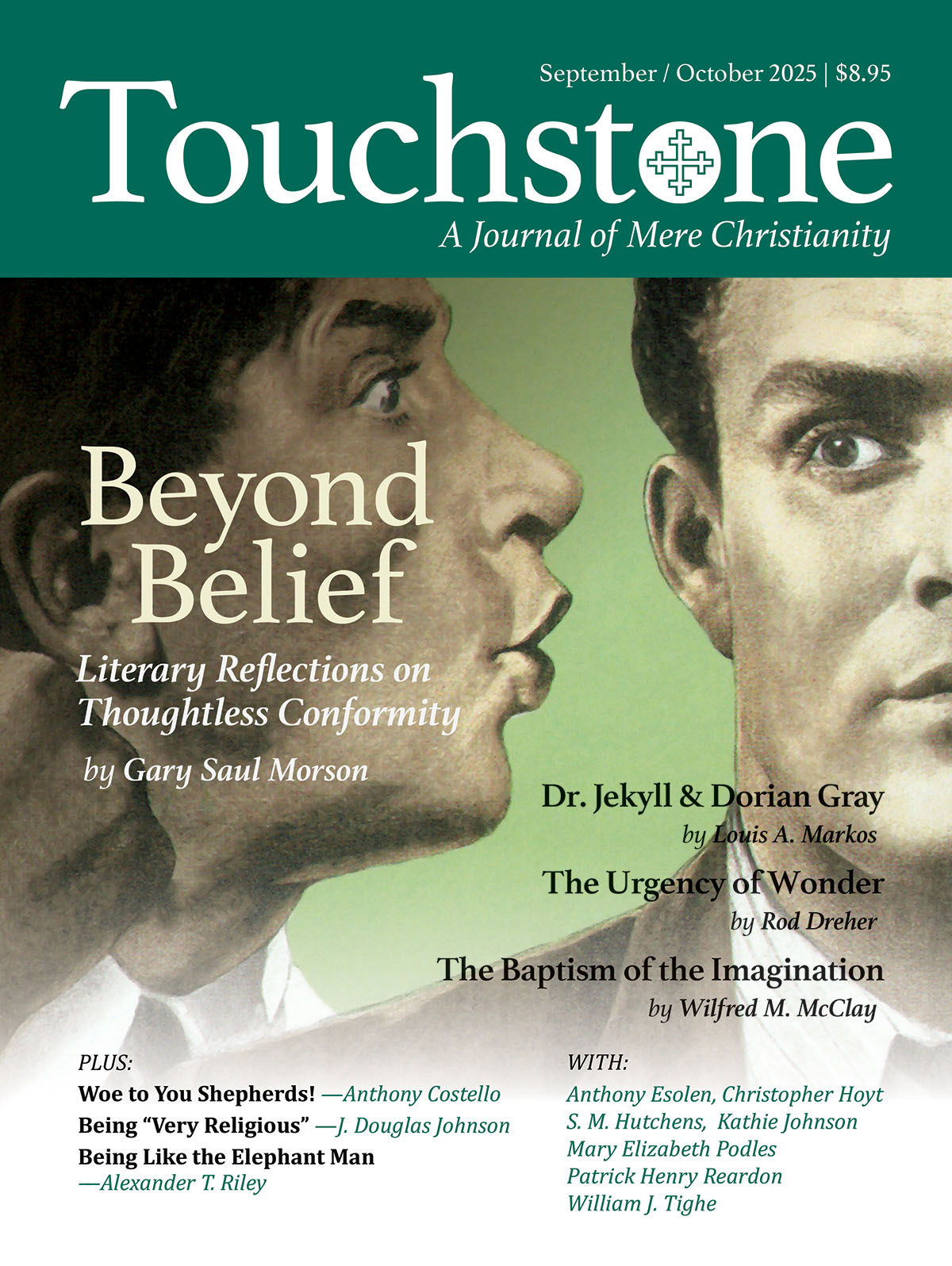
Thankfully, for those who have felt that deep-set discontent over our status as creatures made good but fallen, the late nineteenth century gifted us with two fictional explorations of our dual nature that are at once captivating and convicting, stimulating and sobering. By reading closely those two tales, I hope to draw out the dangers of thinking that we can, by our own reason and volition—two of God’s greatest gifts to man—“free” innocence from experience, spirit from flesh.
Jekyll & His Potion
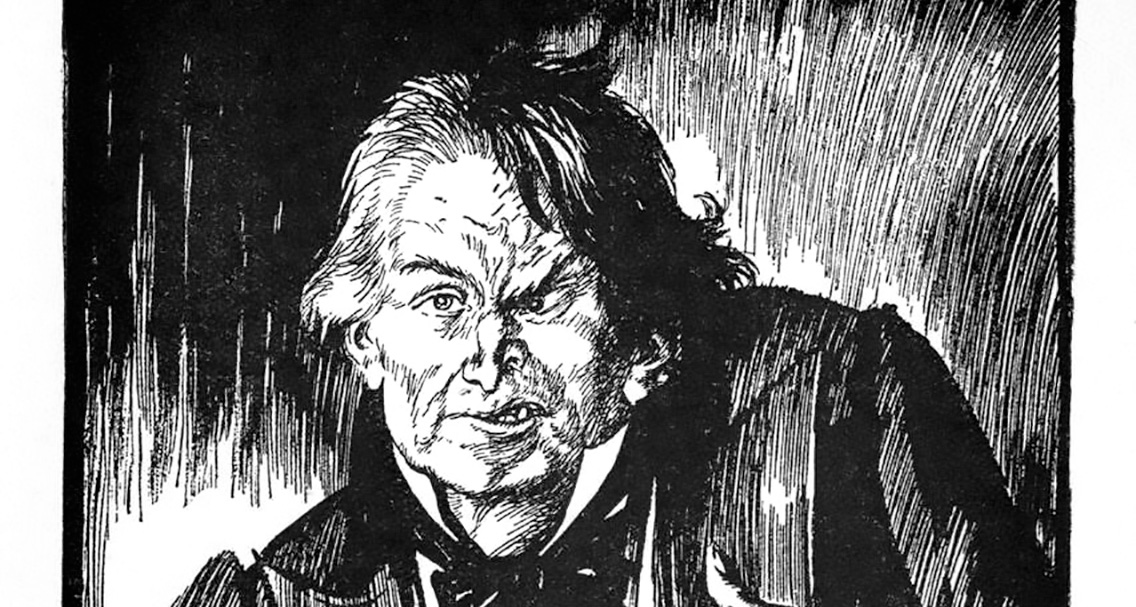
Robert Louis Stevenson’s The Strange Case of Dr. Jekyll and Mr. Hyde (1886) is a cautionary moral tale. It centers on an upright, respectable physician who thinks he can, by drinking a potion, separate his angelic side from his bestial side. His goal may seem noble at first, but he quickly learns that while he (Dr. Jekyll) remains a mixture of good and evil, the fiend that he sets free (Mr. Hyde) is wholly evil and cannot so easily be put back inside him.
Only in the last chapter of his disturbing novella (“Henry Jekyll’s Full Statement of the Case”) does Stevenson allow us to hear Jekyll’s motives and what he learns, to his sorrow, about man’s dual nature. Obsessed with “the thorough and primitive duality of man,” Jekyll decides that if the two sides of his nature
Louis Markos , Professor in English and Scholar in Residence at Houston Baptist University, holds the Robert H. Ray Chair in Humanities. His 19 books include Lewis Agonistes; Restoring Beauty: The Good, the True, and the Beautiful in the Writings of C. S. Lewis; On the Shoulders of Hobbits: The Road to Virtue with Tolkien and Lewis; and From A to Z to Narnia with C. S. Lewis.
A Journal of Mere Christianity—Delivered to Your Door
- Essays on theology, culture, and the Church
- Contributors from across the Christian traditions
Subscribe (Print + Online) 
Six print issues (one year) of Touchstone, plus full online access and PDF downloads for only $39.95.
Subscribe (Online Only) 
Get a one-year full-access subscription to the Touchstone online archives for only $19.95.
bulk subscriptions
Order Touchstone subscriptions in bulk and save $10 per sub! Each subscription includes 6 issues of Touchstone plus full online access to touchstonemag.com—including archives, videos, and pdf downloads of recent issues for only $29.95 each! Great for churches or study groups.
Transactions will be processed on a secure server.
more on literature from the online archives
30.5—Sept/Oct 2017
on Costly Grace in Breece D'J Pancake's Flyover Country by Casey Chalk
30.2—March/April 2017
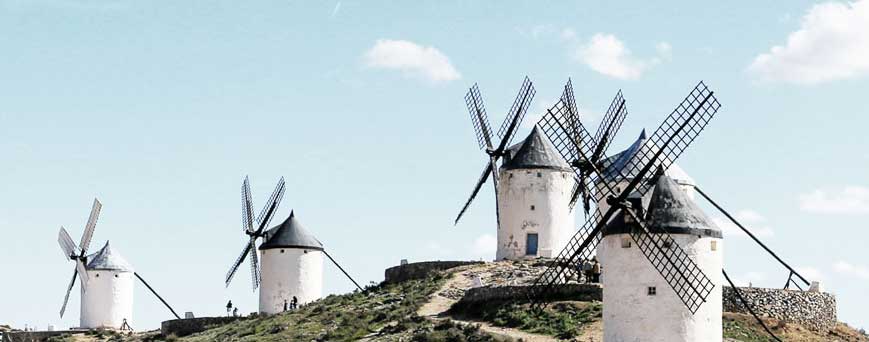
on Reading Don Quixote in Its Original Christian Context by Luis Cortest
more from the online archives

18.8—October 2005
European Islam & the Doubtful Future of Christian Europe by William Murchison
calling all readers
Please Donate
"There are magazines worth reading but few worth saving . . . Touchstone is just such a magazine."
—Alice von Hildebrand"Here we do not concede one square millimeter of territory to falsehood, folly, contemporary sentimentality, or fashion. We speak the truth, and let God be our judge. . . . Touchstone is the one committedly Christian conservative journal."
Support Touchstone
—Anthony Esolen, Touchstone senior editor
