




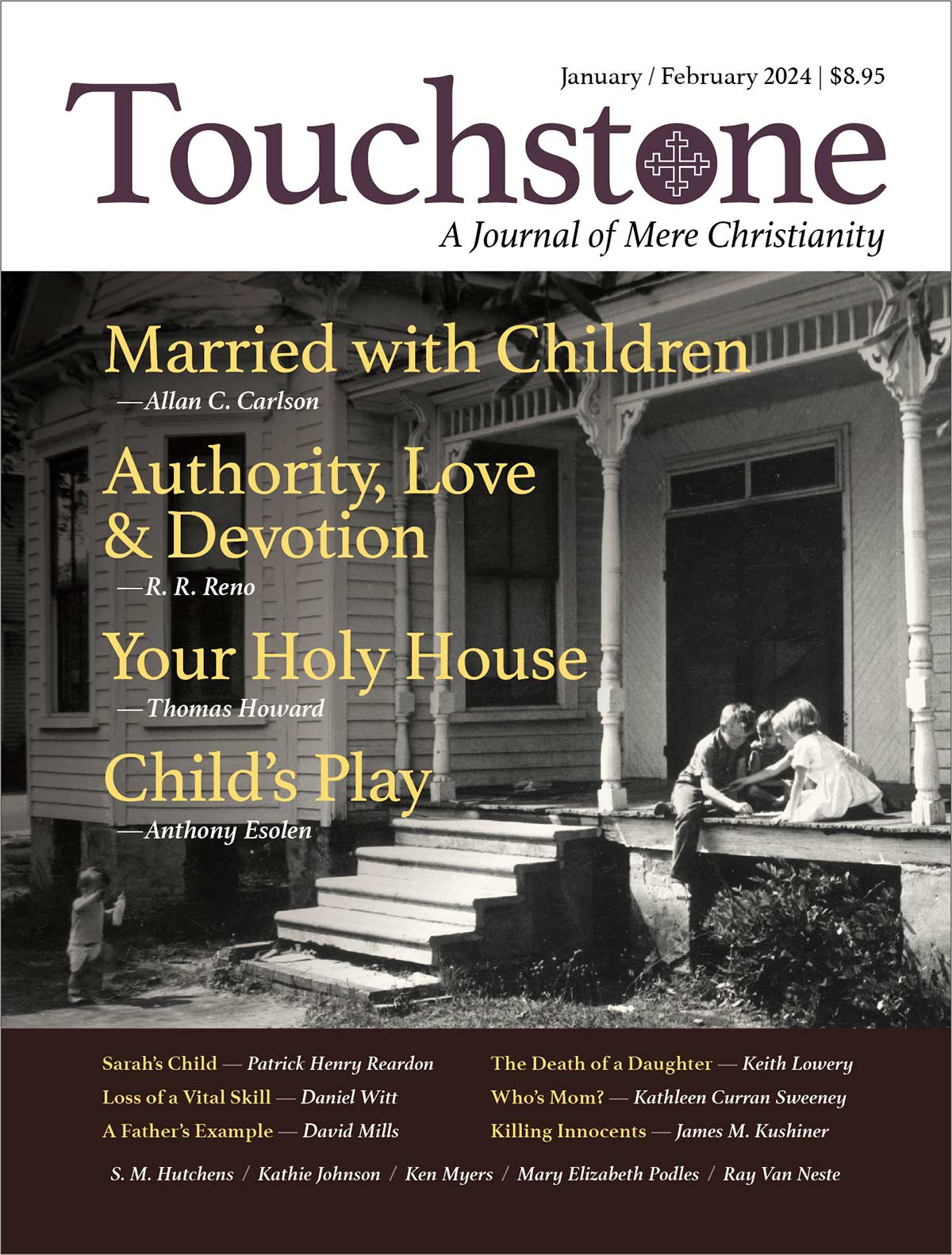
Child’s Play
We aren’t told much about the life of Jesus from the time when the Magi from the east presented the child with their prophetic gifts to the beginning of his ministry. We know that he and his family used to go to Jerusalem every year for the Passover, and that when he was twelve, in the exuberance of his boyish nature, he stayed behind to be about his heavenly Father’s business, disputing and conversing with the scholars in the Temple. We know, besides, that he learned his foster-father’s trade and worked as a carpenter. And that is about all.
We wish there were more, but we should take as an important feature of the Gospel that there is no more:none of the typical embellishments of the young life of the hero, no desire among the Evangelists to see the mature Christ developing in the boy. Indeed, it is a mystery to us, this very question of how Jesus, the only-begotten Son of God, had to learn things in ordinary human fashion. Perhaps it shall be revealed to us in glory. But it does appear that any probing into the development of Jesus’ personality would be impertinent.
The mature Jesus we encounter in the Gospels is like us in obvious ways: he needs food and drink and rest; he is moved with joy and sorrow, with delight in the good deeds of men and disappointment in their failures; he knows how to speak to put people at ease or to accuse them home; he prays, he sings, he holds his peace. He is like us, but not one of us is like him. You may meet a man who is like Socrates: gregarious, not too responsible when it comes to family life, intelligent, sometimes the life of the party, and often an insufferable pest. You will not meet anyone like Jesus, though that very likeness is the aim of the Christian life, and in that likeness we will be fully and distinctly and unrepeatably ourselves.
Then maybe we can guess that if Jesus was like other boys, no boy was ever like Jesus, so that if we were told what kinds of games he liked to play, or what small house he built out of some scraps of lumber that Joseph gave him, that would falsify him, not because the boy Jesus did not do such things, but because, in his case alone, dwelling upon them would encourage in us a kind of false familiarity that gets in the way of genuine knowledge. All that St. Luke tells us is that “the child grew, and waxed strong in spirit, filled with wisdom, and the grace of God was upon him” (2:40), and then, after the account with the doctors of the law, that “Jesus increased in wisdom and stature, and in favor with God and man” (2:52). But what could that mean?
Hiddenness as Testimony
The priest-poet Jean-Baptiste de Santeuil (1630–1697) meditated upon that mystery, giving us the Latin hymn Divine, crescebas, Puer, used, in the Paris Psalter, for Sunday Lauds in the time of Epiphany. He does not make any guesses. He takes the hiddenness of Jesus’ young life as itself a testimony to who he is and what the future has in store for him: by the very darkness we are to see darkness, and then the light that dispels all darkness.
Here is the first stanza, as translated somewhat loosely into English by the otherwise excellent John Chandler:
In stature grows the heavenly Child,
With death before his eyes;
A Lamb unblemished, meek and mild,
Prepared for sacrifice.
In this case, though, Chandler fails us a bit. For the poet says that the Child grew divinely and by his growing, learned to die. The verse from Hebrews comes to mind: “Though he were a Son, yet learned he obedience by the things which he suffered” (5:8). But as a boy? Yes, since his work and his humble life were the praeludia of his death to come. De Santeuil is clearly aware of the inner sense of the Latin word. The boy Jesus’ experiences were not just preludes, but introductory and preparatory play. If boys learn to be men by playing soldier or king, Jesus prepared for his death by the humility of being unknown and powerless.
We have here two cases of dramatic irony of quite a subtle kind, since the two cases appear to contradict one another. The more obvious is that people do not see in the son of the carpenter the Son of God through whom all things were made. The less obvious is that we are especially to see the Son of God in him by the secrecy itself. Of course, we might be forgiven for not seeing:
The Son of God his glory hides
With parents mean and poor;
And he who made the heavens abides
In dwelling-place obscure.
The Latin is domos for the heavens above, and domo for the house of the poor man Joseph. Carpenters build houses, and the Son of God who built the mansions of heaven has chosen the house of earth to dwell in. Again, though, the hiding is a revelation: for God, who made all things, dwells in his fullness in the smallest of the seeds; and the first entry of the Son of God in the flesh was likewise hidden, quiet, in the womb of Mary.
Christ’s Brilliant Humility
Where Jesus lived is in harmony with what he did. “When I consider the heavens, the work of thy fingers,” sings the Psalmist in happy praise, “the moon and the stars, which thou hast ordained, what is man that thou art mindful of him?” (Ps. 8:3–4). Yet the same grace that astonishes the Psalmist and fills him with gratitude is, in Christ, made manifest to the ultimate degree, since we are not simply speaking of God’s being mindful of us, but of his dwelling among us and sharing in the fate of Adam and Adam’s sons:
Those mighty hands that stay the sky
No earthly toil refuse;
And he who set the stars on high
An humble trade pursues.
Socrates the cobbler went out of his way to mingle among the rich, sometimes for the pleasure of conversation, and sometimes for the pleasure of revealing them to be fools. But Jesus was not only a carpenter. He returned, as that boy, to Nazareth with his parents, “and was subject unto them” (Luke 2:51). It is a lesson to us, and one that we, with our insistence upon equality—which is one part democratic ideology, another part misapplied theology, and eight parts envy—do not care to hear, even though we do hear it everywhere in the Gospels and the letters of St. Paul: “[Submit] yourselves one to another in the fear of God” (Eph. 5:21). The example of Jesus should shame us into sanity:
He before whom the angels stand,
At whose behest they fly,
Now yields himself to man’s command,
And lays his glory by.
When he submitted to the soldiers in Gethsemane, and Peter drew his sword, Jesus said, “Thinkest thou that I cannot now pray to my Father, and he shall presently give me more than twelve legions of angels?” (Matt. 26:53). But he sets aside his glory, making himself of no reputation (Phil. 2:7), even while we men seek reputation more than anything, to make a name for ourselves in the world, as did the carpenters and masons of Babel (Gen. 11:4), with what result we can yet see in our midst, as all the glorious works of man must kiss the dust.
The final stanza, a doxology, again binds in one the glory of Christ with the brilliant humility of his dwelling among us, Son of God and Son of Man:
Jesu, the Virgin’s holy Son,
We praise thee and adore,
Who art with God the Father one,
And Spirit evermore. Amen.
Anthony Esolen is Distinguished Professor of Humanities at Thales College and the author of over 30 books, including Real Music: A Guide to the Timeless Hymns of the Church (Tan, with a CD), Out of the Ashes: Rebuilding American Culture (Regnery), and The Hundredfold: Songs for the Lord (Ignatius). He has also translated Dante’s Divine Comedy (Random House) and, with his wife Debra, publishes the web magazine Word and Song (anthonyesolen.substack.com). He is a senior editor of Touchstone.
A Journal of Mere Christianity—Delivered to Your Door
- Essays on theology, culture, and the Church
- Contributors from across the Christian traditions

Six print issues (one year) of Touchstone, plus full online access and PDF downloads for only $39.95.

Get a one-year full-access subscription to the Touchstone online archives for only $19.95.
bulk subscriptions
Order Touchstone subscriptions in bulk and save $10 per sub! Each subscription includes 6 issues of Touchstone plus full online access to touchstonemag.com—including archives, videos, and pdf downloads of recent issues for only $29.95 each! Great for churches or study groups.
Transactions will be processed on a secure server.
more from the online archives
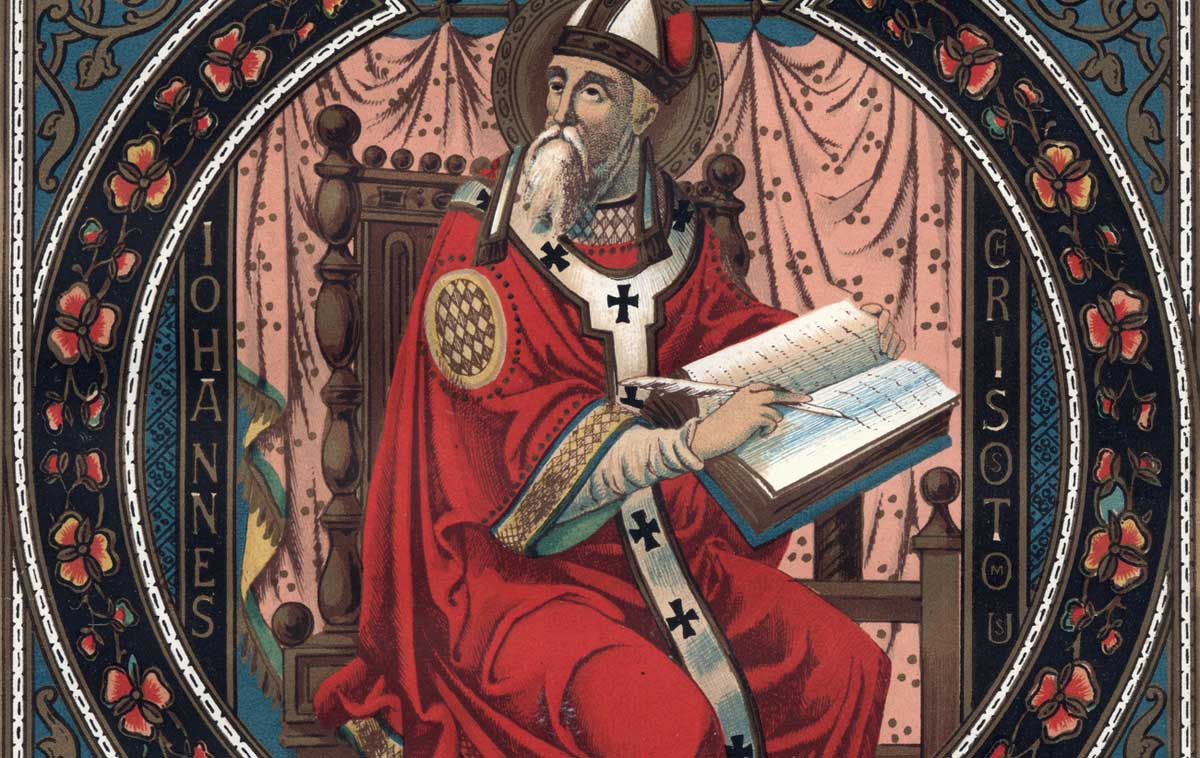
21.1—January/February 2008
John Chrysostom’s Discovery of the Blessings & Mysteries of Marriage by Mike Aquilina

24.6—Nov/Dec 2011
Liberty, Conscience & Autonomy
How the Culture War of the Roaring Twenties Set the Stage for Today’s Catholic & Evangelical Alliance by Barry Hankins
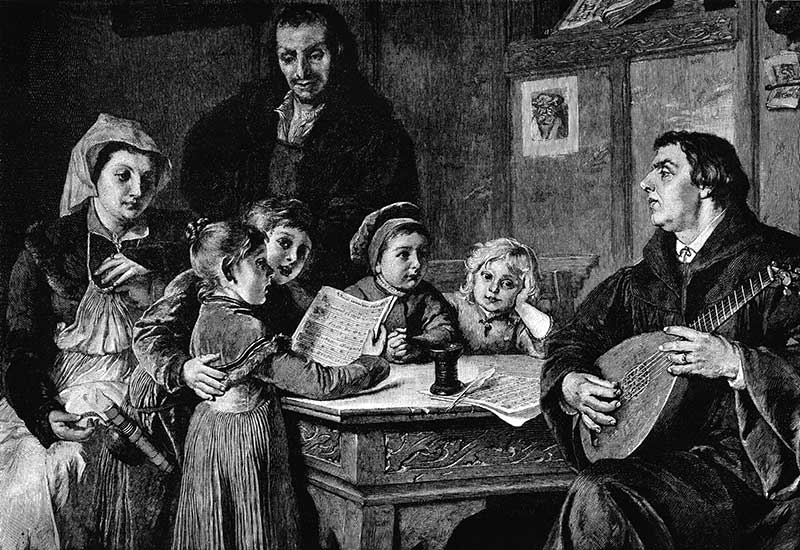
36.1—Jan/Feb 2023
A History of the Protestant Debate over Contraception by James A. Altena
calling all readers
Please Donate
"There are magazines worth reading but few worth saving . . . Touchstone is just such a magazine."
—Alice von Hildebrand
"Here we do not concede one square millimeter of territory to falsehood, folly, contemporary sentimentality, or fashion. We speak the truth, and let God be our judge. . . . Touchstone is the one committedly Christian conservative journal."
—Anthony Esolen, Touchstone senior editor
