




Faithfulness in a Time of Trouble
This year marks the 400th anniversary of the death of William Byrd. English church music owes an immense debt to his accomplishments, as he composed a large and creative repertoire of music for Anglican worship in the 1560s and 1570s. His settings of verse anthems—a major innovation in Anglican worship in which solo voices alternate with full choir, with continuous organ accompaniment—shaped the development of this liturgical form well into the eighteenth century. His dozens of unaccompanied English-language anthems continue to be sung by Anglican choirs. His “Great Service”—a magnificent ten-voice setting of the Creed, Kyrie, and canticles sung at Morning and Evening Prayer—has been hailed as the “jewel in the crown” of Anglican music, despite the fact that it was virtually unknown until its rediscovery in manuscripts at Durham Cathedral in 1922.
But there is a shadow hovering over Byrd’s contribution to the treasury of Anglican music. Peter Phillips has mused that “Byrd holds a uniquely important position in the history of English sacred music, and yet we may suppose from his ardent Catholicism that he disapproved of the existence of the Church for which this music was intended.”
Byrd & Elizabeth
Byrd was born into a newly Protestant England, just a few years (1539 or 1540) after the radical changes mandated by the “Reformation Parliament.” When in 1563 he was appointed to his first major musical post—Organist and Master of the Choristers at Lincoln Cathedral—Elizabeth I had been queen for five years and the prospect of a Roman Catholic monarch who could return the realm to its historical faith was no longer plausible.
Byrd was always loyal to his queen and she to him. In 1572, he was appointed Gentleman of the Chapel Royal, in which position he would compose and perform for the queen’s private liturgical life. When sworn in to serve as one of the Gentlemen, he declared that the queen “is and ought to be, by the word of God, the only supreme governor of this realm . . . as well in spiritual or ecclesiastical things or causes, as temporal.” Since Elizabeth had been excommunicated in 1570 by Pope Pius V, Roman Catholics understood that any subject who continued to “obey her orders, advice or laws” would be anathematized. Ironically, it was during his years of service to this heretic queen that Byrd began to display in his music a deep sympathy for the form of Christian faith that England had repudiated.
It was an odd time for a man in a very public position to begin to have leanings toward Rome. Conductor Andrew Carwood—editor of dozens of scores of Byrd’s music—explains:
The 1580s were difficult years for England. They started with the execution of Edmund Campion in 1581: then followed at least two plots to place Mary Queen of Scots on the throne of England. . . . Pressure from abroad was also building with the steady traffic of Jesuit missionaries from the newly founded seminary at Douai, and 1588 saw the first attempt of King Philip II of Spain to bring Elizabeth’s regime to its knees with the Spanish Armada. It is not surprising therefore that successive Parliaments of the 1580s increased anti-Catholic legislation, including fines for non-attendance at Anglican services and more stringent censorship rules.
Music for the Recusants
It was during the 1580s that Byrd composed some of his most powerful choral music, none of which was intended for use in the Church of England as ruled by Elizabeth. In two collections titled Cantiones sacrae—published in 1589 and 1591 and dedicated to Catholic noblemen—Byrd presented works that echo the themes common in the “seditious” Jesuit pamphlets circulating in England: the destruction of the Holy City, the Babylonian exile, the Advent promise that the Lord will come and save his afflicted and persecuted people.
Since all of the texts were taken from the Bible, it would have been hard for Protestants to object. But Catholics recognized themselves in these texts. As David Trendell notes, “Behind virtually all of Byrd’s choices of texts lie the ideas of consolation, mercy, and redemption.” Catholics often saw themselves as being dispossessed or exiled as had been the Israelites. So, explains Trendell:
[T]he destruction of Jerusalem becomes a metaphor for the destruction of the Catholic faith in England—the violence of the desecration of the Holy Places in Jerusalem echoing the destruction of rood screens, statues, and the other vivid realities of the Catholic faith in England. There are several references to the destruction of Jerusalem in the 1589 collection, most notably Ne irascaris and Deus, venerunt gentes, which describes the event in graphic and gruesome detail. Deus, venerunt gentes also ends with a phrase that is frequently found in recusant literature of the period: “We are become a disgrace in the eyes of our neighbours, an object of scorn and derision to those who are round about us.”
Conductor David Skinner raises an interesting question involving music and divine providence: “One wonders what would have happened if the Reformation never happened in England. We would have had a young genius writing in the style of his forefathers. But what about all these wonderful moments of anxiety, persecution, longing? Perhaps they wouldn’t be there.”
A Fittingly Urgent Plea
One of the most powerful gifts that William Byrd offered for late-sixteenth-century English Catholics—and those of us in a more ecumenical age—are his three settings of the Mass. Published in the early 1590s, they are scored for three, four, and five voices. His contemporary, Palestrina—composing securely in Rome—wrote over one hundred Masses. Byrd only wrote three, but they survive as a remarkable and powerful legacy. William Peter Mahrt observes: “These masses show clear evidence that Byrd was aware that they might be sung many times: their construction and expression is so tight and concentrated that they repay repeated performance.” And repeated, attentive listening.
And when, dear reader, you take time to listen to these Masses, let me call your attention to just one detail. In the closing notes of the Mass for Four Voices, we hear the final supplication, Dona nobis pacem, “Give us peace.” Notice how Byrd presents these words in a long sequence of dissonant harmonies. He uses the musical-rhetorical device of the suspension, by which one note in a chord is suspended a step higher than it is expected to be, until it (peacefully) resolves into the anticipated harmony. One note is suspended; we feel the suspense until things resolve. This is a common device especially at the end of many pieces of music. What is uncommon here is that Byrd includes what Kerry McCarthy describes as “an onslaught of pungent suspensions” (almost thirty of them!) in a relentless plea for peace, “a seemingly endless chain that is broken only by the final cadence and the unexpected G-major glow of the last chord. . . . The effect is uncanny, quite unlike anything else in sixteenth-century sacred music.”
Given the deadly warfare between Christians in sixteenth-century England, an emotionally charged Dona nobis pacem was precisely fitting. But perhaps the Church should always have such urgency in presenting that petition.
Ken Myers is the host and producer of the Mars Hill Audio Journal. Formerly an arts editor with National Public Radio, he also serves as music director at All Saints Anglican Church in Ivy, Virginia. He is a contributing editor for Touchstone.
A Journal of Mere Christianity—Delivered to Your Door
- Essays on theology, culture, and the Church
- Contributors from across the Christian traditions

Six print issues (one year) of Touchstone, plus full online access and PDF downloads for only $39.95.

Get a one-year full-access subscription to the Touchstone online archives for only $19.95.
bulk subscriptions
Order Touchstone subscriptions in bulk and save $10 per sub! Each subscription includes 6 issues of Touchstone plus full online access to touchstonemag.com—including archives, videos, and pdf downloads of recent issues for only $29.95 each! Great for churches or study groups.
Transactions will be processed on a secure server.
more on Music from the online archives
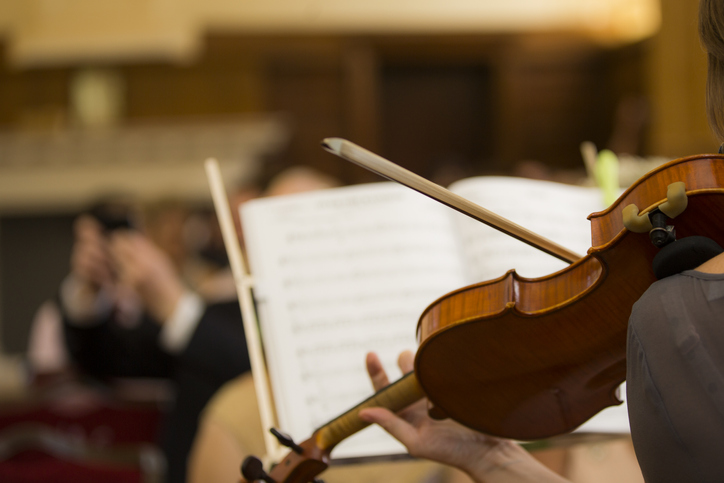
33.3—May/June 2020
Bach's Cantata BWV 106, Gottes Zeit ist die allerbesteZeit (God's time is the very best time) by Ken Myers
more from the online archives
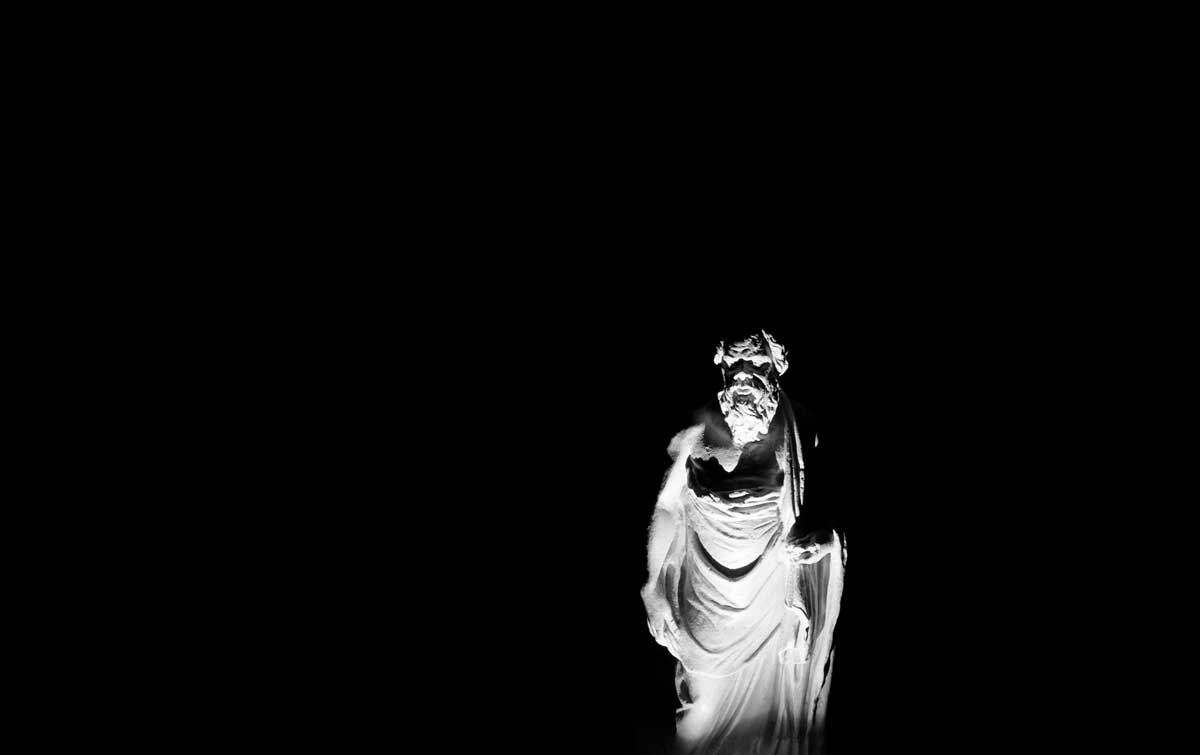
19.1—January/February 2006
on Death & Seven of the Last Words of Socrates by Graeme Hunter
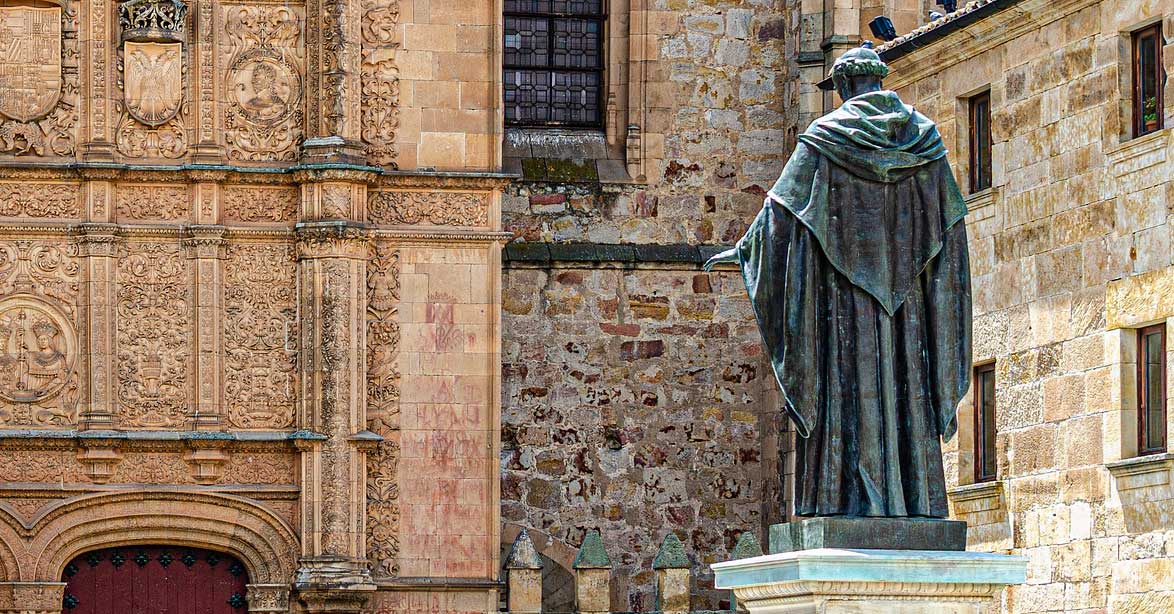
32.6—November/December 2019
An Open Letter to Christian Readers of Jordan Peterson & Roger Scruton by James Bryson

36.4—Jul/Aug 2023
Our Political Void & the Disintegration of Truth by Michael Hanby
calling all readers
Please Donate
"There are magazines worth reading but few worth saving . . . Touchstone is just such a magazine."
—Alice von Hildebrand
"Here we do not concede one square millimeter of territory to falsehood, folly, contemporary sentimentality, or fashion. We speak the truth, and let God be our judge. . . . Touchstone is the one committedly Christian conservative journal."
—Anthony Esolen, Touchstone senior editor
