




Angels in the Upper Room
What on Earth Is Heaven? by James Paul
reviewed by Arthur W. Hunt III
The main course has been completed. Dessert is being placed on the table by the host staff, along with Earl Grey tea and French press coffee. Just outside the window looms the stately Manor House where visitors stay, and beyond that, the hills of the Hampshire countryside where Jane Austen spent the last years of her life.
"Does someone have a question today?" asks the host.
This is how conversations begin at the English L'Abri, one of the ten "shelters" scattered across the globe that remain part of the legacy of Francis and Edith Schaeffer.
A wide variety of people come to stay at the Manor House, each with his or her own background, viewpoints, and questions. To some extent, life at the English L'Abri is reminiscent of another, though fictional, manor house: St. Anne's, in C. S. Lewis's That Hideous Strength. Everyone shares in the chores. There is a routine. The Christian faith is taken very seriously.
Inevitably, a L'Abri visitor will raise a question about the nature of heaven. The persistence of the question, along with his own wrestling with the topic, is what led director James Paul to write What on Earth Is Heaven?
Paul's contemplation of this topic began when, still a new Christian, he was waiting to take off on a flight from London to Warsaw. "So, I was sitting there imagining the plane crashing, contemplating death and what comes after death, when I suddenly realized that I didn't really want to go to heaven."
The sentiment is common among some Christians. What is so exciting about spending eternity on white fluffy clouds playing a harp? The breakthrough for Paul came when he read The Last Battle in Lewis's Narnia Chronicles. What caught his attention was Lewis's line: "The term is over: the holidays have begun." The image clicked in Paul's mind because of the joy he remembered feeling as an English schoolboy when on break from school.
An Inexhaustible Richness
In the Narnia Chronicles, Lewis's description of heaven is earthy—full of trees, fields, streams, rivers, waterfalls, and sunshine. It was the Oxford don's sacramentalism that helped Paul understand that the earth is a shadow version of something more real, more solid.
Eschewing the Greek dualism that tends to pit the spiritual against the earthly, Paul's book utilizes Edwin Abbott's notion of earthly life as being a two-dimensional flatland, whereas heaven is a three-dimensional cube that exists above and beneath us so that it "adds an inexhaustible depth of richness to the things of earth."
For example, Paul notes how the resurrected Jesus' ability to move through walls was not because his body was insubstantial, but because, when compared to the weightiness of his resurrected body, the walls were insubstantial.
What on Earth Is Heaven? is more than a book about heaven; it is also about the gospel and God's dealings with his people—about creation, sin, redemption, and consummation. Paul's previous vocation as a London doctor specializing in hospice care has given him additional insights into the topic of death. His reliance on Lewis and his accounts of life at L'Abri bring further interest to the book.
There is a certain joy that occurs when the French press is poured out at the L'Abri table, a pleasure Lewis would say is a pointer to heavenly realities. During the conversation that follows, the visitors are often taken up into another sphere. As with St. Anne's, one might even say that god-like angels descend and make noise in the upper room.
Paul has done a service, not only for his L'Abri visitors, but also for readers who want to know more about heaven.
Arthur W. Hunt III is a former professor of public speaking at the University of Tennesse at Martin. He is now preparing to transition to ministry-related service and lives in the greater Memphis area.
A Journal of Mere Christianity—Delivered to Your Door
- Essays on theology, culture, and the Church
- Contributors from across the Christian traditions

Six print issues (one year) of Touchstone, plus full online access and PDF downloads for only $39.95.

Get a one-year full-access subscription to the Touchstone online archives for only $19.95.
bulk subscriptions
Order Touchstone subscriptions in bulk and save $10 per sub! Each subscription includes 6 issues of Touchstone plus full online access to touchstonemag.com—including archives, videos, and pdf downloads of recent issues for only $29.95 each! Great for churches or study groups.
Transactions will be processed on a secure server.
more on Christianity from the online archives

33.3—May/June 2020
Human & Divine Societies Require Careful Thought & Discourse by Anthony Esolen
8.4—Fall 1995
The Demise of Biblical Preaching
Distortions of the Gospel and its Recovery by Donald G. Bloesch
more from the online archives
14.6—July/August 2001
The Transformed Relics of the Fall
on the Fulfillment of History in Christ by Patrick Henry Reardon
33.2—March/April 2020
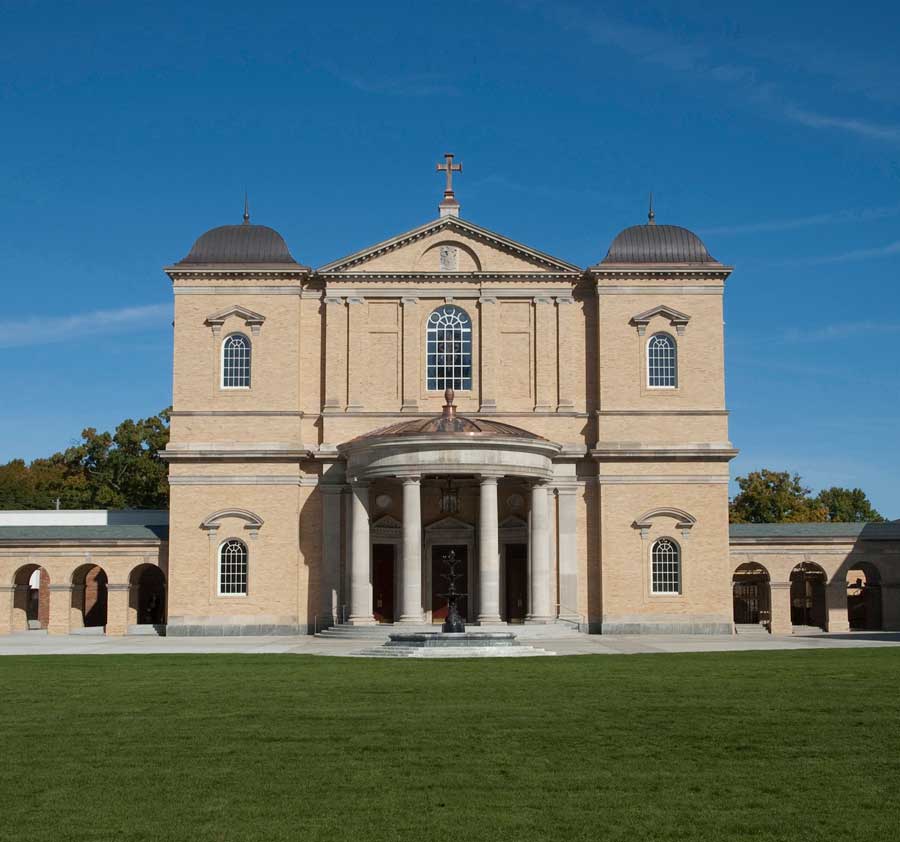
An Architectural Sign of Mere Christianity by Michael Ward
calling all readers
Please Donate
"There are magazines worth reading but few worth saving . . . Touchstone is just such a magazine."
—Alice von Hildebrand
"Here we do not concede one square millimeter of territory to falsehood, folly, contemporary sentimentality, or fashion. We speak the truth, and let God be our judge. . . . Touchstone is the one committedly Christian conservative journal."
—Anthony Esolen, Touchstone senior editor
