




From Heavenly Harmony
With a Merry Noise
As a teenager, singing tenor in the chapel choir at Winchester College in the 1960s, Peter Phillips experienced a eureka moment that established the trajectory of his whole life. He and his fellow students were learning to sing "O clap your hands," an a cappella anthem for two choirs (with eight vocal parts) by Orlando Gibbons (1583–1625). "That was when I got it," Phillips told me not long ago in an interview. "That was when I fell in love with the style."
The style in question is the style of Renaissance choral music, specifically the intertwining of multiple vocal lines to create a harmonic tapestry in which the whole is far greater than the sum of its parts. Peter Phillips was so taken by his experience of this remarkable artistic form that, while still an undergraduate, he organized a performance of Thomas Tallis's 40-part motet Spem in alium. That concert (in 1973) was effectively the birth of the Tallis Scholars, the ensemble that continues to perform in concert and in recording studios and that has done more than any other institution to help many listeners—young and not so young—fall in love with this style.
Ascension Exuberance
Orlando Gibbons was, as singer and Eton music professor Matthew O'Donovan observes, "the finest organist of his age." But he was also "a composer of flamboyant virtuosity." That articulate exuberance is evident in his catalogue of keyboard music (Gibbons was the favorite composer of the brilliant and eccentric pianist Glenn Gould) and is also an animating feature in the many canticles, hymn tunes, and anthems that he wrote for use in the liturgical life of the Church of England.
"O clap your hands" is widely regarded as one of Gibbons's most potent compositions. Organist and conductor Robert Quinney says that it is "his grandest extant work." The anthem is a setting of all but half a verse of the Coverdale Psalter's translation of Psalm 47, a text that revels in the jubilant notion of God as King. It is a psalm that for centuries has been used in Christian worship to commemorate the Ascension of Christ to rule at the right hand of the Father. That liturgical placement is readily suggested by the presence of the metaphor of ascent in verse 5: "God is gone up with a merry noise, and the Lord with the sound of the trumpet." The next verse invites the faithful subjects of the King to respond fittingly: "O sing praises, sing praises unto our God; O sing praises, sing praises unto our King." These verses underscore the vigorous musical spirit of the psalm, established with the injunction in the very first verse to clap and sing.
Quinney argues that the anthem "is untypical of Gibbons in that it eschews the subtle relationship between text and music that characterizes most of his work, preferring dramatic contrasts between groups of voices and an almost motoric rhythmic drive." (Watch the YouTube video of VOCES8 singing this work, and note how at times the camera cuts back and forth between the two groups of four singers, visually underscoring the formal propulsion of the work as words and musical phrases bounce energetically from one quartet to the other.)
A Coronation Anthem
While "O clap your hands" fits the spirit of the Feast of the Ascension perfectly, may I suggest that, especially in times of political and social turmoil, we need more frequent reminders of the reality of the universal and cosmic kingship of Christ. Moral philosopher Oliver O'Donovan reminds us that "the kingly rule of Christ is God's own rule exercised over the whole world." It is Christ's rule alone which makes the work of all rulers—indeed, any exercise of authority—intelligible. As O'Donovan writes:
[T]he Ascension is the foundation which determines all future time. . . . [I]t determines the public existence of the church, which participates in the coming of the Kingdom and witnesses to it; and through the church it determines the provisional public life of the world, in which the authorities are subdued, reformed and given a limited authorisation.
Orlando Gibbons's "O clap your hands" was sung at the coronation of Queen Elizabeth II in Westminster Abbey in 1953: a fitting choice, since Psalm 47 is, after all, a coronation anthem for the King of kings (and queens).
Majestic & Mystical Settings
Throughout the twentieth century, English composers have been attracted to the text of Psalm 47 for some of their most majestic choral works. In 1920, while teaching composition at the Royal College of Music, Ralph Vaughan Williams wrote his own "O clap your hands," scored for four-part choir, organ, brass, and percussion (often performed with just choir and organ). The anthem opens with a confident fanfare. A contemplative middle section begins with the lower voices chanting, "For God is the King of all the earth," while the upper voices answer, "Sing ye praises with understanding." This blossoms out to a stirring conclusion with loud repetitions of the phrase, "Sing praises." As is the case with other works by Vaughan Williams, "O clap your hands" is haunted by the harmonies of his Tudor-era predecessors, an influence even more pronounced in his Mass in G minor, written in the following year.
In 1951, Gerald Finzi (1901–1956) wrote "God is gone up." For his text he used a poem by the Puritan poet Edward Taylor (c.1642–1729), which incorporates verses from Psalm 47 along with snatches of other psalms with similar themes.
Finally, in 1958, Herbert Howells gave the Church his own "God is gone up," drawn more strictly from Psalm 47. It is the most mystical (and hence most challenging) of the pieces I've mentioned. Conductor and organist Patrick Russill explains: "The energy of the piece comes from the harmonic intensity generated by the fusion of the mobile individual lines as they strive to reach an ecstatic plateau. It is doubtful if sacred music of such sustained, melismatic fervour had been written for English choir stalls since the Tudor period."
To my ears, Howells's "God is gone up" captures something of the fearful presence of the seraphim and cherubim who surround the throne of our King. It is a very different style from that of Gibbons, a deeper, more intense, possibly more kingly merriness. Sing praises!
Ken Myers is the host and producer of the Mars Hill Audio Journal. Formerly an arts editor with National Public Radio, he also serves as music director at All Saints Anglican Church in Ivy, Virginia. He is a contributing editor for Touchstone.
A Journal of Mere Christianity—Delivered to Your Door
- Essays on theology, culture, and the Church
- Contributors from across the Christian traditions

Six print issues (one year) of Touchstone, plus full online access and PDF downloads for only $39.95.

Get a one-year full-access subscription to the Touchstone online archives for only $19.95.
bulk subscriptions
Order Touchstone subscriptions in bulk and save $10 per sub! Each subscription includes 6 issues of Touchstone plus full online access to touchstonemag.com—including archives, videos, and pdf downloads of recent issues for only $29.95 each! Great for churches or study groups.
Transactions will be processed on a secure server.
more on music from the online archives
33.3—May/June 2020
Bach's Cantata BWV 106, Gottes Zeit ist die allerbesteZeit (God's time is the very best time) by Ken Myers
more from the online archives

32.4—July/August 2019
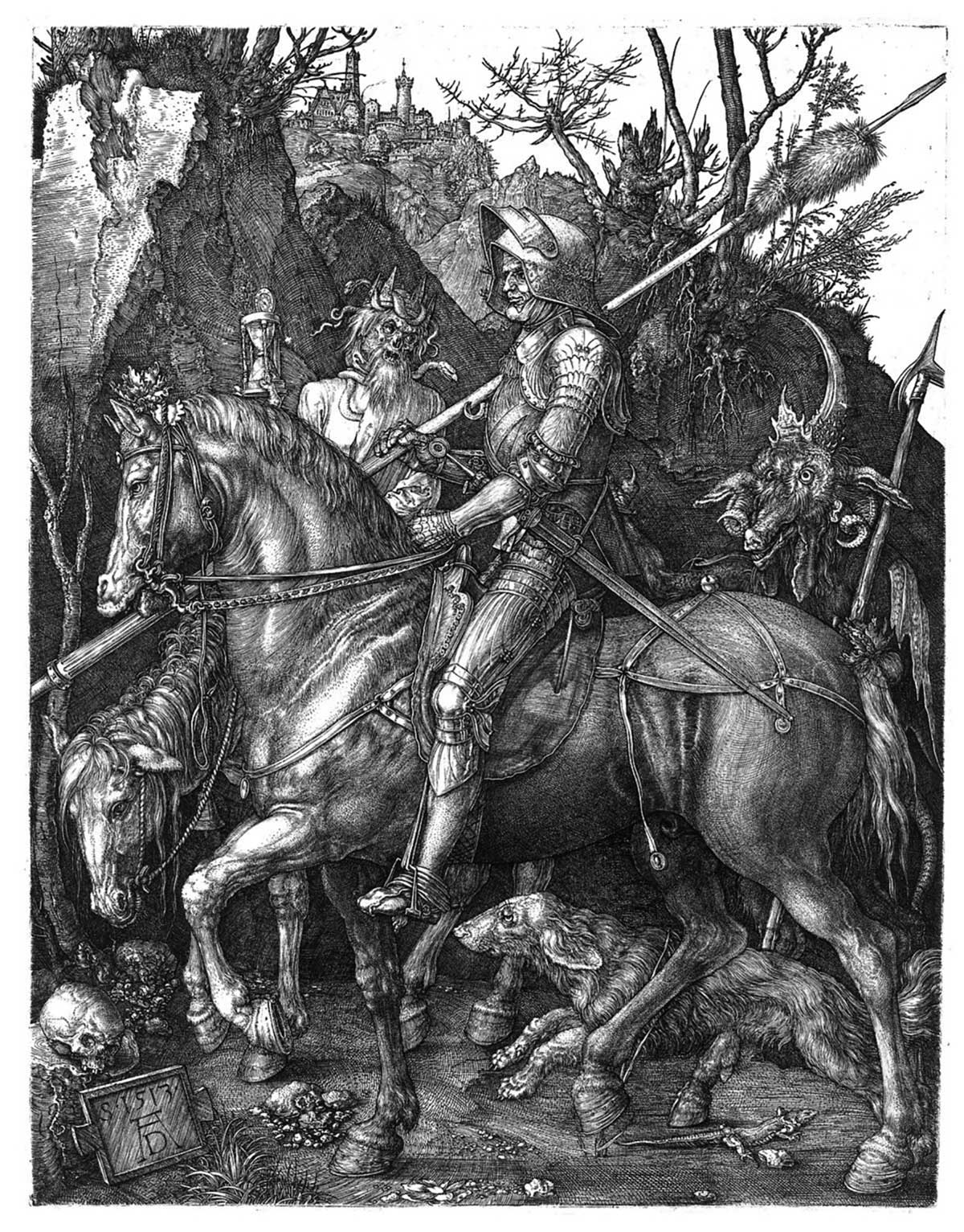
on Single-Mindedness in Durer's Ritter, Tod, und Teufel by Anthony Costello

25.6—Nov/Dec 2012
The Loss of Aristotelian Logic & the Social, Moral & Sexual Consequences by Peter Kreeft
calling all readers
Please Donate
"There are magazines worth reading but few worth saving . . . Touchstone is just such a magazine."
—Alice von Hildebrand
"Here we do not concede one square millimeter of territory to falsehood, folly, contemporary sentimentality, or fashion. We speak the truth, and let God be our judge. . . . Touchstone is the one committedly Christian conservative journal."
—Anthony Esolen, Touchstone senior editor
