




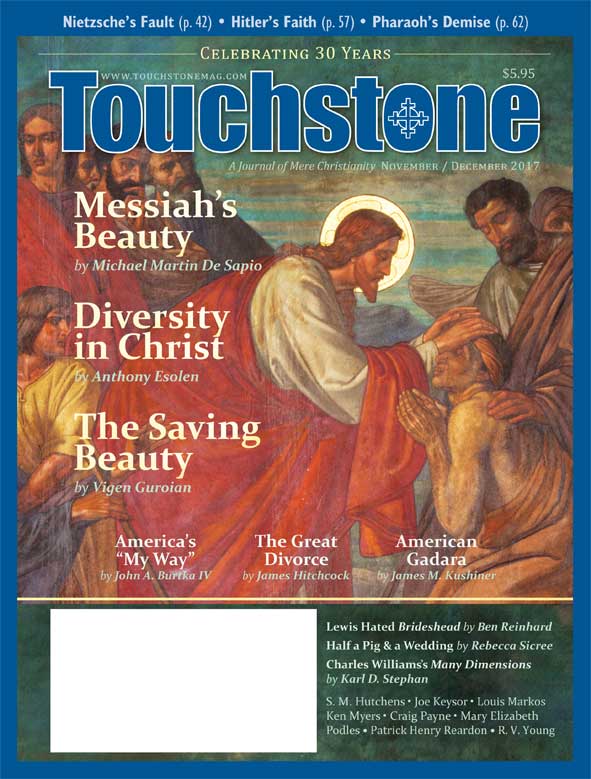
Feature
Can Beauty Save the World?
Neither Dostoevsky nor Prince Myshkin Makes the Case by Vigen Guroian
Twenty years ago, in a small but important book titled On Beauty, Elaine Scarry arraigned what she called the "banishing" of the study of beauty in her own field of English and among the humanities in general. According to her, the complaint against beauty was that study of it, somehow or other, detracts from attention to real suffering in this world and thus also hampers the pursuit of social justice. What is more, even the "look" or the "stare" at a person or thing for its beauty is condemned because that "look" or "stare" objectifies or "reifies" the person or thing that is the subject of the look.
These are silly arguments, but there are many silly arguments that process in academic robes. The ideologically motivated exclusion of beauty as a subject for contemplation and study is, in the last analysis, ridiculous. To her credit, Scarry calls it out as such. Rightly, she argues that an appreciation of and attention to beauty can be unselfish and not self-centered, and may therefore prompt us to take note of the suffering in the world and do something about it, to act fairly towards others and pursue a broader justice.
Her project, however, is narrower than it might have been. Absent in Scarry's book is the full or "complete" argument for beauty that the great tradition of Western thought has made. That tradition has lifted up beauty, together with goodness and truth, as a transcendental through which human beings may participate in all that is divine and eternal. Scarry is not willing to take the bold step of placing beauty on that footing because, I suspect, she, no less than her errant colleagues, has the interests of liberal social justice in mind, above and beyond an appreciation of the contemplation of beauty as in itself ennobling.
There has been a resurgence and renewal of philosophical and theological aesthetics since the publication of On Beauty. And happily, within this renewal books have appeared that make a fuller argument for beauty's transformative power in human life, education, and culture. Those books that immediately come to mind include David Bentley Hart's The Beauty of the Infinite, Roger Scruton's Beauty: A Very Short Introduction, Aidan Nichols's Redeeming Beauty, Gregory Wolfe's Beauty Will Save the World, and Stratford Caldecott's Beauty for the Sake of Truth.
Attributed but Never Spoken
Within the conversation about beauty one often hears reference to the line from Fyodor Dostoevsky's novel The Idiot that "Beauty will save the world." More often than not, this line is cited as if it were a statement Dostoevsky may have made in a speech, letter, or essay. It has thus become something of a maxim regarding the transformative power of beauty that most anyone can pick up and run with.
Scant attention has been given to the meaning that the line obtains in the novel, however. In the novel, several characters attribute the statement to the protagonist Prince Myshkin. In addition to the significant fact that Myshkin does not make the statement in the present, no other character cites or repeats it with a conviction that it is unambiguously true. Within the novel's dramatic action, Dostoevsky's brilliant literary invention obtains a meaning that is not so obviously a self-evident maxim, but is fraught, rather, with ambiguity. In his correspondence, Dostoevsky stated that his aim for the novel was to portray "a perfectly beautiful man." Prince Myshkin was supposed to be that man. But from Dostoevsky's notebooks and letters we learn that, as he wrote the novel, he increasingly recognized that this goal was beyond his creative capacities. After its completion, he wrote to his niece Sofya Ivanovna that he had not succeeded in conveying "a tenth" of what he had set out to accomplish.
The novel begins with Prince Myshkin's descent into Petersburg society one chilly winter day from a mountainous Swiss retreat where for four years he had been treated for the "falling sickness." We soon realize that his eyes and imagination arestrongly attracted to beauty. He is drawn to and bedazzled by beauty, like the fairytale prince who searches for a beautiful princess bride. And yet, early in the novel, when confronted with just such beauty, Myshkin is moved to confess that "Beauty is a riddle." When Lizaveta Prokoyevna Epanchin, the matron of the prosperous family to which he becomes attached, asks the prince how the youngest of her three daughters, Aglaya Ivanovna, impresses him, Myshkin exclaims: "You're an extraordinary beauty, Aglaya Ivanovna. You're so good-looking that one is afraid to look at you." He then adds, "Beauty is difficult to judge; I'm not prepared yet. Beauty is a riddle."
Aglaya Epanchin is one of several characters in the novel from whom we hear that Myshkin has said, "Beauty will save the world." Before a dinner party at which her engagement to Myshkin will be announced, she makes mention of this as she chides him for his idealism and tentativeness about marriage. "Listen, once and for all . . . if you start talking about something like capital punishment, or the economic situation in Russia, or that 'beauty will save the world' . . . I'll certainly be glad and laugh very much, but . . . I'm warning you ahead of time: don't let me set eyes on you afterwards."
Aglaya's barbed jibe echoes Myshkin's earlier confession that Aglaya is "an extraordinary beauty," except that on that occasion, as we have observed, he confessed that he was not "prepared" to speak definitively about beauty. "Beauty is a riddle," he said. Yet if beauty is a riddle, what are we to make of this statement which Aglaya has apparently heard from his lips, "Beauty will save the world"? And if, in that statement, Myshkin has in mind a woman's beauty, how can he be taken seriously? Aglaya unreflectively hears him in this way and so scoffs at the idea.
The One Beautiful Figure
Ippolit Terentyev, a brooding young radical dying of consumption, is another character who testifies that Myshkin has said that "'beauty' would save the world." Terentyev hungers for personal salvation, but he despairs of it because the empirical knowledge in which he puts his complete trust supports no such possibility. Ippolit's "atheism" is complicated. For he affirms Christ's existence, even describes Christ as "a great and priceless being," but he does not believe in Christ as his redeemer, who rose from the dead. Christ could not save himself, so how can he save anyone else?
Prescinding from his convictions about who and what Christ is, it seems that at some deeply intuitive level Ippolit understands that the beauty Myshkin believes can save the world is not the beauty of a woman, such as the woman Myshkin loves, or of any other merely earthly being, but rather the beauty that belongs to the Christ of Christian faith, who is more than a man but God himself. About this, and with palpable pathos, Ippolit taunts
Myshkin:
Is it true, Prince, that you once said 'beauty' would save the world? Gentlemen . . . the prince insists that beauty would save the world. And I insist that he has such playful thoughts because he's in love now. Gentlemen, the prince is in love; as soon as he came in today, I was convinced of it. Don't blush Prince, or I'll feel sorry for you. What beauty will save the world? Kolya told me what you said. . . . Are you a zealous Christian? Kolya says you call yourself a Christian.
Not long afterward in the novel, at a party, Ippolit brings up the subject once again, and I will turn to that in a moment. But here it is important to mention that Ippolit's insinuation that Myshkin has Christ in mind is consistent with a statement Dostoevsky made in another letter to his niece Sofya Ivanovna. In it, Dostoevsky states that there is "only one positively beautiful figure in the world—Christ."
An Astonishing Face
There is another woman in the novel to whom Myshkin is profoundly attracted, whom he finds astonishingly, even terrifyingly, beautiful. That woman is Nastasya Filippovna Barashkov, to whose fate Myshkin's own fate becomes tragically tied. An uncorrupted Nature might have left Nastasya's beauty untouched by anything ugly or grotesque. Like a fairy princess, Nastasya grew up in a cottage near a small village called "Delight," as in the biblical garden of delight, Eden itself. Something, however, went terribly wrong in "Delight." Nastasya's guardian, Afanasy Ivanovich Totsky, sexually abused her as a child, and when she enters society as a grown woman, she is Totsky's paramour. Nastasya is deeply wounded and vulnerable, both psychologically and spiritually, but nonetheless, she fiercely plays to near perfection the role of a captivating femme fatale.
Soon after his arrival in Russia, Myshkin happens upon a photograph of Nastasya in the office of General Epanchin's secretary, Ganya Ivolgin, one of her many suitors. Myshkin cannot take his eyes off the portrait. Ganya is deliciously intrigued by the prince's behavior and asks, "So you are attracted to such a woman, Prince?" Myshkin responds, "An astonishing face! . . . It's a gay face, but she has suffered terribly, eh. It speaks in her eyes . . . It's a proud face, terribly proud, and I don't know whether she's kind or not. Ah, if only she were kind! Everything would be saved."
Later that day, the prince encounters the portrait for a second time. On this occasion, the narrator leads the reader into Myshkin's inner thoughts:
It was as if he wanted to unriddle [my emphasis] something hidden in that face which had also struck him earlier. The earlier impression had scarcely left him, and now it was as if he were hastening to verify something. That face, extraordinary for its beauty, and for something else, now struck him still more. There seemed to be a boundless pride and contempt, almost hatred, in that face, and at the same time something trusting, something surprisingly simple-hearted; the contrast even seemed to awaken some sort of compassion as one looked at those features. That dazzling beauty was unbearable, the beauty of the pale face, the nearly hollow cheeks and burning eyes—strange
beauty.
As the story unfolds, we learn that Myshkin's own affliction—his epilepsy—makes him a kindred soul to Nastasya. Only he among the principal characters of the novel is capable of seeing her afflictions for what they are, and of discerning and fully appreciating the complex mixture of the beautiful and the grotesque in Nastasya's face, that "strange beauty" as he calls it.
An Impossible Goal
In her book Beauty: A Theological Engagement with Gregory of Nyssa, Natalie Carnes explores and tries to make sense of how beauty in this world almost always is mixed with ugliness. By ugliness I take her to mean not just that which is physically unattractive but, far more significantly, the inner wounds and torments that cruelty, violence, and deprivation inflict upon human beings in a fallen creation. She writes:
Beauty is rarely found far from ugliness. . . . It is not that finding beauty apart from ugliness is impossible . . . but that the greater and the more profound the beauty, the greater the ugliness in which it is implicated, for the profoundest beauties participate in the eschatological Beauty, which is to say, the One who is Beauty Crucified.
It seems to me that a similar sentiment prompted Dostoevsky to write The Idiot. Or, perhaps it would be more accurate to say that his artistic endeavor to portray "a perfectly beautiful man" ran up against the difficult truth, as I intimated above, that this goal is impossible to reach, that there is only one such perfectly beautiful being, Jesus Christ, Crucified and Resurrected, whom we encounter in the Gospels. In the letter to his niece that I cited immediately above, Dostoevsky adds to his statement that only Christ is the "positively beautiful man" by declaring that "the whole of the Gospel of St. John is a statement to that effect." This Jesus Christ, however, transcends the imaginations of even the most accomplished fiction writers. Short of the Resurrection, to which the Gospels testify, beauty and the grotesque, the beautiful and the terrifying, remain discordantly and indecipherably mixed.
A Portentous Painting
There is another picture in the novel that captures Myshkin's attention. Dostoevsky set his eyes on the prototype of this painting on a trip to Geneva with his wife Anna Grigoryevna in August 1867. During a one-day stop in Basil, the Dostoevskys visited the city's art museum, in which was housed Hans Holbein the Younger's Dead Christ in the Tomb (1521). Anna Grigoryevna left two accounts of this visit that help explain why and to what end Dostoevsky might have included a copy of the picture in his novel.
She reports that Dostoevsky was so gripped by the painting that he perched on a chair and stared at it for a long time, for so long, in fact, that she feared her husband would be caught and fined. Dead Christ in the Tomb depicts the newly deceased Christ laid out in a casket. The painting is life-size, nearly six feet long and just ten inches high. Christ's body is emaciated, blue, swollen, and riddled with the bloody wounds delivered to him. His eyes are partially open, but they show death and not life in their glassy and lusterless look. Dead Christ in the Tomb is everything a traditional Byzantine or Russian icon of Christ is not, for there is not a hint of the Resurrection in it. And from all the evidence, this contrast shook Dostoevsky's religious imagination.
In the novel, a copy of the Holbein hangs over a doorway in the dark, morbid family home of Parfyon Semyonovich Rogozhin, another of Nastasya's suitors, who, in the end, stabs her to death with a knife in an act of twisted passion. Rogozhin tells the prince, "I like that painting." Myshkin responds, "At that painting! A man could even lose his faith from that painting." According to Anna Grigoryevna, these are precisely the words Dostoevsky uttered when he first set his eyes on the Holbein.
In the final scene of the novel, the body of the dead Nastasya completes a grotesque diptych with the Holbein painting. Nastasya is laid out in Rogozhin's bed, covered from head to foot in a white sheet, the smell of her decaying corpse camouflaged only by bottles of disinfectant. What if Jesus remained a corpse like that in Holbein's Dead Christ, eerilymirrored in Nastasya's decomposing body? What if there was no divinity in Christ and there was no Resurrection? These thoughts lie latent beneath Myshkin's response to Rogozhin: "A man could even lose his faith from that painting."
Ippolit also has seen the Holbein copy. And it prompts in him similar thoughts and questions about Christ's mortality and death, and how faith might be destroyed. Atheist though he may be, Ippolit is aware of the rules of iconographic art and the theology that supports those rules. And, as the pious do, he keeps an icon in his room lighted with a lamp, though there is no reason to believe he prays before it. What is most striking for Ippolit about the Holbein painting is that it does not convey in any perceptible way the reality of the divinity in Christ and his resurrection, as do traditional icons of Christ's crucifixion and death. In these icons, the glory of the God-Man is presented even in death, and in this way his beauty overcomes everything that is ugly or grotesque in his death. Thus, Ippolit questions whether the Holbein can be a "true" depiction of Christ, though witnesses of his death and deposition might well have seen a body much like that which Holbein depicts. "It seems to me," Ippolit comments,
that painters are usually in the habit of portraying Christ, both on the cross or taken down from the cross, as still having a shade of extraordinary beauty in his face; they seek to preserve this beauty for him even in his most horrible suffering. . . . I know that in the first centuries the Christian Church already established that Christ suffered not in appearance but in reality and that on the cross his body, therefore, was fully and completely subject to the laws of nature. . . . But, strangely, when you look at the corpse of this tortured man, one cannot help asking oneself . . . [that had] those who believed in him . . . seen a corpse like that (and it was bound to be exactly like that), how could they believe, looking at such a corpse, that this sufferer would resurrect?
In fact, the Gospels do hint that these lookers did not believe that Jesus would be resurrected, which, in a twist of irony, confirms Ippolit's sense of horror.
Not a True Icon
The Holbein arouses in Ippolit dreadful dreams and horrid hallucinations of a monstrous Nature that consumes life and all its beauty. For Rogozhin, it prompts a murderous will to destroy the beauty that he cannot possess. As for Myshkin, he proves incapable of preventing the destruction of that special beauty he sees in Nastasya. So what, then, are we to make of the idea that "Beauty will save the world"?
To repeat what I said at the beginning, we err if we abstract this expression from the dramatic action of the novel, or attribute it directly to Dostoevsky, as if it is his definitive word on beauty. Viewed from within the dramatic action, "Beauty will save the world" cannot possibly be received as an axiom that delivers all that it
promises.
Diane Oennings Thompson has observed in her essay "Problems of the biblical word in Dostoevsky's poetics" that the living, transformative Word is missing in The Idiot. "[Myshkin's] word changes nothing and even causes unwitting harm," she writes, whereas the word that Fr. Zosima of The Brothers Karamazov speaks is on the order of miracle. Another way of putting the matter is that in The Idiot the Christian virtues "lack full-fledged symbolic representation," "a sufficient embodiment and spokesperson," Thompson writes.
This is completely related to the fact that the Holbein is not "a canonical image of Christ," not a true icon through which Christ becomes present and invites communion with himself. Thompson continues: "One cannot have a dialogue with a Christ contemplating His death, nor a corpse which is the organizing symbol of the novel's tragic vision."
Ironically, it is the professed atheist in the novel who senses this. Ippolit locates both beauty and salvation in Christ, yet he hasn't the conviction in him to live out that truth in his own life, toward his own death. This remains for other characters in Dostoevsky's later great novels to accomplish.
What of Myshkin?
As for Myshkin, over my teaching years, I have held out for students another possible reading of the novel in which he may be seen as a victor over corruption and wickedness through his personal suffering, kenosis, and compassion. I give credit for this to the twentieth-century Roman Catholic theologian Romano Guardini. He movingly made this kind of argument in his book on Dostoevsky, which sadly has not yet been published in English. Guardini's reading emphasizes the ironic over the tragic, and affirms in a more satisfying way than I believe the novel actually allows, that beauty may save the world, if this beauty be, in fact, Christ.
In the closing scene of the novel, Myshkin lays himself down beside Rogozhin, on Rogozhin's bed, next to the deceased Nastasya, and presses his face against Rogozhin's "pale and motionless face . . . no longer . . . [feeling] his own tears and . . . [knowing] nothing about them." One might say, in the spirit of Guardini's interpretation, that Myshkin's tears are holy and redemptive tears. Myshkin has not fled from or abandoned Rogozhin. Rather, in a self-abandoning caress of forgiveness and compassion, he pours out all of his strength to console the tormented soul that is next to him. Mightn't we count Myshkin's kenotic act worthy of Christ and his love for us?
As much as I am attracted to Guardini's beautiful interpretation, each and every reading of The Idiot leaves me with a competing picture: the indelible image of two exhausted, grief-stricken men huddled together in a darkness that is not the luminous dark of divinity's presence—of which the mystics speak and that the iconographers depict—but rather a spiritual darkness that even the first bright light of the morning sun cannot cast out.
There is not a glimmer of hope that this sensual "light" will revive the two friends from the pall in which this spiritual "darkness" has smothered them. "Each time the sick man had a burst of shouting or raving, he [Myshkin] hastened to pass his trembling hand over his hair and cheeks," writes Dostoevsky. "But he no longer understood anything of what . . . [he was asked] and did not recognize the people who came in and surrounded him." In two months' time, Rogozhin breathes his last, and the narrator reports that if Dr. Schneider had seen Myshkin in Rogozhin's bedroom, he would have declared "his former pupil and patient . . . An Idiot!" Shortly afterward, the prince returns to the sanitarium in Switzerland.
What of Beauty?
And what of the fate of beauty in the novel? Earthly beauty, it seems, neither saves nor is saved, but remains a riddle in this fallen and sinful existence that the city of Petersburg symbolizes. My efforts to embrace the irony in Dostoevsky's profound tale about beauty are inevitably overcome by its nearly unmitigated mood of tragedy.
I do not believe that in The Idiot Dostoevsky takes us any further toward a theologically grounded understanding of beauty than I have sketched out here. After The Idiot, he abandons once and for all his early sentimental understanding of Christ as a human ideal and embraces a strong Johannine Christology. Dostoevsky might yet portray the tortured career of beauty in the world, but he is able also to present dramatically a soteriological and eschatological vision of redeemed and redeeming beauty.
In The Brothers Karamazov, Dmitri Karamazov's obsessive attraction to feminine beauty brings down upon him the unjust conviction of the murder of his father. Yet throughout the novel, Dmitri increasingly realizes that the strictly earthly beauty that he has sought and lusted for does not satisfy our deepest human needs or desires and may become an idol that drags a man into a living hell.
"Beauty is a fearful and terrible thing! [Dmitri exclaims]. Fearful because it's undefinable, and . . . cannot be defined because here God gave us only riddles. . . . I can't bear it that some man, even with a lofty heart and the highest mind, should start with the ideal of the Madonna and end with the ideal of Sodom. . . . The terrible thing is that beauty is a fearful mystery. Here the devil is struggling with God."
It remains for the youngest Karamazov brother, Alyosha, the "hero" of the novel, to experience beauty that saves the world, that is genuinely transformative. Alyosha is under the tutelage of the holy monk Zosima. When Zosima dies and his reputation is besmirched, Alyosha passes through a furnace of doubt that prepares him to receive a vision of beauty that is entirely Christological. Beauty is revealed to him as a theological and eschatological "being," the glory of God revealed in the incarnate Word of God, Jesus Christ.
The three disciples Peter, James, and John behold this glory on the Mount of Transfiguration. As St. John writes in the book of Revelation, there is revealed to him a vision of this same beauty and glory in the form of the "new Jerusalem, coming down from God out of heaven, prepared as a bride adorned for her husband" (Rev. 21:2). After Zosima's death, Alyosha attends a funerary vigil for the deceased monk. At the vigil, there is read St. John's story of Christ's miraculous transformation of water to wine at the marriage in Cana of Galilee, and Zosima visits Alyosha in a dream. When Alyosha awakens, he steps out of the holy man's cell into a clear night and is overcome by a vision similar to those of biblical record:
Over him the heavenly dome, full of quiet, shining stars, hung boundlessly. From the zenith to the horizon the still-dim Milky Way stretched its double strand. The white towers and golden domes of the church gleamed in the sapphire sky. . . . The silence of the earth seemed to merge with the silence of the heavens, the mystery of the earth touched by the mystery of the stars. . . . With each moment he [Alyosha] felt clearly and almost tangibly something as firm and immoveable as the heavenly vault descend into his soul. . . . He fell to the earth a weak youth and rose up a fighter, steadfast for the rest of his life, and knew it and felt it suddenly, in that very moment of his ecstasy. . . . Three days later he left the monastery, which was in accordance with the words of his late elder, who had bidden him to "sojourn in the world."
Vigen Guroian was, until his retirement, Professor of Religious Studies in Orthodox Christianity at the University of Virginia in Charlottesville. His books include Tending the Heart of Virtue: How Classic Stories Awaken a Child's Moral Imagination (2002) and The Orthodox Reality: Culture, Theology, and Ethics in the Modern World (Baker Academic, 2018).
A Journal of Mere Christianity—Delivered to Your Door
- Essays on theology, culture, and the Church
- Contributors from across the Christian traditions

Six print issues (one year) of Touchstone, plus full online access and PDF downloads for only $39.95.

Get a one-year full-access subscription to the Touchstone online archives for only $19.95.
bulk subscriptions
Order Touchstone subscriptions in bulk and save $10 per sub! Each subscription includes 6 issues of Touchstone plus full online access to touchstonemag.com—including archives, videos, and pdf downloads of recent issues for only $29.95 each! Great for churches or study groups.
Transactions will be processed on a secure server.
more on literature from the online archives
32.2—March/April 2019
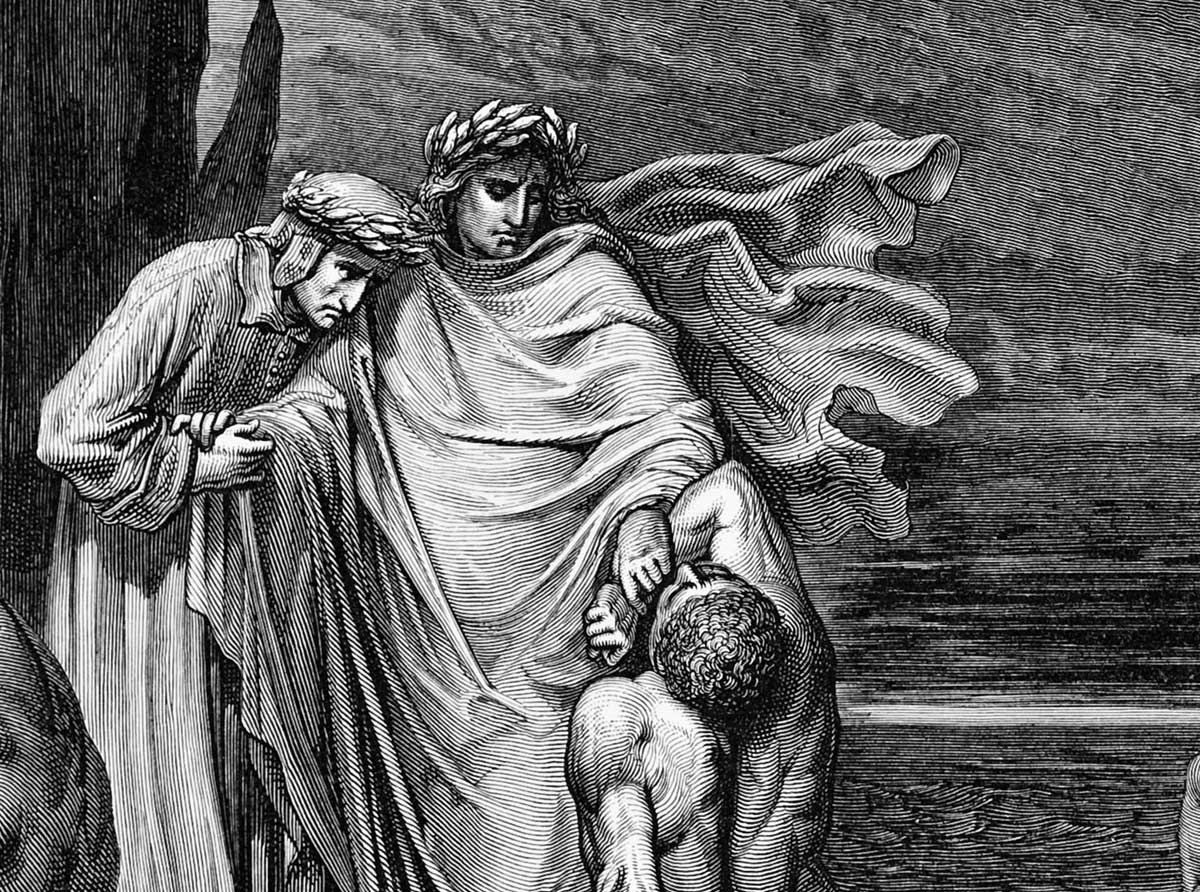
Misguided Mercy & Dante's Infernal Purgation by Joshua Hren

24.1—January/February 2011
Ruminations on the Monstrous Envy of the Soul-Devouring State by Anthony Esolen
30.2—March/April 2017
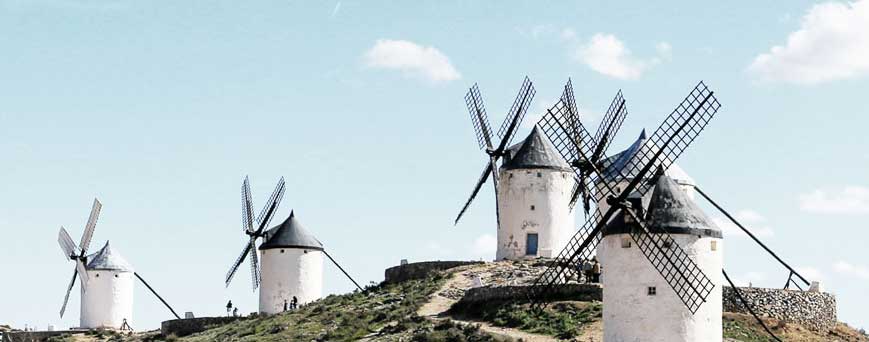
on Reading Don Quixote in Its Original Christian Context by Luis Cortest
more from the online archives

20.7—September 2007
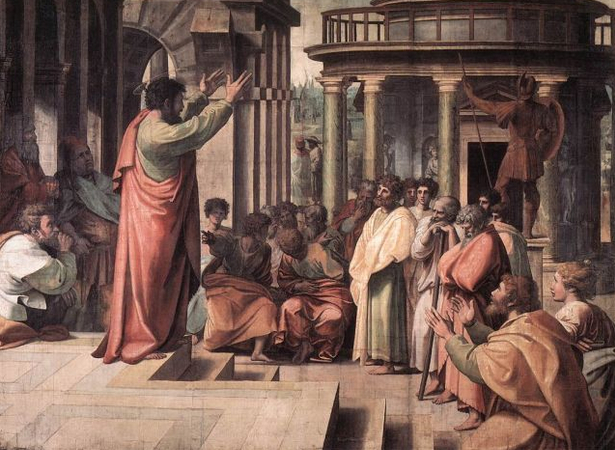
Paul Didn’t Build Bridges to Popular Culture by Russell D. Moore
calling all readers
Please Donate
"There are magazines worth reading but few worth saving . . . Touchstone is just such a magazine."
—Alice von Hildebrand
"Here we do not concede one square millimeter of territory to falsehood, folly, contemporary sentimentality, or fashion. We speak the truth, and let God be our judge. . . . Touchstone is the one committedly Christian conservative journal."
—Anthony Esolen, Touchstone senior editor
