




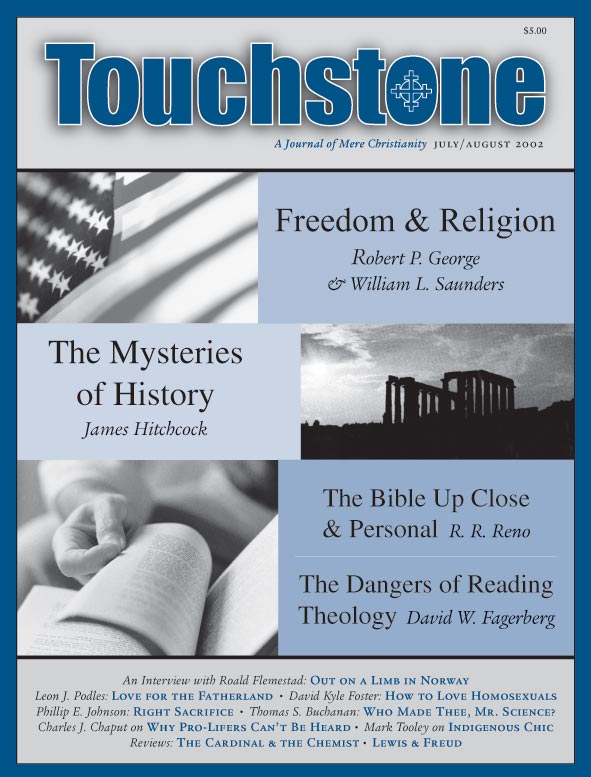
Caveat Lector
On the Reading of Theological Books
by David W. Fagerberg
Although there is no listing for it on the IRS form, I sometimes describe myself as someone who reads for a living. It is true that this work is interrupted on a fairly regular basis by teaching classes, writing exams, and attending faculty meetings, but I try to look upon these as mere anomalies in my true job description.
I might prove to skeptics that reading is a real occupation by pointing out that, just like other occupations, this career comes complete with its own midlife crisis. A midlife crisis occurs when youthful enthusiasm collides violently with the mature conclusion that the time remaining on the far side of the midpoint is inadequate to achieve all the goals conceived on the near side of the midpoint. Thus, the blusterous banker comes to worry whether he will ever become as rich as he had intended, and the brash actor harbors secret doubts as to whether he will ever become a star, and I have begun to fret whether I will, in fact, as planned, read every book in theology before I die.
I am actually coming to suspect that some one of them will escape me. It is becoming a real possibility that the imbalance between an expanding bibliography and a dwindling supply of days means that I will finish in the red, debited, shy of my goal. It is just possible, I moan, that some text in Christology, ecclesiology, Orthodoxy, dogmatics, patristics, medieval studies, neo-Thomism, biblical studies, Judaica, mysticism, monasticism, iconography, sacramentology, liturgiology, eschatology, Scholasticism, church history, history of doctrine, hagiography, asceticism, angelology, or spirituality will escape my attention before I die.
Coming face to face with one’s evanescing future provokes a sober re-evaluation of one’s identity. My identity, in my capacity as professional reader, has often been designated “theologian”—at least that is what I have been called by confreres and innocents and well-wishers because the books I read are in theology. But with this midlife crisis comes a different awareness of the designation.
In most fields there is a difference between performing a task and reading about the performance of the task. Building a house is different from reading a book about the history of the hammer; making music is different from reading a book about Mozart’s early childhood; and if the designation “carpenter” or “musician” belongs to the person with a hammer or a violin in his hand, not the person with a book in his hand, then perhaps the designation “theologian” does not belong to the person with the library card. But then who does deserve the name?
Being a Theologian
The tradition (the very one in which I read) seems to make just such a distinction between reading theology and being a theologian. Just because theology is the subject, the subject is not necessarily a theologian. It is not enough to be acquainted with the theological grammar; being a theologian means being able to use this grammar to speak about God. Even more, it means speaking of God. Even more, it means speaking with God. Evagrius of Pontus calls prayer theology. “If you are a theologian you truly pray. If you truly pray you are a theologian.” And before there were universities with theology faculty, it was possible to learn the grammar of theologia.
It is not just a matter of acquaintance with a concept. What is important is not the information, but being formed within—a different kind of in-formation. “Once a brother came to Abba Theodore of Pherme, and spent three days asking him for a word. But the Abba did not answer, and he went away sadly. So Abba Theodore’s disciples asked him, ‘Abba, why did you not speak to him? Look, he has gone away sad.’ And the old man said: ‘Believe me, I said nothing to him because his business is getting credit by retailing what others have said to him.’”
Apparently even the desert had its form of graduate student teaching assistant who sought honor by letting it be known that he knows someone. Rufinus Aquileiensis describes such persons thus:
David W. Fagerberg is Associate Professor in the Department of Theology of the University of Notre Dame and the author of The Size of Chesterton?s Catholicism (Notre Dame).
A Journal of Mere Christianity—Delivered to Your Door
- Essays on theology, culture, and the Church
- Contributors from across the Christian traditions
Subscribe (Print + Online) 
Six print issues (one year) of Touchstone, plus full online access and PDF downloads for only $39.95.
Subscribe (Online Only) 
Get a one-year full-access subscription to the Touchstone online archives for only $19.95.
bulk subscriptions
Order Touchstone subscriptions in bulk and save $10 per sub! Each subscription includes 6 issues of Touchstone plus full online access to touchstonemag.com—including archives, videos, and pdf downloads of recent issues for only $29.95 each! Great for churches or study groups.
Transactions will be processed on a secure server.
more from the online archives
37.5—Sept/Oct 2024
An Abandoned Ruling Principle & How to Get It Back by Adam MacLeod

33.1—January/February 2020
Speaking Truth About the Sexes Is Not Optional by Anthony Esolen
31.6—November/December 2018
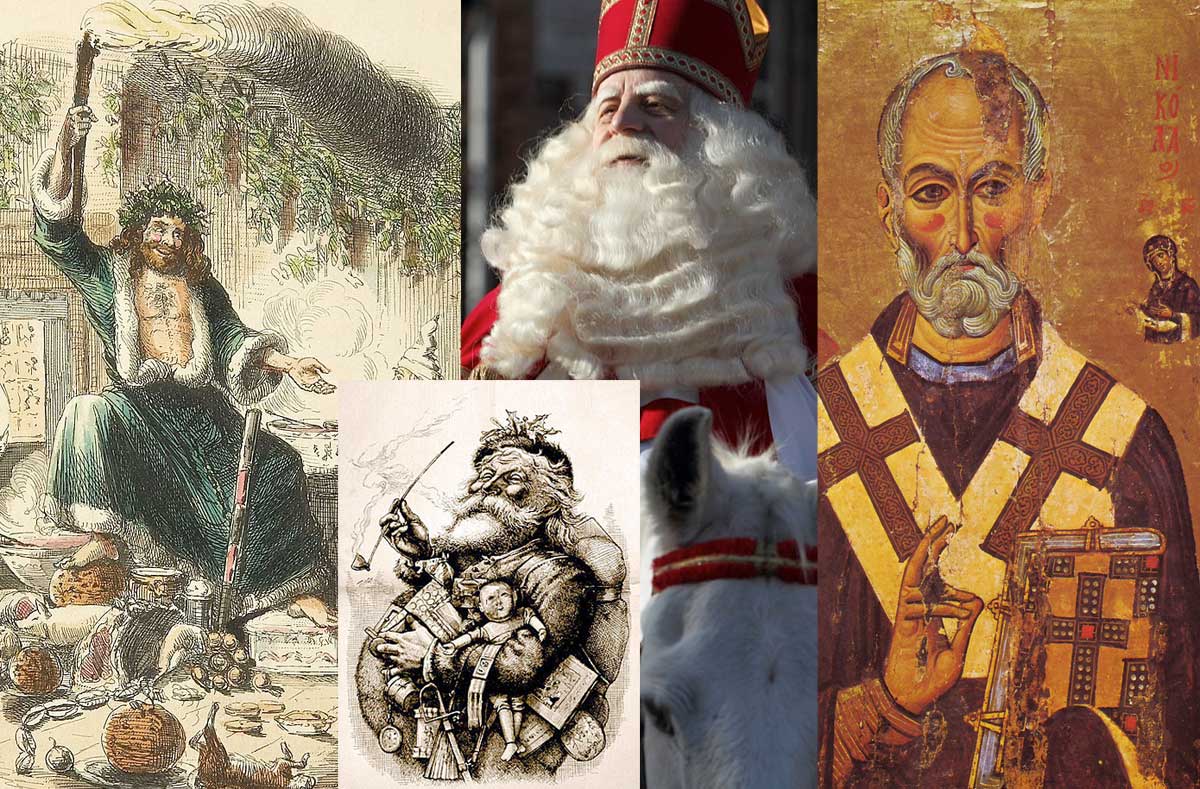
on Childhood Encounters with a Christmas Icon by Rebecca Sicree
calling all readers
Please Donate
"There are magazines worth reading but few worth saving . . . Touchstone is just such a magazine."
—Alice von Hildebrand"Here we do not concede one square millimeter of territory to falsehood, folly, contemporary sentimentality, or fashion. We speak the truth, and let God be our judge. . . . Touchstone is the one committedly Christian conservative journal."
Support Touchstone
—Anthony Esolen, Touchstone senior editor
