




Abortion Matters
Abortion as a Challenge to Christian Orthodoxy
by Terry Schlossberg
Approval of abortion by mainline Protestant denominations is a thoroughly modern phenomenon—scarcely more than two decades old. Early Church documents—the second-century Didache and the Epistle of Barnabas, for example—specifically condemned abortion. Opposition to abortion can be found as a thread running through the ancient writings of church fathers up to those of twentieth-century theologians and denominational proclamations. Orthodox scholar Alexander Webster notes that for all the points of division in the Christian Church through the centuries, abortion was one matter on which the Church was never divided.
John Calvin, in his Commentary on the First Five Books of the Bible, called abortion “an almost monstrous crime.” Martin Luther wrote that “those who have no regard for pregnant women and who do not spare the tender fruit are murderers and infanticides.” In our own century such noted theological voices as Dietrich Bonhoeffer, Karl Barth, Helmut Thielecke, and Paul Ramsey all expressed the opposition to abortion that has characterized the Christian Church historically. And as recently as 1962 the Presbyterian Church, the denomination to which I belong, said, “The fetus is a human life to be protected by the criminal law from the moment when the ovum is fertilized. . . .”
The Test of Abortion
The consensus of opposition to abortion, tied to the biblical and confessional tradition of the Christian Church, began to erode in the late 1960s and seemed to disappear altogether in the 1970s, particularly in mainline Protestantism. It was replaced by a new ethic, introduced by a rapidly changing ethos of the culture in which the basis for deriving truth was transformed from an objective and revealed standard to subjective and individual judgments. The new orthodoxy of mainline denominations is expressed in the oft-repeated “Faithful Christians hold a variety of views about abortion.” But to say that people who profess to be Christians hold a variety of views about abortion is not the same as saying there are a variety of Christian views about abortion, and the distinction is critically important.
Though abortion may not be used as a litmus test for separating Christians from non-Christians in the Church today, it does constitute a test of Christian orthodoxy. Abortion, since it deals with the nature and value of human beings and the order and purpose of God for his creation, raises questions of moral right and wrong. Such a moral and spiritual matter must profoundly concern the Church, and it is proper and necessary for the Church to raise—and to resolve—the moral questions related to abortion, as well as to the problem pregnancies that lead to abortions.
Today the overwhelming need, particularly in the Protestant mainline churches, is not to develop new frameworks for thinking about moral decisions related to abortion, but to return to the framework of Christian orthodoxy itself—and then to think about abortion from within that framework. The abortion issue requires the Church to look again at Scripture, and its doctrinal statements, to examine its confessions, and to reassert what it has believed historically, particularly in contrast to opposing belief systems. The churches are charged to speak the very words of God to his people and to the culture. The churches that now countenance abortion must consider again what they already have been taught about the nature of life in the womb and the moral implications of a decision to kill it. And finally, they must listen to what Scripture has to say about our responsibility to those in need—in this case those women whose personal circumstances lead them to have abortions.
A Common Framework of Absolutes
It obviously is futile to argue these points apart from a common authority framework. Many of my fellow Presbyterians, for example, need to be reminded of what gives them the right to call themselves Presbyterians: an allegiance to prophetic and apostolic doctrine as understood in the Reformed tradition. Reformed doctrine historically has held Scripture to be God’s written revelation of himself and his will to us. Calvin says that Scripture is our means of distinguishing between the true God and those gods devised by human imagination:
. . . God, the Artificer of the universe, is made manifest to us in Scripture, and . . . what we ought to think of him is set forth there, lest we seek some uncertain deity by devious paths. . . . no one can get even the slightest taste of right and sound doctrine unless he be a student of Scripture. ( Institutes, I.VI.1,2).
Terry Schlossberg is executive director of Presbyterians Pro-Life (www.ppl.org), one of the sixteen unofficial renewal groups in the Presbyterian Church (USA).
A Journal of Mere Christianity—Delivered to Your Door
- Essays on theology, culture, and the Church
- Contributors from across the Christian traditions

Six print issues (one year) of Touchstone, plus full online access and PDF downloads for only $39.95.

Get a one-year full-access subscription to the Touchstone online archives for only $19.95.
bulk subscriptions
Order Touchstone subscriptions in bulk and save $10 per sub! Each subscription includes 6 issues of Touchstone plus full online access to touchstonemag.com—including archives, videos, and pdf downloads of recent issues for only $29.95 each! Great for churches or study groups.
Transactions will be processed on a secure server.
more on abortion from the online archives
26.1—Jan/Feb 2013
on Abortion as a Matter of National Welfare by W. Ross Blackburn
27.2—March/April 2014
on C. S. Lewis & the New State Paganism by W. E. Knickerbocker
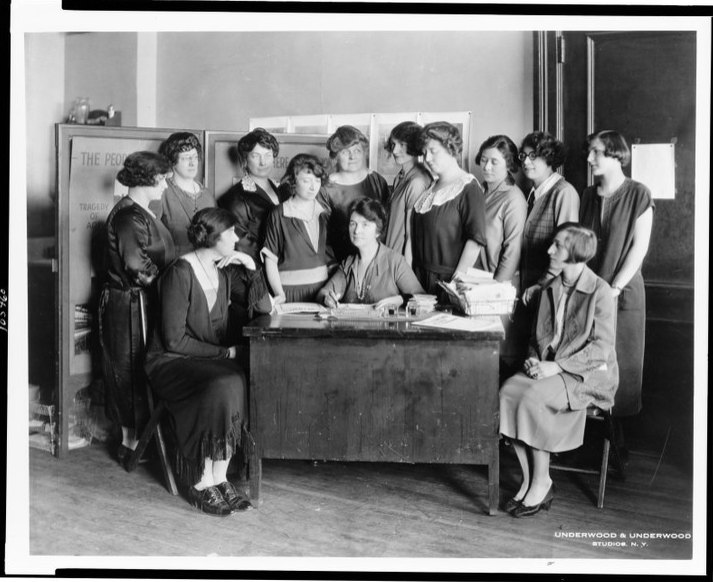
24.1—January/February 2011
How Planned Parenthood's Founder Played the Christians, and Won by Allan C. Carlson
more from the online archives

33.1—January/February 2020
Do You Know Your Child’s Doctor?
The Politicization of Pediatrics in America by Alexander F. C. Webster
18.3—April 2005
on Being a Free Narnian & the Joy of Subordination by Donald T. Williams

31.6—November/December 2018
Victimhood Culture Scapegoats Its Very Source by Michael P. Foley
calling all readers
Please Donate
"There are magazines worth reading but few worth saving . . . Touchstone is just such a magazine."
—Alice von Hildebrand
"Here we do not concede one square millimeter of territory to falsehood, folly, contemporary sentimentality, or fashion. We speak the truth, and let God be our judge. . . . Touchstone is the one committedly Christian conservative journal."
—Anthony Esolen, Touchstone senior editor
