





Freedom & Repentance
On New Tyrannies & Old Sins
When he accepted the prestigious Bradley Prize in a ceremony at the Kennedy Center in February, Robert P. George dedicated it to two patriots: his father, Joseph George, and his father-in-law, Irving Schrom. Both had fought in World War II and were present at the ceremony. He honored them and “their comrades in arms, who secured the freedom that all of us enjoy” in their fight against “one of the great totalitarian systems of the twentieth century.”
He quoted Thomas Jefferson’s famous remark that “the tree of liberty must constantly be refreshed by the blood of patriots and tyrants.” Freedom from tyranny was a major theme of the last century, bringing together new national alliances on the field of battle. It remains a powerful theme in both the rhetoric and acts of our nation in the new century, especially after 9/11. Spreading freedom is American foreign policy now, and while it has its costs in blood, many believe it will result in greater world peace.
But what sort of freedom is being spread? Americans have championed the freedom of a people to determine their own course of both national and local community life, rather than have it dictated to them either by a tyrant or by a small ruling elite that suppresses the aspirations of the citizenry. The tyrant is the privileged man of power, while true patriots are the community of citizens seeking freedom within the context of guaranteed God-given rights natural to man: among them, life, liberty, and the pursuit of happiness. This is the freedom for which the Greatest Generation fought and died.
What they did not fight for is the new freedom recently conjured by judges, one that inverts our traditional understanding of liberty. In a Russell Kirk Lecture given the day after he received the Bradley Prize, George spoke of the judicial tyranny in which secularists, wielding the power of the courts, overturn longstanding community standards with which they disagree. That these standards express the ordered liberty of a free and democratic people has not deterred the judges from removing them.
In Roe v. Wade, the Supreme Court (in what a dissenting justice rightly described as “an exercise of raw judicial power”) exterminated the just authority of the people of the United States to protect the lives of children in the womb. In Lawrence v. Texas, the Court, in striking down a state’s longstanding laws against sodomy, also provided a legal basis for future courts to declare null and void a definition of marriage virtually as old as mankind itself. The key to the court’s thinking, perhaps, lay in the Planned Parenthood v. Casey decision, in which the court declared that “at the heart of liberty is the right to define one’s own concept of existence, of meaning, of the universe, and of the mystery of human life,” implying that the state must accommodate itself to all such private universes.
Thus, the Court has defined freedom as the freedom of the solitary individual from any and all community standards and responsibilities that he personally deems offensive, especially when it comes to sex. This is not the freedom for which our fathers fought the Revolutionary War, or the Civil War, or World War I, or World War II, or the Korean War, or the Cold War, or (we hope) for which we are fighting the Iraq War today.
To pervert liberty in the name of a new sexual ethic that has shown itself to be destructive of the very marital and familial bonds that produced the Greatest Generation, bonds they sought to defend with their blood, dishonors our fathers and mothers who bore the burdens and sacrifices of war.
It is time for Christians to work even harder on every front to overturn—to heal—the effects of this tyranny. We can do something in the political world to reverse the rulings of these justices, but we can do more in the culture to reverse the damage their decisions have aided. (For the Supreme Court did not invent sexual disorder.)
But it is difficult to defend marriage and morality in the public square when many of the churches themselves compromise on these matters. Some soul-searching is in order, for we face two hard realities: a backlog of monumental failures and sins still with us, and a seeming paralysis in repenting and doing what is necessary to clean up our own act across the board, on every front.
Are Christians truly pro-life? How many have had or have facilitated abortions? How many have embraced technology (in vitro fertilization) that freezes or discards “excess” human embryos? How many favor embryonic stem-cell research because it might cure them of a disease?
James M. Kushiner is the Director of Publications for The Fellowship of St. James and the former Executive Editor of Touchstone.
A Journal of Mere Christianity—Delivered to Your Door
- Essays on theology, culture, and the Church
- Contributors from across the Christian traditions

Six print issues (one year) of Touchstone, plus full online access and PDF downloads for only $39.95.

Get a one-year full-access subscription to the Touchstone online archives for only $19.95.
bulk subscriptions
Order Touchstone subscriptions in bulk and save $10 per sub! Each subscription includes 6 issues of Touchstone plus full online access to touchstonemag.com—including archives, videos, and pdf downloads of recent issues for only $29.95 each! Great for churches or study groups.
Transactions will be processed on a secure server.
more from the online archives
32.4—July/August 2019
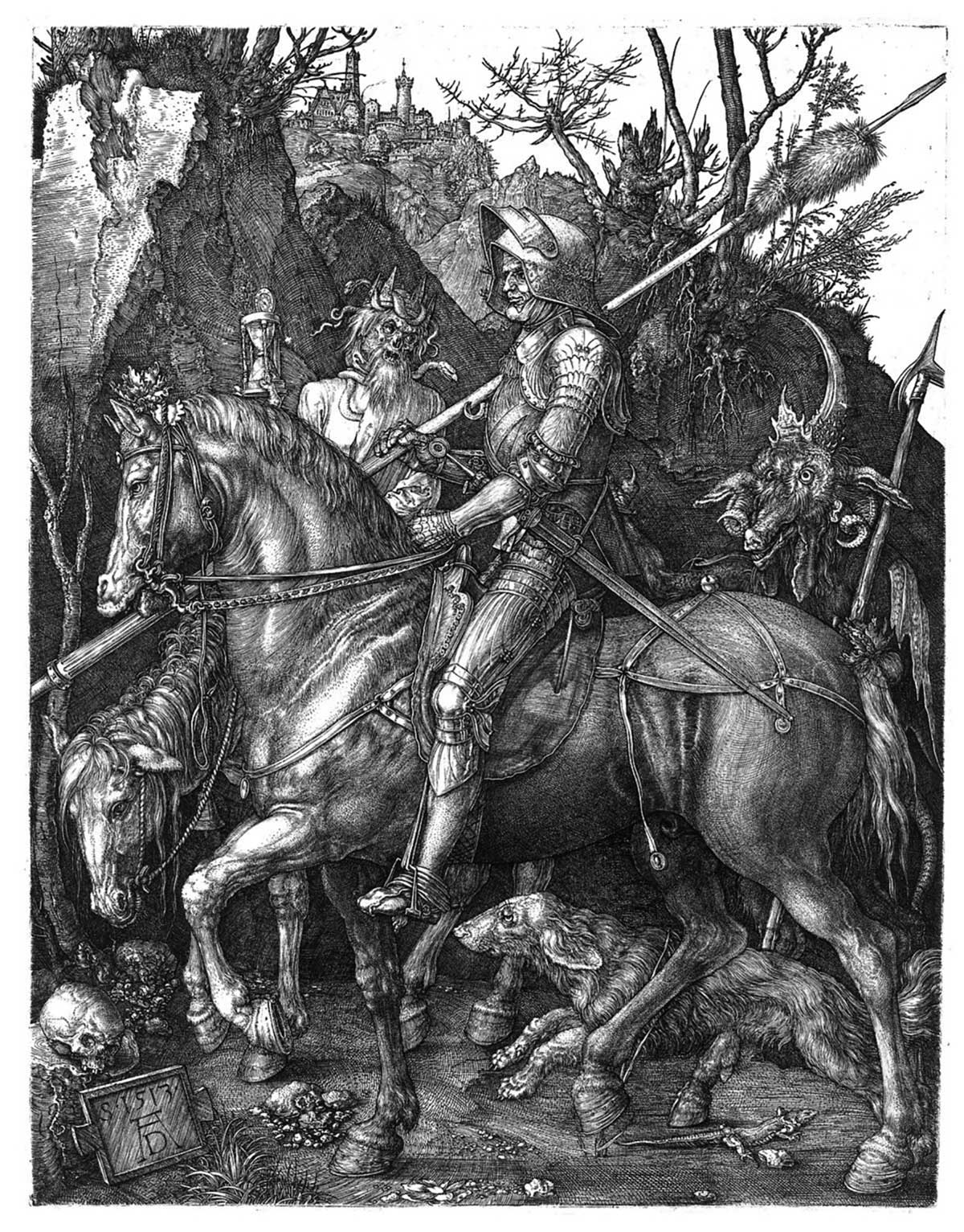
on Single-Mindedness in Durer's Ritter, Tod, und Teufel by Anthony Costello
23.5—September/October 2010
The Loss of a Christian Understanding of Virginity Is Pure Tragedy by Eleanor Bourg Donlon
26.1—Jan/Feb 2013
on Abortion as a Matter of National Welfare by W. Ross Blackburn
calling all readers
Please Donate
"There are magazines worth reading but few worth saving . . . Touchstone is just such a magazine."
—Alice von Hildebrand
"Here we do not concede one square millimeter of territory to falsehood, folly, contemporary sentimentality, or fashion. We speak the truth, and let God be our judge. . . . Touchstone is the one committedly Christian conservative journal."
—Anthony Esolen, Touchstone senior editor
