Is
Murder & the Modern Conscience by James Hitchcock
Murder & the Modern Conscience
A Case Study of Two Murders, the Trials, and the Question of Moral Responsibility
by James Hitchcock
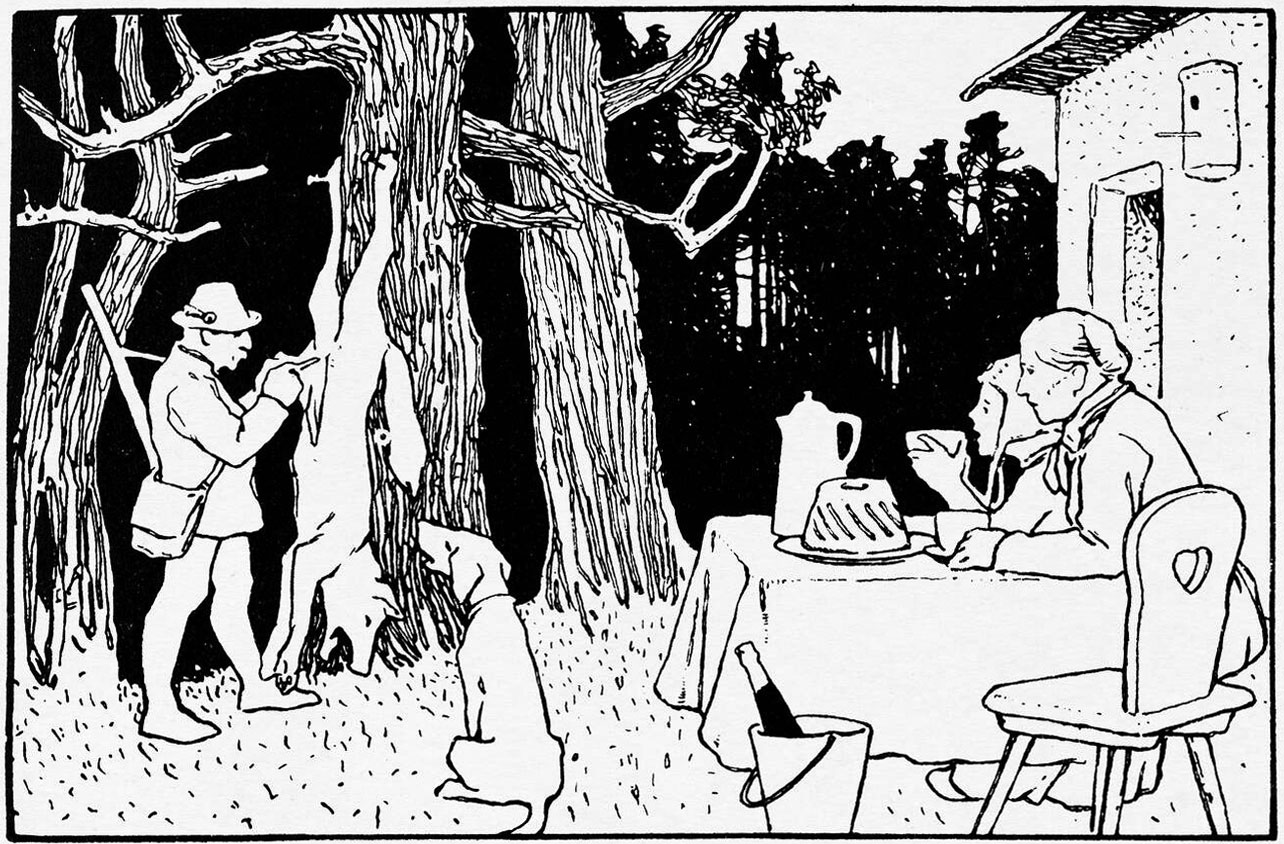
Early one summer morning in 1860 an English nurse woke to discover that her
charge, the infant Francis Savill Kent, was missing from his crib. An increasingly
frantic search of the spacious grounds of Road Hill House finally revealed the
boy’s body in an unused outhouse. His throat was cut, but apparently he
had died by suffocation.
The local Wiltshire police anticipated the Keystone Cops in their ineptitude,
managing to get themselves locked in the kitchen one night while they were supposed
to be keeping watch. They scattered suspicions in all directions, including
toward the nurse and the victim’s father.
The detective division of Scotland Yard was still new, and the Yard’s
most accomplished sleuth, Jonathan Whicher, was assigned to the case. He concluded
that the murder had been committed by sixteen-year-old Constance Kent, Francis’s
half-sister, and she was duly arraigned. However, the evidence against her was
flimsy, local opinion was outraged that she should be suspected, and she was
soon freed. Whicher shortly thereafter resigned from the police force.
Another Murder
On a spring morning in 1924 a laborer on his way to work saw a pair of human
legs protruding from a culvert on waste ground on the south side of Chicago.
Eventually the body was identified as that of 14-year-old Bobby Franks. He too
had died of suffocation, although he also had been bludgeoned.
Police suspicions again scattered in all directions, including especially
toward two of Bobby Franks’s teachers. However, a pair of eyeglasses found
at the scene eventually led to Richard Loeb and Nathan Leopold, neighbors of
the Franks family. When caught in several lies, the pair gave up and confessed
to the crime.
The Road Hill House murder also was solved by a confession. After the murder
Constance Kent traveled on the Continent for a time, then returned to England
and took up residence in an Anglican convent. While being prepared for Confirmation
she told her spiritual director that she indeed had committed the murder. She
went before a magistrate and pleaded guilty and, without trial, was sentenced
to death, which was then commuted to life in prison.
Constance’s spiritual director was Father Arthur Douglas Wagner, a leading
“ritualist” in the Church of England. There was storm of public
protest over his action, on the grounds that he had first led an emotionally
vulnerable girl into the Catholic practice of confession, then violated his
obligation of secrecy. But Wagner was careful to state that Constance’s
revelation to him was made outside the confessional and that she had authorized
him to speak on her behalf. His role in the case is credited with ultimately
helping to gain acceptance of the practice of confession within the Anglican
Communion.
Defending the Crimes
Despite their own confessions Loeb and Leopold were at the center of what
has aptly been called “the trial of the century.” Their lawyer,
the famous Clarence Darrow, advised them to plead guilty, his sole aim being
to allow them to escape the death penalty. He did not have them plead insanity,
because that would have required a jury trial, and instead concentrated on persuading
the judge, through a parade of psychiatrists, that the defendants had “diminished
responsibility” because of certain experiences in their own past. The
judge apparently accepted the claim, and sentenced them to life in prison.
When Constance Kent killed her half-brother she was four years younger than
Loeb and Leopold were when they committed their murder. Although her family
was well off, she had minimal formal education compared with the Chicagoans’
brilliant record at major universities, and she certainly knew much less of
the world than they did. Nonetheless she accepted full responsibility for her
action. Although it would later be revealed that there were indeed pathological
conditions in the Kent household, no one at the time suggested that these were
mitigating factors.
By contrast, although Loeb and Leopold prided themselves on having tasted
all that life had to offer, including at least four criminal transgressions
prior to the murder, Darrow’s strategy was to portray them as mere “boys.”
One of his chosen psychiatrists, William Alanson White, lamented in a private
letter that vicious prosecutors were harassing two young men whose crime was
that they “stumble and fall when they try to pass the threshold that separates
childhood from manhood.” (White at one point proposed that the Franks,
Loeb, and Leopold families jointly endow, in memory of their “lost”
sons, an institute for the study of adolescent disorders, and could not understand
why the Franks family seemed uninterested in his idea.)
The argument that their past lives somehow diminished their responsibility
for the crime came down merely to the fact that Loeb’s mother had died
when he was an adolescent and that Leopold had been under the control of allegedly
strict governesses. The defendants snickered throughout the trial and gave jaunty
interviews to reporters they thought might be sympathetic to their plight.
Remorse
The governor of Millbank Prison, where Constance Kent was incarcerated, later
wrote his memoirs, describing her as a wraith-like creature who would suddenly
disappear if any visitor seemed to know who she was and might seek to talk with
her. After twenty years she was released and disappeared from public view.
Richard Loeb was killed by a fellow prisoner in 1936, but he and Leopold,
who were incarcerated together only during the last four years of Loeb’s
life, were anything but self-effacing in prison. Reporters continued to show
interest in them, and they became prominent in all kinds of prison activities.
They also seemed to have mysterious influence, on one occasion escaping punishment
even though they were caught drinking alcohol in their cells.
It was four years after Leopold and Loeb entered the penal system of the state
of Illinois that Constance Kent at last chose to unveil the mystery of Road
Hill House.
An English author, John Rhode, had written a study of the case, and one day
in 1929 his publisher received an anonymous letter, postmarked in Sydney, Australia,
by a person claiming to have knowledge of the circumstances of the murder. The
contents of the letter suggested that the author was Constance Kent herself.
The author offered no excuses for the murder but sought mainly to correct
certain misconceptions about other people in the case. Constance’s mother
had been ill for some years prior to her death and was regarded by some people
as mentally deranged, which the writer vigorously denied. After her death Samuel
Kent married the children’s governess, and Constance bitterly resented
the fact that the new Mrs. Kent regularly disparaged the former Mrs. Kent. Constance
was driven to kill her half-brother out of hatred for her stepmother; she had
no animosity towards the small victim himself. The writer described Constance
as utterly remorseful over her deed, which she had come to realize was unspeakably
wicked.
To the end of their lives Loeb and Leopold are not known to have ever expressed
remorse for their own crime. In his memoirs Leopold stated that Loeb, whom he
claimed had actually killed Bobby Franks, was incapable of remorse. But his
description of his own mental state was also curiously evasive on the question,
leaving the impression that the murder was to him simply an inexplicable episode
of long ago that had unfortunately blighted the rest of his life.
Their Later Years
Many years after the mysterious letter from Sydney, Bernard Williams, the
definitive student of the Road Hill House murder, traced, in his book Cruelly
Murdered, the later history of Constance Kent. After prison she had gone
to Australia to be with her brother and his family, and in due course had become
a nurse. For decades she tended the sick in a variety of situations and came
to be regarded as a heroically self-sacrificing individual, living under a false
name, with few people knowing her true identity. In 1944 she celebrated her
100th birthday, receiving greetings from King George VI and a personal visit
from the Anglican archbishop of Sydney. She died later that year and, if she
paid attention to such things, had the incredible experience of remembering
events that stretched from the Charge of the Light Brigade to within two months
of D day.
Many people have heard that Nathan Leopold in later years was also a heroic
figure. He was finally paroled in 1957 because he volunteered as a “guinea
pig” in malaria experiments, and after parole went to work in a rural
hospital in Puerto Rico, where some people compared him to Albert Schweitzer.
He died in Puerto Rico in 1971.
But, according to the definitive study of the Loeb-Leopold case, Hal Higdon’s
The Crime of the Century, what people “know” about Leopold’s
later life is not altogether true.
He was a volunteer subject of malaria experiments, but so were 400 other convicts,
none of whom received the kind of publicity he did. In fact the doctors who
conducted the experiment found him so uncooperative that they refused to support
his application for parole. He did do useful work in Puerto Rico, but he also
boasted to friends that he routinely violated the terms of his parole, spending
much time in bars and brothels and even carrying a gun. He never ceased resenting
what he regarded as the stupid and inferior people who had dominated his years
of punishment.
Moral Conversion
Constance Kent’s is one of the great stories of moral conversion, a
story she chose never to tell publicly or in her own name. She merely allowed
the rest of her entire life—six decades—to serve as atonement for
the evil deed she had once committed, an atonement that she probably thought
could never be sufficient.
Richard Loeb almost certainly died defiant and unrepentant. Nathan Leopold
was at best fitfully regretful, and even his regret cannot be separated from
his relentless, and ultimately successful, effort to manipulate the judicial
system for his own benefit.
The adult Constance Kent never even hinted that the emotional scars in her
family (her father habitually had affairs with servants and treated her mother
abominably) in any way excused her actions, even as Clarence Darrow grasped
at every straw in his clients’ lives that in any way could be stretched
to justify the murder of Bobby Franks.
Many things happened in the world between 1861 and 1924, among which was the
defiant rejection of the Christian conscience. If at their worst the Victorians
were unable to see that a starving child was justified in stealing a loaf of
bread, they also did not make heroes out of villains and were deeply shocked
by deeds like the Road Hill House murder. (Public support of Constance Kent
in the beginning was due to the conviction that a young girl was obviously incapable
of such a vicious deed.) She was examined by a doctor and declared sane, and
at her trial Judge Willes wept as, the notorious black cap on his head, he passed
the sentence of death.
A Modern Twist
So much did the moral universe change in the decades after the Road Hill House
murder that, when a leading criminal historian came to write about the case
in the 1940s, she could not accept Constance’s confession. According to
Iseult Bridges’s book, Saint with Red Hands, Constance was the
victim of emotional manipulation by Arthur Wagner, her motive in confessing
being to protect the real murderer, her father. (As Bernard Williams points
out, by the time of her confession her father was no longer a suspect.) Bridges
found the entire Christian concept of redemption unfathomable except as pathology—the
story of Christ’s passion made Constance also want to suffer innocently.
The Loeb-Leopold trial was perhaps the first legal case in which psychiatric
evidence was used not to argue insanity, a plea Darrow cunningly avoided, but
“diminished responsibility.” Darrow said his motive in taking the
case was his absolute abhorrence of capital punishment for any reason. Although
he did not say so explicitly, he must have thought that if Loeb and Leopold
did not deserve death, no one did.
But, like some other critics of capital punishment, many of his arguments
logically went not only against the death penalty but also against any punishment
at all, a plea that not even Darrow dared to make. He and his hired therapists
habitually referred to Loeb and Leopold as “boys,” talked about
the inevitable perplexities and uncertainties of youth growing up, and savagely
attacked the prosecutors as sadists whose sole motive was a lust for blood.
The defendants, while not denying their crime, tried to place the judicial system
itself on trial, casting themselves in the role of victims both of society and
of malevolent officers of the law.
Excusing Sin
In the ensuing decades innumerable criminals have been excused on the grounds
of poverty and ignorance, but at the beginning of the modern era of criminology
Darrow did not even have those excuses—his clients were wealthy, and both
had compiled brilliant records at major universities. The claim that somehow
they were not full moral agents was a wholly gratuitous one, although it apparently
convinced the judge. Like Judge Willes in the Kent case, Judge John V. Caverly
was in tears by the time Darrow completed his peroration.
The crimes were also gratuitous. Constance Kent recognized that part of the
evil of her deed was that she had no grievance against her half-brother, and
did not even dislike him. Her action was breathtaking in its cold-blooded calculation,
a violent act perpetrated on one person in order to harm another. It was, she
declared in her letter of 1929, “vile and unnatural.” Her stated
motive for sending the letter, almost seventy years after the crime, was not
in any way self-justification but precisely to explain her true motives and
to deny that alleged mistreatment at the hands of her father and stepmother
had anything to do with it.
Loeb and Leopold in effect boasted that their crime was even less motivated.
They barely knew Bobby Franks and chose him as their victim only because he
happened along at the right moment. Self-described disciples of Friedrich Nietzsche
(although they apparently knew of his philosophy only from Jack London’s
The Sea Wolf), they wanted to prove themselves supermen who could commit
the ultimate transgressive act without conscience or remorse.
There have been many casual murders in history—in war, during robberies,
as part of feuds—but there are no historical instances, prior to 1924,
of the purely gratuitous act, of the kind described by Fyodor Dostoevsky in
Crime and Punishment and actually carried out by Leopold and Loeb.
Although casual murders are more common now than they have perhaps ever been,
gratuitous murder to make a philosophical point is still rare.
Although the Franks family was of Jewish background, at the time of the murder
they were Christian Scientists. Bobby’s father Jacob issued a public statement
blaming Loeb and Leopold’s atheism for their action. Atheists understandably
bristle at the claim that they are without morals, but in this case it was true—Loeb
and Leopold themselves saw their rejection of God, of any transcendent spiritual
reality, as inescapably leading to the conclusion that any deed is justifiable,
the only sin is failure, and “inferior” public officials should
not be allowed to have authority over “superior” criminals.
But most atheists are not murderers, and there is more involved in the moral
revolution of the twentieth century than Dostoevsky’s “if God does
not exist, all things are permitted.”
Are We Moral Agents?
Unable to face the stark evil of the crime, even Loeb and Leopold’s
prosecutors ignored the murderers’ confessed motives and argued that they
had done it for the ransom money, which they needed to pay gambling debts, an
unconsciously ironic claim that even the rich are sometimes poor and in need
of help. The prosecutors made this claim apparently because they did not think
that public opinion (and perhaps not even their own opinions) could comprehend
the purely gratuitous nature of the crime. If ever a crime opened a window into
the unadulterated mystery of evil, it was the murder of Bobby Franks, and it
is not surprising that most people averted their gaze.
By contrast, although Constance Kent’s crime was considerably less gratuitous,
she and her fellow Victorians had no difficulty seeing, not only in murder but
also in innumerable other kinds of human transgressions, not the struggles of
desperate people, not uncontrollable impulses, not even coldly self-interested
calculation, but a love of evil for its own sake, an awareness of evil that
runs down through the centuries from the Epistle to the Romans through Augustine’s
robbing a pear tree, and becomes a pervasive aspect of every culture influenced
by the theology of John Calvin.
Judge Caverly was a devout Catholic, and it was an unnoticed irony that his
faith did not apparently lead him to a recognition of the great mystery of redemption
acted out on the hill whose name resembled his own. His Catholicism was not
all that separated him from Calvin, for the judge apparently could not bring
himself to believe that it was possible to commit an act purely for the sake
of doing evil. He never explained his reason for accepting Darrow’s arguments,
but unwittingly he became one of the founders of modern criminology, which at
its worst simply denies that human beings are moral agents at all.
Loss of Conscience & Redemption
In religious circles, if not in secular ones, the word conscience is now thrown
about with abandon, but its users rarely notice how it has come to mean almost
the opposite of what it once did.
Constance Kent possessed a Christian conscience in the classic sense—it
ate away at her soul until she was moved to repent of her sins. Loeb and Leopold
in effect boasted that they had no consciences. They were engaged in a visible
experiment in the eradication of conscience, and in their own case they succeeded.
But, if the murderers had no consciences, the community around them unwittingly
allowed its own conscience to be subverted during their trial, as a pious Catholic
judge and many of the general public tacitly accepted the new doctrine that
human beings need not be held accountable for their actions, that the very atrocity
of their deeds proves that they cannot be culpable.
“Conscience” is now a favorite word among liberal Christians,
but it is used not in the classic sense of a faculty that relentlessly calls
the individual to account, but in precisely the opposite sense—the faculty
that constantly flashes a green light, constantly reassuring the individual
that what he wants to do is morally right for him. More often than not, “conscience”
is now not a voice encouraging right conduct but the power excusing wrong conduct,
so that one’s sins actually become the basis of one’s self-righteousness.
Iseult Bridges’s view of the doctrine of redemption as pathological
contained an insight of great importance, which she herself probably did not
understand, for it is the possibility of redemption that alone makes it endurable
for the individual to live with a genuine Christian conscience.
Constance Kent gained the strength to confront her own wicked deed as she
prepared to let the Holy Spirit enter her heart, assured that, although her
sins were as scarlet, they could still be forgiven, and her long years of patient,
self-effacing atonement were proof that a miracle had occurred.
Nathan Leopold, however much he may have tried, never got beyond being a manipulator
of the penal system and the press, even his acts of self-sacrifice being calculated
for effect. Concepts like sin and forgiveness were utterly foreign to him, and
probably he could not have confronted the horror of his guilt precisely because
he knew that, having once done so, tranquillity would never again be given back
to him.
James Hitchcock is Professor of History at St. Louis University in St. Louis. He and his wife Helen have four daughters. His most recent book is the two-volume work, The Supreme Court and Religion in American Life (Princeton University Press, 2004). He is a senior editor of Touchstone.