Is
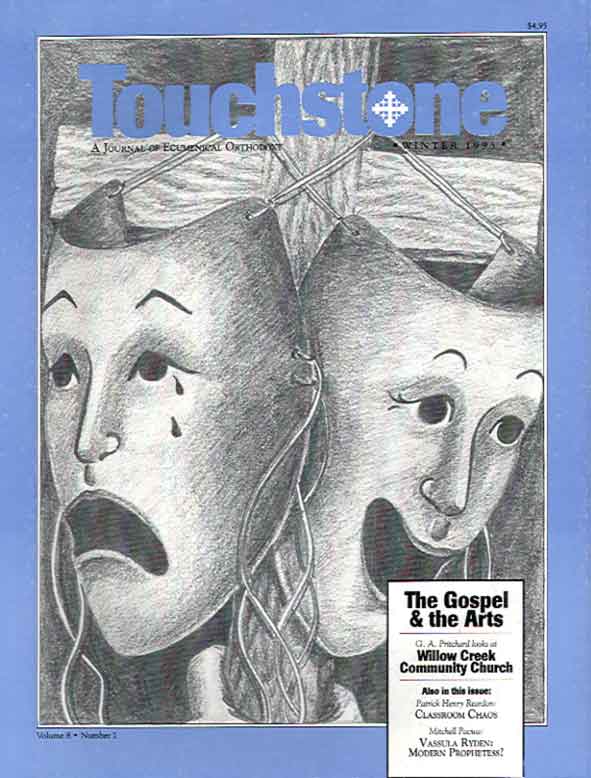
The Spirit of the Prophetess by Mitchell Pacwa
The Spirit of the Prophetess
Vassula Ryden: A Case Study in Discerning the Spirits
by Mitchell Pacwa
From the days of Moses and Miriam, Deborah and Samuel, to the prophets
of the Book of Acts, the people of God have been presented with those who claim,
“Thus says the Lord.” The Church has had its share of visionaries
and seers who give what they claim are revelations from God and messages to
his Church—some of these prophets have been recognized by the Church as
genuine. Others ultimately have been dismissed as frauds. These visionaries
and the messages often attract a following. The hierarchies of the churches
are called to verify the authenticity of spiritual experiences, whenever that
is possible. In many cases no stamp of approval can be given.
One of our modern visionaries is Vassula Ryden, who has spoken around the
world in many churches with prophetic messages about church unity that she alleges
are from Jesus Christ. Does she speak for “ecumenical orthodoxy”?
Touchstone Contributing Editor Fr. Mitch Pacwa was asked by Ryden to examine
and critique her writings. (Her five-volume notebook is published as True
Life in God by Vassula Ryden, Independence, Missouri: Trinitas, 1991.)
The study of the five volumes—which are not typeset but retain the handwritten
text—was a daunting task and required careful work and sifting. The following
article, based on Pacwa’s lengthier critique published in Catholic
Twin Circle (August 1, 8, and 15, 1993) is the result of the theological
aspect of “discerning the spirits” and is presented as an instructive
look at this process. It also serves as a reminder of and evidence for the ongoing
and vital need for spiritual discernment. (Editor)
On January 18, 1942, Vassula Ryden was born to Greek parents in Egypt. She
has lived in many countries because of her first husband’s job. She worked
as a model, and later became tennis champion of Bangladesh. Presently living
with her second (though some say third) husband in Switzerland, she claims that
Jesus, the Virgin Mary, and angels literally write through her hand.
Vassula’s experiences began in November 1985, when she felt a “kind
of supernatural vibration that was flowing through my hands . . . the
pencil was too strong for me to control.” The writer identified himself
as her guardian angel, Daniel, preparing her for conversion. In February 1986
“Jesus” began to write through her hand. Eventually, the “Blessed
Virgin Mary” and “St. Michael” wrote through her, too. Since
then, Vassula, who is Greek Orthodox, has travelled around the world talking
to church groups about these messages.
Getting Involved
Vassula had asked me to examine all five volumes of her published notebooks
for problematic statements. She suggested that notes could be added to later
editions to correct any confusing or imprecise statements about Christ. I read
her books, wrote my notes, and in the fall of 1992 sent them to her spiritual
advisor, Fr. Michael O’Carroll, C.S.Sp., for his response.
I then received a call from Fr. O’Carroll, who was then promoting a
trip by Vassula. Father O’Carroll strongly suggested I not publish my
findings. He said I showed “not one single sign of Christian charity”
in my comments, that I ignored the “immensity of her conversion”
with its prayer life and apostolate, and that I applied a piecemeal approach
to Vassula’s writings in my analysis.
What I particularly did not like about Fr. O’Carroll’s subsequent
letter was its spiritual threat (which also appears in Vassula’s writings):
“Since your article and the distress, the real hurt, it inflicted on Vassula,
God the Father has spoken to her. He is very severe on those who oppose her.
This [book] will be published. If you go ahead with your article, and people
apply this to you, they will not challenge Vassula’s right to defend herself
and they may think much on the One who takes up her defence.” Fr. O’Carroll
also informed me that I “am meant for higher and greater things than this.”
I wrote this article to correct Vassula and to warn her followers of serious
misstatements of theology, allegedly authored by Jesus. The truth of the gospel
is my sole concern, and I trust that is the case with everyone involved.
What is most crucial is whether Vassula’s teachings are true to the
Catholic and Orthodox faith which we have received from our Lord through the
Apostles and the Tradition of the Church. My first concern in evaluating her
messages was that nothing contradict the New Testament, the Councils, or authoritative
Church teaching.
Ryden discounts any assertions that she is “influenced by the subconscious,
or by evil spirits, by psychological disturbances.” Some theologians claim
to find many good fruits in her writings. What does she teach? What are the
doctrinal strengths and problems? This article is based on reading the first
five published volumes of photocopied notebooks written by and (she alleges)
through Vassula. (Please note: The grammar, punctuation, spelling,
emphasis, and capitalization are quoted directly from Vassula’s notebooks.
I put “Jesus” in quotation marks to refer to the one that Vassula
claims is writing through her.)
Attractive Elements
Many good Roman Catholics, clergy and laity, are attracted to several things
in Vassula’s writings. She frequently invites readers to devotion to the
Sacred Heart of Jesus. She teaches that the Christian should die to oneself
so that Jesus can be within. She calls readers to peace, love, and conversion
from sin and unbelief, much like she has epxerienced. This conversion includes
a call to holiness and strong faith in the Eucharist. She promotes belief in
Scripture and a return to authentic Christian faith. Central to her message
is the call for unity among the churches, which can only come from God. This
unity should be under the petrine office embodied in the pope—this comes
from a Greek Orthodox Christian, not a Catholic! Many Roman Catholic readers,
amazed that someone untrained in theology could write such Roman Catholic doctrine,
naturally accept it as strong evidence of her claim to be taking authentic dictation
from Jesus Christ.
Christological Confusion
The main problems of her writings are her confused teaching about Christ and
the Blessed Trinity. She views the unity of God as the model or image of unity
within the Church, yet her version of unity in the Blessed Trinity is muddled,
if not heretical.
The confusion about Jesus Christ begins in Volume One where “Jesus”
writes: “. . . learn that God and I am [sic] one, I am
the Father and the Son, now, do you understand? I am One, I am All in One.”
After Vassula protests that this is difficult, “Jesus” adds: “. . . the
Holy Spirit comes from Me . . . All in One. The Holy Trinity
is One, you can call Me Father, too. Wisdom comes from Me, I am Wisdom, too.”
He “yearned to be loved by you, to hear you call Me Father,” and
asks her to call him “Spouse and Father.” He says, “Lean on
your Holy Father, Spouse, Companion and God.” However, in a passage where
“Jesus” distinguishes himself from the Father, he asks, “Why
were you avoiding calling Me Father? Vassula, I love being called Father. I
am Father of all humanity.”
In Vassula’s own handwriting (the handwriting in the notebooks changes
depending on who is speaking) she calls Jesus the Father, and so does “Jesus”
on numerous occasions. He also says “I am your Holy Father,” and
writes, “Little one call Me Abba” and in Greek, “call Me Baba”;
“say, Abba to Me every now and then”; and “Come in your Father’s
arms.” “Jesus” instructs people to pray to him, “You
are the-One-God-and-Only, the Just One, you are indeed the Lamb, You are
our Heavenly Father.” Still more problematical are the times “Jesus”
writes statements like “the Father and I are One and the same.”
“Jesus” responds to those who would criticize Vassula for calling
him Father: “If they accuse you because you call Me Father it is because
they have not understood that the Spirit of Love you received and speaks through
you, brings you peace and love to cry out: Abba!” This fails to answer
the objections about calling Jesus “Father” or to remove the confusion
among the divine Persons which Vassula introduces.
“Jesus” answers this objection again: “If a ‘sage’
now and then accuses you of calling Me Father, remind him that today a Child
is born and His Name is Wonder-Counsellor [sic], Mighty-God, Eternal-Father,
and Prince of Peace [Is. 9:5]; pray for those who call themselves doctors of
the Law, that their spirit becomes a humble and poor spirit.” In other
words, the title Eternal Father in Isaiah’s messianic prophecy
allows for calling Jesus Father. Critical theologians are the problem,
according to “Jesus.” The weakness of this retort is that the New
Testament does not refer to Jesus as Eternal Father, precisely to
avoid the confusion between Father and Son that Vassula teaches. Theologians
are duty-bound to clarify the Christian faith and test the teachings of locutionaries,
visionaries, etc. Vassula’s response inadequately turns aside proper criticism.
Special confusion about the relationship between Father and Son appears at
two points. First, in Vassula’s own script, she writes, “I love
You, Father, beyond words.” The response is: “I love you daughter.
My sufferings I will make you feel, when My crucifixion comes nearer, I will
come to you leaving My nails and thorned crown, I will give you My Cross, beloved
share with Me My sufferings.” Is it the Father or Jesus who suffers? If
it is the Father (as Vassula’s words indicate), then she is teaching an
old heresy called Patripassianism, the belief that the Father suffered on the
Cross. The Church rejected Patripassianism because the Son suffered on the Cross,
not the Father. Perhaps Vassula means Jesus suffered, but the text is unclear.
The second odd attribution to the Father of something proper to Jesus concerns
the Eucharist. “The Father’s Voice, full of joy resounded through
all Heaven, ‘Ah . . . I shall now make her penetrate My
Wounds [Vassula notes that the Son is speaking] and let her eat My Body and
drink My Blood.’ This sounds as if Jesus teaches that the Son is the Father,
and the Father has wounds and offers His Body and Blood as much as Jesus does.
This also sounds like Patripassianism.
Incorrect Statements Regarding the Holy Spirit
Jesus Christ, in John 16:13, describes the Third Person of the Blessed Trinity
as “the Spirit of truth, who will guide you into all truth.” Vassula’s
“Jesus” says, “I am the Spirit of Truth who speaks.”
“Jesus” distinguishes himself from the Holy Spirit in one paragraph
but identifies himself as the Holy Spirit in the next: “I am the Spirit
of Love.” Still more explicitly, “Jesus” writes, “Anyone
who rejects the Works of My Holy Spirit is rejecting Me, for the Holy Spirit
and I are One, and the same!” Sometimes Vassula sees the Holy Spirit as
distinct from Jesus and sometimes the same as Jesus. Such confusion must originate
in her, not the real Jesus Christ.
“Jesus” writes more confusion: “Remember that I am Spirit,
and all I have I share with your spirit, you and I are one, linked in union
of Love.” He writes, “I who is [sic] the Spirit of Love,
have taught you, how to love Me and how to grow in this love.” He also
writes, “I Am the Holy Trinity all in One, I Am the Spirit of Grace.”
He writes again, “I am Spirit and I desire you to worship Me in spirit
and truth.” “Jesus” also writes, “And I, the Holy Spirit
shall descend upon her to reveal to her the Truth and the depths of Us [Vassula’s
note: “Us” is the Holy Trinity].”
Orthodox Teaching on the Distinction of Divine Persons
Catholics and Eastern Orthodox Christians already possess strong agreement
in faith that the one true God is a Trinity of three distinct Persons. What
follows are just a few of the many statements by Greek and Latin Church Fathers
that the Christian cannot confuse the divine Persons.
Tertullian wrote in Against Praxeas (2,1), “. . . the
present heresy [of Praxeas] . . . supposes that one cannot
believe in the one only God in any other way than by saying that Father, Son,
and Spirit are very selfsame Person. As if One were not All even in this way,
that All are One—through unity of substance, of course!”
St. Athanasius, Patriarch of Alexandria, wrote in Discourses Against
the Arians (3,4):
They [the Father and the Son] are one, not as one thing now divided into
two, but really constituting only one; nor as one thing twice named, so that
the same becomes at one time the Father and at another His own Son. This latter
is what Sabellius held, and he was judged a heretic.
Pope St. Damasus I, at the Council of Rome in A.D. 383, declared, “We
anathematize those also who follow the error of Sabellius in saying that the
same one is both Father and Son” ( Tome of Damasus, Decree 2).
Vassula’s desire for unity under the papacy is most commendable, but this
requires accepting his teaching. Her “Jesus” contradicts the authoritative
teaching of Pope St. Damasus I.
Fr. O’Carroll objected to my article, quoting our Lord’s words:
“He who has seen the Father has seen the Son” (John 14:9). I respond
with the teaching of St. Cyril of Jerusalem’s Catechetical Lectures
on the same passage:
Whoever sees the Son, sees the Father: For the Son is like the begetter
in all respects. . . . The Father, having begotten the
Son, remained Father, and did not become other than He was. He begot Wisdom,
but did not Himself become unwise. He begot Power, and was not weakened. He
begot God, but lost not His own divinity. He neither lost anything of Himself
by diminution or change; nor is there anything lacking in Him that was begotten.
He that begot is perfect; and perfect is He, the Begotten. He that begot is
God; and God is He that was begotten. (11,18).
The Church Doctors, East and West, show that John 14:9 is not interpreted
in the manner of Vassula’s “Jesus.” Rather, it refers to Jesus
Christ having the same nature as the Father. (See also Origen,
Contra Celsum, 7,43; St. John Chrysostom, On John, 74,1; and
Bishop Victor of Vita, History of the Persecution in the Province of Africa,
2,63.) Vassula makes a mistake in claiming that Jesus and the Father share the
same identity. God the Son is of the same nature as the Father, but he is a
distinct Person. Vassula blurs that distinction in her writings. This can only
bring disunity and confusion to those who accept her erroneous theology.
According to this evidence, it would be incorrect and heretical for a Christian
to follow Vassula’s confusion of the Son with either the Father or the
Holy Spirit. Her false teaching can never be the basis of unity between Latin
and Greek Churches since both reject such confusion about Jesus Christ and the
Blessed Trinity. If anything, her Trinitarian teachings would divide the Churches
further.
Her Orthodox Statements on the Trinity
Vassula correctly states: “I am Jesus Christ beloved Son of God and
Saviour.” She correctly distinguishes the Father and the Son on 85 pages,
usually where the Son teaches Vassula to pray to the Father. Most of her references
to the Holy Spirit, over 160 by my count, appear aptly to distinguish Jesus
from the Holy Spirit. No one need dispute these acceptable statements on the
Trinity. Neither can one avoid correcting erroneous or confusing statements,
lest the faithful be led astray by false teachings alleged to be from the hand
of Jesus Christ.
Trinitarian Problems
“Jesus’” version of the Trinity stands in need of serious
correction. First, Vassula writes: “Here I was wondering if it was Yahweh
or Jesus.” “Jesus” answers, “Vassula, I am One, I am
One! . . . the Holy Trinity is One, I am One.” “I
am the Alpha and the Omega, I, the Holy of Holies, the Holy-Trinity-all-in-One,
The Authority.” “I am God, the Living God, your Creator;
I am Love, I am your Father who speaks to you now, I am the Most Holy Trinity.”
“You are in your Father’s Arms; I the Holy Trinity am One and the
Same.” In addition to calling Jesus the Father, now Jesus is the same
as the Holy Trinity!
“Jesus” writes, “I, your Lord Jesus Christ, is heaving My
Sighs of Love upon your forehead and with Great Love I bless each one of you
to unite and be one as the Holy Trinity is One and the Same.” One and
the Same what? Being or substance, yes, that would be orthodox. However, to
believe that Father and Son are one and the same person is heterodox.
“Jesus” also writes, “I your Holy Father love you. I Am
The Holy Trinity, you have discerned well!” He writes, “You are
in your Father’s Arms; I the Holy Trinity am One and the Same.”
“I-Am-He-Who-Saves, I Am your Redeemer, I Am the Holy Trinity all in One,
I Am the Spirit of Grace.” “I am the Holy One, the Most High, I
am the Most Holy Trinity.” These statements bring all the Persons of the
Blessed Trinity into the one Person of Jesus! This is a grievous mistake for
“Jesus” to make!
“Jesus” instructed Vassula to “pray with Me to the Father:
Father, though night still covers this earth, I know that above me, Yahweh,
who sees His children in darkness will take pity on them.” However, “Jesus”
already had said, “I am Yahweh,” so why does “Jesus”
distinguish between himself and Yahweh? Is Jesus other than Yahweh? Later “Jesus”
writes, “I Yahweh, am your Father.” These texts confuse the issue
of identity in the Blessed Trinity beyond what the mysteries already contain.
In her own handwriting, Vassula writes: “Jesus in this whole passage
mentions the Father Himself as the Son and the Holy Spirit showing the action
and the presence of the Holy Trinity.” Since Vassula holds an incorrect
view of the Trinity, one suspects that she is the source of the heretical Trinity
teaching when “Jesus” takes over her hand to write.
Church Teaching on the Trinity
In contrast to the teachings of Vassula and her “Jesus,” let us
examine the Trinitarian teaching of the Church. Pope St. Dionysius wrote to
Patriarch Dionysius of Alexandria in A.D. 262 : “For [Sabellius], in his
blasphemy, says that the Son is the Father, and vice versa.” St. Athanasius
wrote:
[The Lord] having already said, “The Father and I are one” (John
10:30), adds quite reasonably, “I am in the Father, and the Father is
in Me (John 14:10).” He shows thereby the identity of the Godhead and
the unity of essence. They are one, not as one thing now divided into two,
but really constituting only one; nor as one thing twice named, so that the
same becomes at one time the Father and at another His own Son. This latter
is what Sabellius held, and he was judged a heretic. On the contrary, they
are two, because the Father is Father and is not His own Son; and the Son
is Son, and is not His own Father. Their nature is one, because the Offspring
is not unlike its Parent, and in fact is his Image; and all that is the Father’s
is the Son’s. (Discourses Against the Arians, 3,3–4)
The Eleventh Council of Toledo (A.D. 675 ) taught:
Although these three are one, and the one is three, there remains to each
one of the persons his own personal property; for the Father has eternity
without birth, the Son has eternity with birth, and the Holy Spirit has procession
without birth but from eternity.
The Council of Florence issued a decree for the Jacobites (1442) to set forth
the orthodox Trinitarian doctrine as the basis for harmony between the Greek
Orthodox and Roman Catholics:
There is one true God, all-powerful, unchangeable, and eternal, Father,
Son and Holy Spirit, one in essence, but three in persons. The Father is not
begotten; the Son is begotten of the Father . . . . The
Father is not the Son or the Holy Spirit; the Son is not the Father or the
Holy Spirit; the Holy Spirit is not the Father or the Son. Rather, the Father
is only the Father; the Son is only the Son; and the Holy Spirit is only the
Holy Spirit.
The teaching of Vassula’s “Jesus” does not conform to these
normative statements of faith taught by pope, patriarch, and council. In the
face of this contradiction, we must reject Vassula and cling to the orthodox,
catholic faith on which the Greeks and Latins already agree. To do otherwise
would drive the churches farther apart.
Church Unity & the Trinity
The basis for unity in the Church in Vassula’s teaching is based on
the type of unity in the Blessed Trinity. “I desire unity, I want My children
to unite, I am One God and they must understand that the Holy Trinity is all
in One! The Holy Spirit, the Holy Father and Jesus Christ the Son are all three
in One.” “I am the Holy Trinity all in One and the Same who with
My Salvation Plan is preparing you all to unite into one holy single fold.”
He writes, “Unite! unite and be one, as I and the Father are One and the
Same.” Also, “In a short time all of you will learn how
to live a True Life in God and be one with Me as the Holy Trinity
is One and the same, because all Three of Us agree.” Vassula writes to
“Jesus,” “Father, may we be united with one Faith and one
Baptism under Your Holy Name; may we be one in You as You Jesus is one with
our Father.” “Jesus” agrees with this principle in a prayer
given to Vassula. Interestingly, the proper distinctions are made among the
Three Persons, except when it says, “We shall all be one in You as the
Holy Trinity is One and the same; we shall not differentiate ourselves under
Your Name anymore.”
Problems with Her Teachings about the Church
Vassula’s mission is Church unity, as “Jesus” says at least
100 times. He claims that uniting the Church is “ My work,”
indicating a reasonable theology of grace. Yet, “Jesus” asks, “Vassula,
for My sake, will you unite My Church?” The union of the churches is a
most worthy goal and every Christian should pray that our Lord accomplish it.
My problem is with Vassula Ryden trying to unite the Churches on the basis of
her revelations, rife with heretical teachings on Jesus Christ and the Blessed
Trinity.
Another problem is Vassula’s indifferentism about the various denominations.
She once asked “Jesus,” “Which Church Lord, which do You mean?”
He responds, “All are My Churches they are all Mine, they all
belong to Me and Me only. I am the Church, I am the Head of the Church . . . You
can come to Me anytime in any Church, do not make any distinction like the others.
They all belong to Me. I am One God and have One Body.”
We should love and respect Christians of all denominations, but each church’s
claims to truth must be examined in the light of Sacred Scripture and Tradition
in order to determine which church is most authentic.
Vassula’s indifferentist behavior also appears when she receives Holy
Communion in Orthodox, Roman Catholic, and Anglican churches. She “love[s]
receiving Holy Communion” from the Church of England because they kneel
when they receive. However, her behavior is not in accord with the canons of
those churches. Receiving Holy Communion in all these churches would transgress
the conscience of members who hold mutually exclusive Eucharistic theologies.
“Jesus” Spiritual & Sensual
“Jesus” writes, “Vassula, I have no physical body, I am
Spirit, since I am Spirit I have no physical pain, but My Soul suffers intolerably,
as well as the Soul of your Holy Mother when we see our children heading straight
into Satan’s traps.” This appears to deny the physical resurrection
of the Lord Jesus Christ, which is certainly an error, even though elsewhere
Vassula criticizes those clergy who deny the resurrection. How does this statement
fit with “Jesus’” writing, “My Cross is heavy and, ah!
I need to rest now and then.”
Frequently “Jesus” says He has feelings: “I God feel, I
feel all;” “I God exist and I feel.” It might be infelicitous
expression when “Jesus” says, “I, God love you to distraction,”
but it sounds inappropriate. He asks her, “Feel My holiness.” How
is holiness felt?
A further oddity is “Jesus’” saying, “Child, come
and feel My Heart, My Heart desires to be loved. Come and feel My Heart with
your mind. Vassula, are you ready? feel Me.” How does a person feel with
one’s mind? On the same page “Jesus” says, “You need
not be embarrassed feeling My Heart, I am your God who asks you this, allow
Me to use you like I wish. Allow Me to kiss you.” Vassula responds: “(I
got suspicious, thinking it evil trying to make me fall into sin).” “Jesus”
remains persistent in his desire to kiss her. Still later, “Jesus”
says, “Love Me, love Me, feel Me, feel My insatiable love for you, I thirst
for your love, I require more love from you Vassula, hear My Heart beats.”
Vassula’s addition in her own handwriting, “Jesus was passionate.”
seems inappropriately sexual. Likewise “Jesus” writes, “Vassula
by being timid you infatuate Me.” Perhaps Vassula’s limited vocabulary
is the problem with this last statement, but it is quite odd in its sexual overtones.
This also is true when “Jesus” writes, “Come, feel Me, synchronize
with Me, be One, annihilate in Me, let Me possess you entirely and reign over
you, let Me thrust you in My Heart.”
The emotions of “Jesus” range to the negative side of the spectrum,
as when Vassula writes in her own hand, “Jesus was feeling sad and was
longing to be consoled.”
Perhaps this is the most telling statement of all: “Let Me edit what
I wrote. It is I, Jesus.” Why does Jesus need to edit what He Himself
has written down? Does he not trust her? or himself? This is true, despite his
claim on the same page, “I gave you this charisma so that you learn directly
from My lips.” “Jesus’” need to edit is inconsistent
with Vassula’s adamant insistence that God is the sole author of these
writings. In fact, the notebooks are indeed edited. Words are changed and pages
are blanked out, removing embarrassing, wrong doctrines. Comparing later editions
with the first edition proves this.
All the Proof There Is
Vassula, in her own handwriting, admits that “there are false
apparitions, even revelations.” “Jesus” then promises to “unveil
them and show that these are false.” He will not leave her “exposed
in those dangers” but will “rush to you to reveal you the truth.”
Unfortunately, this “Jesus” has not always taught Vassula the truth.
She must submit to the authentic teachings of the Church to learn that truth.
“Jesus’” warning against the “many who claim to hear
Me” but “rave with prophecies that are not pronounced by Me,”
may well apply to Vassula herself. And when Vassula asks for signs and proof
of her revelation, “Jesus” answers, “All that I will give
them is you yourself, child.”
Vassula herself remains unconvinced that she provides “positive proof,”
but nothing more is given. I am not convinced either.
Rev. Mitchell Pacwa, S.J., is Professor of Scripture
at Loyola University in Chicago. He travels widely, lecturing
on Catholic apologetics, the New Age, and cults. In the fall of 1994
he did extensive lecturing in Australia and New Zealand. His book,
Catholics and the New Age (Servant Publications: Ann Arbor, 1992),
was reviewed in the Summer 1992 issue of Touchstone by contributing
editor Donna Steichen.