





Taming the Bear
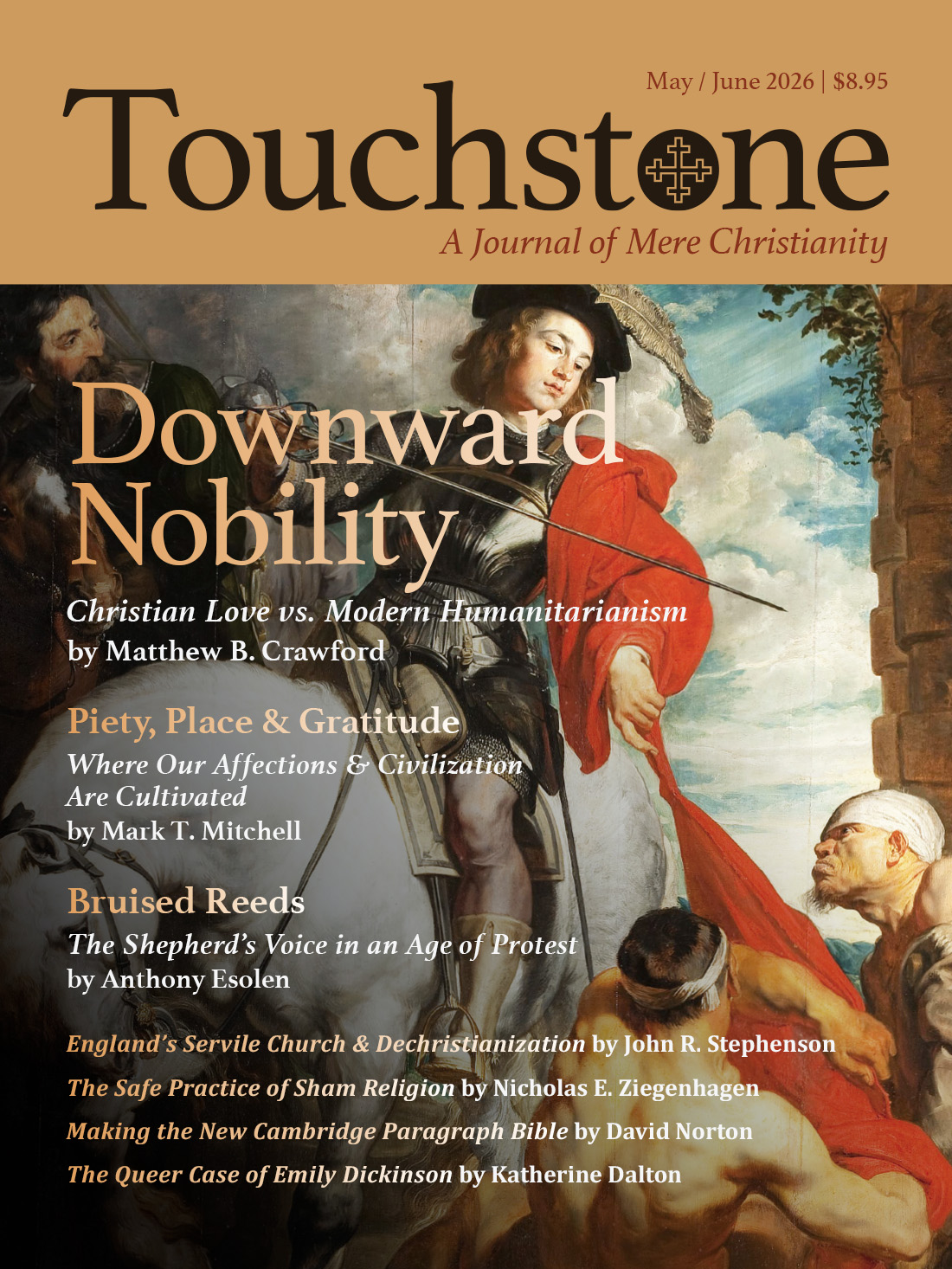
In Richard Adams’s fantasy novel Shardik, a great bear, fleeing a raging forest fire, stumbles almost dead upon the outskirts of a rural fishing village. It happens that these fishermen worship the Great Bear, and their priestesses live in ritual preparation for the return of Lord Shardik, the incarnate power of God in the form of a bear. A simple hunter discovers the wounded bear and relays his discovery to the proper authorities, the powerful baron of the village and the high priestess of Shardik. This bear is of abnormally large girth, and everyone pretty much agrees it must be the real thing.
There is now a problem. The advent of Lord Shardik is a complicated phenomenon. For, being a bear, he is not controllable. As he lies on the verge of death, he presents his disciples with a quandary: Should they help restore the bear to health and see what it does, come what may? Should they kill the bear and so be free from the dangers it presents to their safety and way of life? Should they run away from the bear? Or should they find a way to contain and subdue the bear and utilize its presence and power to support their political and military aims?
Responses to Reality
Shardik provides an analogy for the way confessing believers respond to the reality of God in their lives. In the story, the high priestess and the simple hunter are the true worshipers of the bear. They believe that its appearance is what their faith has been preparing them for and pointing to all along. They know they may very well die in the service of Shardik: “Awe and dread I feel indeed, but most, I am afraid simply of being torn to pieces by a bear,” admits the hunter to the priestess. She responds, “There is such a thing as getting more than we bargain for. Many pray. How many have really considered what it would mean if the prayers were granted?”
THIS ARTICLE ONLY AVAILABLE TO SUBSCRIBERS.
FOR QUICK ACCESS:
N. E. Ziegenhagen is the vicar of Trinity Anglican Church in Pagosa Springs, Colorado, where he lives with his wife and six children.
A Journal of Mere Christianity—Delivered to Your Door
- Essays on theology, culture, and the Church
- Contributors from across the Christian traditions

Six print issues (one year) of Touchstone, plus full online access and PDF downloads for only $39.95.

Get a one-year full-access subscription to the Touchstone online archives for only $19.95.
bulk subscriptions
Order Touchstone subscriptions in bulk and save $10 per sub! Each subscription includes 6 issues of Touchstone plus full online access to touchstonemag.com—including archives, videos, and pdf downloads of recent issues for only $29.95 each! Great for churches or study groups.
Transactions will be processed on a secure server.
more on culture from the online archives
29.3—May/June 2016
Our Choice Is Obedience or Jesus as Anti-Christ by Anthony Esolen

31.2—March/April 2018
The Transmission of Christianity Is Not a New Task by Nathanael Devlin
22.3—April 2009
Neil Postman's Amusing Ourselves to Death: Public Discourse in the Age of Show Business by J. Daryl Charles
more from the online archives

31.5—September/October 2018
The Secular State Without the Decalogue by James M. Kushiner

29.3—May/June 2016
A Deathbed Reflection on Catholic Social Teaching & Our Future Prospects by Karl D. Stephan
calling all readers
Please Donate
"There are magazines worth reading but few worth saving . . . Touchstone is just such a magazine."
—Alice von Hildebrand
"Here we do not concede one square millimeter of territory to falsehood, folly, contemporary sentimentality, or fashion. We speak the truth, and let God be our judge. . . . Touchstone is the one committedly Christian conservative journal."
—Anthony Esolen, Touchstone senior editor
