




To Whom Shall We Listen?
Hans Boersma on the Synod on Synodality’s Misleading Directive
Language is the womb of reality. After all, Christ is the eternal Word of God; it is in and from this Word that creation proceeds. To change language, therefore, is never an innocent thing. Tampering with linguistic conventions was a hallmark of the Reign of Terror after the French Revolution. New rules of discourse are also at the forefront of today’s woke ideologies.
None of this is news to Christians, who know that in the beginning was the Word, that the Word was with God, and that the Word was God (John 1:1). In and through Christ, God utters the world into being. Human speech is an analogical participation in the eternal Word of God. We use our words either to deepen participation in God or to separate ourselves from him.
Generalities & Buzzwords
It is noteworthy, therefore, that the concluding paragraph of the Instrumentum Laboris (IL), the working document for last October’s Roman Catholic synod, asks for a renewal of language, a renewal that would make the gospel “accessible and attractive” to the people of our time. This final paragraph, like much of the rest of IL, is awash in generalities. It offers no theological reflection of note on the nature of human language, on its Christological anchor, or on its grounding within the triune God.
To be sure, the IL celebrates the “diversity” of languages and cultures (cf. Rev. 7:7–9). It notes that words (such as “authority” and “leadership”) can “have very different resonances and connotations in different linguistic and cultural areas.” The IL strives, therefore, to “avoid divisive language” and encourages silence, listening, and prayer, so that we may recognize the voice of the Spirit (cf. John 10:14,27). This way, it suggests, we may find “consensus” on how to walk together.
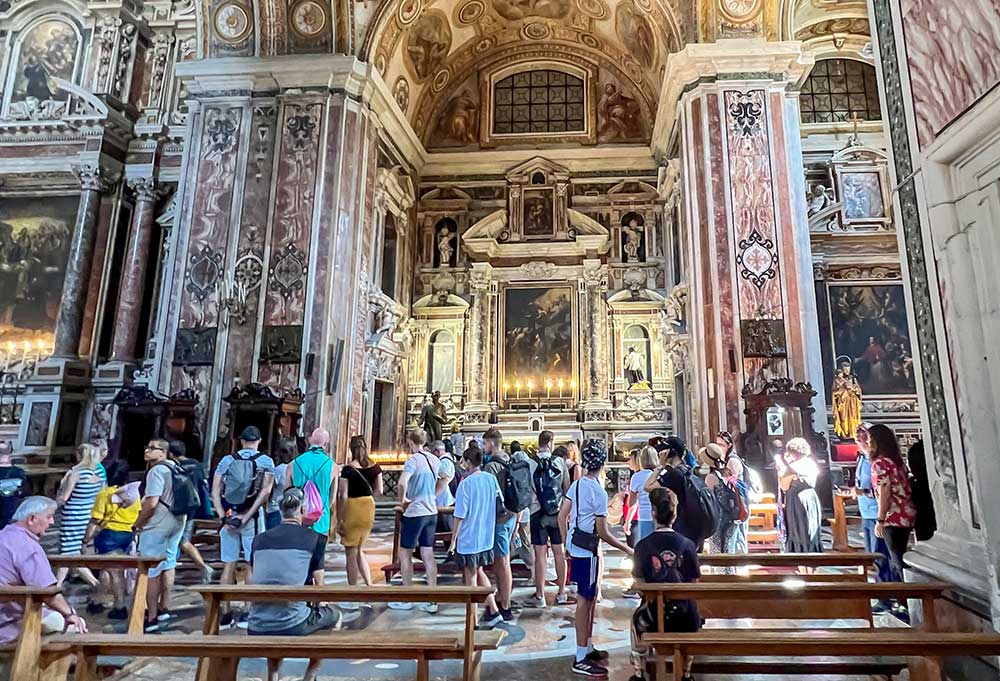
The October synod on synodality was to be about process: how we walk together. Delegates were to talk about how we should talk. The IL is unambiguous about what constitutes a “synodal church.” It is primarily a “listening church,” which involves listening to those “whose voice is most often ignored.” (Here, it appears that the IL has in mind especially “remarried divorcees, people in polygamous marriages, LGBTQ+ people, etc.”) A synodal church is also a humble and forgiving church, a church of encounter and dialogue, a church unafraid of variety and diversity, and a church that welcomes and embraces all.
These buzzwords of diversity, listening, dialogue, and boundary-less embrace do not bode well for the future. To be sure, it is not that the characteristics of a synodal church are entirely alien to the gospel (though I would dearly like to know what it might mean that the church welcomes and embraces all—without qualifier—and that there is “no border” that should not be crossed). Generally, the IL does not simply toss out the old vocabulary, substituting altogether new discourse. Rather, it asks for a “renewal” of language.
The Flawed “Listening” Strategy
The problem is this: the emperor has no clothes. The process of synodality itself has been flawed from the outset. Based on the conviction that the church’s primary mark is that of “listening,” the process began with a “listening phase,” in which the voices of all (including those usually ignored) could be heard and so could help decide what might constitute a truly “listening” church.
Listening as a strategy is nothing new. Leaders and lay activists among Protestant mainline churches have used it widely ever since the 1970s, typically to introduce topics such as the ordination of women, acceptance of homosexual practice, blessings of “same-sex unions,” and so on. Such calls for listening are invariably the first stage leading to the intolerant imposition of false teaching and practice.
Surely, this is not a way in which the church receives or passes on the teaching of our Lord. Jesus insists, “All things are delivered unto me of my Father: and no man knoweth the Son, but the Father; neither knoweth any man the Father, save the Son, and he to whomsoever the Son will reveal him” (Matt. 11:27). The Father delivers (or “traditions,” if neologisms are permitted) all things to the Son, and the Son reveals the Father to the apostles and so to the church. St. Paul insists that he “delivers” (or “traditions”) to the Corinthians what he, in turn, has “received” from the Lord (1 Cor. 11:23).
We arrive at truth, not by ensuring that everyone is listened to but by faithfully listening to the Word that is eternally begotten of the Father. Again, it is not as though the IL simply tosses out the old language. Several times it mentions “listening to” or “meditating on” the Word. The problem is that these phrases are malleable. Beginning with the Arian heresy, sola scriptura has often been used to change and subvert the sacred deposit of faith.
Hans Boersma is the Saint Benedict Servants of Christ Professor in Ascetical Theology at Nashotah House Theological Seminary.
A Journal of Mere Christianity—Delivered to Your Door
- Essays on theology, culture, and the Church
- Contributors from across the Christian traditions

Six print issues (one year) of Touchstone, plus full online access and PDF downloads for only $39.95.

Get a one-year full-access subscription to the Touchstone online archives for only $19.95.
bulk subscriptions
Order Touchstone subscriptions in bulk and save $10 per sub! Each subscription includes 6 issues of Touchstone plus full online access to touchstonemag.com—including archives, videos, and pdf downloads of recent issues for only $29.95 each! Great for churches or study groups.
Transactions will be processed on a secure server.
more from the online archives
29.4—July/August 2016
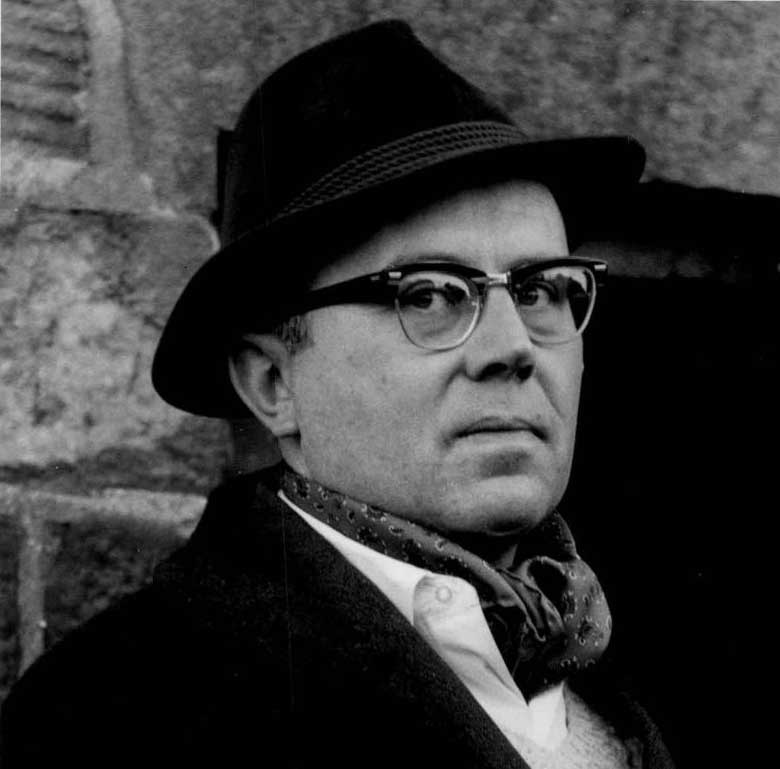
Russell Kirk: American Conservative by Bradley J. Birzer by Hunter Baker

18.8—October 2005
European Islam & the Doubtful Future of Christian Europe by William Murchison

31.2—March/April 2018
The Transmission of Christianity Is Not a New Task by Nathanael Devlin
calling all readers
Please Donate
"There are magazines worth reading but few worth saving . . . Touchstone is just such a magazine."
—Alice von Hildebrand
"Here we do not concede one square millimeter of territory to falsehood, folly, contemporary sentimentality, or fashion. We speak the truth, and let God be our judge. . . . Touchstone is the one committedly Christian conservative journal."
—Anthony Esolen, Touchstone senior editor
