




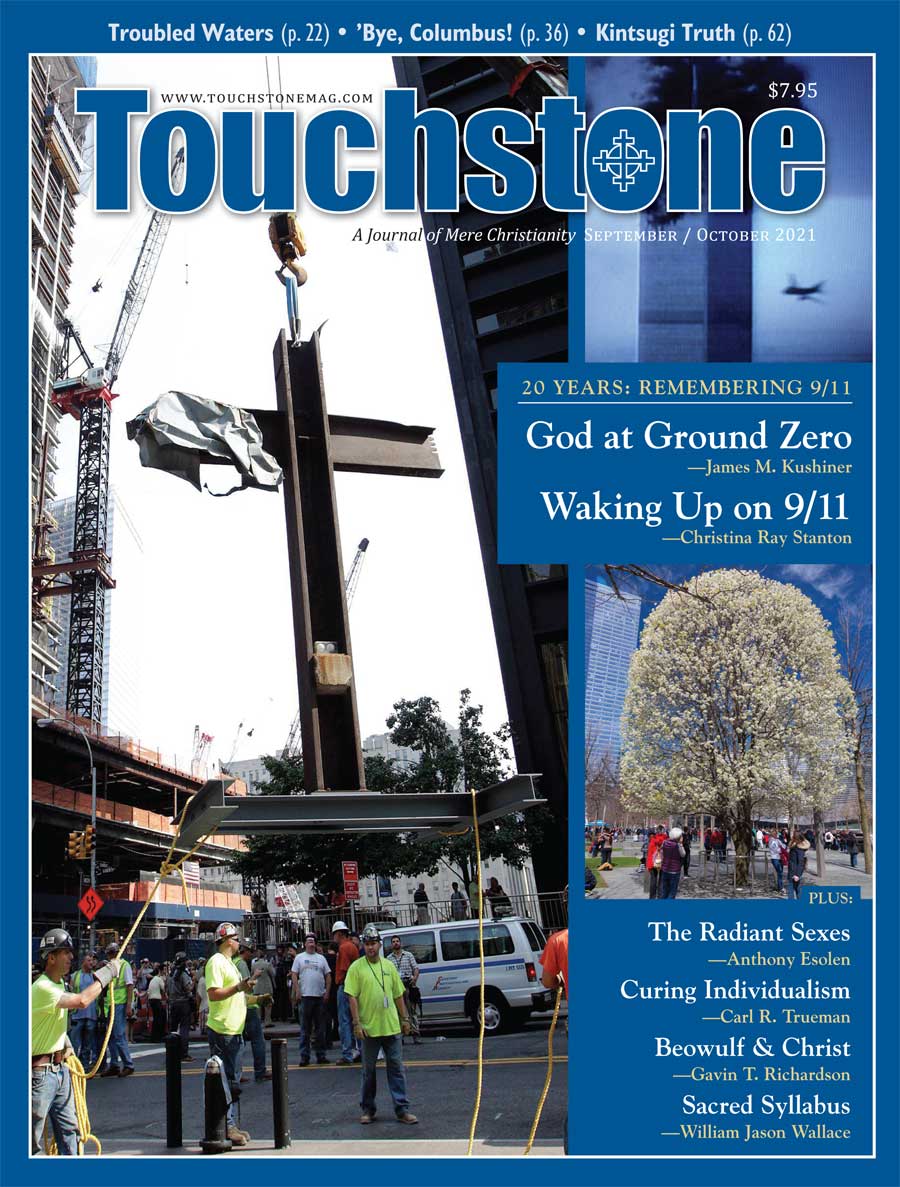
A Foreign Prophet
Solzhenitsyn and American Culture: The Russian Soul in the West edited by David P. Deavel and Jessica Hooten Wilson
David P. Deavel and Jessica Hooten Wilson have edited an impressive volume of essays that continues the work of Edward E. Ericson, Jr., in showing that Solzhenitsyn addresses questions of truth in ways that speak directly to the abiding challenges faced by American culture. One imagines that many Americans today have at most a passing acquaintance with Aleksandr Solzhenitsyn as a Soviet dissident whose literary works exposed and criticized the horrors of Communist totalitarianism in Russia. Few, however, have thought deeply about what it means to engage his work in the context of their own society.

To do that, one must have more than a passing acquaintance with the wide-ranging and profound body of Solzhenitsyn's work, which is integrally related to Russian intellectual and cultural traditions that are typically little-known in the United States. The 21 essays contained in Solzhenitsyn and American Culture engage many dimensions ofSolzhenitsyn's project in ways that illuminate his ongoing relevance for discerning the task of how to live with virtue and integrity in the cultural setting of contemporary America.
Reviewing a collection of so many fine essays presents challenges, as commenting on every contribution would preclude analysis of sufficient depth. A better approach is to investigate some of the common themes of the chapters that get to the heart of the relationship between Solzhenitsyn's work and American culture.
Moral Responsibility Before God
One central theme is how the West has corrupted its devotion to freedom by repudiating an eternal basis for moral responsibility. William Jason Wallace, in "Rage of Freedom," comments on Solzhenitsyn's 1983 Templeton Foundation address, which argued that the West's pursuit of happiness without solid moral grounding had led only to "destructive self-hatred" (237). Even more dangerous than Communism's hatred of religion is the West's removal of any spiritual foundation for the responsible use of human freedom.
As notions of accountability before God in categories of good and evil have become embarrassing for many Americans, they have made the pursuit of happiness without restraints the highest goal of human existence. With the reduction of morality to legal arrangements of individual rights, notions of responsibility have simply vanished and human nature has come to be seen "as lacking eternal substance or significance." The problem is ultimately one of theological anthropology, for "human nature can be deprived of eternal significance by the uncritical expansion of freedom just as it can by the uncritical denial of freedom" (244). The pursuit of power and pleasure in the name of freedom knows no limits when "the accountability of the soul is abandoned" (245).
In ways that resonate deeply with the challenges of living in the post-truth world of contemporary America, Solzhenitsyn's address highlights the profound division between those "who understand freedom and power fundamentally as conditions of the soul and those who understand them fundamentally as social forces to be manipulated and controlled" (246). As Wallace lucidly puts it, "in the case of the Soviet Union all was permissible for those who held power. In the case of the late twentieth-century West all is simply permissible" (242).
Joseph Pearce, in "Kindred Spirits: Solzhenitsyn's Western Literary Confreres," demonstrates important points of continuity between Solzhenitsyn's criticism of the West in this regard and the projects of Tolkien, Lewis, Waugh, Chesterton, and others who reject a facile progressivism and refuse to ignore abiding spiritual and moral truths. Even as one form of materialism, Communism, rejected transcendent truth, another insidious form has taken root at the very heart of American culture. As David Deavel notes in "Life, Liberty, and the Pursuit of Happiness in Solzhenitsyn," the Russian author presents criticisms of the denigration of these characteristically high ideals into little more than a cult of satisfying the desires of people for material comfort in a society characterized by unprecedented economic prosperity.
In a social order permeated with the gratification of self-centered desire, it is tempting—if not inevitable—for people to become blind to the truth that "the primary key to our being or non-being resides in each individual human heart, in the heart's preference for specific good or evil" (48). Prosperity and technological sophistication present grave trials for the soul, not unambiguous progress. Solzhenitsyn was not anti-American, but he saw that the American ethos had corrupted freedom into a pursuit of material satisfaction without moral accountability before God.
Defeating Lies with Truth
A related theme is the sense in which Solzhenitsyn's literary corpusspeaks truth prophetically. In her aptly titled contribution, "How Fiction Defeats Lies," Jessica Hooten Wilson interprets In the First Circle as a prophetic work written by "a descendant of Dante, Tolstoy, and Dostoevsky" (129). Not merely an account of the imprisonment of purged intellectuals in a given period of Soviet history, this novel proclaims that true freedom comes only "when truth defeats lies" (123). To defeat lies with truth was for Solzhenitsyn not only a moral duty, but an existential imperative for living with integrity as a human being. Hooten Wilson demonstrates that the novel is not simply a piece of political criticism, but a clarion call to live truthfully in any time or place.
Similarly, Daniel J. Mahoney, in "Judging Communism and All Its Works," notes that The Gulag Archipelago exposes the truth about a totalitarian system that devoured millions of people for the sake of an ideological lie. This work conveys Solzhenitsyn's focus on "the nonnegotiable distinction between truth and falsehood," which must not be obscured by falsehood in the name of progress (223). Julianna Leachman, in "The Price of Restoration: Flannery O'Connor and the Nineteenth-Century Russian Realists," astutely notes that O'Connor and Solzhenitsyn both viewed literature as "the best remedy for a globally connected, posttruth [sic] world" (302). American society should hear from more such literary
prophets!
Eastern Christian Sensibilities
These references to moral responsibility before God and to prophetic proclamations of truth invite consideration of the importance of religion to Solzhenitsyn. Ralph C. Wood notes in "The Distinctively Orthodox Character of Solzhenitsyn's Literary Imagination" that Solzhenitsyn's writings, in response to the horrors of Communism, typically reflect a "generically Christian" faith "wherein God would no longer be forgotten and human life not again be crushed" (113). Nonetheless, on rare occasions in his work, one finds distinctive themes and practices reflecting specifically Orthodox sensibilities. Wood presents a penetrating analysis of the short story "Matryona's Home" and of passages in One Day in the Life of Ivan Denisovich in light of the Eastern Christian sensibilities that definitely influenced Solzhenitsyn during his childhood in a pious home and through historic Russian culture.
Philip LeMasters is Professor of Religion at McMurry University and pastor of Saint Luke Antiochian Orthodox Church in Abilene, Texas. He holds a Ph.D. in Theology and Ethics from Duke University and studies Orthodox moral theology and social ethics.
A Journal of Mere Christianity—Delivered to Your Door
- Essays on theology, culture, and the Church
- Contributors from across the Christian traditions

Six print issues (one year) of Touchstone, plus full online access and PDF downloads for only $39.95.

Get a one-year full-access subscription to the Touchstone online archives for only $19.95.
bulk subscriptions
Order Touchstone subscriptions in bulk and save $10 per sub! Each subscription includes 6 issues of Touchstone plus full online access to touchstonemag.com—including archives, videos, and pdf downloads of recent issues for only $29.95 each! Great for churches or study groups.
Transactions will be processed on a secure server.
more on America from the online archives

30.5—Sept/Oct 2017
The Christian Cure for What Ails Modern Politics by David Bradshaw

29.2—March/April 2016
The History of Family Strength in America May Reveal Good News by Allan C. Carlson
29.4—July/August 2016
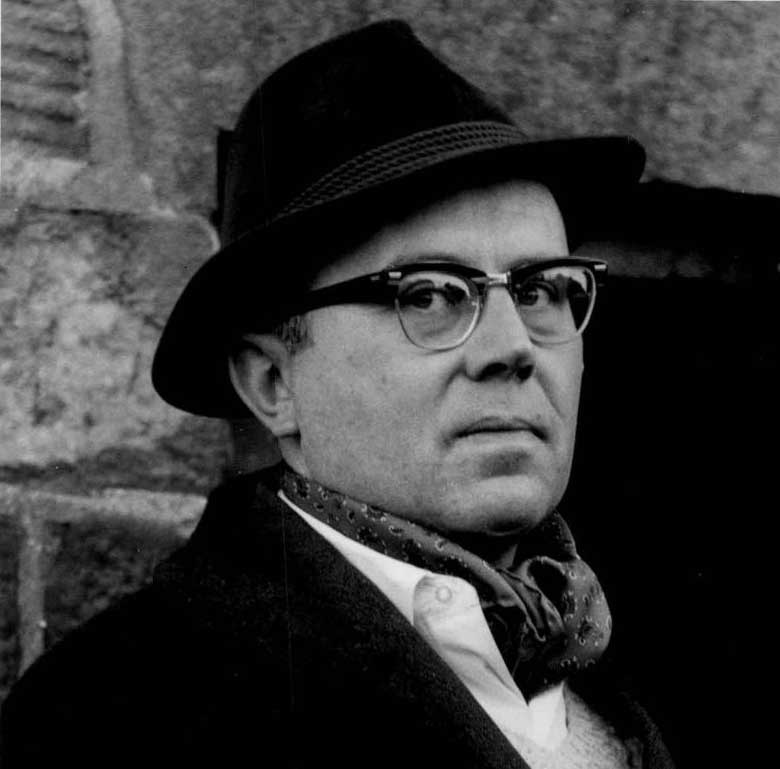
Russell Kirk: American Conservative by Bradley J. Birzer by Hunter Baker
more from the online archives

27.5—Sept/Oct 2014
The Culture of Death's Campaign Against the Catholic Church by Brantly Millegan

33.3—May/June 2020
on the Wisdom of the Good Doctor Edmund Pellegrino by Allen H. Roberts II
calling all readers
Please Donate
"There are magazines worth reading but few worth saving . . . Touchstone is just such a magazine."
—Alice von Hildebrand
"Here we do not concede one square millimeter of territory to falsehood, folly, contemporary sentimentality, or fashion. We speak the truth, and let God be our judge. . . . Touchstone is the one committedly Christian conservative journal."
—Anthony Esolen, Touchstone senior editor
