




Feature
An Encouraging Book
How Tolkien's Lord of the Rings Saved Me
by Donald T. Williams
I first read The Lord of the Rings in the summer of 1968, the summer between my junior and senior years of high school. (I will never forget the chills running down my spine like the large, black, and angry summer thunderstorm that was rolling toward me across the Georgia piedmont as I first encountered the Black Riders.) I checked the hardback volumes out of the library and devoured every page, including every last word of the appendices. My very next act after that was to buy the old Ballantine paperbacks (which cost a whopping 95 cents each at the time) and repeat the process.
I have read The Hobbit and The Lord of the Rings annually ever since (missing only a couple of years), and The Silmarillion several times as well. The only book to which I have devoted more time and effort as a reader is the Bible, which I also read cover to cover annually. My fellow Christians, even those who are also fans of Tolkien, might well ask why I devote that much time to him. Here is why.
In that summer of 1968 I was going through a spiritual crisis that is familiar to a lot of people who grew up in Fundamentalist or conservative Evangelical churches. I had walked the aisle of a little country Baptist church at the advanced philosophical age of five to accept Christ as my Lord and Savior. That commitment was real and life-changing. But in a healthy, discipling church, it would have been the introduction to a lifetime of learning to follow John Donne's advice: "Employ then this noblest sense [sight] upon the noblest object. See God; see God in everything, and then thou needst not take off thine eye from . . . anything" (Sermon XXIII). Unfortunately, we learned a lot of Bible and even some doctrine, but it did not seem to have anything much to do with how we saw the world beyond driving the necessary crises of getting saved, being baptized, joining the church, and rededicating your life. By the time I was in high school, I had come to realize that not everybody saw things that way, and people were asking questions like, "How do we know this is true?"
It was not so much the lack of answers that almost knocked my faith out of me; it was the attitude toward the questions: "If you were spiritual, you wouldn't ask questions like that. You need to just read your Bible and pray more, and have faith. You need to just believe." Now, on any other topic, if I asked you why I should believe something and your answer was, "You just need to believe it (for no reason I can give you)," I would immediately conclude that this would be a good belief to drop like the proverbial hot potato. Why should this one be different? Nobody seemed able to tell me.
Men Who Knew Joy
Fortunately, Christianity is in fact true, which meant that Jesus was really present in my life, and he wasn't about to let me get away. So I did not abandon the faith, but for a while I ceased being comfortable or at home in it. I had a nagging doubt I could not get rid of. I kept wanting to ask the church, "If you are so insecure in your beliefs that you are threatened by the questions of a half-educated kid, how could those beliefs possibly be true?"
In the providence of God, it was just then that the Tolkien craze of the 1960s hit my high-school campus. I was captivated by the Ring trilogy, partly because it is such a great adventure story so well told, but also because I was seeing in it hints of biblical ideas I was not used to encountering so strongly in "secular" literature. For example: Gandalf tells Frodo that Bilbo was meant to find the Ring, and not by its maker, and that this might be an encouraging thought (The Fellowship of the Ring, 81). Well, if he was meant to find it, there had to be Someone to do the meaning—for only then could it be an encouraging thought. Such passages only made sense in the context of Christian belief. And then somebody said, "If you like Tolkien, you should check out his friend C. S. Lewis." The cure had begun.
These men knew joy, not just as a passing emotion, but as the fountain of life. They gave me answers to my questions. But just as importantly (maybe more so), they showed me that there was such a thing as a Christian mind. It was possible. It was not an oxymoron. And it took all the strength you could muster to receive and understand and embrace that joy.
This did not just mean that there were good reasons to think that Christianity was true. It meant that, once you accepted that truth, it revealed itself as the foundation of all truth and the key to understanding all of life and the whole world. It was the key that opened the door not just to escape from hell but to enter into a life full of meaning and joy, so much so that it was worth living for all of eternity.
The Supreme Story
Donald T. Williams is Professor Emeritus of Toccoa Falls College. He stays permanently camped out on the borders between serious scholarship and pastoral ministry, between theology and literature, and between Narnia and Middle-Earth. He is the author of fourteen books, including Answers from Aslan: The Enduring Apologetics of C. S. Lewis (DeWard, 2023). He is a contributing editor of Touchstone.
A Journal of Mere Christianity—Delivered to Your Door
- Essays on theology, culture, and the Church
- Contributors from across the Christian traditions

Six print issues (one year) of Touchstone, plus full online access and PDF downloads for only $39.95.

Get a one-year full-access subscription to the Touchstone online archives for only $19.95.
bulk subscriptions
Order Touchstone subscriptions in bulk and save $10 per sub! Each subscription includes 6 issues of Touchstone plus full online access to touchstonemag.com—including archives, videos, and pdf downloads of recent issues for only $29.95 each! Great for churches or study groups.
Transactions will be processed on a secure server.
more on J. R. R. Tolkien from the online archives
more from the online archives
29.1—Jan/Feb 2016
on Marriage, Moral Corruption & the Christian Duty of Witness by Regis Nicoll
27.3—May/June 2014
Facts versus Stereotypes About Love & Marriage in the Land of the Free by Allan C. Carlson
22.3—April 2009
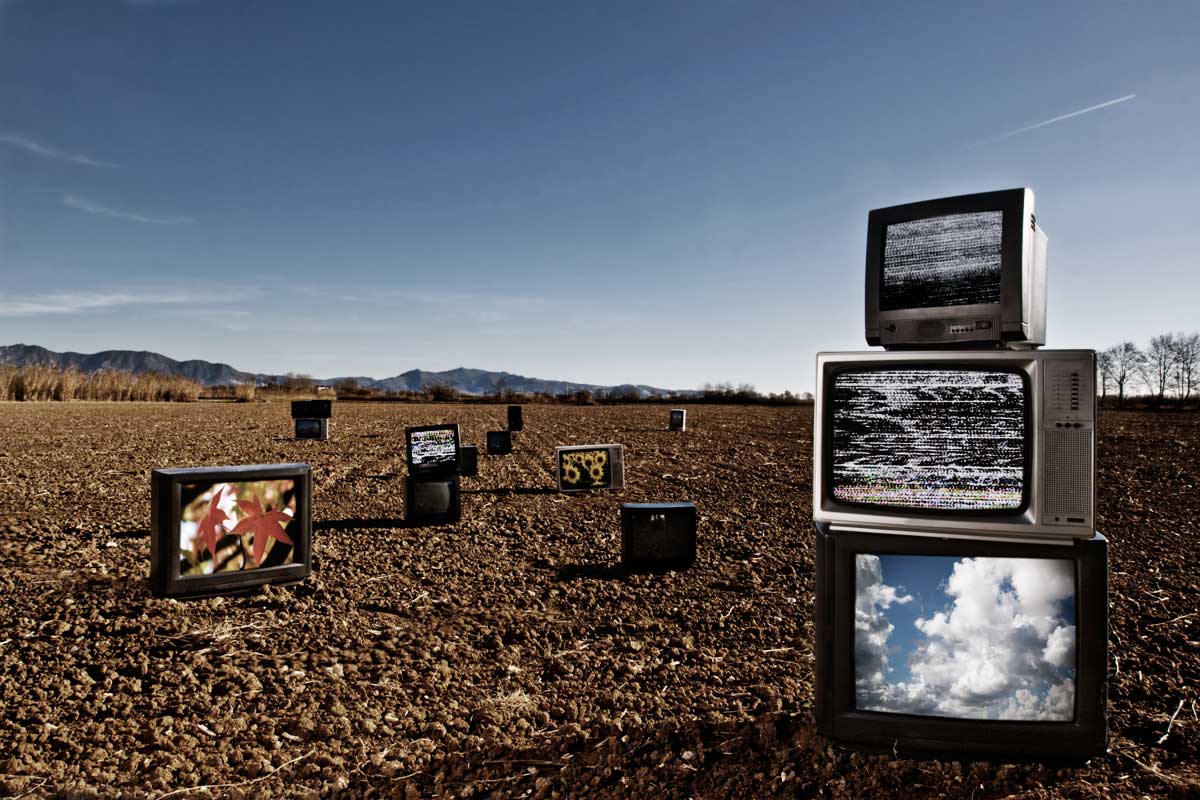
Neil Postman's Amusing Ourselves to Death: Public Discourse in the Age of Show Business by J. Daryl Charles
calling all readers
Please Donate
"There are magazines worth reading but few worth saving . . . Touchstone is just such a magazine."
—Alice von Hildebrand
"Here we do not concede one square millimeter of territory to falsehood, folly, contemporary sentimentality, or fashion. We speak the truth, and let God be our judge. . . . Touchstone is the one committedly Christian conservative journal."
—Anthony Esolen, Touchstone senior editor
