




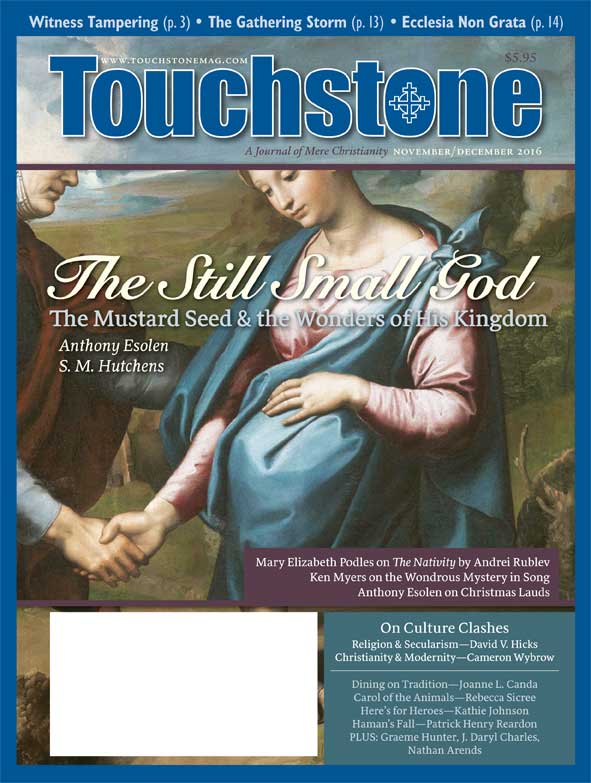
A Global Conflict of Interest
The Clash Between Religion & Secularism Overshadows The Clash of Civilizations
by David V. Hicks
Almost a quarter century has passed since Samuel P. Huntington wrote The Clash of Civilizations and proposed "a map of the post-Cold War world." In spite of many thoughtful demurs, his map still serves as a touchstone for scholars and pundits who think and write about everything from the emerging world order to the cause of yesterday's terrorism attack in Nigeria or Paris. "It is my hypothesis," writes Huntington,
that the fundamental source of conflict in this new world will not be primarily ideological or primarily economic. The great divisions among humankind and the dominating source of conflict will be cultural. Nation states will remain the most powerful actors in world affairs, but the principal conflicts of global politics will occur between nations and groups of different civilizations. The clash of civilizations will dominate global politics. The fault lines between civilizations will be the battle lines of the future.
Huntington's theory posits a number of conflicting civilizations: Islamic, Slavic-Orthodox, Western, Confucian, Japanese, Hindu, Latin American, and possibly African. He believes that with the demise of fascist Germany and communist Russia, the ideological struggles of the twentieth century are at an end. He describes in detail Islam's "bloody borders" and rather brilliantly anticipates that Western democracy will strengthen anti-Western political forces in the Arab world. At the same time, his theory frequently fails his own test. "If civilization is what counts," he claims, "the likelihood of violence between Ukrainians and Russians should be low."
It is not my purpose, however, to score pettifogging points with the benefit of hindsight. Rather, I'd like to suggest that there is a simpler and more useful paradigm in helping us account for what's happening in our world. This paradigm is embedded but not drawn out in Huntington's essay. A simple question can help us identify it. What is it about all the other "civilizations" Huntington names that separate them from the West? Isn't it, essentially, religion? All of the non-Western civilizations recognize a moral order deriving from religious beliefs or sacred texts that pre-exist them and act as the source of their laws and traditions. By labeling China Confucian rather than communist, Huntington includes even China in this distinction. Only the ideological West, built on the shaky foundation of successive revolutions, has explicitly rejected religion as the source of its moral order and has sought to make the amorphous, ever-changing, and often violent "will of the people" the source of its laws and legitimacy. Indeed, the ideology of the West is more accurately described as "secular democracy," which may be the reason that, as Huntington claims, "Western efforts to propagate (its ideas) produce instead a reaction against 'human rights imperialism' and a reaffirmation of indigenous values, as can be seen in the support for religious fundamentalism by the younger generation in non-Western cultures."
Can religion really co-exist with an ideology that recognizes nothing except itself as "sacred" and sees itself as the final arbiter of life, morality, rights, norms, and liberty? Can it get along with an ideology that regards God as a human invention, an intruder in the public square, and a useful tool to be invoked only during times of crisis? Democracy places its faith in a process of collective human decision making, confident that faithful adherence to this process will yield the best outcomes and ensure justice for all. But historically, this has clearly not always been the case. What, then, are the religious to do when the processes of secular democracy—the votes of the people, the decisions of the judges, or the "executive orders" of the leaders—offend their consciences, violate their norms, or simply result in bad outcomes? Or when these processes take away the rights and liberties they alone can grant and guarantee? It doesn't take a religious person to realize that making a headcount the ground for one's liberties and rights invests the politically powerful and influential with the attributes of a capricious deity. Clearly, the secular democracy that America wishes to export to the world is antithetical to the world's civilizations, based as they are on religious rather than secular presuppositions. And there is growing evidence that this form of democracy is even hostile to
the West.
A better paradigm than Huntington's might be this: With the fall of the Soviet Union and the decline and discrediting of communist ideology, the Cold War ended and a new historical dialectic, or perhaps just one that lived in the shadows of the ideological conflicts of the twentieth century, began to emerge. This dialectic pits a secular and essentially anti-religious version of democracy against the ancient world religions.
With the triumph of secular democracy in the West over communism in the East, it initially appeared that Fukuyama's thesis was correct: history was coming to an end. The forces and values of secular democracy had won a decisive victory, partly on the strength of their spurious claim to oppose "godless communism." These forces would now prove irresistible. It was only a matter of time before all "civilizations" would adopt the Western version of democracy. But then, how does one account for the repeated rejection or failure of this version in the new millennium in Turkey, Russia, India, Egypt, and China, for example?
One has to wonder if the West was showing its true colors and deep understanding of this paradigm when it systematically propped up "secular" dictators in the Middle East and Africa—the Shah of Iran, Ben Ali, Hosni Mubarak, and Saddam Hussein just for starters. Certainly, it showed no concern for democracy in most instances. Was this to protect Western interests in the region or to thwart the religious aspirations of the people in these countries? This may sound far-fetched to the God-blind secularists in the West, but the average person on the streets of Cairo or the young Somali immigrant on the streets of Minneapolis who is ready to fight for the new caliphate in Syria may not think so.
Why Western Eyes Can't See
I don't mean to imply that Huntington entirely overlooks the pivotal role of religion in describing the clash of civilizations. He repeatedly gives lip service to the rising power of religion in the modern world. Quoting George Weigel, he acknowledges that the "unsecularization of the world is one of the dominant social facts of life in the twentieth century." And, one might argue, even more dominant in the twenty-first century if the 2015 global study published in Demographic Research is to be believed. This exhaustive study by Hackett, Stonawski, et al. estimates that the religiously unaffiliated (self-identifying atheists and agnostics, as well as those who say their religion is "nothing in particular"), who made up 16.4 percent of the world's population in 2010, will decline to 13.2 percent by 2050. Huntington clearly sees religion as the "most important" element in what he defines as a civilization, along with history, language, and that catch-all term, culture, and he wonders out loud whether an ideology like liberal democracy has the power to inspire the young and win adherents willing to fight and die for it. But Huntington fails to identify the increasing secularization of the West as the underlying source of conflict.
Why, we might ask, do Western scholars like Huntington overlook this rather obvious paradigm in favor of the more nebulous theory of civilizations in collision? I propose three primary reasons for this. The first is that the West is fixated on the Arab world. Oil, terror, and Israel dominate Western thinking and have made the fractured and fraught Muslim world the world we all live in. This in turn has allowed Islam to become the poster child for the world's religions. All religions (civilizations) are inevitably in conflict because the Muslim world is in revolt. Isn't this just another case of historical myopia? Islam's borders were bloody centuries before Huntington described them as such. From its inception, the sword has proven mightier than the pen in spreading the word of the Prophet and has brought Muslims into conflict with the West, India, Africa, Russia, and one another. Is blaming this on a small minority of misbehaving Muslims, rather than acknowledging that Islam itself is a contradictory and conflictual belief system, adding anything to our understanding?
The second reason for this blindness may have something to do with the West's Christian heritage. A good friend and professing Christian objected to the paradigm I've proposed by saying, "A secular and material world is what peoples East and West crave; a God-centered world of moral discipline is what they eschew or merely give lip service to." This is only a reasonable objection if one narrows one's definition of the religious to those who, like St. Anthony, sell all and flee into the desert. In fact, men and women from time immemorial have attempted to serve God and Mammon, seeking for themselves and their families prosperity and comfort, status and power, along with a prominent pew in the local church or synagogue. The religious have always been materialistic, and their prophets and priests have always railed against them for being so. The secular ideologues are the ones who have ruthlessly and unsuccessfully tried to stamp out property. Religion, bowing to our dual nature, merely asks us to share what we have with our neighbor.
Finally, might not this blindness also have something to do with the fact that Western scholars are, well, Western, and see the world through the lens of their own secular institutions and presuppositions? It's easy to understand why those in the secular West find it difficult to take the religious aspirations of the world's peoples seriously. They have grown up in a world where religion has been pushed to the margins and where so much material progress has been achieved through human ingenuity alone, without the apparent aid of any deity. Isn't the massive migration of non-Western peoples to the West proof enough that Western science trumps Eastern religion?
But is that really what your average immigrant from Syria, Iraq, Libya, India, or Nigeria is thinking? If anything, immigrants are building temples, mosques, and churches in the West as fast as the old mainline churches are emptying. This points out some peculiar and glaring omissions in Huntington's essay. One of these is the striking phenomenon that as the West becomes increasingly secular, to the point of being hostile to its own homegrown religions, the religions of the world are migrating to the West and stimulating within it growing conflict with the ruling secularists.
The blindness of Western scholars to this phenomenon is augmented by the fact that most of them live within the Academy, which, as the arch defender of secular orthodoxies, is itself several steps removed from the religious currents within society. These scholars live largely among one another, exchanging papers and ideas, passing on their secular worldview to the young, who are seldom in a position to challenge them, which accounts for the striking degree of conformity in their thinking. Many of them, I suspect, are still living ideologically in the past century and have little contact with people whose lives revolve around their religious commitments. They might have great difficulty comprehending a world in which religious considerations govern personal behavior and public policy. For them, religion is simply the source of outmoded norms and a cause of conflict, despite the extraordinary bloodiness of the last century's wars waged in the name of secular, virulently anti-religious ideologies that many of these scholars once embraced, and some still do.
The Decline of the West
Might being the only ideological civilization on the map, and the last one standing after the overthrow of fascism and communism, signal a decline and fall for democracy, or at least its secular variant?
Western democracy's internal contradictions appear to be tearing it apart. For all the good it's done in affirming the rich heritages of its immigrant populations, the West's insistence on multiculturalism has fragmented society and given rise to a minority/outsider mentality that resists assimilation and disavows allegiance to traditional Western values. In our universities, where the rising generation is being formed, we have moved from political correctness to the micro-aggression police opposed to free speech that might give offense. Imams in London openly declare their intention to use democratic means—free speech, the ballot box, and political activism—to overthrow democracy itself. With every Supreme Court ruling, another (usually religious) segment of American society is alienated.
In spite of George Washington's prophetic warning in his last speech to the Congress, the religious ground for moral conduct in the West is not only denied but increasingly under attack in the state's secular institutions. Ironically, when the other world civilizations look at the West, they see it as "Christian," a source of considerable embarrassment to Western leaders who strive to distance themselves from their religious heritage, believing it to be divisive and exclusionary. Yet this distancing has neither won friends in the rest of the world nor improved citizen conduct at home. On the contrary, the West is hated and despised by the rest of the world for its decadence and depravity, while at home, governments are whipsawed between passing laws and regulations to enforce better individual and corporate behavior and giving up on laws and regulations that have ostensibly failed to curb pornography, gambling, prostitution, drug abuse, gun violence, and other forms of "immoral" conduct. Nietzsche famously declared that with God dead, "all things become permissible," and so they eventually do in a secular democracy.
This suggests that the logical and ineluctable tendency of secular democracy is the de-norming of society. The West, specifically America and Britain, is de-norming at an accelerating pace, which, perhaps more than anything else, is at the root of our political divisiveness, moral confusion, generational divide, and educational decline. It's hard to think of a single segment of modern life in which de-norming has not become the new normal. In art, music, fashion, language, manners, and beliefs, what would have been regarded as outside the norm, if not beyond the pale, fifty years ago now hardly provokes notice, let alone censure.
If you want to show yourself to be a true citizen of the West, find something pretending to be a norm and attack it. As Northrop Frye pointed out many years ago in Anatomy of Criticism, using art forms to trace the decline and fall of civilizations, those arts that throw acid in the face of societal norms—satire, parody, burlesque, irony—have historically marked the last stage in the decline of a civilization. Is it too late to ask ourselves if all this de-norming is a good thing? Can we live and raise our children without norms?
We know that a dissolution of norms has accompanied the decline of all former civilizations. We know that children raised without norms struggle to find their way in the world. And we know that one of the first things successful school reformers have done when taking over failing schools is to establish a clear and coherent set of norms that are fairly and rigorously enforced. We also suspect that as norms come under attack and dissolve, a dangerous cynicism and distrust creep into societal attitudes toward authority and accepted ways of behavior, and society is forced to adopt ever more Draconian methods of protecting its members as the jungle encroaches on the lawn. One recalls Book 8 of The Republic and Plato's description of democracy's inevitable slide into tyranny.
Christian Quandaries
One proof of our Academy's blindness is Huntington's paradigm, which makes no mention of the West's Christian heritage and studiously ignores the many millions of Christians inhabiting the secular democracies of the West. This disregard for Christians and other religious minorities allows Huntington to assume a certain monolithic quality about the world's civilizations. His only challenge, then, is in drawing their borders. But this is largely a fantasy, making it possible to ignore the quandary that many Christians throughout the world face regardless of where the borders are drawn.
In the Arab world, the millions of invisible Christians who have lived peacefully (albeit as second-class citizens) with their Muslim neighbors for centuries have borne the brunt of what many Muslims regard as the "Christian" West's attack on them and their faith. The irony of this, of course, is that there isn't an ounce of religious motivation in the West's interference in Somalia, Afghanistan, Egypt, Libya, Lebanon, Iraq, and Syria. Attacks on Christians and other non-Muslim believers in these places have drawn only tepid official condemnation from the West, where the goal of nation-building assumes democracy without religious content (an obvious non-starter in most of the non-Western world). The West is merely protecting its interests and friends in the region and retaliating in the "war on terrorism" while trying to avoid the religious question and treating the Arab world as one undifferentiated "civilization."
In the secular West, Huntington's paradigm places Christians within a civilization that forces them to choose between an ideology that denies the existence or relevance of their God and a position of alienation and opposition within the West's so-called inclusive societies. Nor is this merely a theoretical quandary. Every day Christians in the West must choose between sending their children to free schools (they are taxed to support) in which only the secular ideology of the state can be taught and fee-supported schools in which religion can be taught. Christians must stand by while the government strips the public square of historic religious content and symbols, which it claims is required to ensure that no religion is favored, in effect pitting all religions against one another and by default favoring the secular ideology of the state. In a secular democracy, only the atheist can be favored.
Consider President Obama's nomination of Merrick Garland to the Supreme Court. A very bright, nice, left-leaning man—a clever nomination for Obama, hanging out this temptation to a Republican Senate before the possible election of Secretary Clinton. But why, we should ask, a fourth secular Jew on the Supreme Court? Ginsberg, Breyer, and Kagan now vote in virtual lockstep on the issues of concern to citizens of faith. So why not an Orthodox Jew? Or why not an Evangelical Protestant? Shouldn't there be at least one of those on the Court? How could someone otherwise so sensitive to the need for an administration that "looks like America" be so blind to the need for this sort of balance on a Court that often uses its power of judicial review to legislate? With so many decisions with religious import coming before the Court, are we really comfortable with a group of secular Jews, who represent less than one percent of the country, deciding these cases? No wonder a substantial number of Americans are angry with Washington and feel that they are not being heard or represented.
Not only does the Huntington paradigm cause gross Court imbalances to go unnoticed by defining America merely as a secular democracy (what would the media be saying if a fourth Pentecostal were being proposed for the Court?), but it assumes that the religions at the heart of each civilization cannot get along and will inevitably clash. Without saying so outright, Huntington makes religious differences the fundamental source of conflict in the modern world. There are at least two problems with this. The first is that it conveniently removes blame from the non-religious players with their non-religious motives. Other writers have already taken Huntington to task for this, citing manifold economic, geo-political, ideological, and balance of power considerations. Much of this conflict will exist, as it did in the last century, even in John Lennon's imagined world.
In addition, the paradigm itself may be contributing to religious conflict. Casting religion in the role of villain and secular democracy as a desired outcome removes the possibility that the religions of the world might find ways to live together in peace were they not threatened by a condescending ideology that insists they ignore their beliefs in order to participate in the political process. Again, given the role of religion in the world's non-Western civilizations, this mandate to remove religion from the public sphere would appear to be a non-starter. One might even suspect the secular ideologist of delighting in and stirring up inter-religious conflict when looking for temporary allies in his struggle against religion. Even Stalin famously resurrected the church in his fight against the Nazis.
This quandary appears to be less evident in Europe, where the secularization project of the state has largely succeeded in diminishing the number and role of Christians. This is due in part to a history of state churches identified with the failed monarchies of the past and the state's historic control of the churches. In the United States, the doctrine of separation of church and state has had, until recently, the opposite effect, working to the benefit of believers and the free exercise of their religious beliefs. This freedom extends, as it ought, to Muslims; however, security concerns are now forcing Christians to choose between those who would exclude Muslims from the country on the basis of their religious beliefs and those who would welcome them in the struggle against a state hostile to all religion.
What Can Be Done?
How might the new paradigm assist Christians with their quandaries and help the West better understand the world, interpret its signs and events, and respond appropriately? How might it guide the policy-makers of the secular West to engage more constructively the civilizations with which they are in conflict?
We might start by eschewing the frankly pathetic and unhelpful attempts to pretend that the world's religions are, at root, all the same. These efforts not only show how ignorant the learned can be when trying to prove what they assume, but they do a disservice to all believers by distorting and violating the tenets of their respective faiths. There is theological common ground, of course, and the search for it is both laudable and helpful, but not when the differences are ignored or glossed over. This strategy loses in respect what it tries to gain in agreement; and respect, not agreement, must be the goal if we are to live together peacefully in a diverse and pluralistic world society.
Do Christians and Muslims worship the same God? Clearly not, if one takes their sacred texts seriously. The Koran repeatedly and unequivocally declares Allah as one and indivisible and rejects the divinity of Christ, and for this reason calls Christians blasphemers. Christians, on the other hand, worship the triune God—Father, Son, and Holy Spirit. Salvation, they believe, comes only to those who believe that Jesus Christ is God. Jews reject the notion that in Jesus the long-awaited Messiah has already come. And between the Children of Isaac and the Children of Ishmael there is a diametrically opposed reading of God's promises and intentions vis-à-vis the Children of Abraham. To gloss over these differences is not only foolish but also unnecessary. History is replete with examples of people with these different beliefs living and working together in harmony, but this didn't happen by their simply denying or failing to acknowledge their differences. To do so shows either ignorance or disrespect.
Whatever their differences, there is in all these world religions something upon which to build a harmonious and diverse community. For the Jews, when not threatened, this is perhaps easiest of all. They are secure in their "chosenness," and the Law upon which their faith rests places a high premium on social justice and getting along with their neighbors, albeit at a spiritually safe distance. For Christians and Muslims, this is admittedly more challenging, given the proselytizing mission of both and a long history of bloody conquest, conflict, and subjugation. Yet the teachings of both encourage them to respect one another. Muslims are cautioned by the Prophet to respect the People of the Book, Jews and Christians, and to leave them free to practice their respective faiths. Christians have no warrant in their Scriptures to force their beliefs on anyone, and they are instructed by Christ to love their enemies and pray for those who abuse them.
Above all, Jews, Christians, and Muslims all claim descent from Father Abraham and acknowledge the Creator of the Old Testament who made man in his image and likeness, free. That freedom to choose, represented by the Tree of Knowledge in the Garden of Eden, no religion or government of men, however democratic, can or should take away. That freedom implies that not all of us will make the same choice. Otherwise, what proof of our freedom would we have? This is why respect, not agreement, is the goal for the religious. Agreement is only a goal for totalitarians, fanatics, and the politically correct.
Although Huntington assumes that conflicts due to religious differences are inevitable, he describes the clash as one of "civilizations," not one of religions and certainly not, as this new paradigm suggests, one of secularism versus religion. Making it all about civilizations clouds the issues and allows us to imagine that we can resolve these conflicts by refusing to take religion seriously and resorting simply to arms and diplomacy. Is there any evidence that this is working?
The recent meeting of Pope Francis and Iranian President Rouhani suggests a more fruitful approach, an echo of those extraordinary exchanges between St. Francis and Saladin perhaps. Pope Francis urged Rouhani to use his influence in the Middle East to discourage terrorism and arms trafficking, and Rouhani asked the pontiff to pray for him. One can't read this story without thinking that these two men had much more in common and felt much greater respect for each other than was the case when Rouhani later met with secular leaders in the West. One recalls Huntington's acute observation about the old Cold War antagonists and their ability to relate on an ideological level. The new paradigm suggests that we would do well to forget about exporting secular democracy to the rest of the world and bring forward men and women of genuine faith to engage those in the non-Western world—men and women with a profound understanding of the religious aspirations and differences of others—to pray and work for peaceful solutions.
Admittedly, Muslims these days are giving religion itself a bad name in spite of the fact that the world is full of good, loving, and peaceful Muslims. It is unclear to many whether this is because some Muslims are misbehaving or because Islam itself is a contradictory and conflictual belief system. Nonetheless, one hears repeated calls for leadership within the Muslim community to speak out against terrorist acts. Here again we must recognize the extent to which the Huntington paradigm makes it difficult for a conscientious Muslim to appear to side with the secular (godless) West. If, on the other hand, the West were to acknowledge the harm it has done and is doing to its own religious citizens and truly embrace religious diversity by encouraging religious dialogue within its public square, a Muslim cleric might believe that by speaking out he is not simply acting as the pawn of a secular state in which he has no voice and his faith is not respected. The presence of Islam in a West free for religion rather than free from religion might finally allow it to resolve its own contradictions and live at peace, as equals, with its neighbors.
By banning religion from the public square, the secular West has made atheism its de facto "religion." By attacking those who introduce religious assumptions, motives, or arguments to official discussions of public policy, aren't secular governments simply creating a "black market" for these ideas—or, in Freudian terms, fomenting social neuroses by repressing the religious yearnings of their citizens? Under these circumstances, should we be surprised when acts of religious fanaticism or intolerance suddenly break out? Can we really hope to achieve a harmonious society containing multiple faiths with competing faith claims by pretending that these differences don't matter and by failing to provide a space in which citizens of different faiths can exchange and defend their views as they argue for this policy or that? The alternative, as we are seeing in a state segregated by religion, is a society in which Christians can't tell the difference between a Sikh and a Muslim and in which young Muslim men regard all Western women as sexually promiscuous "Christians."
The West should avail itself of a still-available opportunity to create a truly inclusive "safe space" in which men and women of all faiths can meet openly and discuss their beliefs, differences, doubts, and disbeliefs, and to foster a climate in which faith is taken seriously and allowed public expression. Only when this happens can we hope to reverse the West's growing polarization and begin to build a world in which West and East achieve the kind of accord that now seems so elusive.
David V. Hicks is a former naval officer and educator with a thirty-year career in independent education, including serving as Chief Academic Officer for Meritas LLC, a family of independent K–12 schools. He and his wife, Mary Elizabeth, have four grown children and live on a ranch near Harrison, Montana. They own and operate a certified organic market farm in Bozeman, where they are also members of St. Anthony the Great Orthodox Church.
A Journal of Mere Christianity—Delivered to Your Door
- Essays on theology, culture, and the Church
- Contributors from across the Christian traditions

Six print issues (one year) of Touchstone, plus full online access and PDF downloads for only $39.95.

Get a one-year full-access subscription to the Touchstone online archives for only $19.95.
bulk subscriptions
Order Touchstone subscriptions in bulk and save $10 per sub! Each subscription includes 6 issues of Touchstone plus full online access to touchstonemag.com—including archives, videos, and pdf downloads of recent issues for only $29.95 each! Great for churches or study groups.
Transactions will be processed on a secure server.
more on liberalism from the online archives
31.5—September/October 2018
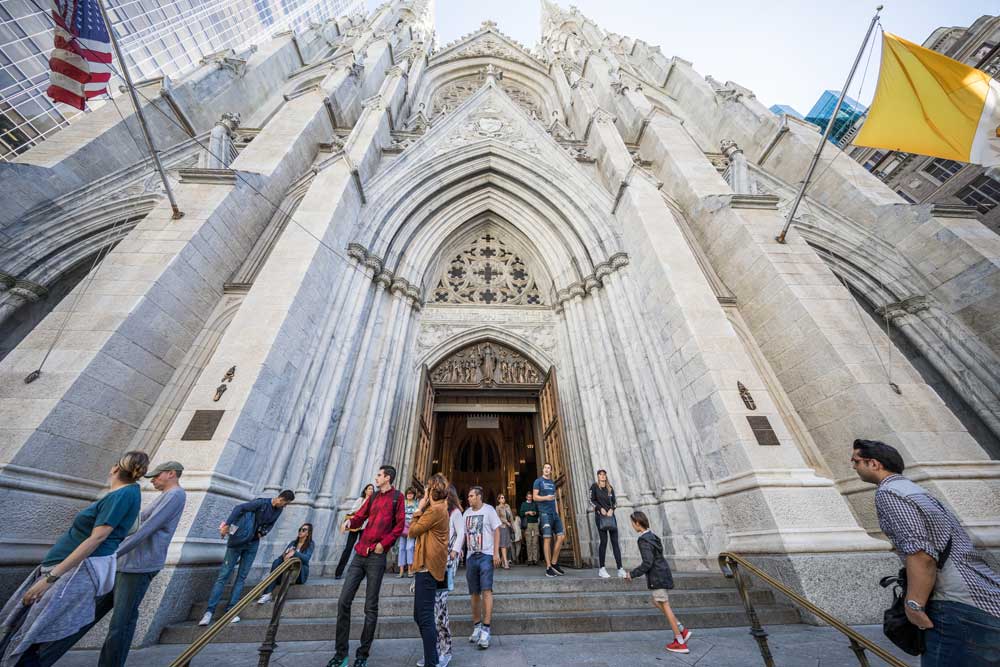
The Rise of the Gnostic Liberal State After Christianity by Andrew Latham
29.1—Jan/Feb 2016
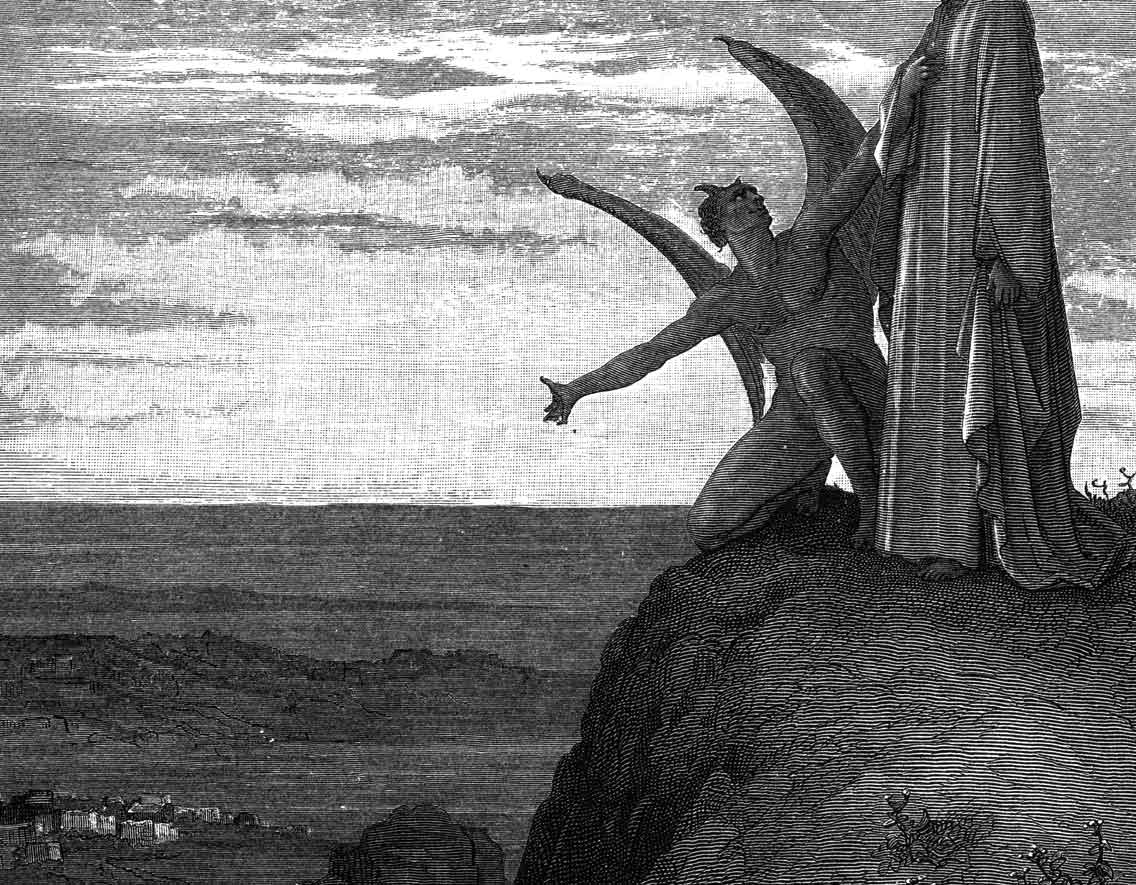
Secular Credibility Is a Devilish Temptation by James Hitchcock
more from the online archives

27.5—Sept/Oct 2014
on Growing Vegetables as a Primer in Moral Philosophy by Rachel Lu
32.6—November/December 2019
on Taking Heed of the Parallels Between the Crises of Yesterday & Today by Korey D. Maas
calling all readers
Please Donate
"There are magazines worth reading but few worth saving . . . Touchstone is just such a magazine."
—Alice von Hildebrand
"Here we do not concede one square millimeter of territory to falsehood, folly, contemporary sentimentality, or fashion. We speak the truth, and let God be our judge. . . . Touchstone is the one committedly Christian conservative journal."
—Anthony Esolen, Touchstone senior editor
