




Book Review
Sabbath Unrest
Searching for Sunday: Loving, Leaving, and Finding the Church
by Rachel Held Evans
Thomas Nelson, 2015
(288 pages, $16.99, paperback)
reviewed by Dennis R. Di Mauro
In the late 1970s, when Campbell's Soup entered the spaghetti sauce market, its sauce didn't sell well because of a public perception that a Campbell's brand sauce would be too "soupy." It wasn't until Campbell's introduced its Prego line of sauces in 1981 that its sales started to soar. It was still the same sauce, but its new name removed the "soupy"perception.
In a similar way, Rachel Held Evans holds essentially the same views as her colleague and conference partner, Nadia Bolz-Weber, a tattoo-clad, foul-mouthed, recovering alcoholic and Lutheran pastor. They both hold to a high view of the sacraments and liturgical worship. They both vociferously defend gay marriage and "radical hospitality," the practice of offering Holy Communion to the unbaptized. They both seek to serve the outcasts of society: alcoholics, drug addicts, gays and lesbians, and so on. The only difference is that Evans is the "nice Southern Christian girl" version of Bolz-Weber. It's the same sauce, but Evans is the brand you can take home to mother.
Rachel Held Evans grew up in an Evangelical home in Birmingham, Alabama, where her father served as a Bible college professor. At age 14, her family moved to Dayton, Tennessee (home to the famed Scopes Monkey Trial), where he started a new position at Bryan College and her family joined the fellowship of Grace Bible Church. Upon completing high school, Evans matriculated at the college and graduated in 2003. She later worked at local papers in Chattanooga and Dayton, and in 2007 started a popular blog, http://rachelheldevans.com/blog. Her books include Evolving in Monkeytown (2010) and A Year of Biblical Womanhood (2012), and she is also a popular speaker at mainline church conferences.
Autobiographical Essay
In her latest work, Searching for Sunday: Loving, Leaving, and Finding the Church, she uses the seven Roman Catholic sacraments to structure an autobiographical essay on what the Church must do to engage the younger generation, which, according to Evans, has largely dropped out of organized religion. In the book, Evans seeks to build her Evangelical credentials by telling humorous stories about the youth group games she played at church. She also discusses the salvation formulas she debated with Pentecostals at her local Christian school.
But despite her recollections of a past seemingly devoted to sharing the gospel and bringing the unsaved to faith, one can find little evidence that Evans still holds many of her old Evangelical views. In fact, instead of sharing the gospel, Evans often apologizes for it. For instance, she embraces the "Christianity is no better than any other religion, and is probably worse" mantra that is so typical of today's Protestant mainline churches. In one chapter, Evans cites the Crusades, the Inquisition, Luther's anti-Semitism, forced conversions, the mistreatment of Native Americans, and racism as evidence of Christian cruelty, and then adds to each the refrain, "Lord have Mercy, Christ have Mercy." Sadly, this litany of sins lacks depth and historical context, and is followed by a much shorter list of Christian heroes.
In her junior year in college, Evans began wrestling with her childhood beliefs, and upon returning to Grace Bible Church, these questions, and others, led to a crisis of faith. Over many Sundays, she tallied the times she disagreed with statements uttered from the pulpit. She writes,
"America is a Christian nation," said the man making the announcements. Is it? "Those who do not know Christ will be separated from God for eternity in hell." They will? "If the Bible is the inspired Word of God then we must accept this as historical fact." Must we? "God has called us to pave the parking lot."
Has he?
Dennis Di Mauro is the secretary of the National Pro-Life Religious Council, and a doctoral student in Theology and Religious Studies at Catholic University in Washington, D.C. He is the author of A Love for Life: Christianity’s Consistent Protection of the Unborn (2008).
A Journal of Mere Christianity—Delivered to Your Door
- Essays on theology, culture, and the Church
- Contributors from across the Christian traditions

Six print issues (one year) of Touchstone, plus full online access and PDF downloads for only $39.95.

Get a one-year full-access subscription to the Touchstone online archives for only $19.95.
bulk subscriptions
Order Touchstone subscriptions in bulk and save $10 per sub! Each subscription includes 6 issues of Touchstone plus full online access to touchstonemag.com—including archives, videos, and pdf downloads of recent issues for only $29.95 each! Great for churches or study groups.
Transactions will be processed on a secure server.
more from the online archives


33.1—January/February 2020
Do You Know Your Child’s Doctor?
The Politicization of Pediatrics in America by Alexander F. C. Webster
24.1—January/February 2011
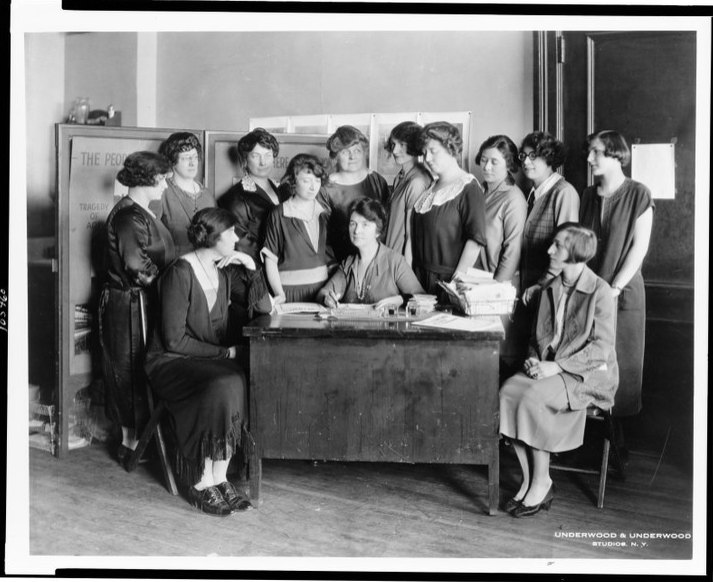
How Planned Parenthood's Founder Played the Christians, and Won by Allan C. Carlson
calling all readers
Please Donate
"There are magazines worth reading but few worth saving . . . Touchstone is just such a magazine."
—Alice von Hildebrand
"Here we do not concede one square millimeter of territory to falsehood, folly, contemporary sentimentality, or fashion. We speak the truth, and let God be our judge. . . . Touchstone is the one committedly Christian conservative journal."
—Anthony Esolen, Touchstone senior editor
