




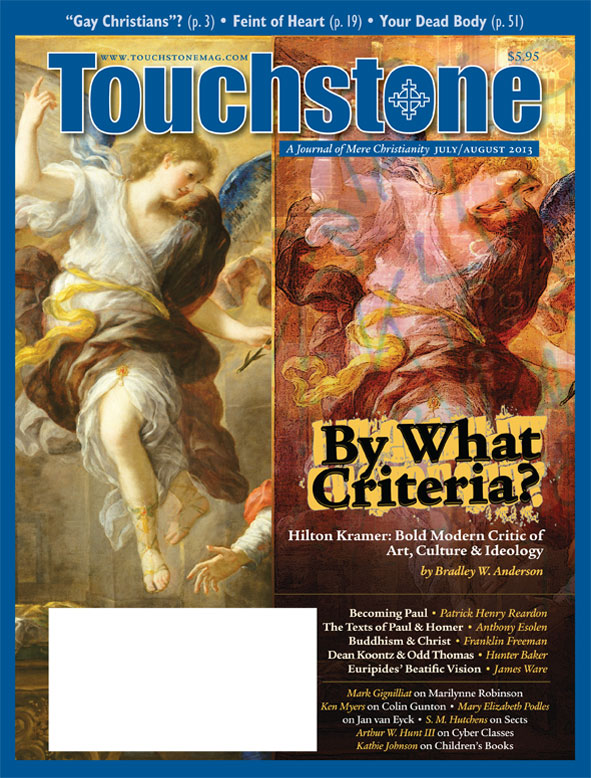
Primary Graces
When I Was a Child I Read Books
by Marilynne Robinson
Farrar, Straus and Giroux, 2012
(224 pages, $24.00, hardcover)
reviewed by Mark Gignilliat
Reading Marilynne Robinson is a dangerous enterprise. The beauty and force of her prose has the ability to lull one's critical sensibilities to sleep; at the very least, I find myself wanting to agree with just about everything she says, only to rouse my critical faculties at the final moment.
Her fiction is a delight to read, as perennially rich and difficult questions of Christian theology, especially of the Reformed stripe, are brought to bear in poignant prose and arresting narratives. Who can forget the haunting character of Jack in Home, a figure who knows his Calvinist theology well enough to identify himself as a reprobate and suffer under the implications
of such?
Her essays are hospitable and tyrannical at the same time. Robinson has something to say; her criticisms are sharp, yet the air the reader breathes is crisp and clean, not the hot and heavy kind too often found in public, critical discourse.
Her most recent collection of essays, When I Was a Child I Read Books, is filled with the subjects expected from Robinson: the mystery of language, the American self, a joyful rescuing of John Calvin from modern caricature, the happy marriage of science and faith, the inability of the former to provide a meta-narrative (a larger story that connects and gives meaning to the smaller stories it contains)—and these are
but a few.
Of particular interest in this collection is her infectious delight in the Old Testament, that moribund literary deposit of the Christian canon collecting dust in the church and society either by intention or the lack thereof. The slightest whiff of Marcion moves Robinson to dip her pen in the inkwell and go on the attack: always respectful, never ad hominem, yet forceful
nonetheless.
The Sophisticated Ancients
Robinson is a contrarian who winces at modernity's churlish dismissal of the authority of the past. She is a romantic, in the best and philosophical sense of that term. She shows respect to cultures and peoples foreign to her. She is curious; she listens well. In brief, she's hospitable.
This applies especially to ancient texts and peoples. In the face of modernity's hubris, Robinson reminds readers, "Perhaps the tendency to think of classical religion as an effort at explaining a world otherwise incomprehensible to them encourages us to forget how sophisticated ancient people really were" (p. 13). This collection of essays reveals her special appreciation of the Old Testament and the sophistication present in its archaic and befuddling laws.
This does not mean Robinson is a Luddite pining for the simplicity of a bygone era (though there may be some of this present). She is fascinated by recent discoveries in the sciences and encourages people to subscribe to Scientific American for a year, simply to bask in the glories of God's creation—advice I have in fact taken. But she is also quick to point out the inability of science to provide a meta-narrative—an academically trendy term I have yet to locate in her work, though the concept is there. The Bible and her Reformation heritage provide the all-encompassing framework that science cannot. And concerning the Bible, when Robinson's well-worn one falls open to its most weathered sections, the reader can be sure he will be facing the Old Testament.
The Old Testament's Liberality
What is it about the Old Testament that fascinates her? In part, its liberal nature. Ever the lover of words, Robinson warns readers not to allow that term's conceptual baggage to obscure its biblical character. Instead, she takes us on a linguistic tour, guiding us through sixteenth-century French and its understanding of liberal or liberalité as synonymous with generosity and as antipodal to niggardly, a term whose unsettling sound is equal to its denotative effect.
The Bishop Spongs and Jack Mileses of this world put the spotlight of their Old Testament critique on those sections of the Hebrew Scriptures most offensive to modern ears: cherem warfare, capital punishment for sexual offenses, and the rest of the familiar indictment. Robinson does not shy away from these matters, but her frustration at these dismissive accounts is based on her recognition that emphasizing these aspects of the Old Testament law cuts against the grain of its total witness, like playing a musical piece in minor key when its original arrangement is in the major.
What is lost as a result of this practice is the generosity and liberality of spirit present in Old Testament law: laws for the poor, for the alien sojourner in the land, and the ethic of jubilee. Reading Robinson's essay, "Open Thy Hand Wide," is worth the price of admission to her book. Robinson, the Reformed theologian, bristles at a two-dimensional law/gospel hermeneutic that does not recognize the gracious character of the Old Testament law.
"No one," she claims, "can read the books of Moses with any care without understanding that law can be a means of grace" (p. 72). Lutherans begin to squirm while Calvinist cheeks turn slightly upward. One can hear Robinson commenting on the Old Testament law with a logic similar to Paul's in Romans 7, or in Shakespearean terms: "The fault, dear Brutus, is not in our stars but in ourselves. . . ." The Torah is not the problem; we are.
Scholarly in Looks Only
Robinson is also critical of those nefarious folks who write "scholarly-looking books about the Bible" (p. 95). "We have enshrined the iconoclast," she reminds us (p. 95), whereas she seeks to remove from the pedestal the scholar-icon whom the modern self has so admired.
She is especially troubled by condescending attitudes toward the biblical text, toward the culture that produced the text, and most importantly, toward God. The Bible, she insists, is an honored icon of Western culture; yet the more discredited one can make it, the beefier his scholarly credentials become.
This is, of course, hyperbole. There are many within the guild who write "scholarly looking" books about the Bible in a non-condescending way, and without doubt, Robinson knows this. Nevertheless, she is writing for an intelligent, though non-specialist, readership that probably browses the religion section at Barnes and Noble. Such persons may have read Jack Miles's God: A Biography or seen Bishop Spong interviewed on CNN. Robinson shows an intelligent readership that these productions are scholarly looking only and that they need to be taken for what they are, mere appearances.
Challenging Assmann
Nor is she content merely to challenge pseudo-scholarship. She goes after bigger fish, too, which makes her engagement with Jan Assmann all the more interesting. Robinson, the non-specialist in Old Testament studies, goes after a ranking Egyptologist. I am caught off-guard and intrigued by this courageous move. Assmann is a leader in the field of Israel's history of religion who has given special attention to what he terms the "translatability" of the religious concepts and practices of the ancient civilizations surrounding Israel, particularly Egypt, into the nascent and developing "monotheism" of pre-monarchic Israel.
A full outline of Assmann's thought will run too far afield, so I will take the risk of presenting his ideas in brief. To begin with, there are two types of monotheism, inclusive and exclusive. The former, according to Assmann, was born out of polytheism and is inclusive and non-violent. The latter, which had its source in the religion of Akhenaten, runs toward exclusivity and violence. Moses was influenced by this exclusive kind of monotheism, and, as a result, the developing monotheism of ancient Israel was decidedly of this "exclusivist" type as well.
Through this Egyptian lens, Assmann is quick to make moral judgments on Israel's monotheism. But not all are convinced of his reading of the evidence. Old Testament scholars such as Mark Smith and Benjamin Sommer, for example, while appreciating Assmann's advancements in the idea of "translatability," are quick to criticize Assmann for his own "bias against monotheism" (Mark Smith, God in Translation: Deities in Cross-Cultural Discourse in the Biblical World, p. 326).
Robinson is helpful on this score because she calls a spade a spade. Scholars who use impressive terminology, such as "mnemohistory," and then extrapolate from a very limited amount of source material a sweeping historical narrative about the evils of monotheism because of its roots in the Egyptian cultus face multiple problems, the least of which is the genetic fallacy that something is wrong on the basis of its source or beginnings.
Some Quibbles, More Gratitude
There are, however, aspects of Robinson's critical engagement with the Old Testament, and other matters, that I find befuddling. She speaks of the heirs of Calvin as rejecting the Old Testament to their own detriment. She must be referring to the heirs of Schleiermacher here. Calvin's progeny in others streams of the Reformed tradition are on safer ground.
The Christian theological side of me yearns for a bit more ontological oomph from Robinson as well. For instance, how does the triune character of God impinge on our reading of the Old Testament: is Yahweh triune? And how does the Old Testament's witness to a generous humanity root itself primarily in the election and generosity of God? Maybe Robinson's romantic hospitality could be tied a bit more formally and materially to Christian confession, namely, the gospel.
But as one who teaches Old Testament and who takes seriously Marcion's threatening presence in the Church, I am, despite my quibbles, grateful to Robinson for the care with which she demonstrates the continuing validity of the first part of our Christian canon. Perhaps more than this, I am glad that her giddiness over the Old Testament peeks through in the midst of her serious engagement with this corpus and its detractors.
When Marilynne Robinson was a child, she read the Old Testament. I hope for a playground full of children like her. In fact, I would like to play on that playground, too.
Mark Gignilliat is a professor of divinity at Beeson Divinity School, Samford University. He also serves as the director of Beeson’s newly launched Ph.D. program in Theology for the Church and as theologian-in-residence at St. Peter’s Anglican Church in Birmingham, Alabama.
A Journal of Mere Christianity—Delivered to Your Door
- Essays on theology, culture, and the Church
- Contributors from across the Christian traditions

Six print issues (one year) of Touchstone, plus full online access and PDF downloads for only $39.95.

Get a one-year full-access subscription to the Touchstone online archives for only $19.95.
bulk subscriptions
Order Touchstone subscriptions in bulk and save $10 per sub! Each subscription includes 6 issues of Touchstone plus full online access to touchstonemag.com—including archives, videos, and pdf downloads of recent issues for only $29.95 each! Great for churches or study groups.
Transactions will be processed on a secure server.
more from the online archives

37.5—Sept/Oct 2024
The Death of Conservatism & the Negative World by J. Douglas Johnson
8.4—Fall 1995
The Demise of Biblical Preaching
Distortions of the Gospel and its Recovery by Donald G. Bloesch
31.6—November/December 2018
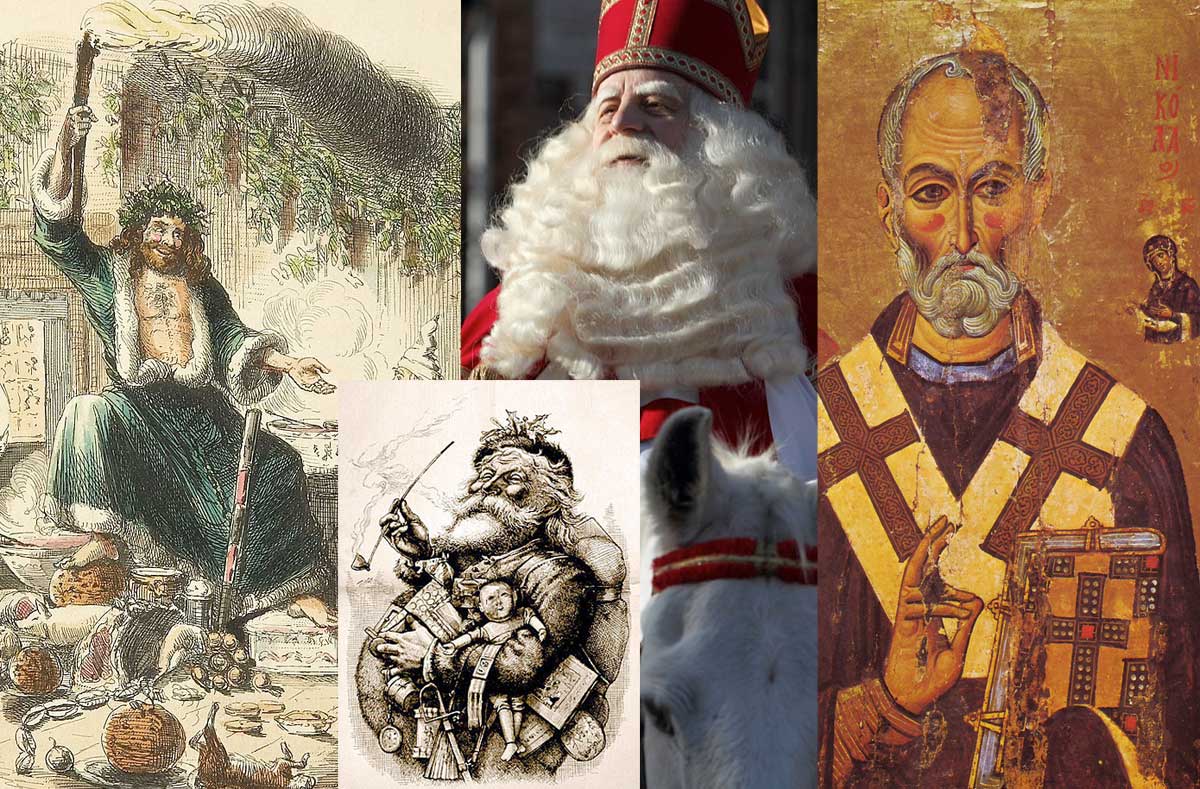
on Childhood Encounters with a Christmas Icon by Rebecca Sicree
calling all readers
Please Donate
"There are magazines worth reading but few worth saving . . . Touchstone is just such a magazine."
—Alice von Hildebrand
"Here we do not concede one square millimeter of territory to falsehood, folly, contemporary sentimentality, or fashion. We speak the truth, and let God be our judge. . . . Touchstone is the one committedly Christian conservative journal."
—Anthony Esolen, Touchstone senior editor
