





Book Review
Readers & Believers
Inklings of Reality: Essays Toward a Christian Philosophy of Letters
by Donald T. Williams
Lantern Hollow Press, 2012
(364 pages, $14.99, paperback)
reviewed by Louis Markos
Donald Williams does not mince words. After reminding us that every culture "has had a mode of speech that is more rhythmical, more formal, more suggestive, more intense . . . than the normal ones it uses for everyday discourse," he hits us with a true zinger: "There is only one society on record in which it [poetry] is considered unmanly, in which its more artistic forms are practiced only by an isolated elite who write, only for each other, texts which would be utterly incomprehensible to the general public. And that is our own, though only in the last century."
THIS ARTICLE ONLY AVAILABLE TO SUBSCRIBERS.
FOR QUICK ACCESS:
Louis Markos , Professor in English and Scholar in Residence at Houston Baptist University, holds the Robert H. Ray Chair in Humanities. His 19 books include Lewis Agonistes; Restoring Beauty: The Good, the True, and the Beautiful in the Writings of C. S. Lewis; On the Shoulders of Hobbits: The Road to Virtue with Tolkien and Lewis; and From A to Z to Narnia with C. S. Lewis.
A Journal of Mere Christianity—Delivered to Your Door
- Essays on theology, culture, and the Church
- Contributors from across the Christian traditions

Six print issues (one year) of Touchstone, plus full online access and PDF downloads for only $39.95.

Get a one-year full-access subscription to the Touchstone online archives for only $19.95.
bulk subscriptions
Order Touchstone subscriptions in bulk and save $10 per sub! Each subscription includes 6 issues of Touchstone plus full online access to touchstonemag.com—including archives, videos, and pdf downloads of recent issues for only $29.95 each! Great for churches or study groups.
Transactions will be processed on a secure server.
more on christianity from the online archives

8.4—Fall 1995
The Demise of Biblical Preaching
Distortions of the Gospel and its Recovery by Donald G. Bloesch

31.1—January/February 2018
on Taking the Measure of the Deserving & the Undeserving Poor by Martin Bordelon

33.3—May/June 2020
Human & Divine Societies Require Careful Thought & Discourse by Anthony Esolen
more from the online archives
20.7—September 2007
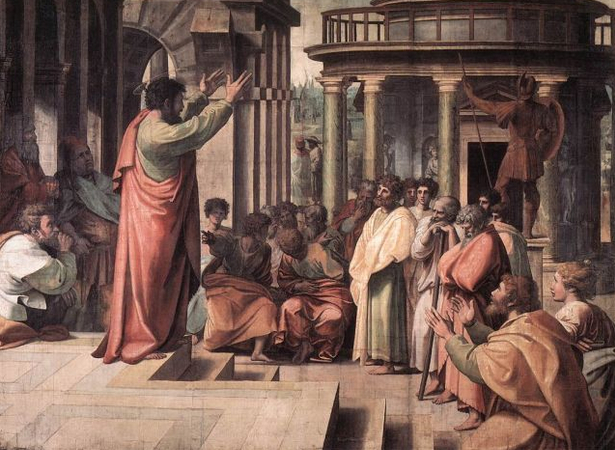
Paul Didn’t Build Bridges to Popular Culture by Russell D. Moore

24.6—Nov/Dec 2011
Liberty, Conscience & Autonomy
How the Culture War of the Roaring Twenties Set the Stage for Today’s Catholic & Evangelical Alliance by Barry Hankins
calling all readers
Please Donate
"There are magazines worth reading but few worth saving . . . Touchstone is just such a magazine."
—Alice von Hildebrand
"Here we do not concede one square millimeter of territory to falsehood, folly, contemporary sentimentality, or fashion. We speak the truth, and let God be our judge. . . . Touchstone is the one committedly Christian conservative journal."
—Anthony Esolen, Touchstone senior editor
