




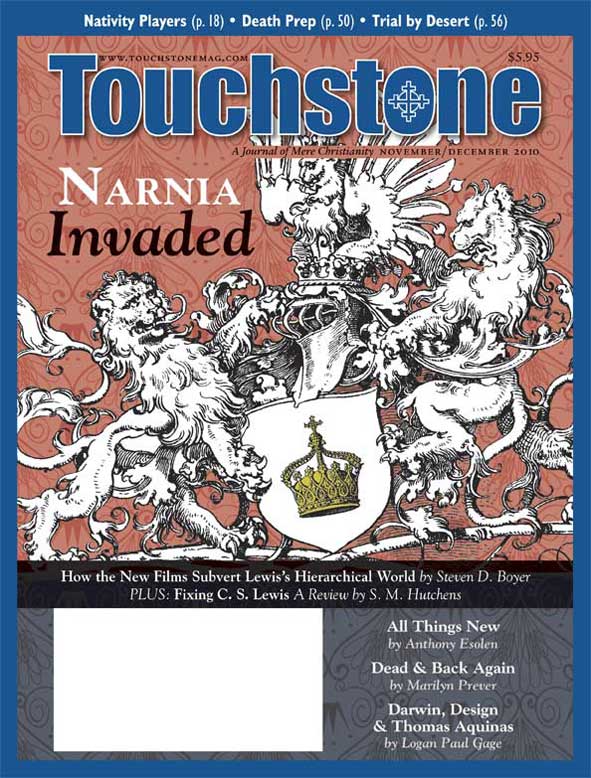
Not Well Reds
The Anti-Communist Manifestos: Four Books That Shaped the Cold War
by John V. Fleming
W.W. Norton & Co., Inc., 2009
(362 pages, $27.95, hardcover)
reviewed by Richard M. Reinsch II
In his highly engrossing book, The Anti-Communist Manifestos: Four Books that Shaped the Cold War, John V. Fleming, professor emeritus of literature at Princeton, recovers four texts—Arthur Koestler’s Darkness at Noon (1940) , Richard Krebs’s Out of the Night (1941), Victor Kravchenko’s I Chose Freedom (1946), and Whittaker Chambers’s Witness (1952)—that unmasked the existential truth that Communism offered to its believers. In many respects, Fleming’s task is immensely complicated. Most contemporary observers struggle either to recall or to imagine the paramount threat once posed to American security by the armed doctrine of Soviet Communism. Equally distant are the compelling moral and spiritual attractions that this ideology offered to men and women of learning and sensitivity who occupied formidable intellectual and political posts.
The Stalinist jurisprudence of the second half of the 1930s, known as the Moscow Trials or the Purges, unites the four texts in Fleming’s study. The Purges’ surreal destruction of huge numbers of military and political leaders who had led the Bolshevik Revolution of 1917 demonstrated the crushing dexterity of the laws of revolutionary history. Having destroyed much of the first generation of Soviet leadership, the Purges revealed Communism as a monstrous fraud, and because of them, the authors in Fleming’s study severed their commitments to Communist ideology.
Arthur Koestler
One cannot overstate the influence of Arthur Koestler’s 1940 novel, Darkness at Noon, on French thought. Writing as an ex-Communist but still a man of the Left, Koestler produced a novel that sold over two million copies in France at a time of economic devastation. Leading French Communists, having correctly judged the moral suasion of the novel, attempted to stop its publication by viciously attacking the book and its author. The novel excelled in its use of the Purges as an anvil upon which it delegitimized the Soviet revolutionary ideal. Koestler’s literary presentation permanently stained Communist parties in the West.
Fleming focuses on the binary moral conclusions voiced in the novel by an NKVD (secret police) interrogator, Ivanov, to the prisoner Nicholas Rubashov, a former high-ranking Soviet official who had helped establish the Soviet state:
There are only two conceptions of human ethics, and they are at opposite poles. One of them is Christian and humane, declares the individual to be sacrosanct, and asserts that the rules of arithmetic are not to be applied to human units. The other starts from the basic principle that a collective aim justifies all means, and not only allows, but demands, that the individual should in every way be subordinated and sacrificed to the community—which may dispose of it as an experimentation rabbit or sacrificial lamb.
Viewed as too simplistic by many of the novel’s critics, Ivanov’s separation of the Jerusalem-Athens ethical continuum from the Berlin-Moscow will to power cogently raised the question of human significance within Communist revolutionary ideology. If one pillar of Western civilization is that a good end never justifies an evil act, then Communism, rather than alleviating human suffering and misery, accepted their necessity in its universal quest of collectivist liberation.
Koestler’s novel enraged the intransigent French Left in its depiction of the Purges. Rationalizing that the accused were, at a minimum, subjectively guilty of thwarting Stalinist rule, the leftists saw the tortured confessions extracted from them as confirming this convoluted judgment. Fleming notes that many French and other Western Communists cognitively insulated the Soviet experiment from criticism for its human rights abuses in the Purges.
Reasoning that, within capitalist regimes, notions of legal innocence or guilt were merely the effects of material inequalities, many Communist intellectuals held that the Soviet regime’s pursuit of egalitarian ideals made the Purges objectively defensible. The same could not be maintained for courts in liberal democracies, or so it was argued. The Purges had served the ineffable progress of the Soviet regime, and as such, were lifted beyond good and evil. Thus, through his novel’s depiction of the false confession, apology, and execution of Nicholas Rubashov, Koestler indelibly turned this fact of Stalinist rule against the regime’s intellectual defenders in France.
A Journal of Mere Christianity—Delivered to Your Door
- Essays on theology, culture, and the Church
- Contributors from across the Christian traditions

Six print issues (one year) of Touchstone, plus full online access and PDF downloads for only $39.95.

Get a one-year full-access subscription to the Touchstone online archives for only $19.95.
bulk subscriptions
Order Touchstone subscriptions in bulk and save $10 per sub! Each subscription includes 6 issues of Touchstone plus full online access to touchstonemag.com—including archives, videos, and pdf downloads of recent issues for only $29.95 each! Great for churches or study groups.
Transactions will be processed on a secure server.
more on communism from the online archives
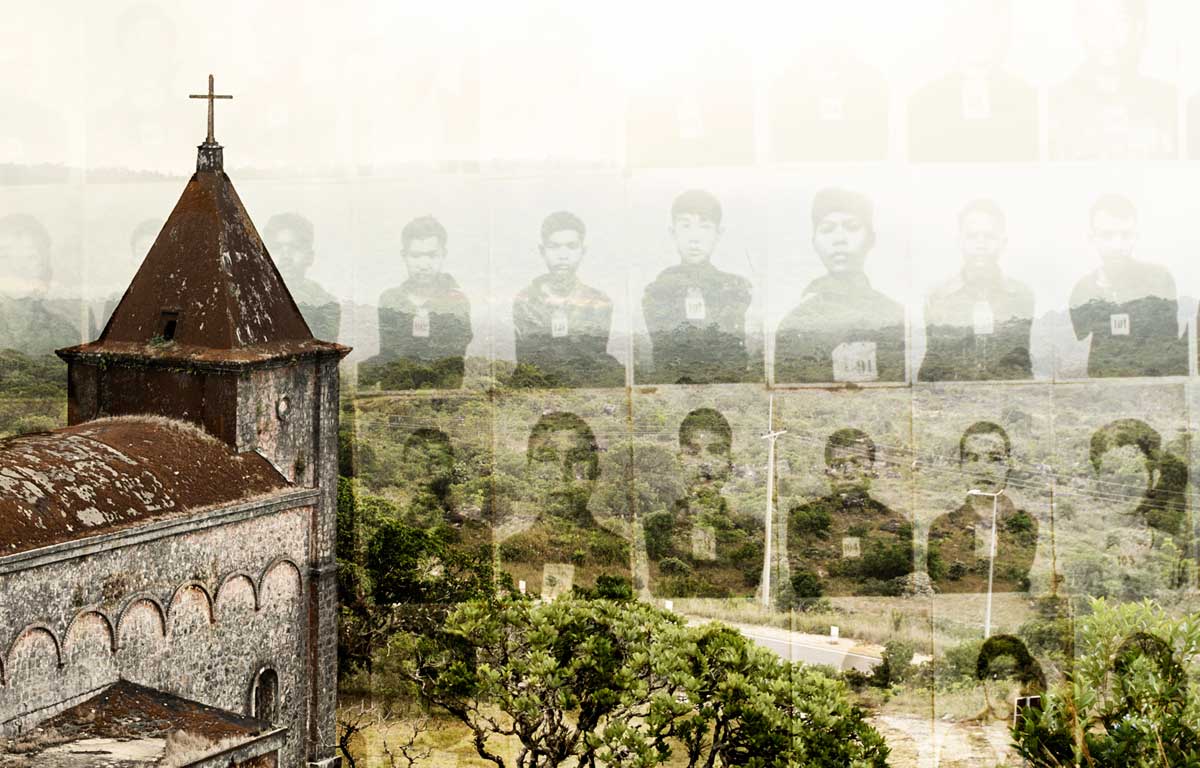
28.5—Sept/Oct 2015
Remembering Angka & the Idolatry of the Khmer Rouge 40 Years Later by Les Sillars
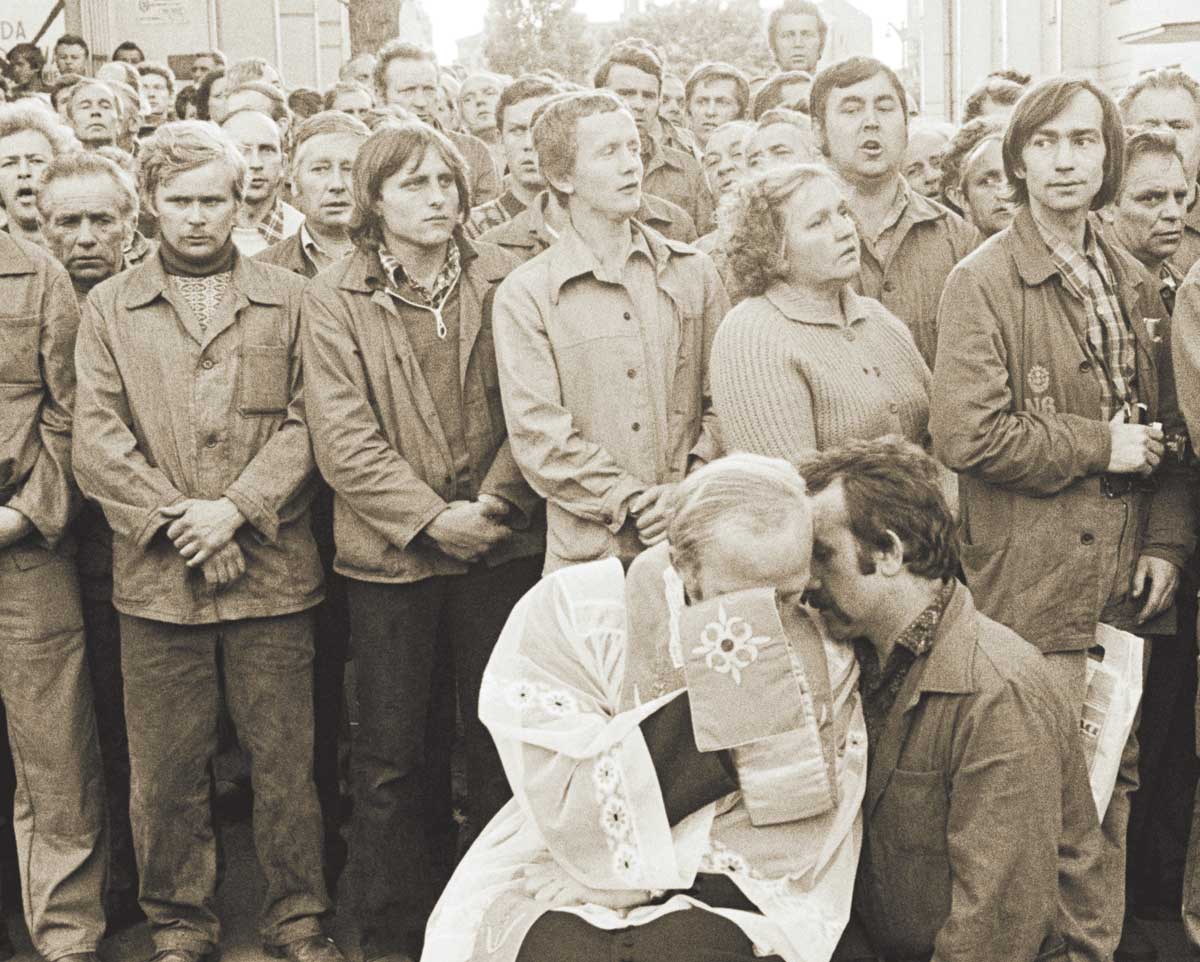
19.10—December 2006
Workers of Another World United
A Personal Commemoration of Poland’s Solidarity 25 Years Later by John Harmon McElroy
more from the online archives

33.3—May/June 2020
Human & Divine Societies Require Careful Thought & Discourse by Anthony Esolen

30.3—May/June 2017
C. S. Lewis Assesses the Religion of Mohammed by Jacob Fareed Imam
17.4—May 2004
The Unhappy & Abusive Marriage of Liberalism & Modernism by James Hitchcock
calling all readers
Please Donate
"There are magazines worth reading but few worth saving . . . Touchstone is just such a magazine."
—Alice von Hildebrand
"Here we do not concede one square millimeter of territory to falsehood, folly, contemporary sentimentality, or fashion. We speak the truth, and let God be our judge. . . . Touchstone is the one committedly Christian conservative journal."
—Anthony Esolen, Touchstone senior editor
