




Durable Divinity
God Is Back: How the Global Rise of Faith Will Change the World
by John Micklethwait
and Adrian Wooldridge
The Penguin Press, 2009
(416 pages, $27.95, hardcover)
reviewed by Les Sillars
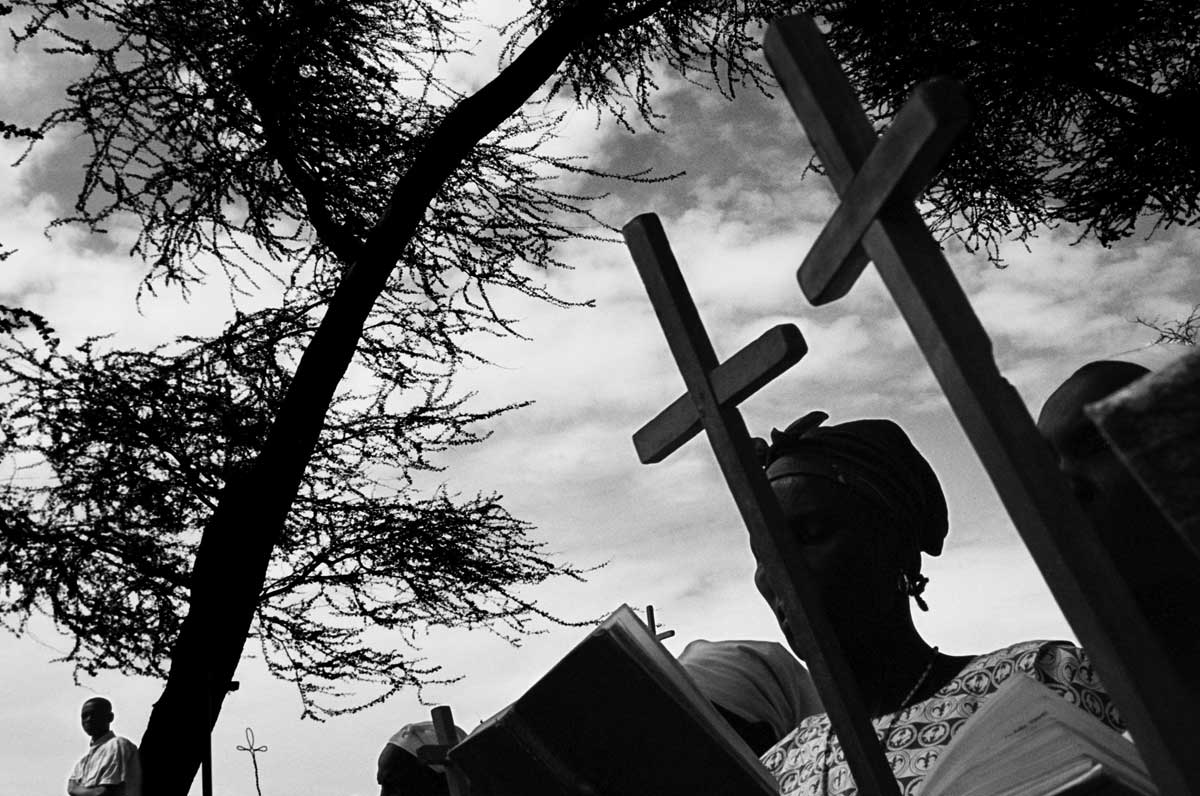
The news that God Is Back will come as no surprise. Some of us, of course, were aware that he had never left. But since 9/11 even secularists have been noting, often with alarm, the growing strength of religion around the world, from the explosion of Pentecostalism in Africa and Latin America to house churches in China. Meanwhile, the number of Muslims worldwide has rocketed from 200 million in 1900 to 1.2 billion today. Numbers aside, religion is moving back into public life with a vengeance, from Ankara to London, Shanghai to Moscow, Nairobi to Washington.
It wasn’t supposed to be like this. Secularists take it as a matter of faith that as societies become wealthier, more educated, more technologically advanced, and, of course, smarter, the influence of religion will wane. The “secularization theory” holds that reason will replace blind adherence to dogma and science will expose religion as a collection of myths fabricated to control the ignorant masses.
Micklethwait and Wooldridge, editor and Washington bureau chief of The Economist, show how the secularization theory is not merely wrong (except in Europe and a few US enclaves), but utter nonsense. Religion and modernity not only can go together, they do go together. The authors, one a Catholic and the other an atheist, take a good shot at explaining why this is so, but they forget one thing.
A Religious Surge
The secularization theory is based largely on the European experience, where you can’t become modern “without throwing off religion’s yoke.” But most Americans have remained stubbornly religious. Secular intellectuals on both sides of the Atlantic think this is peculiar but have imagined that the rest of the world would eventually follow Europe: “The people you met on the cocktail circuit in New York and San Francisco seemed like sensible sorts. Surely the rubes would eventually catch up?”
But the rubes, apparently, have been out in front all along. As historians of American religion, such as Rodney Stark, have shown, Christianity in America grew powerful largely because the American founders realized that true religious freedom meant that churches must be de-coupled from the state—hence the First Amendment—forcing American Christians to compete for converts, members, money, and resources. The effort made them strong and resilient and produced a large, vibrant, and influential (if often contentious) religious environment. The established churches of Europe, where tax revenues sheltered them from the need to behave like churches, became empty husks.
Today, write the authors, it is the American model that is spreading around the world, not the European one. Even worse, from a secularist perspective, this worldwide growth is driven to a significant degree by the upwardly mobile, educated middle classes. Developing countries are becoming more religious as they modernize, not less. God Is Back begins with a fascinating description of a house church in China. Its members are Blackberry-sporting management consultants, doctors, academics, entrepreneurs, and ballet dancers who meet in a gated Shanghai community. While studying Romans, they condemn Darwinism and discuss the “sin” of homosexuality.
What’s going on? The authors assert that the surge of religion is driven by competition and choice:
It is not just that religion is thriving in many modernizing countries; it is also that religion is succeeding in harnessing the tools of modernity to propagate its message. The very things that were supposed to destroy religion—democracy and markets, technology and reason—are combining to make it stronger.
Les Sillars teaches journalism at Patrick Henry College and is on staff at WORLD magazine; his first book, Intended for Evil: A Survivor's Story of Love, Faith, and Courage in the Cambodian Killing Fields, was released by Baker in 2016.
A Journal of Mere Christianity—Delivered to Your Door
- Essays on theology, culture, and the Church
- Contributors from across the Christian traditions

Six print issues (one year) of Touchstone, plus full online access and PDF downloads for only $39.95.

Get a one-year full-access subscription to the Touchstone online archives for only $19.95.
bulk subscriptions
Order Touchstone subscriptions in bulk and save $10 per sub! Each subscription includes 6 issues of Touchstone plus full online access to touchstonemag.com—including archives, videos, and pdf downloads of recent issues for only $29.95 each! Great for churches or study groups.
Transactions will be processed on a secure server.
more from the online archives
27.3—May/June 2014
Religious Freedom & Why It Matters
Working in the Spirit of John Leland by Robert P. George


30.2—March/April 2017
on Reading Don Quixote in Its Original Christian Context by Luis Cortest
calling all readers
Please Donate
"There are magazines worth reading but few worth saving . . . Touchstone is just such a magazine."
—Alice von Hildebrand
"Here we do not concede one square millimeter of territory to falsehood, folly, contemporary sentimentality, or fashion. We speak the truth, and let God be our judge. . . . Touchstone is the one committedly Christian conservative journal."
—Anthony Esolen, Touchstone senior editor
