





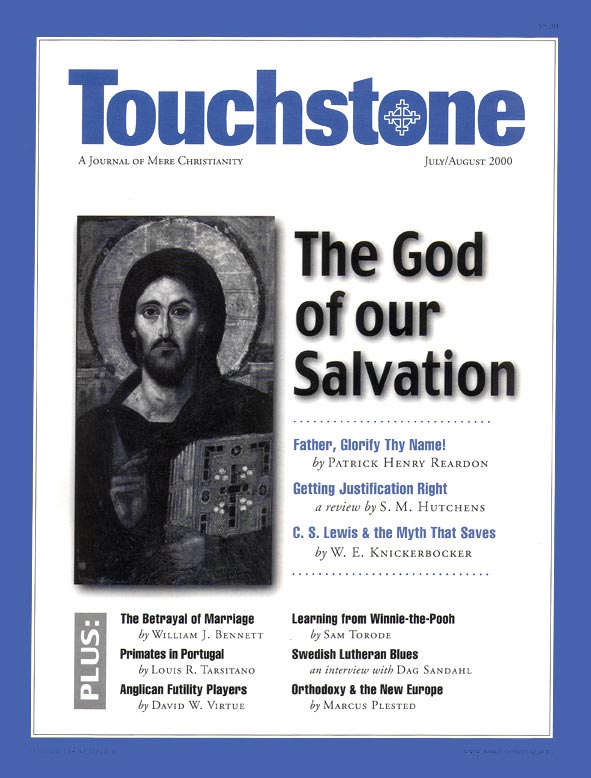
The Betrayal of Marriage
As this article goes to print, it is as yet unclear whether Mayor Rudy Giuliani will withdraw from the New York Senate race. I believe he should—and not merely for health reasons. Given the events of the past weeks, it is the only honorable thing to do. I say this as a person who has admired Mr. Giuliani and considers his accomplishments as mayor of New York City to be among the most impressive governing achievements of modern times.
It is worth briefly recapitulating here what has occurred. Just over two weeks ago, Mr. Giuliani all but conceded that he was having an affair with Judith Nathan, a woman he has been squiring about town and whom he calls his “very good friend.” Then, on May 10, Mr. Giuliani announced at a press conference that he was seeking a separation from his wife, Donna Hanover—without first informing her of his decision. Mr. Giuliani went out of his way to praise his mistress as a “very, very fine woman,” and said about his marriage with Ms. Hanover: “Over the course of some period of time in many ways, we’ve grown to live independent and separate lives.”
The mayor’s assertion was contradicted three hours later by his emotionally distraught wife, who said, “I had hoped that we could keep this marriage together. For several years, it was difficult to participate in Rudy’s public life because of his relationship with one staff member.” Ms. Hanover was referring to Cristyne Lategano-Nicholas, the mayor’s former communications director. The mayor and Ms. Lategano-Nicholas denied those allegations in the past, and continue to deny them now.
THIS ARTICLE ONLY AVAILABLE TO SUBSCRIBERS.
FOR QUICK ACCESS:
A Journal of Mere Christianity—Delivered to Your Door
- Essays on theology, culture, and the Church
- Contributors from across the Christian traditions

Six print issues (one year) of Touchstone, plus full online access and PDF downloads for only $39.95.

Get a one-year full-access subscription to the Touchstone online archives for only $19.95.
bulk subscriptions
Order Touchstone subscriptions in bulk and save $10 per sub! Each subscription includes 6 issues of Touchstone plus full online access to touchstonemag.com—including archives, videos, and pdf downloads of recent issues for only $29.95 each! Great for churches or study groups.
Transactions will be processed on a secure server.
more from the online archives
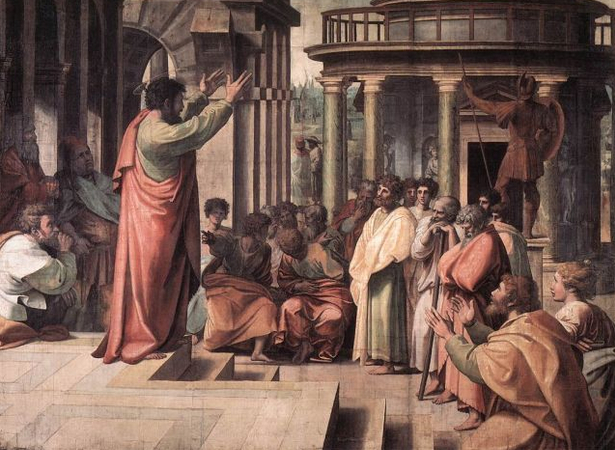
20.7—September 2007
Paul Didn’t Build Bridges to Popular Culture by Russell D. Moore

32.4—July/August 2019
Does Biblical Language for Man Matter? by Stephen F. Noll
calling all readers
Please Donate
"There are magazines worth reading but few worth saving . . . Touchstone is just such a magazine."
—Alice von Hildebrand
"Here we do not concede one square millimeter of territory to falsehood, folly, contemporary sentimentality, or fashion. We speak the truth, and let God be our judge. . . . Touchstone is the one committedly Christian conservative journal."
—Anthony Esolen, Touchstone senior editor
